Jeff French and Ross Baldwin discuss the economic and commodity markets of wheat, corn, soybeans, cattle, feeders, hogs, gold and silver.
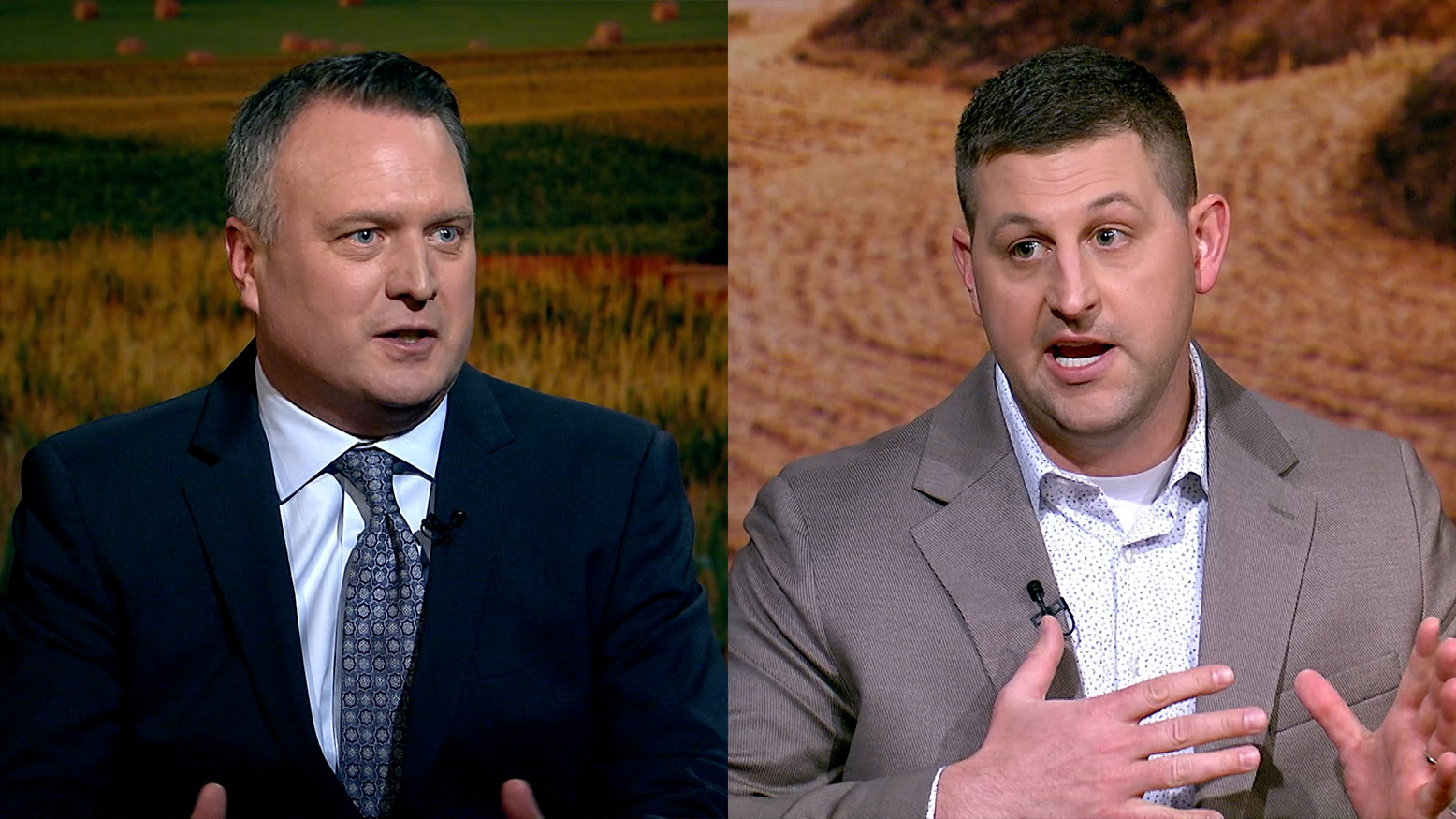
Market Analysis with Jeff French and Ross Baldwin
Share


Jeff French and Ross Baldwin discuss the economic and commodity markets.
Transcript
[Yeager] A weaker U.S. dollar, along with prospects of winter kill, offered some support to the wheat trade for the week ending January 30th. The nearby wheat contract added $0.09, and the March corn contract lost $0.02. Demand for soy products weakened, keeping a lid on the soy complex, the March soybean contract fell by $0.04, while March meal shed 630 per ton. March cotton contracted by $0.73 per hundredweight over in the dairy parlor. March class three milk futures added $1.35. The livestock market was mixed. April cattle gained two. 82. March. Feeders put on a dime, and the April lean hog contract declined by $1. Three. In the currency markets, the U.S. Dollar index, weakened by 80 ticks. March crude oil expanded 390 per ton or per barrel. That is, Comex gold was off 101. 50 per ounce. And the Goldman Sachs Commodity index was up by more than 18 points to settle at five 9150. Here, now, to lend us their insight on these and other trends is regular market analysts. Ross Baldwin and Jeff French. Good to see you, gentlemen.
[Jeff French] Good to be here, Paul.
[Ross Baldwin] Good to see you, Paul.
[Yeager] Jeff, when you hear that the wheat market has had its best week since November, is that a good thing or is it just an indication of how bad the wheat market has been?
[French] Probably a little bit of both. I mean, it's it hit a two month high this week. A couple of factors. The U.S. dollar hit a four-year low. So, but also you know we get down to $5. And we just couldn't take that level out. That's awfully cheap. And you just start to run out of sellers. And I think that was what we've seen here over the last couple of weeks. So, there is fundamentally some news. I mean, Ukraine next week is going to be very cold. They're talking -20 temperatures. So potential for winterkill there. I mean historically, you know I like to sell winter kill rallies. I mean, I just I talked to enough guys that just it doesn't affect the crop that big. But I think we just got too cheap. And you saw some short covering. And that was probably a result with, you know, coming in here at the end of January.
[Yeager] Is it strong enough of a move to pull anybody else along for the ride?
[French] You know, it did a little bit. But this week you know there wasn't too much news this week. I think the grain markets were dominated by, you know, what was going on in the in the metals and the financials. I mean, that was an extreme move. What we saw in silver and gold this week. But yeah, I mean we rebounded a little bit. But we got awfully cheap though in the grains after that report. We've held some support here for a while. But you know, there was some failures technically on Thursday and Friday.
[Yeager] I'm no expert in gold and silver other than the reports that we do on the two. Tell me why the movement up in gold and silver. And then the last two days are significant to commodities.
[French] Well, I mean, so the goal that, you know, gold is the flight to safety, you know, geopolitical risk, the weak U.S. dollar, you know, not knowing what this administration is going to do, I think that all contributes it. You know silver there's you know there's fundamental demand out there. And you have China cutting off exports. But then you have a lot of speculation and, you know, a lot of people getting in on I mean, it's one of the biggest conversations that everybody wants to talk to you about right now. But you see, we came in on Thursday and it was our 10th day higher consecutively. You know, way overdone. I mean, typical blow off type top. And we saw that I mean, you know, silver at one time was down $39 an ounce today alone. I mean, you go back a year ago, it was $29 an ounce. Today.
[Yeager] The price, the price, not the movement.
[French] Yeah. So, it's way overdone itself. Weekly key reversal lower on the charts. Technically, that's a very strong signal that the rally is over. But, you know, you have Chinese silver again. They cut off their exports. They're much higher. They're up in the 130 an ounce. So, we'll see next week. But some very heavy chart damage done in the precious metals.
[Yeager] It got Ross all excited. He was that's all he wanted to talk about before we started to roll. Is there any correlation between what silver and gold does and another market? Do either of you know that.
[Baldwin] It's funny you bring that up. If you if over the last 30 days, silver and feeder cattle have had an 84% correlation and live cattle and silver over the last 30 days, I believe it's right around a 63% correlation. If you look at what feeder cattle did today in the wake of cash cattle being up to 240 sharply higher again this week, feeder cattle had a reversal closed nearly $5 lower on the day. From a fundamental perspective, nothing changed in cattle. Actually, we got more positive fundamentals today, but I think it was the outside influence just from those kind of markets. I mean, you had the equity markets under a lot of pressure, and then you look at what gold and silver has been doing.
[Yeager] Is there any other correlation?
[French] Well, you know, commodities in general, when you have a massive movement like we have in the metals, that will affect everything, and it's hard to when gold and silver are going straight up, it's hard to sell other commodities. I mean, they tend to swim together. And that's what we've seen here.
[Yeager] All right, Ross, you kind of alluded to today's news right before we recorded one of two days a year where USDA releases big numbers on cattle. The story in the past, the headline has been smallest cattle herd since. And last year was 1950. Now we're going to say it's before 1950 because we're still at a small cattle herd.
[Baldwin] Correct. The average guess is on the U.S. beef cow herd was 100.4, I believe, and we came in about 1% below what those guesses were. So, the U.S. beef herd actually shrunk year over year, which I'll be honest, it surprised me. I thought maybe we'd see a little bit of stabilization in the cow herd, and that's not the case. I mean, the dairy cow herd, we did see almost a 2% increase, I believe in that number here today. Not a big surprise given the beef on dairy phenomenon we've seen over the last several years. But given the margins that they're looking at and then them baby calves, they're not a huge surprise to see that. But the all inventory was lower. The calf crop was 2% lower year over year. So really friendly numbers. I would say. I'm pleasantly surprised to see these numbers. And it goes back to it brings up the whole question again of when is this big rebuild going to start?
[Yeager] And look, he's now asking himself his own questions. He doesn't even need me anymore. When is this rebuild ever going to start?
[Baldwin] We've started a slow a slow rebuild over the last year and it's been evidenced by some of the reports that we've seen. But today's report throws a curveball in that, that it it's a slow rebuild at that. I mean that is at best. And I think you've seen some data points over the last few months where there's more heifers getting kept back. But it's just it's going to take time. This is not a nothing like the 2014 2015 rebuild, but the one thing that is different today versus the 2014 cycle is beef on dairy. And where I go back to, we are able to have a slower rebuild and rebuild the herd a little bit more. Today is because there's the beef on dairy. They keep 3.5% more heifers on feed, so when the last cattle on feed report, the heifers on feed was 38.7. Well 3.5% more heifers are on feed because of beef on dairy today versus the 2014 cycle. So back in 2014 we got down to like 32%. I believe it was of heifers on feed. That meant we were keeping everything back. So, we don't need to get down that low to expand the herd.
[Yeager] Because the herd is smaller and so the percentages are closer. Is that what you're trying --
[Baldwin] There's more, there's more cattle available today because of the beef on dairy.
[Yeager] Got it. Okay, so the significance of this then becomes what for? Let's just talk for the producer first.
[Baldwin] The significance is barring I mean barring an outside event the fundamentals of cattle are alive and well. The structure of the cattle market is friendly. I, I expect prices to continue to work higher, I really do. We've seen the big sell off this last fall. That was outside influence. That was when Trump was banging the drum on wanting lower beef prices and talking about beef imports. And you had the managed money crowd that ran for the door. And rightfully so during the time of uncertainty. And here we are. You've got cash trading 240 up here in the North again today, and the South Texas and Kansas have traded 240. We're back within a stone's throw of the all-time highs. Futures still got some work to do. But cash feeders I mean cash feeders. The feeder cattle index has been 3.66 to 3.67. And it feeders are just on fire. And I don't see that changing history would tell you don't put the highs in in the feeder cattle market until a larger degree of expansion is underway. And today's report showed us that a larger degree of expansion is still in front of us. It's still down the road.
[Yeager] It's still murky. All right. So, is this an opportunity now for anybody who's holding some corn that all of a sudden there's going to be somewhere to sell it? Because we have some more. We have animals to feed or there's going to be we're going to hold. We're going to do what Ross says here.
[French] Well, I mean, you talk to every cattleman. I mean, the one thing that they bring up is I just I want more animals. I want more cattle. I mean, that's what they say, but yeah, the numbers are favorable. You know, actually, the next 60 days is going to be some of our tightest numbers of the entire cycle. I didn't like how the cattle closed, though. Today a lot of that could have been, you know, end of the month outside markets. But we had fats and feeders closed below the 20-day moving average for the first time since November. So, I think Monday is a big move. I think, you know, if they come out negative and close negative, I think that's a strong signal. But the fundamentals are absolutely I mean, it's extremely tight, you know, to really change the dynamic. It's going to be something in the outside markets.
[Yeager] Let's go to corn specifically for a moment because that has been fighting resistance. The chart keeps it kind of bound. Why.
[French] Well, you know, after that big plunge that we had after the report, we get down to 420. And then overnight after the report, we get down to 417. You know, you look at the chart, it just it didn't want to go below 420. We've held that now here for the last two weeks. But I don't really think that we're going to go up to the upside anytime strong right now. I mean you get up to 434 there on Thursday and then we kind of fail. And 435 was a big number for two months. 435 was the low. And that held that March contract. Well, it's not support anymore because we're below it now. It becomes resistance. And today or yesterday and today's price action clearly signals that. So, I'd watch the 420 I'd watch 445 in December if we start closing below those numbers, then you probably get a little more defensive here. But you know, we're going into February. I mean, February seasonally. Historically one of the worst times to sell green.
[Yeager] Let's look, if we could for Bradley and Nebraska's question because it's about the new crop, Jeff. And he wants to know how aggressively should producers sell new crop corn prior to that acreage intention report that we're slated to get here in February. If there's no government shutdown.
[French] Well, you know, going into that. So, you're talking about the planting intentions there, end of March, you know, I ten, 15% of actual physical sales. You know, I'm not a big but on paper, you know, whatever you're comfortable with because you know, the potential right now at least. I mean, if you look at new crop prices, it's still probably favors corn acres. And, you know, everybody's thinking, oh, 93 to 95 million acres. You know, we could see more than that. I just don't be surprised. I mean, we've seen it. We went through it here this year. So, the economics still favor more corn acres.
[Yeager] Do you agree?
[Baldwin] I agree with what Jeff said. The economics favor more corn acres I mean beans. It's a struggle on beans. And with the record yields we've seen across the corn belt last year, producers have a lot more confidence they can yield their way out of it. So, I don't think it's out of line that we see 95, 96 million acres of corn right now.
[Yeager] Soybeans have been kind of stuck to, but almost it's even more of a lackluster story. Is there anything different in that market to you?
[French] Well, you know, bean oil kind of took this rally and we've rallied, you know, 45, $0.50 off the lows here in the last two weeks. So, we had a little bit of a good rally. You had crude oil up there trading at multi-month highs which helped out as well. But again, you know it looks like China has fulfilled their commitment of the actual purchases. And obviously with where we're going at into February, Brazil is going to start. South America is going to start harvesting. So obviously purchases move down south. That's no surprise. But again, we got up to, you know, the 200 day moving averages, that 1080 1090 area depending on what contract you're looking at. And that's where it gets more challenging to move higher. I mean, it's just, you know, we potentially are going to miss out on between 150 to 200 million bushels of exports. If China doesn't continue to buy, which we're just going to have to see.
[Yeager] I was going to say, is there any reason that they would come by?
[French] No. I mean, if you look at it, I mean, we're still more expensive than Brazil. I mean, they fulfilled their commitment and we were a dollar bushel higher. So, you know, I just I think it's hard to explain if they're going to continue to buy from us, especially what's coming down the pipeline from Brazil, which looks like a massive crop.
[Yeager] And you mentioned the weaker dollar. That thing can't get that much more weak to spur sales, can it?
[French] You know, I think, you know, it's the perception. You know, we had that big break. We got down to multiyear lows. But then the administration announces the new fed chairman, which obviously he still has to go through the committee. But he would be you know, he likes a strong dollar. And that's why you've actually seen the dollar rebound off of these lows. So, I you know we'll have to see. But I think you know the U.S. dollar this week could be a low for some time.
[Yeager] And he wants to pull more of that money back off the balance sheets and reduce and basically burn the money not let it out as much. Do I have that right? Correct. Okay. Yeah. All right. Ross, if we could I have a very specific feeder cattle question that that Arlo in Nebraska wanted to ask you. And Arlo is curious is it time to lock in LRP on October feeder cattle.
[Baldwin] I think when you're looking at your bottom line and these cattle markets, you need to. Yes. I mean be managing your risk. I mean no, know where your breakevens are, know what your margin is. And at these prices, have a plan in place and use something, you know, whether it's futures and options or LRP, you have a plan in place and use something. And if nothing else, at least have a floor, you know, to prevent a train wreck. I mean, we've seen this last fall when feeder cattle futures sold off, it was essentially $80 over the course of a month, $80, 100 wait. And the live cattle, it was about a $40 sell off. And there was a time period there where you went home and a few days later, your physical feeder cattle were worth about $500 less ahead. And so, we know how fast these markets will sell off. And I always tell people, if you don't have some risk in place or some risk managed prior to the sell off, once that first big sell off happens, you're a deer in the headlight. You can't force yourself to go do something. So, if you're asking this question, I would say today you generally know the answer. And it's that yes, you should be doing something to have a floor in place.
[Yeager] Is there any is the report that came Friday a warning sign or a caution sign? I mean, let's look at it as a traffic light. Is it flashing red, yellow or green right now for the we'll say, the feeder market specifically from that lens?
[Baldwin] I think the report is friendly. So more than anything, I really think this report continues to show the strong underlying fundamental story that cattle has going on right now. But that said, we've seen the outside influence of what can happen to a market. We see Tyson took a plant down or Lexington went down January 20th, actually a little bit before that. And they took Amarillo to a single shift because their margins have been so deep in the red. I mean, the Packers are going on four years, essentially of negative margins. Things will continue to change. So, I think cattle are still in good shape, but there will be things that continue to change. Retail beef prices, in my opinion, are not going to get cheaper right now because supplies are going to tighten this year. So, then you bring in the whole demand factor and weights are big. So, prior to today's report, because I don't have the exact number in front of me, the U.S. beef cow herd since 2019 is 12% lower. Prior to today's report, carcass weights are 10% higher in that same time frame. So, we don't need to build the cow herd back to the levels that it was at, is the punchline. So don't be so bogged down that, oh, we're not expanding the herd or we're never going to expand the herd back to those levels. Well, the reality is we don't need to today because of where we're feeding these cattle to.
[Yeager] We feed them heavy. All right, let's switch to cattle or the hog market, because a that's what we do on the show. But it did have a good run up until again end of the week.
[Baldwin] Correct. And I think hogs similar to a lot of the other commodities. You had the end of the month and the outside influences, but hogs, a lot of the contracts are within well within a couple bucks of their highs or the back months have been making new contract highs. And I do think heading into spring and summer, the hog market, there's reasons to be optimistic. And probably the largest thing to watch for the hog market, I would say, is what kind of disease pressure is there this year? We obviously dealt with a lot of disease pressure last year. We we've seen that slow down quite a bit. But I do think hogs they have a story here. As we get into spring and summer and prices should stay pretty well for them.
[Yeager] I ask him a great question. So, I got to let you say is there any livestock answer you want to give?
[French] Well, you buy you buy protection when you can, not when you have to because absolutely. When in this the futures market moves so fast, especially when $8 limits and $13 limits on feeders. So, buy the protection when you can, not when you have to. But then the summer month hogs hitting 110. I mean that's an awfully good price. And you look at what we've done here in the last three months. So absolutely look for some protection.
[Yeager] There is that only domestic demand that's driving that right now.
[French] Exports have been solid. But it's you know, it's the cheaper product.
[Yeager] It's the alternate to the beef.
[French] Yeah. I mean it's a cheaper protein. So, it has had really good domestic demand.
[Yeager] All right. Final 10 seconds when we sit here and have this conversation a year from now, do you expect it to be the same result as it was today?
[Baldwin] The report to be lower? I think we're very close to seeing the U.S. cow herd stabilize and start to see a bottom in the inventory, I really do.
[Yeager] Fair enough. Ross Baldwin great to see you. Thank you so very much. Jeff French same to you. Thank you.
[French] Thanks, Paul.
[Yeager] All right. Thank you, gentlemen. And you have been watching the analysis portion of the program in a moment. We're going to continue this discussion in an online only segment, search Market Plus with Jeff French and Ross Baldwin wherever you get your podcasts. To hear that conversation. Or you can go to our website at Markettomarket.org. Each Monday I send you an email directly to you with behind-the-scenes information about the production of this program, previews of upcoming content, and my world-famous poll question. Sign up today at our website just above where we have those thank you gifts displayed next week. A small solution to a big problem in the cornfield. Thank you so much for watching. Have a good week.
Trading in futures and options involves substantial risk. No warranty is given or implied by Iowa PBS or the analysts who appear on Market to Market. Past performance is not necessarily indicative of future results.
Watch More
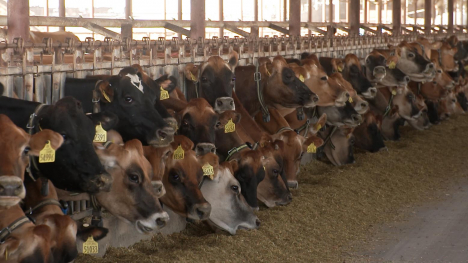
Many California dairy producers have made fighting climate change a high priority. Recent adoption of certain laws has helped them in achieving their goal.

USDA projects best acreage and production guesses for 2026. Wildfires and an avalanche top weather headlines. Turning waste into an investment in your operation. And, commodity market analysis with Shawn Hackett.

President Trump's use of the Emergency Powers Act is disallowed and USDA lowers the number for planted acres of wheat, corn and soybeans.
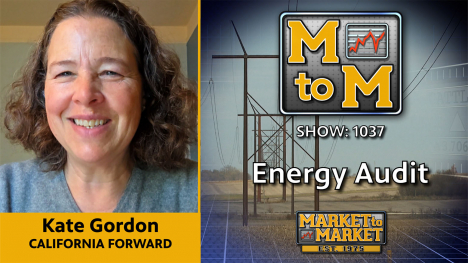
Kate Gordon has watched American energy policy evolve for two decades across multiple presidential administrations. Her frank conversation about rising utility bills, surging demand from data centers, the complicated truth about coal's comeback and whether an all-of-the-above energy strategy still exists in America or whether we're now just picking winners and losers.

Shawn Hackett discusses the economic and commodity markets in this web-only feature with topics of wheat, corn, soybeans and other topics of interest.

Shawn Hackett discusses the economic and commodity markets of wheat, corn, soybeans, live cattle, feeder cattle and lean hogs.