Kristi Van Ahn-Kjeseth discusses the economic and commodity markets in our Market Analysis segment featuring topics of wheat, corn, soybeans, cattle, hogs and metals.
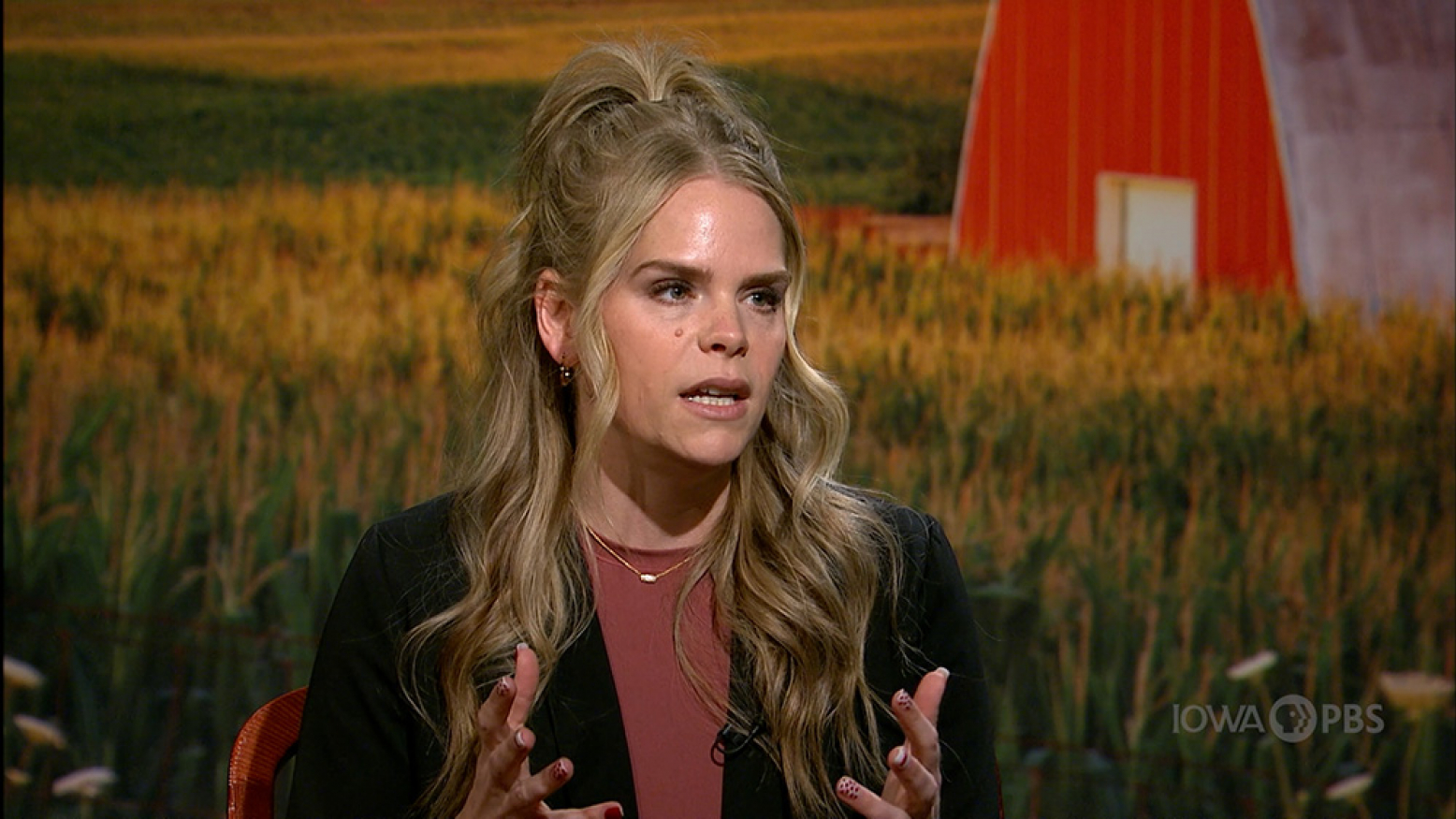


Kristi Van Ahn-Kjeseth discusses the economic and commodity markets in our Market Analysis segment featuring topics of wheat, corn, soybeans, cattle, hogs and metals.
Transcript
[Yeager] The volatility train returned to the station Wednesday as a two-hour phone call was not enough to move all the trade for the week ending February 5th. The nearby wheat contract lost $0.03, and the March corn contract added $0.07. China indicated intent to buy 8 million more metric tons of U.S. beans, sending the complex higher. The March soybean contract improved $0.48, while March meal gained 960 per ton. March cotton contracted by $1.33 per hundredweight over in the dairy parlor. March class three milk futures added $0.90. The livestock market was mixed. April cattle fell $1. 20th March feeders put on 380, and the April lean hog contract expanded by 323. In the currency markets, U.S. dollar index rose by 93 ticks. March crude oil lost $1.55 per barrel. Comex gold sold off $27 per ounce, and the Goldman Sachs Commodity Index was off by more than seven points to settle at five 8385. Here now to lend us her insight on these and other trends as regular market analyst, Kristi Van Ahn-Kjeseth. Hello, Christi. Hey, Paul. So, this phone call came a little bit out of the blue. We knew there's always we knew what China's intent to buy had done to the market before, but we just thought it's in the past. We're done. And then this phone call comes. How come it was so emotional to the markets?
[Kristi Van Ahn-Kjeseth]I think it was probably emotional because you over the last 2 or 3 weeks, I think people have decided that China met their 12 million metric ton. We haven't really seen any private sales lately, and that they just kind of assumed, hey, beans got their run. Let's step away. You also had managed money. Really step away from the market as well. And so, I think people just kind of gave up on soybeans. So as soon as you started to see that information, you saw those buyers start to come in. And then I think it was that FOMO, right? The fear of missing out that people all of a sudden jumped in and they said, hey, I, I sold I don't want to sell my beans too low. Like if they're going to come in here and buy this, I need to be part of this and then manage. Money really was flat. And so, you had them jump in. I think it was that that spiral that led it higher. And it has been a while since I have had a wild day in the grain markets. And when it started to creep and then it jumped from pretty much 30 to $0.50 higher, and then before, you know, it was back down to $0.25. And you just had a lot of people saying, hey, I want to be part of this movement. And I think a lot of marketing got done, which was the smart thing to do in my opinion.
[Yeager] Well, that's what I was going to ask is, so are you recommending or hearing? People are like, yes, I have my blip, it's time to sell.
[Van Ahn-Kjeseth]Yeah. So, we actually moved to 100% marketed in old crop soybeans off this move. We were 90. So, you know, it was only 10%. But we decided to move on the rest of them. And we really went with either sales. If you had a decent basis. Otherwise, I really like April and May puts you get a little bit of carry into the situation, and April is actually very reasonably priced because it doesn't get you to the March 31st crop report. So due to that, you have a little bit of that lower volatility, lower price action, lower interest, because people want to see the report. I don't think you need to see the report for downside protection in soybeans. I could be wrong on that. You never know. But I think the writing on the wall is that we're not going to see the Bean Acres and that we're going to have to do something about it. It was really nice to see follow through again today after that sell off, initially from the high, but really, when I look at beans, I have really hard concerns about them buying another 8 million metric ton. So, you're asking them to buy with Brazil having fresh soybeans on the way.
[Yeager] And that actually leads to a question. I want to go to a viewer question, if I could. Gary in Wisconsin, let's talk about that next crop, because that is going to maybe be where there's more discussion to be had here. Gary says if China does buy that number of soybeans this year, does that cut 26 corn acres to under 92 million acres?
[Van Ahn-Kjeseth]I think you'd need to see a sizable rally in soybeans to get that cut. So, I think the writing on the wall is actually pretty friendly for soybeans next year, because especially if China comes in here and let's say they don't buy eight, they buy 4 million metric ton, right? They went from 12 to 16. We still don't have like a ton of wiggle room for them to be buying soybeans at this point. So, it would be friendly. And now you're coming into the writing on the wall that I think you're going to see Lower Bean Acres compared to corn. Again, corn just seems to be more profitable, and you can get yourself in a tight situation especially, you know, we're going on three years of pretty good growing conditions that if you have a hiccup, you know, things could get really tight in soybeans in a quick hurry, especially with China committing to 25 million metric ton for next year. So, I don't know if you're going to be able to see those repercussions yet. I think it's more we're going to have to deal with them later. You would have to see soybeans, in my opinion. New crop soybeans run an entire dollar before you start to eat away at some acres from corn.
[Yeager] Let's talk about corn, then. Let's go backwards. The new Let’s Talk old crop. First, though, how come this phone call didn't do anything to corn?
[Van Ahn-Kjeseth]Because corn has a ton of production. I mean, I think that's the most probable, like the biggest problem right now for me on corn is that you are at a 17-billion-bushel production number. That is so much corn that needs to get sold out of farmers hand compared to last year. And even though our demand is hot like corn has been doing a fantastic job with its demand structure, but it still doesn't make up for the fact that we had ginormous acres, huge harvested acres, huge yield. And so, we're sitting here with 17 billion bushels of corn that needs to go somewhere. And I feel like the writing on the wall is that you're going to be met with selling pressure moving forward over and over and over again. Anytime we can get a rally. And we've proven that the last couple times corn has been able to get to 435 area off March futures. It's sold off right away. Now. Today was a good day. We saw a strong close. Hopefully we'll carry through with that, but I'm just fearful that this. 435 to 445 or any time somebody could get close to $4 cash or 420 cash, that range is going to bring out selling pressure. And I think you're looking at a situation that we know a lot of bills need to be paid over the next 60 days, that there's going to be some grain sold.
[Yeager] Yeah. And I have a question about that that we'll get to in plus about a little more planning and trying to be profitable new crop real quick here on corn. You mentioned possible acre change again. But really, let's be real. There's not that much change that's going to happen on this news.
[Van Ahn-Kjeseth]No, I don't think so. And honestly, I have been to a lot of ag meetings over the last month and a half, and I have yet to really meet somebody that said they're interested in planting more soybeans than they did last year, and that makes me really worried because we had so many corn acres. But I think on a profitability stance, soybeans just aren't there. And I think, to be honest, people are starting to get a little bit annoyed with how finicky soybeans have been the last couple of years. You have to do more to soybeans right now than you had to do five years ago, and you have not seen the, you know, the reward for that on a yield. As much as you can see, the reward on corn.
[Yeager] Any reward in wheat coming anytime soon?
[Van Ahn-Kjeseth] Man, wheat is a dog. It is not fun to deal with right now. And you know, personally, we are far behind on marketing because there just has not been opportunities for wheat. You know, you're not at profitable levels. You haven't been for quite some time, but what is going to bring us out of this? We've increased demand in wheat, but it's still not enough. You're slowly starting to decrease acreage over the last few years and wheat still not enough. We continue to get good yields. You had this cold snap through winter wheat country, and that got its little bit of a push, but I just don't see a situation that can really prove for wheat to buy out of here. And we got that setback. For now, I just think you're consolidating and you have to look at wheat on more of a standpoint of basis opportunities. If for some reason you see one take it.
[Yeager] Right. So, we're just kind of holding until something better comes along, not really sticking our neck out.
[Van Ahn-Kjeseth]Right? I think it's going to be more of a follower than anything.
[Yeager] All right. Let's go to livestock. This live cattle market last week this this inventory report. Did you expect more reaction on Monday than what happened?
[Van Ahn-Kjeseth]No, I think you're you know, you're looking at a situation where cash remains strong. You're still off of the highs. You're kind of all over the place and trying to decide where we're at as far as the economy goes, what are we going to see happen with interest rates? And so, you know, to be able to bring those fresh buyers in, I did think you had a great reaction. Obviously we had some problems today, but I still think the general logic around the market is a friendly market. And I think what you're looking at is that, you know, we're 12 bucks off the high for live cattle, 20 bucks off the high for feeder cattle. I feel like they have a good chance of getting back to those highs. And when you can have a steady Eddie market that's not overly obnoxious, not like a silver, let's say, or something like that, something that can gradually get to that point. It's a much healthier market.
[Yeager] The I think you're referring to what happened in Feeders on Thursday as a sell off, a huge sell off to open kind of rebound a little bit. And that was a JBS strike in Colorado that's impacting it. Next week we're going to have a story about the Tyson plant in in Nebraska. Closing, are we that precarious of a position now in the in the cattle market, if 1 or 2 major plants go offline, we're going to have reactions like this.
[Van Ahn-Kjeseth]Yeah, I think so. You know, it's very problematic to see that production start to shut down or the fear of that. Right. We know demand is running strong here in the U.S. consumption, when you look at it as a whole, I think this next generation is very heavy on protein consumption. And they want quality protein. And so, I think that's one thing we're looking at. But yeah, I mean it's very reactive to any sort of story. I would say the biggest fear would be, you know, the border opening back up. And I don't see that happening with these new screwworm cases.
[Yeager] And therefore, the influx from Mexico is you don't see that happening anytime soon. No, because there's a school of thought that says it's going to open and whatever happens, happens. I mean, you're not in that camp.
[Van Ahn-Kjeseth]I'm not there yet.
[Yeager] What about in the hog market? Because that's a market that had, again, a little bit more of a positive turn this week. Why?
[Van Ahn-Kjeseth]Yeah. So, I just think, you know, once again, protein consumption huge driving market. But we're at a point here for those deferred contracts. Those summer contracts for hogs that you start to get a point where you should really be looking at hedging where between third and fourth price counts. And I think that they need to be met with some form of hedging to take off some risk off that table. You look at the premium of summer contracts right now at a nearby contracts. It's there. You're not that far off from those recent highs 110 to 112. In some summer contracts that I think it's the right thing to do.
[Yeager] Last week I put Jeff on the spot talking about metals. The metals do anything this week that that caught your attention. Or is that story, last week's news?
[Van Ahn-Kjeseth]I think that metals can just prove to you that there is volatility in some markets. And the grain markets have been sleepers for quite some time, that there will be that moment again where you're looking at them and you're like, this is absolutely nuts. But right now, for the most part, you've had very, very narrow range bound trade. And especially for corn, I'm fearful that that's what we're going to see moving forward as well.
[Yeager] Well, moving forward, we'll talk to you for another few minutes. But that's it for now. Kristi, thank you so much. Thank you. Time goes fast. When you've been watching the analysis portion of the program, because that's what we just finished. We're going to keep going in Market Plus search Market Plus with Kristi Van Ahn-Kjeseth. Wherever you get your podcast to hear that conversation, or just go to our website, Markettomarket.org. Each Monday we preview the week ahead here on the TV show and a reset of just what just happened in the studio and deliver it to your email inbox. If it's new here, we'll outline it in that market. Newsletter sign up now at our website. Next week. The overall effect of one community's packing plant closure. Thank you so much for watching. Have a great week.
Trading in futures and options involves substantial risk. No warranty is given or implied by Iowa PBS or the analysts who appear on Market to Market. Past performance is not necessarily indicative of future results.
Watch More
Wednesday's USDA report traditionally is quiet on yield, but risk is in the air according to Kristi Van Ahn-Kjeseth.
Wheat stalls, corn struggles and cattle turns cautious, according to Kristi Van Ahn-Kjeseth in our Market Analysis segment.
The Farm Bill fails to make it out of the Senate Agriculture committee.
Iran casts a shadow over the jobs report.
A grocery store keeps a community from turning into a food desert
And commodity market analysis with Kristi Van Ahn-Kjeseth.
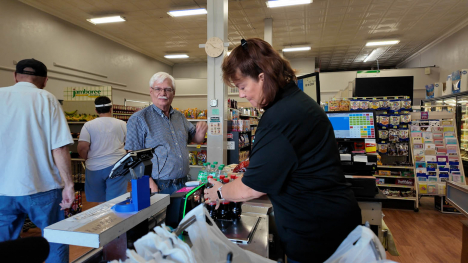
Facing closure, Gowrie's only grocery store was saved by 60 residents and $250,000.
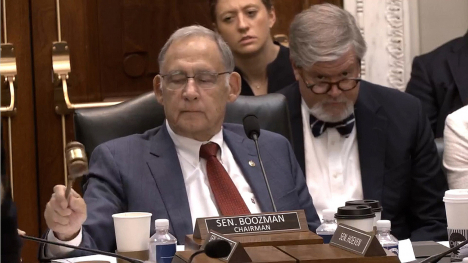
A battle over SNAP kept the Senate Farm Bill from advancing before August recess.
The weather’s influence on the market may be closing soon, according to Dan Hueber in Market Plus.