A seasonal rally is returning to the corn market according to Ted Seifried in our Market Analysis.
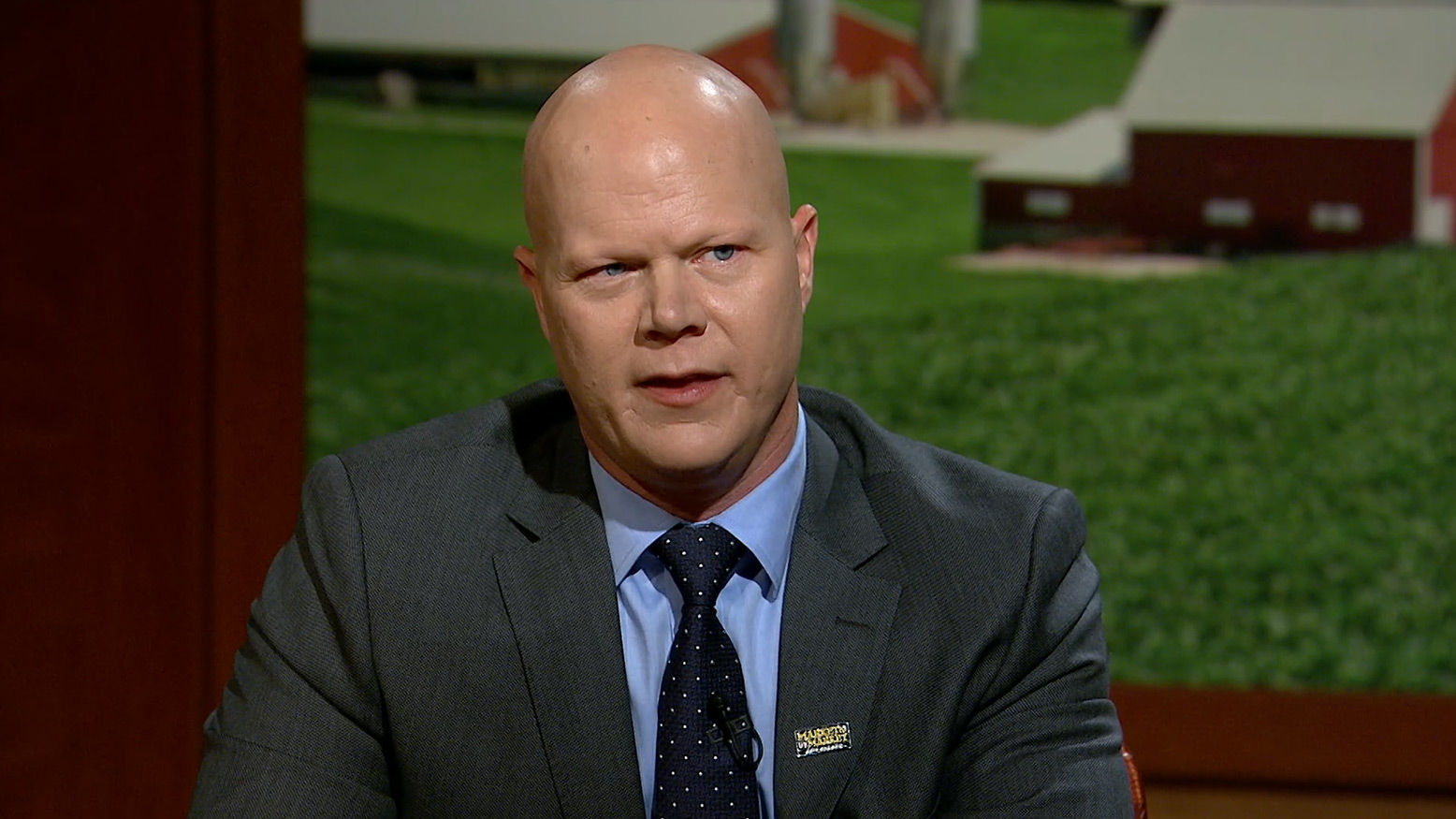


After a busy week in wheat, Ted Seifried thinks booking some sales would be smart. More in our Market Analysis.
Transcript
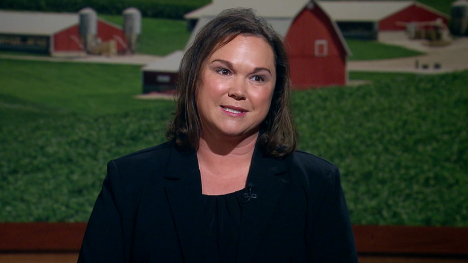
[Yeager] Extended dryness in the Wheat belt provided the fuel for a rally in grains, with corn getting a small bump in the final session for the week ending April 17th. The nearby wheat contract gained $0.20 and the May corn contract added $0.08. B oil gave and took away some rallies to the soy complex. The May soybean contract lost $0.09, while May meal was even on the weak. May cotton improved by $4.26 per hundredweight. May class three milk futures fell by $0.02. The livestock market was lower. June cattle shed 205 May. Feeders cut 735 and the June lean hog contract, weakened by a nickel in the currency markets, the US dollar index lost 75 ticks. May crude oil sold off nearly 15%, or 1442 per barrel. Comex gold added a $106.80 per ounce, and the Goldman Sachs Commodity Index was up by nearly 32 points to settle at seven 2795. Here now, to lend us his insight on these and other trends is regular market analyst Ted Seifried. Hello, sir.
[Ted Seifried] Hello, Paul. How are you?
[Yeager] Good to have you here.
[Seifried] Good to be here. Thanks for having me.
[Yeager] Wheat is always that thing we talk about first, and sometimes it's by necessity. That would be this week. Dryness continues. We've got this huge line in a certain area. Is that the main driver in the movement of wheat?
[Seifried] Yeah, I would say so. Right. Crop conditions are really bad. And anytime we have crop conditions really bad at this time of year, it usually has a negative impact and a pretty significant negative impact on yield. So that is certainly coming into play for wheat. Now we know that the underlying fundamentals for wheat are we've got a big supply here in this country. There's a lot of wheat in the world. But these are bearish fundamentals that have been known for a while. So, I'm going to say, Paul, that this is a case of less bearish fundamentals. I don't know if this is a case of wildly bullish fundamentals. Yes I do think we are hurting the production and what our overall wheat crop is going to be. But if you look at our balance sheet, we basically could go a whole year without growing wheat and still sustain our demand, the demand side of the balance sheet. So again, I think it is a less bearish outlook for wheat than what we were talking about a couple of months ago. That is mostly being driven by weather at the moment.
[Yeager] Is this enough momentum for or enough movement for someone to make some type of decision, whether it's a sale or a place of position somewhere?
[Seifried] Yeah. You know, certainly we are well off the lows and this is a much better value proposition than what it had been. So, I think making some sales here is pretty smart. That being said, you know, we had tried to break back to the downside again on a bit of an improved forecast. What at the time was a bit of an improved forecast, but then we've really snapped right back up. So, you look at this, this last month of trade or so, and it looks like a level of consolidation rather than a topping formation. So, I want to be measured in my sales for wheat. Right now. I look at the chart and I see some optimism there. And then I look over at the row crops. And I think corn in particular. Maybe we could get some help here in the relatively near future.
[Yeager] Help for corn.
[Seifried] Well, no corn help for wheat.
[Yeager] Corn help for wheat because that's what I was going to ask about. Corn is. So given what you just said, that doesn't sound like to give much reason. That's the reason maybe corn didn't move as high with wheat.
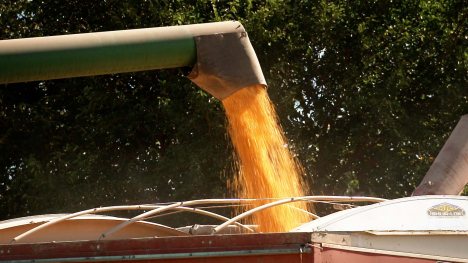
[Seifried] There's a couple of things that have been holding corn back. One is we had a 17-billion-bushel crop last year, according to the USDA, and there's a lot of bushels that we have to get through before we can get really excited about corn. We've had wonderful demand. But when you have a 17-billion-bushel crop, there's a lead time where we have to chew through that supply of corn. So that's part of it. Also, I think the fund's got a little bit too long, a little bit too early, and maybe for the wrong reasons, right. They got excited about the energy portion of corn based on the war in Iran and Strait of Hormuz being closed up and oh wow, energies are going through the roof. And while corn does have a significant portion of its balance sheet that is dedicated to energies in the form of ethanol, you cannot put raw corn kernels into a gas tank and run a car, right? There's a process that has to happen. Corn has to be ground into ethanol, just like soybeans have to be processed into soybean meal and oil. It's not something that you can go from one day to the next and say, oh, we're going to double our output of ethanol. It's just not a thing. And I think Wall Street's maybe realized that they've trimmed some of their bullish bets on corn. And I think this is now a much more healthy atmosphere or climate to maybe see a more seasonal rally for corn going into our planting season in the first half of our growing season. So, I like what's happened in corn. We've come back off the highs. I think we're set up for good things to come maybe going forward. I think the activity that we saw this week kind of feels like a bit of a bottom. The one potential monkey wrench that we have in this whole equation is South America. I mean it's always South America, but in particular, you look at what the recent estimates for Argentina have been coming from the Argentinian reporting agencies, namely the Rosario Grain Exchange and the Buenos Aires Grain Exchange. And oh boy, are they very aggressively increasing that Argentinian crop. Part of that is because they got better weather from about middle of February. February. On another part of that, Paul, is they're citing increased acreage about 4% higher than what they had originally thought, which, by the way, if that sounds familiar, you just have to go back to our last growing season to see that, how that happens. And that's wild. It's wild to me to think that that can happen in two of the major exporters in two consecutive crops where acreage is just so much bigger than what was originally expected. But either way, you know, you have the Buenos Aires grain exchange at 62 million metric tons as of their last estimate, which was earlier in the week. That's 10 million metric tons higher than the USDA. And you have the Rosario Grain Exchange at 67 million metric tons, 15 million metric tons higher than the USDA. And Argentina's is important because while they don't grow as much corn as Brazil, they are a very big exporter of corn, and they will be competition for us at the very tail end of our marketing year and going into the next.
[Yeager] Let's stay on South America then. But on the impact of soybeans and does any of what you just said impact us on beans or do we does beans have an independent story of South America right now?
[Seifried] Well, I'm going to say that the soybean yields for Argentina are better than they were expecting in, say, February. But unlike corn, where it saw a huge acreage increase, corn or soybeans were sort of the were at a loss for that. So, the estimates for soybeans are really staying the same from all their reporting agencies and ours for that matter. USDA. So, it's not really a soybean story. The soybean crop was good. It just isn't growing in massive levels like it is for corn. That will still be competition. The question, I think, for soybeans is more about the products. And what does Argentina do this year? Are they going to do another repeat of the soy dollar? Last year? They had very compelling reasons to do that politically. But if they like the results that they had last year, they may try to do that again this year. And if they do, that adds a lot to our products, that adds a lot to our crush margins. And yeah, I mean, look, crush margins have been very, very, very, very good for soybeans. Crush has been really rocking. And so yes, it could have an effect on our soybeans. But for the moment, I think we have to say this is not our export season for soybeans. Brazil just finished or Brazil now has this last crop, which it it's good. The Brazilians still think it's in the mid one 80s where we're hanging out at 180. From the USDA perspective, could be a little bit bigger than the USDA is thinking, is what I'm saying. And the Argentinian production numbers aren't falling, even though they're finding that they there was more corn acreage and maybe a little bit less bean acreage, but the yield is offsetting that for soybeans.
[Yeager] Let's move to livestock because Friday was a pretty a jarring day. And that was before report. A couple of reasons. There was. Well, you tell me why are the reasons on.
[Seifried] Yep, yep. Look, I think you had kind of a perfect storm for the second half of the week for the cattle complex. Right? One, we made a new high for June, June live cattle and then didn't really, you know, break out in a big way to the upside. So, when you have speculative traders funds that are very long in the cattle complex, they see that and they say, okay, this is a good place for us to maybe take profits. This is an overbought market. Let's take a little bit of profits here. Well, that rolled into Thursday. And on Thursday we were hearing that a Mexican official was saying that the USDA was making plans to reopen the border. And that put a lot of pressure on the cattle complex, especially feeder cattle. But then after the market on Thursday, you had a tweet from the USDA. It's amazing how we do all these all these things and tweet nowadays. Paulw or X. Yes, whatever posts, social media. How's that? There you go. By the way, you had the USDA refuting that saying, no, that's not a thing that was not accurate. So, then it was like, okay, well, how are markets going to respond on Friday? Are we going to completely take back the technical damage that was done on the rumor or the misspoken truth that happened on Thursday? And the answer to that was really not, at least not at first. We were down sharply. And I think that's the market saying, well, okay, USDA, but where there's smoke, there's fire and where there's concern or uncertainty, you have liquidation of positions. And in this case, with the funds being very, very long, that's long liquidation. So, you had funds kind of running for the doors just for the possibility that the USDA might, in fact, be looking at reopening that border sometime in the relatively near future, even though they're saying that they're not. However, also on Friday, you had Iran also on social media, Paul, saying that the Strait of Hormuz is open. They're happy with what's going on with Israel and Lebanon as far as the ceasefire is concerned. And you had crude oil down sharply, but you had equities up very sharply. You had the Dow up over 1000 points at one point. And by about midday, I think, in the cattle complex we said, well, okay. The USDA said they're not reopening the border. And even if they do, or even if they're considering it, that probably won't happen for a little bit. In the meantime, look at the equities markets. That's a big vote of confidence for consumer demand here domestically in the states. And so, you had those value buyers coming back into the cattle complex. And we ended up bouncing way off of our lows. So, a very volatile day started with a panic flush out, I think ended with some value buying based on, you know, what are still bullish fundamentals. And the cattle on feed report, which came after the close, also confirmed that.
[Yeager] In the final few seconds, I can say cattle on feed on feed 99 plus 93 fed 94. I'll get your take on those in Market Plus as well as your thoughts on the hog market and all of the other questions. Thank you Ted.
[Seifried] Hey. Thanks, Paul.
[Yeager] All right. Appreciate it. You have been watching the analysis portion of our program. And in a moment we will continue our discussion in an online only segment. Find it by searching Market Plus with Ted Seifried, wherever that you get your podcasts. You can also go to our website of markettomarket.org to listen. We've had a resurgence of discussions taking place on our Facebook page. When you get there, you'll find links to our content. And we notice that many of you have registered opinions on the news of the day as well. Join us at facebook.com Market to Market. So, remember to keep it civil, please next week, one egg producer is expanding his supply chain, one small farm at a time. Thank you so much for watching. Have a great week.
Trading in futures and options involves substantial risk. No warranty is given or implied by Iowa PBS or the analysts who appear on Market to Market. Past performance is not necessarily indicative of future results.
Watch More
Agriculture gets sorted to the side during high-stakes negotiations with China. The yeas have it - E15 is approved in the House but not without some pushback. Revving up fans, drivers, and rural communities on the dirt track. And, commodity market analysis with Naomi Blohm.
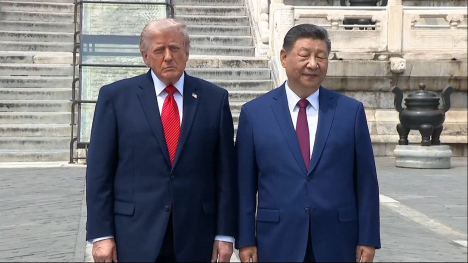
President Trump met with Chinese President Xi this week in a highly anticipated two-day summit.
Oil, fertilizer, and protein join the discussion for our Market Plus with Naomi Blohm along with corn, soybeans and weather.
One wet blanket hangs over the corn market in our Market Analysis with Naomi Blohm. We also cover cheese and soybean demand as part of the commodity story.
The U.S. House approved the sale of year-round E15. The bill now goes to the U.S. Senate.

Underneath the fun and excitement surrounding the rituals of dirt track racing at local speedways are the spinning wheels of economic good that smalltown race tracks bring to their communities.