The week brings no news from China. Wheat continues to struggle because of the Black Sea. Rainfall distribution hammers beans. All this and more in our Market Analysis with Arlan Suderman.
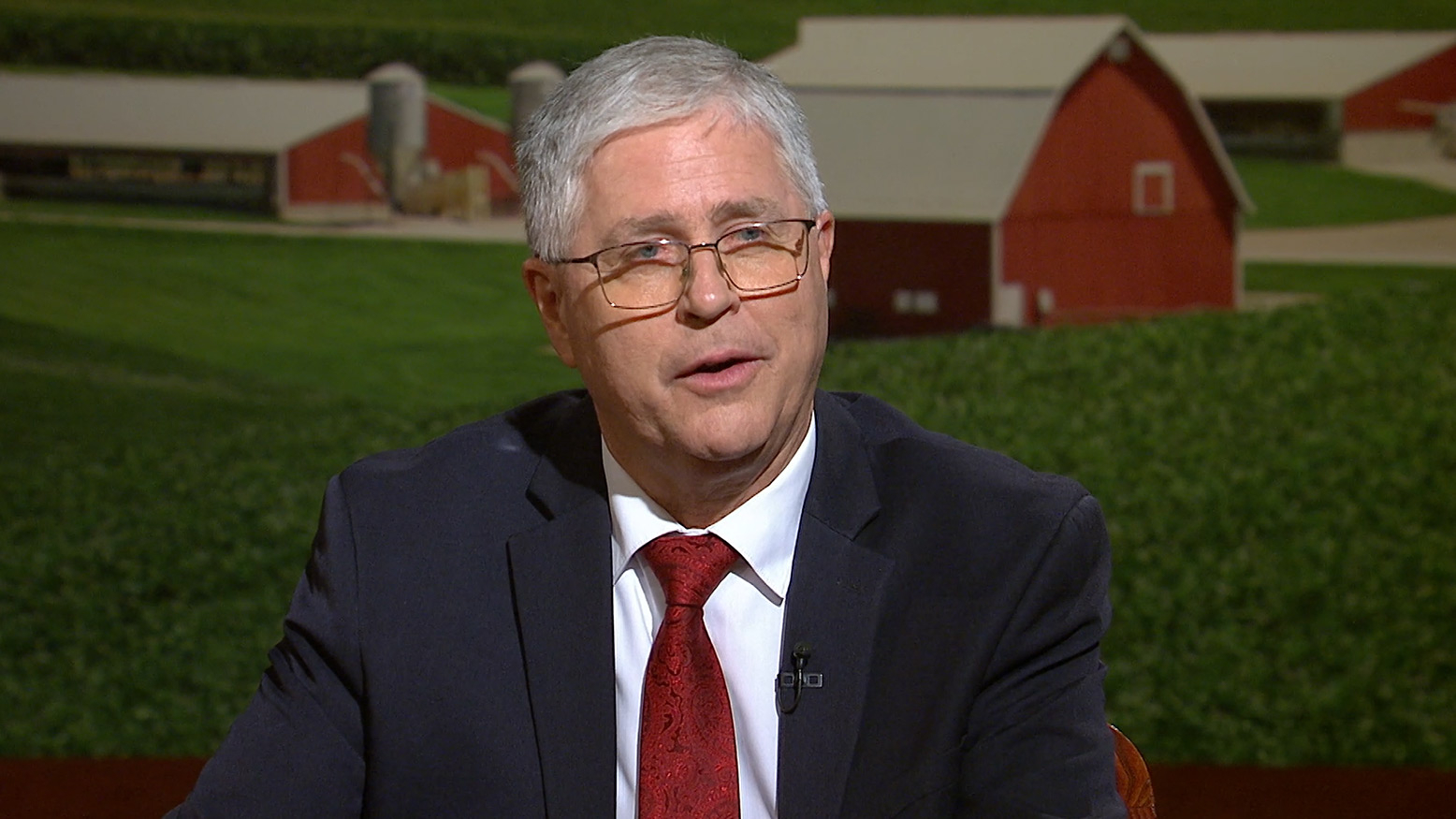
A summit summary, wheat limited by Black Sea news, and Market Analysis with Arlan Suderman
Share


The U.S./China summit leaves gives little details. Wheat prices continue to suffer because of the Black Sea. Rainfall distribution plagues soybeans. All of this and more in Market Analysis with Arlan Suderman and Mike Castle.
Transcript
[Paul Yeager] No news of a deal with China took the markets lower before promises of details Monday boosted the trade at week’s end.
For the trading week ending September 25.
The nearby wheat contract lost 11 cents and the December corn contract added a penny.
Meal kept a floor under the soy complex while trade negotiations took place in Washington.
The November soybean contract gained 16 cents, and December meal put on $12.40 per ton.
December cotton increased $1.58 per hundredweight.
October Class Three milk futures fell by 52 cents.
The livestock complex was mixed.
December cattle fell by $4.48. November feeders gained $13.98 and the December lean hog contract expanded by 48 cents.
In the currency markets, the U.S. dollar index found 85 points.
November crude oil sold off $3.69 per barrel.
COMEX gold expanded by $1.20 per ounce, and the Goldman Sachs Commodity Index was down just over 3 points to settle at 748 - 94.
Here now to lend us her insight on these and other trends is regular market analyst Arlan Suderman. Hello, sir.
[Arlan Suderman] Hello, Paul.
[Paul Yeager] This week really had one focus. Any other week it would have been the weather and how delayed we are with harvest. We'll get to that. What did the summit need to happen? Needed to be said to keep agriculture markets fed with information.
[Arlan Suderman] Well, they needed some type of details on commitments to purchase, and I think that was too high of an expectation. That's not the way these summits between Trump and XI work. Each time we've had a summit. No announcement in a couple days later, the White House releases something talking about what the agreement was. China never does confirm. That's the pattern that we've seen. But this is also the era of algorithmic computers, computers putting on orders. And I think we saw that play out on Friday pretty well. When the computers start selling momentum trading Algo's then pile on. But then the human traders bring it back and end users who are looking for an opportunity to buy a break. Got that break to buy and help bring us back.
[Paul Yeager] There's a couple of buy signals out there right now, but wheat, is it one of them?
[Arlan Suderman] Wheat is struggling because Black Sea. And the problem there is is even with the problems in the Black Sea, we are seeing countries look for alternative sources of wheat. Now, Egypt just announced that they were looking to diversify away from the Black Sea. But where are they going? There's several countries with cheaper wheat than the United States. They're going to first. We don't benefit until those other countries run out of wheat. Hopefully that will happen here before in the next third or fourth quarter of the marketing year.
[Paul Yeager] It's time to plant winter wheat. How much of that's going to happen? More than normal?
[Arlan Suderman] Yeah. Now that we're getting some rain in the plains, once that rain passes through, we should see a lot of wheat go in. We're looking for higher acreage this year. It's going to vary. Midwest to Plains depending on the rains, et cetera., but I'd look for anywhere from some regions 1 to 2% increase in some areas, 8 to 9% increases overall, maybe a 3 to 5% increase.
[Paul Yeager] On the drive North. Missouri to Iowa. Did you see much green at all? Any water in the fields? Anything?
[Arlan Suderman] Not today, because it wasn't the heavy rain. So the flooding wasn't occurring. We did still see some fields that had some green in them yet, particularly some soybeans that still had a little bit of green, but they're pretty much done now. We needed this rain earlier in the season, so rainfall wasn't a problem. It's the distribution of this season that was the problem.
[Paul Yeager] Put that agronomist hat back on there for me. For me, sir, what does a wet September mean to this crop in particular?
[Arlan Suderman] Well, it does slow it down. It doesn't help the yield that much. Except for the beans. It probably helped a little bigger bean size and beans that we actually could see the bean yield go up. On the other hand, we were drying the corn crop down nicely, maybe a little smaller seed size where we were doing that. But now the rains come in and now it's just, can we get it out before we start seeing the molds.
[Paul Yeager] So the mold is an issue. There's stocks issues, quality. Are you hearing any of that?
[Arlan Suderman] Hearing a little bit of it. We hear some every year. I think it's premature to say we have a big problem right now. The forecast models think that we're going to move all this out about the first full week of October. If we do that, I think we'll be relatively well on a national basis with just localized problems.
[Paul Yeager] How much of the action in Washington, D.C., do I need to pay attention with corn in the field, maybe corn in the bin, and plans for 27.
[Arlan Suderman] You always got to watch Washington, D.C.. I mean, policy is driving a lot, particularly the algos are doing it. And really the bigger factor is we have two wars going on in the world right now that are wars on commodity logistics, and money flow is figuring that out. And so they're looking for headlines that will support that. Despite what we saw happen this past week, they had built record long positions in corn and soybeans. And so they were looking for it's harvest time. And to hold something contra seasonally high at harvest time when they have record large positions, you got to have news, something fresh to feed the bulls. We haven't had that yet. Maybe we'll get it first of the week, but I still wouldn't be surprised if we see a more significant drop in corn. You know, a correction. Beans have the strongest story though.
[Paul Yeager] Well, the corn the March contract that's up there on the screen. We're at 565 50. Area 542 is where we printed on Friday. Still a really good price right now. Is there a percentage that should be sold or you're hearing people have sold on this ‘26 crop?
[Arlan Suderman] Well, the problem is the diesel corn ratio. And when it takes a, takes a bushel and a quarter to a bushel and a half to pay for a gallon of diesel, then that's a problem. And so particularly the irrigated guys who are running their irrigation systems on diesel, it's a real problem. So what I'm saying is, look at those deferred contracts. Six months ago, I was saying, look at your fall harvest. Diesel needs because we had such an inversion in the diesel market. Deferred contracts are much cheaper because the market thought this is going to get solved. Where are we now? Even higher prices. But we still have an inversion. But we have a carry in the grain prices. So look at that carry versus the inversion and the diesel. See what you can do for the margin in those deferred contracts. And see if you can work something out.
[Paul Yeager] I want to go back to something you said just a minute ago. Boyce in North Dakota is, I think, listening to what you're saying about the algorithms with the whole market on one side of the boat, is it still a good idea to be long, or might this be a good time to start quietly moving to the other side of the boat?
[Arlan Suderman] So we back up a week. Yeah. A week ago. Yeah, that's really the case. And that's what we saw this last week coming up on the Xi meeting summit. The funds record long positions. They're worried about a surprise. And so they're taking profits. Had they been really short it probably would have gone the other way. So we saw them pull back on that. Now being harvest time, we did some damage to the corn charts. I like the way we finished on Friday, but still we did some damage. It is harvest and if the rains do dry out in October and we get this crop in fast at that point, then I think we have some concerns in corn, but soybeans, there's a lot of end users going to be looking to buy the break in soybeans.
[Paul Yeager] So is there a break coming anywhere in soybeans soon?
[Arlan Suderman] Not I don't think there would be a very big break. And even in corn, I think we'll see export and even some domestic users buying a break, but they'll allow that break to come to them a little bit more because it's not as strong of immediate story in the corn side.
[Paul Yeager] In beans, you mentioned the the rain possibly adding to pods. So with the grain stocks report coming. There's always a tendency, whatever used to happen with reports is out the window. So I guess I'm not really asking you to predict what's going to happen Wednesday. But are we going to start to see some adjustment given what has happened here in the last month?
[Arlan Suderman] On stocks? Now, this would be old crop as of August 31st or September 1st. That's we'll finish out that year with this stocks report. Next thing to watch is the next day our new customer. Got a yield ahead of USDA's October 9th WASDE report. That'll be the next market mover.
[Paul Yeager] Oh I'd easily ask you to say but you want to stay employed real quickly on beans. Before we wrap up looking again, let's look to the deferred side. What are you hearing about people committing to sales in 27 or getting something down?
[Arlan Suderman] You never go broke selling at a profit. So if you see those margin opportunities, you from a business standpoint, you at least need to go somewhere. And I heard it said once, and I think it's very well don't use the Barney Fife marketing method where you think you have to use just one bullet scale into stuff, because we're in a world where one headline can kill the opportunities. So if you see some opportunities, have prepared ahead of time. So when you get that algorithmic headline driving things higher, that you're ready to take advantage of it and do it at that point and start scaling in.
[Paul Yeager] Live cattle market had a couple of headlines this week, one about lower kills, and then you had Ice raids start to percolate out there. What's that going to do to this market?
[Arlan Suderman] Yeah. And surprisingly, we firmed up a little bit on Friday anyway because of it. We are seeing really good demand for the rib cuts. The middle loins. That is helping support it. When you look at the B-50s beef 90, you're really struggling. Similar to the pork product market is really struggling as well, even worse. And we're importing a tremendous amount of beef. And probably one reason we're hurting in those prices. But that so far, we're able to keep pushing the cash price of cattle higher because of the loins. How high? I think what we're doing is we're finding that middle ground, that trading range right now in the cattle market, where if we go high, we increase the imports. If we go low, those imports start dropping and we're finding that value level.
[Paul Yeager] And I'm drawing a blank. If it was an economist or a representative said that the imports that were bringing in for ground beef haven't really contributed to lower prices for consumers yet. So that's weighing on the market as well. Feeder market wise, this is a pretty there's been a little opportunity to fill in some feed needs. Is that happening?
[Arlan Suderman] You really have. And when you have cheaper corn like we saw last week, this past week, that really helped the feeder market as well. We've got two openings now in the border with Mexico, slow going through, inspecting every animal. So that's not really materially contributing to supply yet. That kind of continues to slowly ramp up.
[Paul Yeager] Hog market report yesterday ended up being most likely viewed bullish. I think it was inventory was down 2%. So was that a bullish report.
[Arlan Suderman] Yeah it was supportive. The the pigs per litter was again higher. But the farrowing were down. And we've lost some of the incentive to feed to heavier weights. So now we're pulling the weights down. I think USDA is going to have to ratchet down their 2027 production numbers.
[Paul Yeager] Before we go fuel and diesel. Is there any help for anybody? Is there any policy that's going to save us right now?
[Arlan Suderman] Well, I think we'll probably see some action, whether good or bad. We'll see some action ahead of the election to limit exports of diesel. Probably not a ban, but a limitation closer to what level we were exporting before, because we produce more than what we consume in this country. And so we've always been exporters, but now we're exporting a lot more than that. So we'll probably try to pull it closer to that level so we can keep the refineries going to produce gasoline. So gas prices don't go higher. That'll probably be a temporary thing. We still have to settle things into Black Sea. I don't think we're anywhere close to that. We have to settle things in the Middle East. We may be a little bit closer to that, incrementally closer to that, at least on a temporary basis.
[Paul Yeager] Well, incrementally. We're out of time. Arlan, good to see you. Thank you so very much.
[Arlan Suderman] Thank you. Paul.
[Paul Yeager] Arlan Suderman, everyone. And you've been watching our market analysis. If you are watching online or on the PBS app, we are going to stay right here and continue this discussion in market. Plus, that's our online only segment. By the way, there's a little surprise coming in that find it wherever you get your podcasts or at Markettomarket.org to watch, listen, or read. Each Monday, we ship out some behind the scenes information on the program that you won't see anywhere else. Subscribe to the Market Insider newsletter so you're never the last to know. Subscribe on our home page of Market to Market dot next week. A story of Midwest cities growing. While some rural areas are left behind. Thank you so much for watching. Have a great week.
[MUSIC]
[Announcer] Market to market is a production of Iowa PBS, which is solely responsible for its content.
[MUSIC]
[Announcer] I wouldn't be here without my customers.
[Announcer] Yeah, I'd like to thank the customers there. They're very dear to our hearts.
[Announcer] It's about the people that you're working with and the relationships that you have.
[Announcer] Thank you, thank you, thank you.
[Announcer] Thank you from the bottom of my heart.
[Announcer] Support for Market to Market has been provided by a bequest from Philip Leeds of Alta, Iowa, in recognition of public television's commitment to agricultural programing.
[Announcer] Market to market is made possible in part by a grant from the Corporation for Public Broadcasting.
Trading in futures and options involves substantial risk. No warranty is given or implied by Iowa PBS or the analysts who appear on Market to Market. Past performance is not necessarily indicative of future results.
Watch More
Passing a dairy farm on to the next generation can be hard, but two operations in Wisconsin are making it work for each of their own styles.
Rain distribution affects beans and uncertain times make end users reluctant to stick necks out.
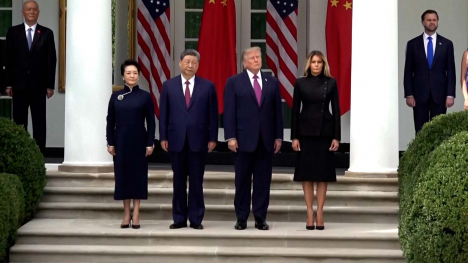
President Trump hosted President XI in Washington, DC., but the news for agriculture was only a 60-day extension of the tariff rollback.
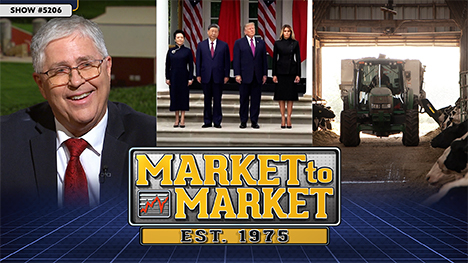
China trade talks, harvest delays, corn demand and Wisconsin dairies plan for the next generation.
The recent return to higher commodity prices has helped keep the farmland and cash rent market strong.
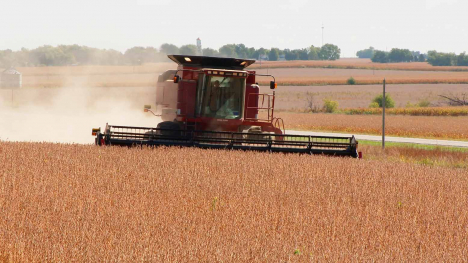
The bill advances 12–11 as lawmakers remain divided over SNAP provisions.