If everything goes according to plan, the reduction in GHGs is expected to hold worldwide temperatures at 1.5 degrees Celsius over pre-industrial levels.


If everything goes according to plan, the reduction in GHGs is expected to hold worldwide temperatures at 1.5 degrees Celsius over pre-industrial levels.
Transcript
If everything goes according to plan, the reduction in GHGs is expected to hold worldwide temperatures at 1.5 degrees Celsius over pre-industrial levels.
Developed and developing nations have joined together over the last 28 years to sign non-binding agreements with the promise to hold the line on activities that could raise the planet’s temperature. Enforcement of the policies is largely based on peer-pressure among nations.
Despite critics who say there has yet to be ambitious action, the assembled nations are working on ways to reduce the amount of greenhouse gas emissions in the agricultural arena. As a way to codify the idea, representatives from 140 nations have signed on what is being called the Declaration on Sustainable Agriculture, Resilient Food Systems and Climate Action. The signatories include the world’s top three emitters of GHGs - the U.S., the European Union countries and China.
With the goal of achieving new policies by 2025, the declaration includes public support to promote an increase in income, reduce greenhouse gas emissions, and bolster productivity, livelihoods and nutrition.
Behind the declaration is $2.5 billion in aid to help farmers make the transition to more sustainable, climate friendly agricultural practices.
Elizabeth Nsimadala - President, East Africa Farmers Federation: “We need to make sure that adaptation remains prominent in the outcome of COP 28. We need to make sure that agriculture targets are included in the global goal for adaptation”.
H.E Mariam Almheiri, Minister of Climate Change - UAE: “This is truly is a historic moment for food systems and will really raise the profile of agriculture and climate in all these respective countries.”
The United States government is focused on promoting Climate Smart Agriculture to help reduce greenhouse gas emissions and feed a hungry planet.
Secretary Antony Blinken, U.S. Department of State: “We’re also working with partners to rethink what, where, and how we produce food, in the context of a changing planet. Our goal is for farmers, for ranchers, to be able to sustainably achieve bigger yields of more nutritious crops, at lower costs, using less land, producing lower emissions.”
For Market to Market, I’m David Miller.
Watch More
Sugarbeet losses, diesel costs, Montana’s feral horses and market analysis with Shawn Hackett.
Shawn Hackett weighs storing corn versus selling soybeans and Brazil’s potential weather risks.

Montana residents balance affection for free-roaming horses with safety and property concerns.
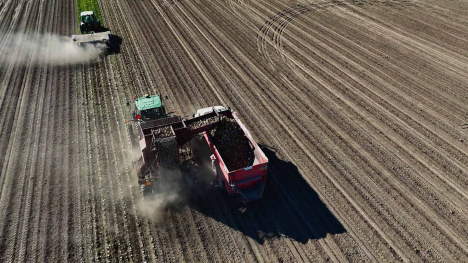
A growers association reports average losses of $500 per acre as sugarbeet harvest gets underway.
Shawn Hackett weighs corn demand, USDA yields and potential November turning points for grains.

Global supply disruptions keep fertilizer markets volatile heading into 2027.