Sue Martin discusses the latest trade deal with China along with corn, soybeans, cattle and hogs in our Market Analysis.
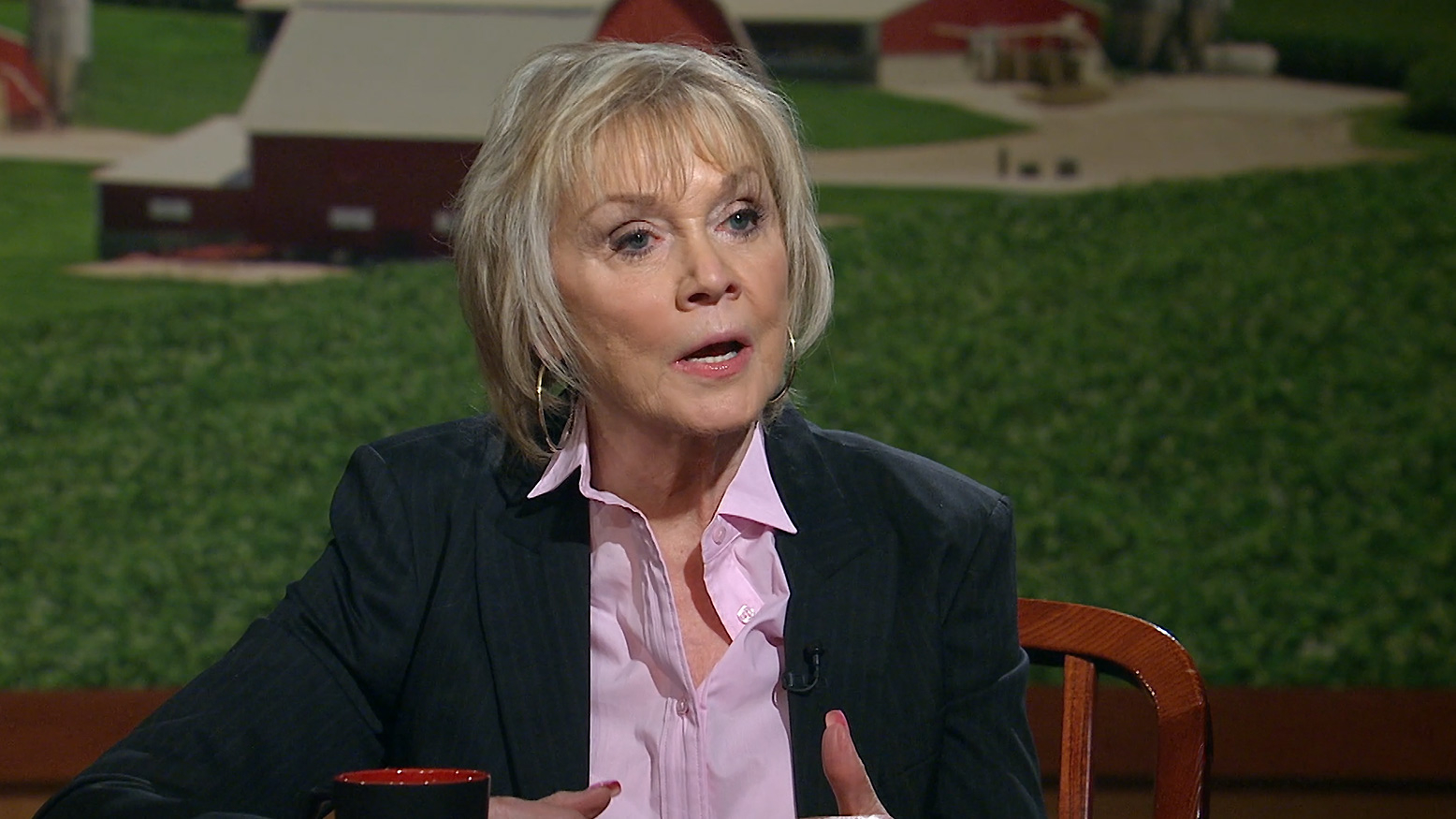


Markets hate uncertainty, and Sue Martin thinks sales to “Unknown Destinations” only cloud the picture. In the wake of this month's Cattle on Feed report, Sue has some insight on how placements might be bearish for feeders.
Transcript
[Kohlsdorf] The market has been suffering from trade deal anxiety. The White House says yes there is a deal. But China's failure to provide any details is weighing on the trade for the week ending May 22nd, the nearby wheat contract added $0.11 and the July corn contract went $0.08 higher. Good weather and uncertainty over China was coupled with the continued potential for a flare up in Iran. The July soybean contract rose $0.20, while July meal declined $2.40 per ton. July cotton weakened by $2.99 per hundredweight. June Class three milk futures contracted $0.47. The livestock market was down August cattle cut $8.55. August feeders shed $11.27. And the July Lean Hog contract fell $2.95. In the currency markets, the U.S. Dollar index was even. July. Crude oil dropped $4.76 per barrel. Comex gold declined $44.30 per ounce, and the Goldman Sachs Commodity Index was lower by more than 14 points to settle at 736 20. And here now, to lend us her insight on these and other trends, is our senior market analyst, Sue Martin. Hi, Sue.
[Sue Martin] Hi there.
[Kohlsdorf] Yeah. Thanks for being with us. So again, no shortage of headlines this week. We've got a lot of things to talk about. So of course, the trade deal with China, President Trump's trip there last week and then the war in Iran and a possible deal with them. Are those the two headlines that have weighed on the markets and the wheat market in particular, as we begin with wheat?
[Martin] I think with wheat, it's been those along with the weather. And of course, there's been some rains that have come through hard red winter wheat areas, but not enough to really take care of the situation. The wheat is far enough along heading towards harvest yields that I've heard so far out of Oklahoma have actually come in a little bit. Well, very disappointing. And of course, higher in protein, which is a sign of poorer quality wheat. But then it's the soft red wheat that is enduring with too much rain, or will be, if we continue to see it continue. And that's not good either. You know, it could give us Fusarium and some concerns. And so, I think that when I look at the wheat market, we've had a good rally on the hot, dry weather that we've had and the conditions. And, you know, the wheat quality tour that went through Kansas. So, I think if you want to be long, you're already there. So, the markets seem to like a catch your breath moment. We're heading towards harvest. Usually as you get into the latter part of May, all the way into the middle of June, you're into what would seasonally be kind of a downtime just because of harvest pressure starting.
[Kohlsdorf] Okay. What about corn? What's pulling the corn market down this week?
[Martin] Well, I think that for corn, you know, it's I believe that in the corn market, the uncertainty of trade, there's been some thought and I'm a big fan of that thought that China has been buying U.S. Corn. I believe they've been buying it for seven months. And, you know, an example, of course, last year's crop for China was not the best. It was poor quality, horrible drought at to start with. Then it ended up in floods. When you're trying to harvest it. And it was so bad that the government had to help farmers get it out of the fields. Wheat was under the similar condition. And then we note that they have a very vibrant hog industry, much to the disdain of the government. They wanted it to shrink. And it's maybe shrink a little bit, but not enough. The conglomerate's expanded while the little guy kind of got out. And so, they've got plentiful supply of mouths to feed for soymeal. And so, I think that when you look at the corn market, for seven months, we've had sales announced to unknown destinations up until this past week and a week ago, the sales started to split between old crop and new crop. Otherwise, all the other sales were, oh, crop sales in corn going to unknown destinations. Now large sales go to Mexico, Japan and South Korea, but you don't see them tend to use unknown destinations. An example this week we had export sales on Thursday that showed an unknown destination switch to China on sorghum. It just shows their character. They like to be ambiguous, I guess is, so to speak. They realize that they're like the big elephant in the room. And if that news was to get out that they're buying corn, which is relatively reasonable in price, I think that they think, oh, we're going to have a problem and the price will go up psychologically and rally and, oh, crop corn. A year ago, the high was 521 basis of July contract. We haven't been able to get over four 87.5. So, the market's got room to rally. If that news comes out. One more thing on wheat. We're finding that the U.S. Wheat price is higher priced versus global markets, especially out of the EU. And Ukraine or the Black Sea. And so, we're seeing Russian wheat and also European Union wheat make it into Mexico if it's priced better for them to send into Mexico.
[Kohlsdorf] So that's not good news for us for wheat. So back to the corn market. What's it going to take outside of China continuing to possibly be buying corn to give us a little bit of a rally or to get a boost in the market?
[Martin] Well, it's interesting because we are in a year of a six, and I'm a big believer of patterning in markets and in like ending numbers of a year. Over time, they tend to have a pattern more times than not. So, since 1916, 11 years of a six ending in a six, I would say one of them was in May. That would put the high in for the year for any lead contract. And that was in the year of 1986. Then we had a year where we had a high in June 1st year, and that was 2016. We had three years with the high in July, two years in August, two years in September, and two years in December, which does show a tendency. Nine out of those 11 years that we do have. Your traditional fall break. But and I think we're looking at something like that again now because we're looking for some transparency. Markets don't like uncertainty or ambiguousness or whatever you want to call it, but I'm wondering because they're talking about $17 billion in ag markets, you know, other than soybeans. It makes me wonder if China said to them, okay, we'll spend $17 billion for 26, 27, 27, 28 and 28, 29. And maybe this year it'll be corn and poultry. Maybe next year it's something else. But so maybe that is why they're not giving us the particulars that this market really needs to hear. And I wish they would try to define it better. China's not going to give us anything as far as news, because then they'd be on the losing side of prices going higher. So, I think that's my thought or perception. But on the same token, for corn, we've gone into the crop coming into next week. On Tuesday, we should see the downhill slide on the planting progress. We should be pretty much nearing done. And so that'll be complete. Then in, I think another week, we start looking at conditions. And then I think the market's going to say, okay, the crops planted. Now what. And I think the focus is going to shift to weather.
[Kohlsdorf] Okay. Weather. Well with beans I want to take a social media question because it has to do with what's happening in Iran. So, Andy in Iowa is asking, could the closing of the Strait of Hormuz put a long-term slowdown on the acreage expansion in Brazil, or is this just a small speed bump? And acreage will keep growing once the state reopens?
[Martin] I think in Brazil they're already talking that we're going to see acres this year. Step back. And of course, Brazil's making some alterations as to where they look to sell beans and what have you as well. But I think over time they've had a pretty good progression of or expansion of acres. But with the Strait of Hormuz. Be it, it opens, let's say it does the price of crude oil and input costs aren't going to go down just this past. Entity of producing, you know, phosphorus phosphate, urea, whatever inputs. And they're talking about cutting production by half. And that's not going to cheapen the price any. And so, I believe, and we keep hearing this too, around the world, other countries talking about production going down, be it wheat, corn, soybeans. So, I think we're looking at a situation that because it takes time to get them back up and running and get that fuel back out flowing, I think we're going to still see prices go higher. And of course, I'm tremendously bullish. Crude oil, it may take time, but I think next year we're going to see some very high prices in.
[Kohlsdorf] Crude. Okay. And I wonder if the grains will follow. We have to get on to the meats. There was a cattle on feed report today. Was there anything in it you had a chance to look at it that stood out to you.
[Martin] Well, it was you know, it was already anticipated to be bearish. You know, the average trade guess for on feed was actually 101.6. And it came out at 102. So just a little over that. Then the placements number was guessed at 101.6 or excuse me, 104.6. And it came out at 106. So that's probably the bearish most bearish part of it. And then marketings they were expecting Marketings to be around 90.6. And it came out at 90. So, it had a bearish tone. It was expected to be bearish but it even was a little bit more.
[Kohlsdorf] Okay. Was there anything else that you wanted to talk about with cattle. They had kind of a it came down a little bit this week, right? The market did.
[Martin] So we've had just to give you an idea since the 1st of May, which was our highest price in feeder cattle, August feeder cattle. We have broke over $34 to Friday's low. In fact, it might have even been in excess of that. So, we've had a healthy break. The cash market held around 260, and that's a little disappointing, I think, for the cash market. Still pretty good. And so, we encourage producers keep your cattle moving, get them gone. Don't try to keep adding a lot more weight because this clock is ticking. Yeah, we feel that the yield fours are showing up pretty abundantly. And they may be always have been there. And it's just now getting talked about. But cattle are weighing heavy. And now we're seeing heifers coming back to the marketplace on feed because of the fact of too dry in cattle cat cow calf country.
[Kohlsdorf] Yeah, we've been hearing that. Okay. Unfortunately, we've run out of time. We'll talk about some other things in Market Plus though we didn't get to hogs and a lot of other things as well. So, thank you.
[Martin] Thank you Brooke.
[Kohlsdorf] All right. You've been watching the analysis portion of our program, and in a moment we will continue our discussion in an online only segment. You can find it by searching Market Plus with Sue Martin. Wherever you get your podcast. You can also go to our website of Markettomarket.org to listen. If you're working in the field or in the garden, take us along to stay connected. We have three listening options to add to a walk, a field work, or a run to the co-op. You can check out the market analysis, Market Plus and M to M podcast wherever you get your podcasts. All right, next week we look at the battle blueberry growers face after harvest. Thanks for watching.
Trading in futures and options involves substantial risk. No warranty is given or implied by Iowa PBS or the analysts who appear on Market to Market. Past performance is not necessarily indicative of future results.
Watch More
An expanded response to the spread of the screwworm. Indoor farming looks to survive the hype and harvest profits. And, commodity market analysis with Mark Gold.
We get to the China and weather story, but first our Market Plus with Mark Gold includes a special thank you in addition to thoughts on corn, soybeans and wheat.
The wheat, corn and soybean market struggle while cattle and feeders find footing. Here's our Market Analysis with Mark Gold.
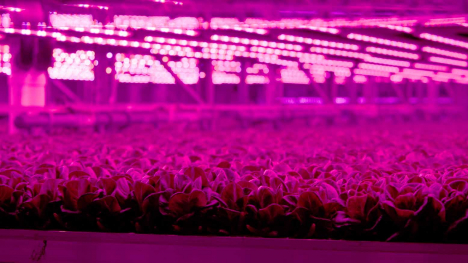
Indoor farm limits variables to maximize yields as we profile 80 Acres Farms in Ohio.
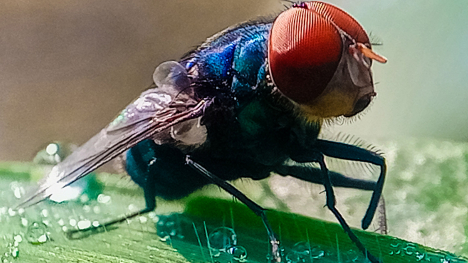
Secretary of Agriculture Brooke Rollins appeared before the Senate Agriculture Committee and the big topic was NWS.
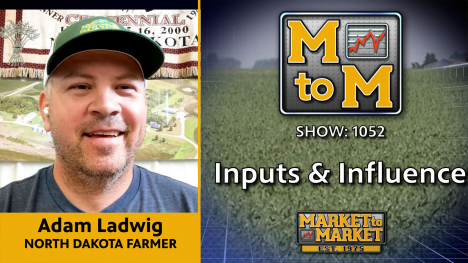
Fertilizer helps grow the food that fills grocery store shelves, and concerns about competition in the fertilizer industry are now drawing attention from federal regulators. North Dakota farmer Adam Ladwig was part of a group asking questions about pricing, consolidation and transparency in one of agriculture's most important industries.