Professional loggers would like Midwest farmers to glance up from their fields to what they see as an overlooked resource.


Professional loggers would like Midwest farmers to glance up from their fields to what they see as an overlooked resource.
Transcript
Cole Spurgin/Moravia Hardwoods LLC: “Timber is like any kind of crop – corn or beans – it just has a lot longer life cycle than a year-to-year crop.”
Professional loggers would like Midwest farmers to glance up from their fields to what they see as an overlooked resource.
Cole Spurgin/Moravia Hardwoods LLC: “The best advice I can give a landowner is, if they have a current or growing timber stand, don’t just put it on the backburner.”
Cole Spurgin procures logs and timber for his southern Iowa family business, Moravia Hardwoods – in operation since 1968. He harvests several species, like oak, cottonwood and cherry, but says Iowa, Missouri and surrounding states’ crown jewel is high quality black walnut, which accounts for 10 percent of global lumber exports.
Cole Spurgin/Moravia Hardwoods LLC: “We’re after the trees that have very few limbs on them, because we are using them for grade lumber, flooring lumber, stuff like that. So we don’t want knots and defects.”
USDA analysis reveals U.S. hardwood exports have more than doubled over the past 30 years – cracking over $1 billion in annual revenue.
Spurgin says demand surged during the height of COVID, driving lumber prices the highest he’d ever seen – and they haven’t snapped back to pre-pandemic levels.
Cole Spurgin/Moravia Hardwoods LLC: “It’s rotten in the center of it. There’s an evident hole there that that tree is dying. On its way out, there’s a big tree somewhere suffocating it.”
Spurgin says the industry is selective and sustainable…
Cole Spurgin/Moravia Hardwoods LLC: “Livestock are very hard on trees. Stumpworm showing there.”
…though if it’s invasive species or weather, loggers will always battle Mother Nature. Key, he adds, is proper management, to help tree stands grow faster and realize potential profit sooner.
Cole Spurgin/Moravia Hardwoods LLC: “Step into your timber, and every so often, harvest the large, mature trees that are ready to come out to give room for the littler trees to grow.”
According to Iowa State University Extension and Outreach, some 3 million of Iowa’s total 26 million acres of cropland are forests – with 85 percent under private ownership.
Greg Heidebrink/District 2 Forester/Iowa Department of Natural Resources: “That’s where we come in, to help private landowners manage their woodlands.”
Iowa Department of Natural Resources District Forester Greg Heidebrink gives recommendations for habitat, hunting ground and recreation. He also marks timber sales and helps coordinate equitable transactions between sellers and loggers like Spurgin.
Greg Heidebrink/District 2 Forester/Iowa Department of Natural Resources: “We have, quite honestly, some of the best loggers in the world in the state of Iowa. But you, as a landowner, have to understand that that logger’s job is to buy your very best trees for as little as they possibly can. That’s business. I compare that to me going to the sales barn to buy cattle. If I’m at the sales barn and there’s nobody else in the seats, I’m probably not going to stop the sale and say: ‘I’m not paying enough for these cows.’ Well, that’s what a logger’s job is. So it’s up to you to get somebody on your side. Whether that’s a private consultant, or it’s a district forester, to help you through that process. And try to bid those trees out so you have some competition.”
Officials say Iowa was a sawmill mecca during the second half of the 19th century. One-third of the nation’s lumber supply, log-harvested from old growth forests in Minnesota and Wisconsin, traveled by river and rail to sawmills on the Mississippi River before recession and deforestation doomed the region for generations. But modern sustainable forestry practices rose from the ashes.
Greg Heidebrink/District 2 Forester/Iowa Department of Natural Resources: “I’m standing in a clear cut that was done in the early ‘80s. So if we look around, we have some fantastic trees coming.”
Heidebrink says state forestry and all associated ties are worth around $5 billion to Iowa’s economy. Value-added endeavors have helped push the envelope.
Mike Paul/Swan Creek Cabinetry/Boone, Iowa: “Our company starts with the lumber that we receive from a primary sawmill, dry kiln operator, and we start by ripping it up into strips that we further cut to length and machine and try to turn into a finished product. It’s just a very different scale of equipment and a lot more fine…You know, a logger might measure to the foot, a cabinetmaker might measure to the /64th.”
Mike Paul founded Boone-based Swan Creek Cabinet Company, fresh out of high school, nearly 35 years ago. He grew up in the sawmill business, grading and stacking lumber. While his primary market is residential kitchen cabinetry, with all parts manufactured at his shop, business to business manufactured components and moldings account for a quarter of sales.
Mike Paul/Swan Creek Cabinetry/Boone, Iowa: “We buy hickory. We buy walnut. We buy cherry. The quality of Iowa hardwoods is very good. The primary manufacturers in the state…there are several very, very good ones…It’s a great resource and it's very local. Our two main suppliers are within two hours of here, so it makes freight, inbound, very workable as well.”
Though Paul successfully navigated his operation through COVID, he says labor shortages and unprecedented inflationary pressures have bloated his backlog from 90 days to 6 months. He’s hopeful plywood costs will drop and clear the way for more help tackling projects.
Mike Paul/Swan Creek Cabinetry/Boone, Iowa: “There’s a lot of relevance in being able to take wood, a natural resource, and turn it into something that someone can use.”
As rural America eases the lingering sting of the coronavirus, unknowns remain, but optimism is in heavy supply. Producers work to fill supply lines with various raw commodities and finished products, and stewards remind timber landowners of the crucial link between conservation and commerce.
Greg Heidebrink/District 2 Forester/Iowa Department of Natural Resources: “We really encourage them to put a plan together. That plan is so important. It’s your road map to successful forest management. It’s that follow-up work that is so important - making sure that we have good trees coming.”
For Market to Market, I’m Josh Buettner.
Watch More
Farmers rarely seek mental health help. Farm Dog offers care from people who know farm life.
Sue Martin examines grain stocks, harvest risks, soybean demand, energy costs and livestock markets.

Rising diesel and freight costs squeeze farm margins and could reshape plans for the 2027 crop.
Trade frustration is muting the weather rally, according to Sue Martin in our Market Plus segment.
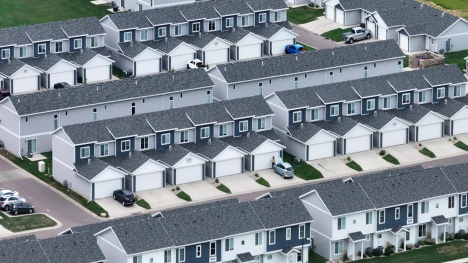
Midwest population growth brings opportunities near cities, while remote farm towns lose residents.
Wet fields threaten harvest delays, diesel raises farm costs and rural population growth is uneven.