This week, business leaders, top politicians and political activists gathered at the World Economic Forum's annual meeting in Davos, Switzerland.
World Leaders in Business, Politics and Activism Meet in Davos, Switzerland
Share


This week, business leaders, top politicians and political activists gathered at the World Economic Forum's annual meeting in Davos, Switzerland. Among the topics of discussion were finding ways to balance climate change with preserving the planet’s natural resources while promoting economic development and feeding a hungry world.
Transcript
This week, business leaders, top politicians and political activists gathered at the World Economic Forum's annual meeting in Davos, Switzerland. Among the topics of discussion were finding ways to balance climate change with preserving the planet’s natural resources while promoting economic development and feeding a hungry world.
Last year, the U.S. launched a food initiative called the Vision for Adapted Crops and Soils. At this year’s enclave, U.S. Secretary of State Antony Blinken spoke about the program that includes a partnership with the African Union and the United Nations Food and Agriculture Organization.
Sec. Antony Blinken, United States Department of State: “First, we’re investing above ground, identifying the indigenous African crops that are most nutritious and most resilient to climate change, improving these varieties, delivering them to the world. At the same time, we're investing below ground, mapping, conserving, building healthy soils.“
There were also discussions about how to balance economic development and preservation of the Amazon rainforest. Gustavo Petro, President of Colombia, laid out what he believed was needed to keep the environment from going past the point of no return in his country.
President Gustavo Petro, Colombia: "We need a flow of approximately $2.5 billion dollars per year. In order to revitalize the already deforested area and to maintain over the years the construction of a bioeconomy, that is, an economy with the forest and not against the forest."
Silva Marina, Brazil’s Minister of Environment and Climate Change reiterated the need to combat inequality with sustainable food and renewable fuels.
Silva Marina, Minister of Environment and Climate Change - Brazil: "The big challenge is how we are going to make sure that all these comparative advantages that Brazil has can be increasingly transformed into advantages, I don’t know if that word exists, instead of competitive advantages that are distributive advantages, so that we can make Brazil, which may be a model of low-carbon agriculture, a major supplier of food."
For Market to Market, I’m David Miller.
Watch More
A growers association reports average losses of $500 per acre as sugarbeet harvest gets underway.
Shawn Hackett weighs corn demand, USDA yields and potential November turning points for grains.
Sugarbeet losses, diesel costs, Montana’s feral horses and market analysis with Shawn Hackett.
Shawn Hackett weighs storing corn versus selling soybeans and Brazil’s potential weather risks.
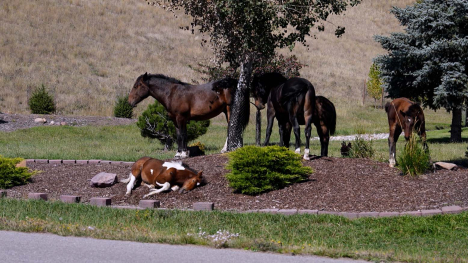
Montana residents balance affection for free-roaming horses with safety and property concerns.

Global supply disruptions keep fertilizer markets volatile heading into 2027.