The United Nations annual climate conference was held this week.


The United Nations annual climate conference was held this week, with countries noting their progress in reducing the carbon emissions released by human activity that are believed to be amplifying climate change.
Transcript
The United Nations annual climate conference was held this week, with countries noting their progress in reducing the carbon emissions released by human activity that are believed to be amplifying climate change.
John Podesta, U.S. Climate envoy: "That's why President Biden and Vice President Harris have marshaled unprecedented climate resources over the past four years because of historic private sector investments made possible by the Inflation Reduction Act. The United States economy will continue down the path of decarbonization, reducing emissions for years to come, and we are on track to meet President Biden's ambitious international public finance commitment of $11 billion per year by the end of 2024."
But some participants complained that their nations were bearing the brunt of climate change accelerated by wealthier economies. Others charged that more can be done to bring green technologies to developing economies.
Sec. Musalia Mudavadi, Prime Cabinet Secretary, Kenya: "The world is setting new records in renewable energy deployment, leaving Africa behind. Our continent accounted for just 0.5% last year. So if we are to translate our ambition, commitment and vision to impact on the ground, we must look for innovative solutions that can help drive new capital into green industries, create jobs for our youth and strengthen Africa's infrastructure for the next level of growth."
Scientists who track carbon emissions reported this week that the world population is on track to put more carbon into the atmosphere than last year, but the rate of increase has slowed compared to 2023.
The world’s carbon emissions are double the amount measured in 1974, and 50 percent higher than 1999. Carbon emissions from the United States have declined over the last decade, driven by reductions in the use of coal.
Negotiators are wrestling over multiple options that nations can pledge to meet over the coming years, but any agreement that is reached is non-binding and holds no enforcement mechanism.
For Market to Market, I’m Peter Tubbs.
Watch More
Shawn Hackett weighs corn demand, USDA yields and potential November turning points for grains.

Sugarbeet losses, diesel costs, Montana’s feral horses and market analysis with Shawn Hackett.
Shawn Hackett weighs storing corn versus selling soybeans and Brazil’s potential weather risks.

Montana residents balance affection for free-roaming horses with safety and property concerns.
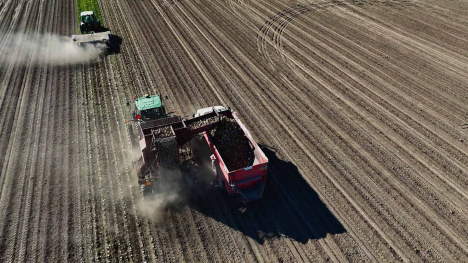
A growers association reports average losses of $500 per acre as sugarbeet harvest gets underway.

Global supply disruptions keep fertilizer markets volatile heading into 2027.