Hundreds of farmers gathered in Brookland, Arkansas last week as producers told congressional staffers about a combination of a bumper crop, disappearing export markets and higher input costs for items like fertilizer due to higher import tariffs.


Hundreds of farmers gathered in Brookland, Arkansas last week as producers told congressional staffers about a combination of a bumper crop, disappearing export markets and higher input costs for items like fertilizer due to higher import tariffs.
Transcript
Hundreds of farmers gathered in Brookland, Arkansas last week as producers told congressional staffers about a combination of a bumper crop, disappearing export markets and higher input costs for items like fertilizer due to higher import tariffs.
As reported by KATV in Little Rock, the group also stopped for a prayer.
Main Street USA businesses centered on agriculture have experienced fewer sales as farmers look to cut costs wherever possible.
Dr. Ryan Loy, Assistant Professor Extension Economist, University of Arkansas: “what's going on right now is, is a is really not due at all, to poor money management on a farmers part, right. They do everything marketing, they cut costs, they handle everything. And they've got things pretty, pretty sewed up tight and solid. But there's these outside market factors that are occurring right now that just makes it very difficult for them.
Dr. Ryan Loy, Assistant Professor and Extension Economist at the University of Arkansas says these challenges are heightened as rice and soybean exports have dropped in the last year.
Dr. Ryan Loy, Assistant Professor Extension Economist, University of Arkansas: “I think that the China ship, in terms and physically, metaphorically has really sailed, overall. And I think that this has been a slow, shift since 2018, since the first trade war, if you think about it from a purely a business perspective. Right. If I'm China and commodities are on the whole not saying that they actually are, but if commodities are all the same, I have a better relationship with Brazil and I can get it cheaper.”
With half of U.S. soybeans exported, this leaves all U.S. farmers, including those in the Razorback State turning to the federal government for aid in the same manner as it with payments in 2018 and 2019 that totaled nearly $23 billion. USDA forecasts agricultural exports to China to be $9 billion next year, down from a peak of $36 billion 2022.
Dr. Ryan Loy, Assistant Professor Extension Economist, University of Arkansas: “If the policy is isolationism and we are going to tariff everybody, well, they, they can retaliate. And unfortunately the pawn in that is going to be the farmer. Right. They're going to be the first ones attacked because that's the easiest. That's kind of the Achilles heel. And so really they're asking for immediate support to get to 2026.
For Market to Market, I’m Colleen Krantz.
Watch More
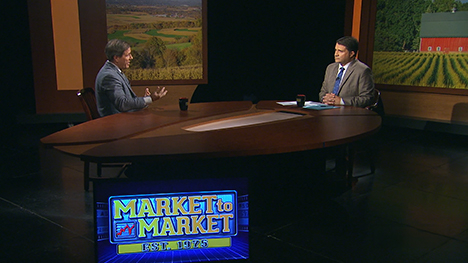
Shawn Hackett weighs storing corn versus selling soybeans and Brazil’s potential weather risks.

Montana residents balance affection for free-roaming horses with safety and property concerns.
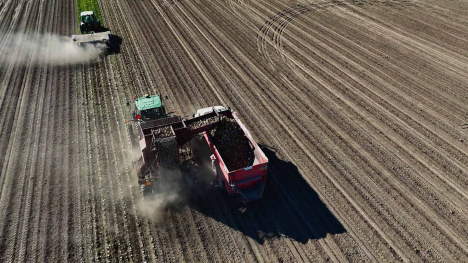
A growers association reports average losses of $500 per acre as sugarbeet harvest gets underway.
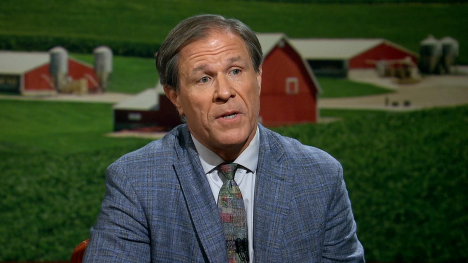
Shawn Hackett weighs corn demand, USDA yields and potential November turning points for grains.
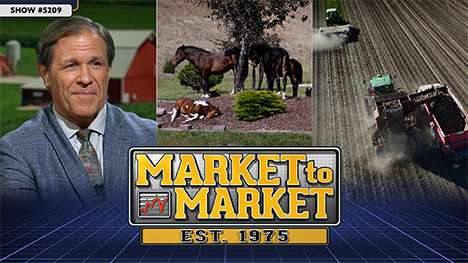
Sugarbeet losses, diesel costs, Montana’s feral horses and market analysis with Shawn Hackett.

Global supply disruptions keep fertilizer markets volatile heading into 2027.