A nematode is having success in reducing root worm in corn fields across the country. Persistent BioControl is a new company that expanded acres in 2025 with more acres in the works for 2026.


Waxworms in the upper Midwest are in short supply this winter thanks to efforts to help reduce rootworm damage on the corn crop.
An Iowa based company uses the bait to produce nematodes in a process that eventually goes into soil to attack insect and soil insect pests.
The one time application has doubters, but as Keegan Shields, the company’s CEO told us recently, the proof of reduction in root worm is visible in the field and grain hopper with increased yields.
Our previous MtoM conversation is this week’s Cover Story.
Transcript
[Shields] We sell a microscopic worm called the nematode. It attacks soil, insects and soil insect pests. We use them in agriculture for pest control. And kind of our unique angle is it's a one time application and should be good for at least a few decades. Based on our research, this all came out of my father's lab at Cornell University over his career. And it was developed originally for an invasive pest. So it's only in, I believe, northern New York. So, you know, pretty small market. He kind of stumbled on that this works really well. And in corn and organic vegetables and other things. So now we've got ourselves a business and, and, we're trying to get it out to the masses.
[Yeager] The lab is one thing. The larger application is another. When we last talked, you had already kind of done and had clients. But as you've gotten bigger, does the idea still hold in what the vision was and what the research was?
[Shields] Yeah, it's a big jump to go from the lab, you know, to full production. As my father would say, animal entomologists are not very good corn growers. You know, they're interested in insect damage. I think it's been really cool to see professional farmers, professional corn growers and what they can do with the technology. We're even starting to see a benefit, even when there's not really bad rootworm damage, you know? So I had a guy call me last spring, and he had a 12 bushel difference between his treated and untreated with our bio control nematodes and the rest of his farm is untreated. So you're talking, you know, 1500 acres compared to 2000 acres. And he was trying to convince me that it was our product. We went and dug his field. There wasn't, you know, ratable root damage, but the only difference was, the biocontrol nematodes. So we think it's probably preventing some early root damage. And given, his cornfields a head start. So it's constantly, evolving, I would say.
[Yeager] I mentioned Webster City, where you're at and again, center of a lot of corn. Is it still the center of where your clients are?
[Shields] Yeah, we're, we're getting a lot of response in the livestock heavy areas. And, the guys growing continuous corn, they've got a lot of rootworm pressure. They've really stressed out the traits that they're using to fight. Rootworm. And so those are kind of the initial clusters.
[Yeager] What was the, 2025, in some big corn growing areas was a challenging year for pests. We heard about, the rust. That's not what you're trying to chase, but does that throw off results or understanding results of your product?
[Shields] Well, I think it everything's always interconnected. You know we had, we had a field where the guy ran out of, he was applying, our bio-control nematodes to the field. He ran out of product for the last 20 acres. He was told by the applicator who came to spray fungicide, that he couldn't get through the last 20 acres. So because he had really bad rootworm damage, he wasn't able to spray for fungicide. He lost even more yield. So there seems to be all these kind of secondary benefits that you don't necessarily think about. And then you can't get through the corn to spray your fungicide in a year, like, in 25, where plant disease was so widespread. So, you know, I think it's really having a healthy root system, I think is the foundation to a good crop. And you can really lower your inputs, which I know is top of mind. For a lot of guys this year.
[Yeager] what about those that just rotate beans, corn being corn, alfalfa or whatever?
[Shields] This the nematodes persist just fine across rotation. There's quite a few soil insects in your soybean acres that that they can persist on. The original research, in New York that we've got 30 years of data of persistence, data on. There. That's for dairies. And they're on a four year corn alfalfa rotation. And so, like one of the early studies was will this persist across when there's corn or alfalfa? So very confident. We went back this fall, this past November down to a field. We applied in 2019, in Roswell, New Mexico. And, we went back and sampled and the biocontrol nematodes are still there. They're still still humming right along. At the levels we'd expect. And we went back and tried to calculate what the benefits been over the last seven years. And, it's between 4 and 500,000. It's a silage field. So, you know, silage is a bit more valuable than, than an acre of, of grain. But, yeah, a huge ROI for I think the farmer spent $9,000 on nematodes. So, we're pretty proud of that. Big return for the grower.
[Yeager] We hit dry at the end of the growing season in Iowa and yeah, Illinois. I mean, it had various times and things like that. When you mentioned 2025, do you put the word success behind it yet?
[Shields] Yeah. Yeah, I think it was a great year. We sold 25,000 acres. We basically sold out a product, and, and we should have, with our improvements, 30,000 acres available for the spring. So trying to double every year, we'll see how it goes. But, yeah, I think overall a success. We, we got some cool drone shots from, from some tests we did this year and, our last year in Iowa, which, I can send you the you can see the application lines, where there were nematodes and where they weren't, based on, you know, down corn and and the coolest part that those nematodes were applied in 2024. So they were applied the year before. There was no pressure. And then we saw a lot of rootworm pressure this year in that field. And, it was very compelling.
The full MtoM is available now.
Watch More

Shawn Hackett weighs storing corn versus selling soybeans and Brazil’s potential weather risks.
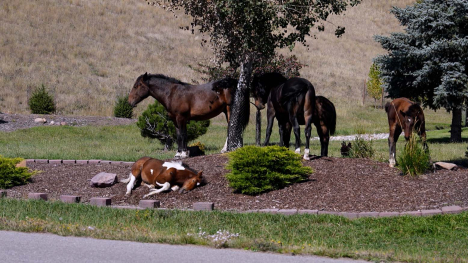
Montana residents balance affection for free-roaming horses with safety and property concerns.
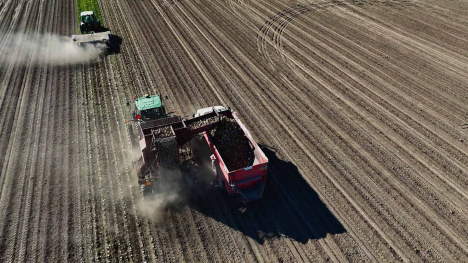
A growers association reports average losses of $500 per acre as sugarbeet harvest gets underway.
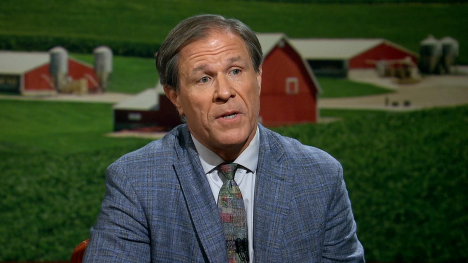
Shawn Hackett weighs corn demand, USDA yields and potential November turning points for grains.
Sugarbeet losses, diesel costs, Montana’s feral horses and market analysis with Shawn Hackett.

Global supply disruptions keep fertilizer markets volatile heading into 2027.