The GLP-01 weight loss drug has quickly become a driving factor in demand for more protein. Brian Earnest, an analyst for CoBank offers insight on the trend.
Weight Loss Drug Changes Diets and Sparks Protein Demand
Share


More protein demand has come as the rise in use of the weight loss drug GLP-01. And we also ask Brian Earnest from CoBank about the change in the food pyramid.
Transcript
Brian Earnest: You know I think so I look at the KSU Meat Demand Monitor. They do the survey work. They've been kind of working on it since 2020 and asking the consumer like, what are you going after when you're purchasing your, your protein items, taste, freshness, price? You know, these things really kind of in nutrition. These things fit at the top of the list almost every month when they're, they're looking at, the survey results from their consumers. I think that continues to be the case in 2026. But I think we'll see. Probably more of this behavioral shift, towards GLP one usage start to show up. And what we're seeing at the counter, I wonder if that's the case. We're certainly, you know, seeing the consumers asking for more protein. I looked at some survey work that, I think it was the power of meat or one of those that's, you know, they surveyed folks in 2024 and asked them if they were putting more protein in their diet. And the more than 60% of respondents said, yes, I'm actively trying to put more protein in my diet. In 2019, that was about 40%. So we're continuing to grow, you know, how much protein the consumer is looking for. But at the same time, the caloric needs of this GLP one users are decreasing and they're looking for a smaller portion size. One of the questions I have that I really do think this might just start to show up in the data in 2026 for a consumption in that, you know, chicken fits that profile very well. You think about chicken nuggets. They're kind of portion size. Most of the chicken meat that is developed ERS is produced. It can be sized to four ounce portion. Right. If, if I want to do the same thing on beef, it's like, well, I'm going after a nice big thick cut ribeye to get the experience I want out of beef. But I can't do a four ounce ribeye, you know, to, to to fit my needs. So, that's where I kind of just have a question of like, when is this going to start to show up in some of the data? And the adoption rate has increased rather rapidly. You know, we were talking about figures last year, mid-year, how many GLP one users are there in the US? And they were saying, you know, somewhere around 8 to 8 to 10% of the adult population by the end of the year, they were saying more than 20% of US households, which is a different metric, but they're saying more than 20% of U.S. households have at least one user, and they're making the decisions around what the household is eating. So, I think there's potential for that to influence what we see in the markets this year. For, for the animal protein space.
Yeager: I was looking away while you were talking. Not out of disrespect. I was looking for my deck of cards, Brian, because that's what we always talk about is the more protein we're supposed to have. And your four ounce ribeye is unfortunately about the size of a deck of cards. And it's never enough for me. When you again just tell me GLP that is the weight loss drug or that's, a shot or a pill. Right. And that's being used to, for people a massive try to do weight loss versus the old bariatric that was, that was, the trend a few years ago.
Earnest: Sure. And originally I think the, you know, the drugs were designed to, you know, how about folks have diabetes? They also notice that it really helps with weight loss as well. Now, the difficult component is, they're noticing users while they're losing weight. They're also losing muscle mass. So to retain that muscle mass, we need more protein in our diet. You know, our users need more protein in their diet. To offset that. Yeager: And also it comes up another thing I wanted to bring up, after your last statement was there is the the new plate recommendations from the federal government is flipping and putting the protein at the front and putting way more protein on that plate than what we used to in the past. How does that play into your research now?
Earnest: You know, I think this is interesting. And I looked at the new food pyramid and yeah, it's flipped and they have a massive chicken on that food pyramid. I think it's I don't know, it's just a visual thing, but, I also have a big rib eye. And so certainly those items are, you know, thinking about more whole foods or, you know, minimally processed. This is a trend that really started, I think, you know, 12, 13, 14, 15 years a go, when I was more working on the food development side, I worked in the frozen foods area for a while, as a sourcing manager. And the trend then was like, how small can we get? The ingredient back on some of these items in the frozen foods case? Same with Center Store. Like how, you know, we want minimally processed. We want labels that we can read fairly easily. These ingredients on it. I look at the meat case and, you know, you look at beef, and it's really one component that's in there. Right? There's just beef. You look at eggs, it's just an egg in there. Right. So, clean labeling is something that I think the consumer has been after for more than a decade now. We're finally starting to see that recognition and the dietary guidelines that the US government has released. And so I think it fits more naturally with what most folks that are focused on their nutritional, you know, their nutritional needs are already doing where I see maybe a change is in government food programs.
The full discussion is available now.
Watch More
Sugarbeet losses, diesel costs, Montana’s feral horses and market analysis with Shawn Hackett.
Shawn Hackett weighs storing corn versus selling soybeans and Brazil’s potential weather risks.

Montana residents balance affection for free-roaming horses with safety and property concerns.
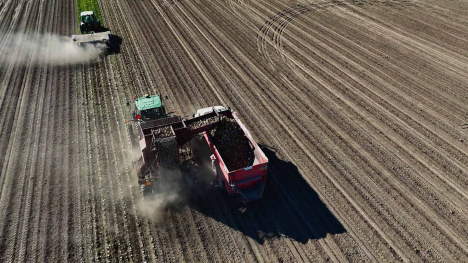
A growers association reports average losses of $500 per acre as sugarbeet harvest gets underway.
Shawn Hackett weighs corn demand, USDA yields and potential November turning points for grains.

Global supply disruptions keep fertilizer markets volatile heading into 2027.