Monday, the House Ag Committee held its fourth listening session of the year in Rice County, Minnesota. The previous session had occurred in the Western United States, and speakers there focused on water issues.


The uncertainty about economic conditions in the future is weighing on rural Americans. Farmers and ranchers are looking down the road for some kind of relief. One source might be the next Farm Bill.
As producers tell Congress what they’d like to see in the 2023 edition of the Bill, Peter Tubbs found out that, like politics, all farming is local.
Transcript
Monday, the House Ag Committee held its fourth listening session of the year in Rice County, Minnesota. The previous session had occurred in the Western United States, and speakers there focused on water issues.
The Midwestern crowd shared several comments about tying subsidized crop insurance to conservation practices.
Gary Wertish, Minnesota Farmers Union: “You know, it's really a food security, rural development bill. There's a lot of you know, this is the only bill that really funds a lot of rural America. You know, it's not only providing farmers protection to keep them on the farm, but, you know, the example is giving a crop insurance. You know, the intent is not to profit off it. And the intent is if you go through a crop disaster to keep you on the farm.”
Richard Syverson, Minnesota Corn Growers: “First, crop insurance must be actuarially sound. All farmers who want to participate should be allowed to. This means no size limits or ties to other conservation programs like conservation that do not affect the farmers risk profile.”
Jim Kanten, Minnesota Corn Growers: “Keeping climate and conservation initiatives inside the conservation title makes the most sense, rather than tying them to crop insurance. We really need to stay focused on keeping farmers in business.”
Will Clayton, Pheasants Forever: “When we ask farmers, ranchers and forest landowners to implement conservation practices. They should be fully supported and appropriately compensated. These practices benefit all of society.”
Speakers were also concerned about the difficulty beginning farmers have in gaining access to the land.
Ed Terry, Randolph MN: “But young farmers can't afford $350 rent, $10,000 plus land costs with the high input costs. And you know, they just can't possibly compete with the mega farms that we're seeing.”
Kelsey Zaavedra, Amador, MN: “ In the next farm bill. We need to acknowledge that the playbook is changing and we need policies that recognize diverse models of how food is produced. And we need policies that support farm viability for young farmers and for farmers of color.”
Rep. Angie Craig, D - MN: “I think we've got to find a way to enable the beginning farmer to, you know, better be able to finance the land. Right. I mean, it is it's extraordinary just how much land costs in my congressional district.”
Rep. Cheri Bustos, D - IL: “I think what we heard today is don't mess with crop insurance. It's working. And there's real concern among our family farmers really to do anything to it. I don't I didn't see the comments as a resistance to conservation but just not to link conservation practices with crop insurance.”
For Market to Market, I’m Peter Tubbs.
Watch More
Shawn Hackett weighs storing corn versus selling soybeans and Brazil’s potential weather risks.
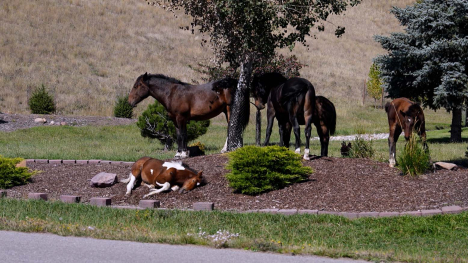
Montana residents balance affection for free-roaming horses with safety and property concerns.
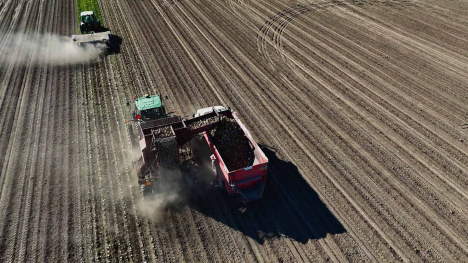
A growers association reports average losses of $500 per acre as sugarbeet harvest gets underway.
Shawn Hackett weighs corn demand, USDA yields and potential November turning points for grains.
Sugarbeet losses, diesel costs, Montana’s feral horses and market analysis with Shawn Hackett.
Global supply disruptions keep fertilizer markets volatile heading into 2027.