As years-long arid conditions grip the western U.S., producers in Europe are enduring their continent’s worst drought in decades.
Europe Fights Drought Woes Familiar to U.S. Producers
Share


As years-long arid conditions grip the western U.S., producers in Europe are enduring their continent’s worst drought in decades.
Transcript
As years-long arid conditions grip the western U.S., producers in Europe are enduring their continent’s worst drought in decades.
Bizza Walters/Farmer and Rural Advisor - Shropshire, United Kingdom: “We’re really worried, especially for the eight months time when the sheep are in for lambing. If we’re feeding our winter rations now, we run the risk of running out – and across the country people will be doing the same. So, in the spring, it’s going to push demand up and it’ll push the price up.”
England has been thumped by months of low rainfall and a record heatwave. France has declared their worst drought on record as crops from soybeans to lavender have suffered. Irrigation bans, drinking water shortages and temporary power cuts to river-cooled nuclear power plants have followed.
Ninety percent of the Bosnian corn crop has been damaged, reportedly, due to severe drought in the Balkans – exacerbating cattle feed concerns.
Tinder-dry vegetation has given way to wildfires in France, Spain and Portugal – where over 600 firefighters have been mobilized.
Officials in Germany say Rhine River water levels could reach a critical low any day, making transportation of coal and gasoline increasingly difficult.
Andrea Toreti/Senior Researcher/European Commission Joint Research Center- Varese, Italy: “Our analysis indeed is pointing to extremely low flows affecting almost all the European rivers.”
At least 30 percent of Northern Italy’s rice crop has already been lost as the salty Adriatic Sea has creeped nearly 20 miles into the dwindling Po River – a crucial irrigation source.
Bobby Costa/Costa Farms – Tracy California: “That’s salt up there.”
The plight is echoed domestically, in the California Delta, where decreased snowpack has given way to increased salinity from the Pacific Ocean – leading to a bump in crooked produce unattractive to retail outlets.
Bobby Costa/Costa Farms – Tracy California: “We just try to hang on and hope the water quality gets better. But, I mean, basically, we’re paying our bills with 75%, if we’re lucky, of our income.”
For Market to Market, I’m Josh Buettner.
Watch More
Shawn Hackett weighs corn demand, USDA yields and potential November turning points for grains.
Sugarbeet losses, diesel costs, Montana’s feral horses and market analysis with Shawn Hackett.
Shawn Hackett weighs storing corn versus selling soybeans and Brazil’s potential weather risks.
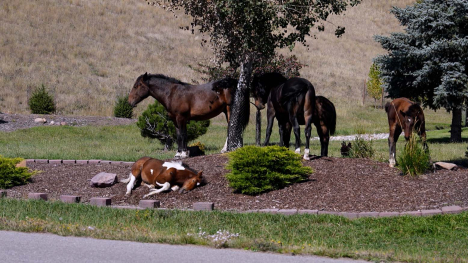
Montana residents balance affection for free-roaming horses with safety and property concerns.
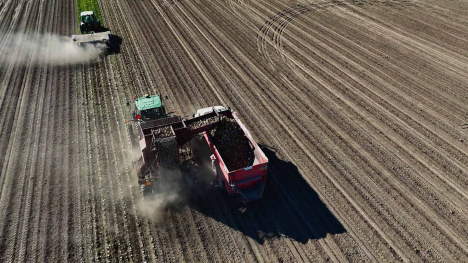
A growers association reports average losses of $500 per acre as sugarbeet harvest gets underway.

Global supply disruptions keep fertilizer markets volatile heading into 2027.