Two trade group leaders address the challenge in feeding a fragile world.
Soybean and Fertilizer Trade Groups Cite Responsibility in Feeding the World
Share


Soybean industry leaders told a group gathered at the Norman Borlaug International Dialogue that the challenges to feed the world came in many ways — one need will be to increase production. The fertilizer variable has been dictated by global events and demands.
Transcript
The Norman Borlaug International Dialogue centers on the efforts to feed the world.
The U.S. is second globally in soybean production. The product’s many uses create value economically and nutritionally – but as the CEO of the American Soybean Association said in one of the panels, production can and needs to keep expanding.
Stephen Censky/CEO, American Soybean Association: “The latest global agricultural productivity report that just came out a few weeks ago from Virginia Tech using USDA Economic Research Service data really does show that we're off the pace in increasing productivity around the world and that means that we have to double down on our agriculture basic agriculture research in this country and around the world. And then we also need to make sure that we have the right regulatory regimes that welcome agriculture innovation, companies can can cross those because that will stifle innovation.”
One way to reach that goal is through genetics, the other may be to increase the use of fertilizers in markets around the world – already a costly input option the last 12 months. The head of The Fertilizer Institute, a U.S. trade group, told the panel 90 percent of fertilizer is consumed outside of this country and, while Russia’s invasion of Ukraine greatly impacted the global market, the war wasn’t the only major factor affecting price.
Corey Rosenbusch/President/CEO, The Fertilizer Institute: “I think it's more so related to global pricing dynamics, you take China, for example, that produces about a third of the phosphate and nitrogen in the world, and they blocked all their exports, most of their exports go to India, India is a huge consumer of fertilizer, and they don't have that supply anymore. And so that means they're having to go to the marketplace, they're having to procure from places they don't normally procure from. And so that begins to set a very high bar for base price. That’s just one example.”
For Market to Market, I’m Colleen Bradford Krantz.
Watch More
Shawn Hackett weighs corn demand, USDA yields and potential November turning points for grains.
Sugarbeet losses, diesel costs, Montana’s feral horses and market analysis with Shawn Hackett.
Shawn Hackett weighs storing corn versus selling soybeans and Brazil’s potential weather risks.

Montana residents balance affection for free-roaming horses with safety and property concerns.
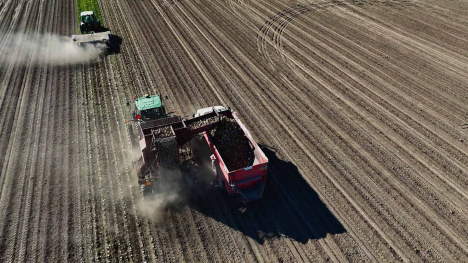
A growers association reports average losses of $500 per acre as sugarbeet harvest gets underway.

Global supply disruptions keep fertilizer markets volatile heading into 2027.