Last year we all heard about big logistical challenges at ports of call in the U.S.


Last year we all heard about big logistical challenges at ports of call in the U.S. Now the transportation challenge involving boats and water is an inland one along the Mississippi River. Peter Tubbs reports on how river traffic is moving along with what little water is still there.
Transcript
A dramatic drop in water levels on the Mississippi River is slowing the movement of goods along the center of the country.
Barge traffic is being limited to alternating traffic in some areas, as well as limits to the size and draft of barge groups.
Phillip VanderWeit, USCG: “We’re dealing with extreme low water conditions and certain areas. We haven't seen it this low since since the 80s or even before that. It's definitely created navigational hazards along the marine transportation system. But we've been working very closely with the Army Corps of Engineers who have put in a lot of work over the past decade in preparing for a situation like this.”
The lower Mississippi River is currently limited to a similar barge draft restriction that is standard on the Upper Mississippi.
Paul Rhode, Waterways Council: “We're we're about 40% a little bit more than 40% right now in some cases half 50% so you know the industry is very resilient and working with the Corps to make sure that let's say the Corps is dredging 12 hours and then we'll stop for 12 hours so that two cue of barges and boats can get through. At its worst we had 2,200 barges directly impacted with 150 boats waiting. Depending on the duration, again, this could be an unprecedented disruption.”
Little precipitation in the watershed means that low water levels will probably continue in the near term.
Dennis Toddy, USDA Midwest Climate Hub: “Our problems on the Mississippi River are not only their time and space related because of widespread drought throughout the whole Mississippi River drainage basin and the time period that we've been in drought in this situation. The left hand side is percent of normal precipitation over the last 30 days. The reddest areas are less than 25% of average precipitation. And you can see looking on the right hand side for the last year, we have very dry conditions, less than half average precipitation throughout much of the plains, a little bit better in the Ohio basin.”
For Market to Market, I’m Peter Tubbs.
Watch More
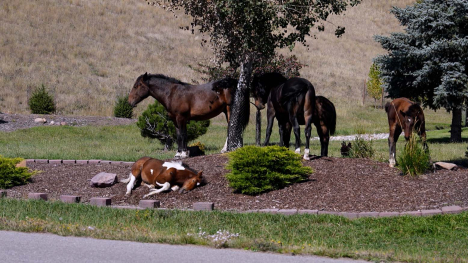
Montana residents balance affection for free-roaming horses with safety and property concerns.
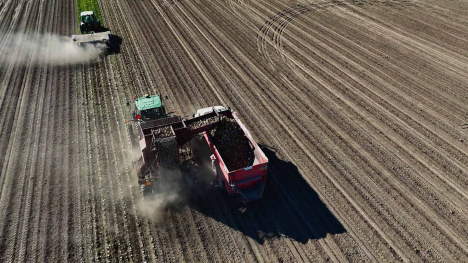
A growers association reports average losses of $500 per acre as sugarbeet harvest gets underway.
Shawn Hackett weighs corn demand, USDA yields and potential November turning points for grains.
Sugarbeet losses, diesel costs, Montana’s feral horses and market analysis with Shawn Hackett.
Shawn Hackett weighs storing corn versus selling soybeans and Brazil’s potential weather risks.

Global supply disruptions keep fertilizer markets volatile heading into 2027.