One of the most common production practices in animal agriculture is due for a massive overhaul.


One of the most common production practices in animal agriculture is due for a massive overhaul. The United States Supreme Court, in a 5-4 ruling, upheld California’s right to require pork sold in the state to meet minimum humane standards.
Transcript
One of the most common production practices in animal agriculture is due for a massive overhaul.
The United States Supreme Court, in a 5-4 ruling, upheld California’s right to require pork sold in the state to meet minimum humane standards.
Proposition 12 was originally passed by California voters in November of 2018 with 63 percent support, and has been challenged by industry groups as violating the Commerce Clause of the Constitution. Multiple courts have disagreed.
The National Pork Producers Council, which brought the suit, maintains the policy should have been struck down. It argued California produces far less than 1 percent of the nation's pork, while maintaining a large appetite for the end product thus placing a heavy burden on out-of-state pork producers. 13 percent of the country’s pork is consumed in California.
The Court’s opinion argued that as the Prop 12 rules applied to all pork producers, both in and outside Golden State, and did not create any unfair protectionist schemes, it was constitutional.
The NPPC maintains its case.
NPPC statement: “We are very disappointed with the Supreme Court’s opinion. Allowing state overreach will increase prices for consumers and drive small farms out of business, leading to more consolidation.”
The United States Humane Society, which promoted the proposition in 2018, celebrated the result.
Kitty Block, president and CEO of the Humane Society: "We’re delighted that the Supreme Court has upheld California Proposition 12 - the nation’s strongest farm animal welfare law - and made clear that preventing animal cruelty and protecting public health are core functions of our state governments.”
Pork processors now have decisions to make.
Jennifer Zwagerman, Drake University Agricultural Law Center: “It's really packers that are going to have a lot of decisions to make here right now. I mean, think of our contract system. You know, individual producers are really sort of at the direction of whoever they're contracting with. And so the contractors are really going to have to decide quickly, are we going to segregate some plants for right now so that we know. Everything going forward to conform to compliance with their regulations? Are we going to keep that segregation quiet? Everyone plays a role and are we going to set a precedent rules? I think a lot to say right now to sort out.”
For Market to Market, I’m Peter Tubbs.
Watch More
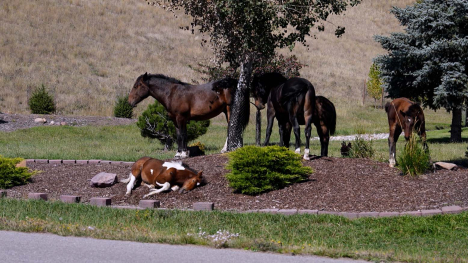
Montana residents balance affection for free-roaming horses with safety and property concerns.
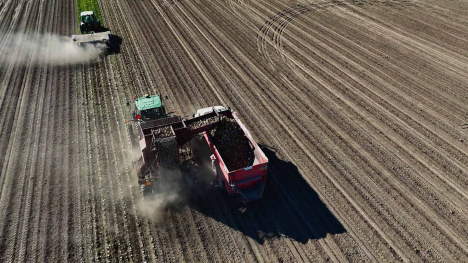
A growers association reports average losses of $500 per acre as sugarbeet harvest gets underway.
Shawn Hackett weighs corn demand, USDA yields and potential November turning points for grains.
Sugarbeet losses, diesel costs, Montana’s feral horses and market analysis with Shawn Hackett.
Shawn Hackett weighs storing corn versus selling soybeans and Brazil’s potential weather risks.
Global supply disruptions keep fertilizer markets volatile heading into 2027.