Naomi Blohm and Ted Seifried discuss the economic and commodity markets in this web-only feature on corn and soybeans.


Naomi Blohm and Ted Seifried discuss the economic and commodity markets in this web-only feature on corn and soybeans.
Transcript
[Paul Yeager] Welcome to the table for the Friday, January 16th, 2026 installment of Market Plus. Ted Seifried and Naomi Blohm with us here. Thank you for indulging us on a different seating arrangement. Did you feel like elbowing him?
[Naomi Blohm] Never, I like Ted.
[Yeager] Ted, you had to kind of turn a little bit to see her. Ted, you both were last here together in August when we did our anniversary celebration. You had just come off of crop tour. Yeah. And Arlan Suderman was here. Arlan had made some headlines with a yield change. Crop tour gives us our own direction. Then we have Monday. Can you make any sense of the 2025 growing year in 90s or less?
[Ted Seifried] 90s or less. Well, first of all, that 50-year anniversary thing was awesome and super happy to be a part of that. I know I speak for both of us on that. And you didn't see this because you were on stage at the time. But as we were waiting to come out individually, Arlan and I, he pulled me aside to have that conversation of what? How bad is the rust? Because he knew I was on crop tour. And I'll tell you the same thing that I said back then. And that was like, look, I was coming out of fields completely covered in rust. It was bad. But I also my second immediate thought after that was, this crop is pretty far along. I'm not sure that this can really do a whole lot of damage at this point. And then I started talking to my guys down south that deal with rust every year and showing him pictures and describing what I saw, and they were saying, yeah, you know, again, that's a pretty mature corn crop. It might have some impact on test weight, maybe yield down 1 to 2%, but no real major impact. But then you start talking to guys in Iowa, agronomists, farmers saying, well, no, we plant different varieties. They're meant to go much longer term. This is this is potentially a 20 or 30% impact on yield overall. Well, yeah. Okay. The USDA did lower us or did lower Illinois in Iowa, but not a 20 or 30%. So, the answer ultimately, according to the USDA, was that the rust didn't have as big of an impact as what some of us were talking about. And other areas, North Dakota and Minnesota in particular, really made up for it and then some. So, we had a higher yield, which shocked everybody that, you know, in a year that was very dry in August into September, but cool. And in a year where we had rampant southern rust. But late. Right. So that's those are the buts that came in to give us that higher yield.
[Yeager] Naomi, though, we're going to see we already knew North Dakota, Minnesota were already producing more corn. If they did it this year, they're going to do it again next year. So, does that or do you not buy that? As far as acres go for next year and production.
[Blohm] So if you look at the corn and soybean price ratio right now, soybeans are not doing any help to get themselves to have some more acres. And just with where prices are at right now, I'm my fear is that we're going to go back into a trough of pricing from like 2014 to 2020, where we had decent weather, we had big crops, demand was okay, but it was just that we had years of huge production and that's what kept prices lower. And we had 2-billion-bushel carryout for about three years in a row. So, I do think that those states are going to I don't know if they're going to add acres, but I don't think that they will really take too much away from what they did this last year.
[Yeager] Okay.
[Seifried] It's almost too late to make any changes anyways.
[Blohm] Yeah, right.
[Yeager] That's true. Phil, I want to say we kind of did cover your question, but thank you for submitting. You had a birthday this week, so I had to make sure I get that in there. Let's do Trenton, Iowa if we could, because this is an end user question. I think you both kind of touched on it a little bit. We're the end users. As surprised as farmers were in this report, just felt like all the processors, all the processes were looking to lock in cheap bushels ahead of the report, most farmers, the Trent, knows they were bullish on this report.
[Seifried] Yeah. I mean look, everybody was surprised on this report outside of the range of guesses, that means surprised, right? But they were surprised in a different way. And that is hey that's not bad for us right. You know because that's an end user's, you know, dream that hey, we hear there's more supply out there. I'm not going to have to compete for feedstocks and things like that. So yeah. The problem is their hedges might not have done well on that. So, look everybody's affected when you get a shock to the market like that. But as we were talking about in the main program, this is reflective of last year's crop, not reflective of the future crop that we're going to get ready to plant here pretty soon. Now we start to turn towards that. We will start to look forward. Now that we've got a lot of this in the rear-view mirror, it is limiting because of a 2.2 plus 2.226 billion bushel carryover. There's a big cushion. It would have to take a major weather issue in South America, followed by a major weather issue here to start talking about 550 plus again, something like that. Well.
[Yeager] Naomi, though, you had said I'm having flashbacks here all of a sudden because I think about a year ago you were talking about we needed six points of things to happen for prices to go up. Ted, you're laying out scenarios of, we have to get this and this and this. That doesn't sound very optimistic.
[Seifried] Well, like I said, in the regular program, you know, the function of price is to supplies behind us, right? The function of price at this time of year is if we need more demand, lower prices is what we use to find more demand. Demand is really, really good record good. I mean, across the board record good record ethanol record feed and residual exports are just off on a tear. So. Lower prices don't really at this point I think don't really find more demand. So, I don't think the function of the market is to make prices sharply lower. Right. So again, now that we've got things like this report in the rear-view mirror and last year's production in the rear-view mirror, and we're going to argue this for years to come I think. But it doesn't matter. This is the number that we're going to have to use. Well, looking forward again we have points of risk, points of weather risk, points of a whole lot of things that that a lot of times. Well, I mean, that sort of uncertainty on the production side of things generally means we put what's called a weather premium into the market. And this would be the time of year where we start to do that. So once the dust settles, once we're done fully digesting this report, I'm optimistic about prices being able to recover at least some.
[Yeager] Do you buy that? No, I already asked that question. You don't have to answer it again. All right, let's go to Boyce in North Dakota if we could. Because I want to talk about beans. I'm not trying to rehash land that's already been cut since December of 24 the march, soybeans have been in an uptrend of higher highs and higher lows. And that held even after Monday's report, is that significant as a positive sign going forward?
[Blohm] I'm glad they brought that up because yes, it has been a one-year uptrend line that has held for those soybean prices for old crop and new crop. I was pretty nervous. Like with the bigger carryout for the U.S. number and again, more larger carryout on the global supply that the funds were just going to come in and annihilate this thing and take it lower. But it didn't. So, I think because we had that big price drop from the latter part of November and December, the market had absorbed a lot of that into it. And like we talked about on the show, you know, we still have some uncertainties as far as how much China's going to maybe come in and buy for beans. We still have to find out for sure. With weather in South America, what that's going to be like. And then there may be needs to be a competition for acres here in the United States this spring. Yet for anything last minute. So, it is a big deal that that uptrend held. And let's just keep fingers crossed that it maybe will keep holding for a few more months.
[Seifried] Yeah. Because it's just barely. I mean, we're right. on top of it. And that doesn't I mean look.
[Blohm] Don't jinx it.
[Seifried] So, hold it at the end of the week like that. That's it's good to see. But yeah, I'm not I'm not trying to jinx it. I'm just I have a hard time being as optimistic about soybeans as I do for corn because, you know, I've talked a lot about, you know, the corn production, things like that. That's behind us. I mean, yes, we're still going to have to deal with the ramifications for that. We still have a lot of corn around. We got a big cushion. You know, all the things I've said. Right. But the story is now realized, right? Whereas I'm not sure we're done realizing the story of soybeans, because if China stops buying now that they've hit that 12 million metric tons, I don't think the USDA is done lowering our export number. We could still yet see a bigger carryover for soybeans. I should have said this earlier, but I don't think we're going to see a more bearish carryover number for corn for this current marketing year than what we just saw.
[Blohm] I agree with that.
[Seifried] I can't say the same thing about soybeans, so I'm worried about that uptrend line. I'm worried that if China doesn't overperform on that 12 million metric tons, that we do still have to put soybeans on sale to try to find more demand or very, very.
[Blohm] Of if we could get a different blender’s credit going, that would be helpful.
[Seifried] Yeah. But like you said, I think there's a lot of politics in the way of that. And you can't really count on that. You know, I don't think the market is going to we had a reaction to that in soybean oil. It had an outsized reversal higher day. And that was great to see. But I don't think the market actually truly believes it until we see it, because we've been told things so many times in the past that just haven't come to fruition or happen a year and a half after they were supposed to.
[Blohm] Yeah. That's true.
[Yeager] Do you have questions you want to ask each other? Ted's always good for a question. I'll stall a little bit while you think, because I always, I always say I'm going to do it, and I never do. Ted, do you have a question for Naomi?
[Seifried] Well, I mean, the first thing that comes to mind is, how's the band going? And, like. But. No, but I think you mean about markets, right?
[Yeager] Yeah.
[Seifried] Okay, I can I'll do some of a conspiracy theory question because it's something that that I've been kind of tussling with internally as well. Quarterly grain stocks year over year implied demand or disappearance, which is implied demand was up 710 million bushels from the previous year. Of that 710, the part we know about are exports and ethanol and exports was the big winner up, what, 360-million-bushel ethanol to that point in that quarter was only up a few million. So, let's say we can account for 370 of the 710 million bushels of that. That's a lot left over. Now, is that all feed and residual? I mean, it's got to be right. But is that the USDA showing their residual number or is that them maybe. Well, we might be a little too high on production. So, this disappearance of we're just going to explain it with feed and residual for this disappearance. My question is did you read anything into anything like that. The massive amount of demand or implied disappearance. You think that demand is actually real, or do you think that the crop might have been a little bit overstated?
[Blohm] I think it's maybe a little bit of both. And let me build on what you're saying, because I have a conspiracy question for you. No, this is good.
[Yeager] Or you can answer a question with a question.
[Seifried] You're done, Paul.
[Yeager] I know I'm done.
[Blohm] No. Okay. So, here's my question. So, we're going into the report. We thought we would see the feed number. You know come down. What if what if all this corn gets exported. The 3.2 billion bushels.
[Seifried] I think will.
[Blohm] Then they open the border. Corn is gone. Border opens, cattle come in, and now we have to feed the cattle here. So maybe that's why that number didn't go down like we thought. Because we're going to have cattle coming over that we have to feed, I don't know.
[Seifried] Oh, so you're saying, is that a tell that the border is going to reopen? Maybe.
[Yeager] Well, I think we're thinking that's going to happen sooner than later.
[Blohm] Well, maybe that's why that feed number.
[Seifried] Did anybody ask Paul? I'm just kidding. No. Okay, so. But the feed residual number. Yeah. We all thought it was going to come down, but that's because we thought production was going to come down.
[Blohm] Right, right.
[Seifried] The market was sure yields were going lower. And feed residual is a function of production. It's a percentage of production. Right. So obviously that number is going to I mean surprisingly go higher because the crop I mean the production came in 450 million bushels higher. So, you got to, you got to add it to demand somewhere. I think the most disappointing thing for, for all of us was that they didn't add it to export demand. Yeah, they feel maxed out on export.
[Blohm] Yeah, I would agree with that. Yeah.
[Seifried] You know when, when I think, you know, based on shipments alone, you could argue that they could have added at least 50 million bushels to exports just to say, hey, this has been great. Hopefully it continues. Yeah. But the fact they didn't do that, I think that was one of the many really bearish things that we saw in that report.
[Blohm] Yeah for sure.
[Yeager] Speaking of great you two. Thank you Naomi, Ted appreciate it.
[Seifried] I braved a squall to come see you. Actually, I came to see Naomi, but it's nice to see you, too.
[Yeager] It’s always this weekend. We'll talk about that another time. Thank you both. And next week we are going to press the pick of a crop into an answer for a profitable bottom line. Confused? Intrigued? Find out next week and we'll have Dan Hueber with us to break down the markets. And we'll let you know that Market Insider newsletter that will be released Tuesday. Because of the MLK holiday. Subscribe today at Markettomarket.org for all of us here at Iowa PBS and Market to Market. Thank you so very much for watching. Have a great week.
Trading in futures and options involves substantial risk. No warranty is given or implied by Iowa PBS or the analysts who appear on Market to Market. Past performance is not necessarily indicative of future results.
Watch More
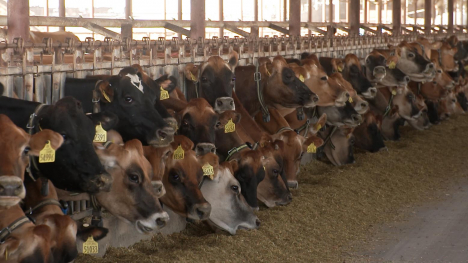
Many California dairy producers have made fighting climate change a high priority. Recent adoption of certain laws has helped them in achieving their goal.

USDA projects best acreage and production guesses for 2026. Wildfires and an avalanche top weather headlines. Turning waste into an investment in your operation. And, commodity market analysis with Shawn Hackett.

President Trump's use of the Emergency Powers Act is disallowed and USDA lowers the number for planted acres of wheat, corn and soybeans.
Kate Gordon has watched American energy policy evolve for two decades across multiple presidential administrations. Her frank conversation about rising utility bills, surging demand from data centers, the complicated truth about coal's comeback and whether an all-of-the-above energy strategy still exists in America or whether we're now just picking winners and losers.

Shawn Hackett discusses the economic and commodity markets in this web-only feature with topics of wheat, corn, soybeans and other topics of interest.

Shawn Hackett discusses the economic and commodity markets of wheat, corn, soybeans, live cattle, feeder cattle and lean hogs.