Dan Hueber discusses the economic and commodity markets in this web-only feature on corn, wheat, soybeans and government policy.


Dan Hueber discusses the economic and commodity markets in this web-only feature on corn, wheat, soybeans and government policy.
Transcript
Paul Yeager: Welcome back to the table for the Friday, January 23rd, 2026 installment of Market Plus. Dan Hueber is still with us. Dan, I left off one large topic of the week news of the week because how much did the Non-decision on E-15 have on the market and what I mean non-decision the press releases that I was sent said they kicked Congress, kicked the can down the road again. We need this now. It's now or never.
Dan Hueber: They recognize this might have been a Freudian slip on your part that you just really didn't want to address the.
Yeager: It wasn't? It wasn't intentional?
Hueber: Okay, okay. You know, I don't necessarily say it had a major impact on the market. I mean, the markets rallied to finish off the week. So I think it was largely overlooked. But it is just one of those things that says, you know, we are are we I should say that the government did little to help improve the situation on a longer term basis. I mean, yes, going to the E15 year round nationwide certainly would help be a boost to ethanol production. And ethanol has been a good profitable, good profitable market. One of the bright spots in the ag sector here at this point in time. But that said, you know, I don't think it necessarily has a lot of political backing in Washington at this point in time.
Yeager: So and if it doesn't happen now?
Hueber: Or, you know, I wouldn't say never. Well, I wouldn't say never. I mean, granted, the as is typical in Washington, we've started a committee to research and look into a little bit further, which is basically saying, you know, we're not going to pay attention to it at this point in time. But you know, I would say it's going to have to get to probably closer to election time. And I think that is one thing we do have to keep in mind this year, period, is that, yes, it is an election year. You know, nobody's going to try to shoot their ammunition in January. But as we get out in the summer months, closer to the fall, I think you're going to see a lot of rhetoric coming out of Washington about how we're going to support the farmers and what we're going to do for them and this type of thing. So. So there's probably going to be help on the way, but boy, it's certainly not going to be much help when it comes to the spring planting season.
Yeager: Let me look at my notes. I want to see which banks cash rhetoric checks.
Hueber: I see. Exactly, exactly.
Yeager: So I mean, that's going to be what's going to be said.
Hueber: Oh, certainly.
Yeager: There's going to be a lot of doubt, mistrust, fear, whatever you want to say about what's going on. You didn't help us when we needed you most. Why? Right. Why should we help you now?
Hueber: Well, and I wouldn't say that those who are pulling the political strings recognize that necessarily at this point in time, because they really to a large extent, I think a lot of them don't understand agriculture, don't understand the cycles of production. You know, they just think you throw money out there when you need to buy a favor. And, you know, I don't think it's going to work this time around.
Yeager: And we still don't have a farm bill nor prospect of one coming anytime soon.
Hueber: No, no, nor nor will there be.
Yeager: I mean, before this election.
Hueber: They'll just continue to kick it. Kick it off and with extensions and.
Yeager: Or if one returns, I mean, there's, there's, there's a group that says we don't even need it.
Hueber: Well, true.
Yeager: It's not a group that's very popular.
Hueber: No, no. Again, I guess I'm not going to put a whole lot of credence there. But I mean, because of that kind of obstinance because of that kind of pushback, then yes, it's just going to continue to push it on down because they don't see what the value is. And I think to a large extent, there's a lot of people in power that feel that the sector's ours no matter what. And, you know, we can kind of kick them around and they'll come around our side anyway. So it's not many friends out there right now.
Yeager: Oh, let's keep having fun with some political questions. Dan, I've got a couple of good ones here that are going to get us both in trouble. All right. Let's start with Bradley in Nebraska. He wants to talk about Ukraine because there's nothing controversial about that topic. Will an end to the Ukraine conflict be negative for corn long term? How about wheat.
Hueber: Long term most likely so. Now granted, you know, as we know you don't turn production around on a dime. You aren't going to necessarily have people rush in there with money to start boosting things up. You know, again, depending on what kind of resolution comes about or hopefully some kind of resolution comes about there. But certainly longer term, short term, I can't see where it's going to be able to do much. And then you've got the whole element of, you know, we don't know what the weather's going to be there this year either. So it's, it would be certainly a relief, you know, for, for the rest of the globe. But like I say over the long term it's just more bushels ultimately that will come back into production.
Yeager: The export news that came before Friday's session, it sounds like something you would say. And I was surprised you didn't today. Okay. To cite the Mark Twain line, the news of the market's death was greatly exaggerated because both corn, beans and wheat all rallied Friday.
Hueber: Sure.
Yeager: A trend? A blip?
Hueber: Oh, I would say it's more of a continuation of the ongoing pattern that we've been witnessing. So, you know, keep in mind, markets before the export sales came out were all a little bit higher for corn, corn was pretty much unchanged, but wheat and soybeans were already higher for the week. This just gave them a little bit of an extra boost. It did not. You know, I think March corn finished around 430, if I'm not mistaken. And really, since the report, we've stayed between 425 and 430 every day, you know, so I mean, it was, it was sure a little bit uplifting, but it didn't amount to much. Not really.
Yeager: Let's speak of, let's talk about amounting to much Lenny in South Dakota. This is the sentiment again, a carryover a little bit from last week. Why didn't I sell more corn before January 12th?
Hueber: Well, I'm you know, not trying to pick on Lenny, but why did you wait until January 12th? I guess, you know, we should have been selling corn to course back, you know, and on should have is always a key word within the markets. But, you know, I think when you're coming into January and granted, I guess nobody, nobody has the hold on what's going to come out there. Nobody really anticipated that that number that came out from the USDA, that insurmountable? No, no, I think again, but we're going to have to start putting some pieces in place. We're going to have to see demand at least remain constant. And like I say, I think we're going to have to start psychologically thinking about producing less corn this year, which could help us lift that corn back up, at least to where we were January 11th. You know, we're going to go beyond there, but we could probably get back to those levels without a lot of difficulty.
Yeager: There's a lot of people that talked about dates last year where, well, I sold it for five. How come I didn't sell more? But at the time you didn't think it was going to go? I mean, that's always the game. It's not just right. The one thing I'm going to get to that less part of your answer that you just gave in a minute. But let's do Ethan in Kansas, if we could please, what is the most realistic expectation one should have for the cattle markets for the first half of the year, and then the second half of the year? Heavy bread cows are selling extremely high for a cab that will not be weaned for another six months. Right now.
Hueber: You know, I, I again, I don't envy anybody who's on any, any side of the cattle market at this point in time. If you're in a feedlot and you're buying these, paying these kind of prices for feeders, you know, it certainly a very much a gambling game here at this point in time. I mean, if you're putting them in and you can't see your way to featuring them to protect that, I think you, you know, need to think twice about why you're doing that same thing on that cow calf. Yes. If there's an opportunity and granted, not that that's a tremendously liquid market. If there's an opportunity to lock in some profitability, I would do it. I mean, I think there's just too much on the table, too much downside risk at this point in time. And yes, we know we're not going to rebuild herds overnight. But in the same token, you know, we, this has been a two year bull market. And it's pretty difficult to sustain that.
Yeager: So see Lenny's question from just a couple of minutes ago. Why didn't I sell more before, right?
Hueber: Well, right. I mean although there, you know, particularly if you're at the feedlot side of it, you know, it's, you know, you have to look at the profitability. But at the same token, you know, you need to look at that when you put those in the lot to begin with.
Yeager: So yeah, it's hard to take the emotion out of this.
Hueber: Absolutely. It is. If you're committed to that business.
Yeager: Let's look to metals, shall we? Randy wants to know can the metals side lift us up?
Hueber: Well, when you consider that the metals market has been accelerating for the past two years, while the grains have been sinking for the past two years, odds are probably no. So the metals are really moving because of uncertainty about the global economy, uncertainty about economic policies, uncertainty about tariffs. You know, if anything, you're probably got the metals in somewhat of a bubble. So the you know, chances are if we're going to see some excitement, it's going to be with the metals that bubble bursting and coming back to reality.
Yeager: One thing that was really high this week was natural gas, up 33% on the week.
Hueber: Well, you know, and again cold snap coming in. So I mean it's.
Yeager: Only that you don't see any of the global issue right now.
Hueber: You know and again maybe I'm being naive there. But no, I think it was a, it was an overdue reaction. But I think it was primarily this weather onset.
Yeager: Well, let's overreact one more time. Okay. For our last question. And that's Denise and Alan asked this one and they said, you know, maybe it's just time to start thinking about limiting production like we did in the 80s?
Hueber: Well, of course, number one, that would mean a discussion of a farm bill, which of course is not happening to begin with. It would be a challenge, actually, from personal bias. I've always maintained that, you know, we were probably from a federal expenditure standpoint. We probably spent less back on those years when we had set aside programs, because really, you set aside acres that probably shouldn't have been producing anyway. Grain was tied up until you reach certain thresholds where it was then released. So it really and granted, the government accounting never really accounted for that properly. It always looked like a great expenditure, but it wasn't. All that said, you know, I do think the current system is more equitable as far as letting the market theoretically tell us what we should be planting. Having crop insurance is the backstop, as your government sponsored put. But on the same token, when you get into these depressed periods, which again, I think we probably could be struggling with for the next 4 to 5 years yet, boy, it makes it. You start looking for new alternatives. And I think that discussion should be had, not that we're going to go back to that, but the discussion should start. And unfortunately that's not happening.
Yeager: You always enjoy history. Is there more history to look at some of those other programs from before? I mean, or have we already extracted the best of what worked or what could work in the current environment? You mentioned crop insurance. That's something that's different than before.
Hueber: You know, and again, I think crop insurance is an element that that should remain. I think it served a great purpose. The same token, you know, the only thing that's really going to tell us what will ultimately turn us around is going to be trying to stimulate demand. And yes, we tried to do it with renewable fuels. We tried to do with ethanol. And ethanol truly was the element that brought us up into the highs in the early part of the century. But, you know, we need something new. We need to develop something new. And it's probably got to be a combination of some type of back, often production. Is economics going to be enough to do that? You know, I think that's probably going to start affecting us this year. You know, and again, we've already heard story after story about banks saying, you know, this is probably not the year we're going to have the checkbook open quite as wide.
Yeager: So and then you hear the, oh, no, no, that's not the story. And then it's always, no, it's my neighbor that's going to have to give up my land, not me. True. I mean that that's the hard part of all this, right?
Hueber: Right. But you know, and again, it's, this is true, you know, again, when you want to talk about about using a Mark Twain quote, you know, history doesn't necessarily repeat itself, but it oftentimes rhymes. We've seen this cycle turn over and turn over time and time again. And I'm afraid we're looking at a, you know, one of these periods where we're going to see a lot of pain out in the farm sector for the next few years.
Yeager: We were pretty positive until right at the very end, until the end. You had to bring that up. I had to bring it up and I was and I was like, well, it's not appropriate for me to come up with some rhyme with from with Dan Hueber. I'll just say, there we go. Thank you. Dan, great to see you.
Hueber: Pleasure to be here. Thank you.
Yeager: Dan Hueber everyone. And next week we are going to look at a program that is an agriculture program that is feeding a changing local community. And we're also going to have double the analysis with Ross Baldwin and Jeff French. And I also want to say thank you to those who have subscribed to the Market Insider newsletter, new episodes or new installments are shipped to your email inbox every Monday from all of us here. Thank you for joining us and have a great week.
Trading in futures and options involves substantial risk. No warranty is given or implied by Iowa PBS or the analysts who appear on Market to Market. Past performance is not necessarily indicative of future results.
Watch More
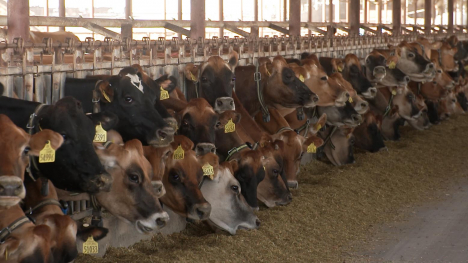
Many California dairy producers have made fighting climate change a high priority. Recent adoption of certain laws has helped them in achieving their goal.

USDA projects best acreage and production guesses for 2026. Wildfires and an avalanche top weather headlines. Turning waste into an investment in your operation. And, commodity market analysis with Shawn Hackett.

President Trump's use of the Emergency Powers Act is disallowed and USDA lowers the number for planted acres of wheat, corn and soybeans.
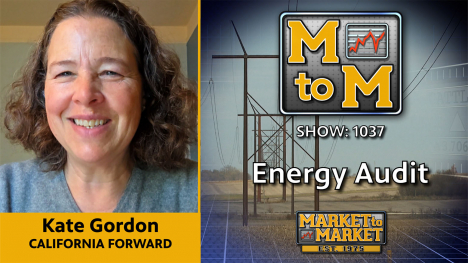
Kate Gordon has watched American energy policy evolve for two decades across multiple presidential administrations. Her frank conversation about rising utility bills, surging demand from data centers, the complicated truth about coal's comeback and whether an all-of-the-above energy strategy still exists in America or whether we're now just picking winners and losers.

Shawn Hackett discusses the economic and commodity markets in this web-only feature with topics of wheat, corn, soybeans and other topics of interest.

Shawn Hackett discusses the economic and commodity markets of wheat, corn, soybeans, live cattle, feeder cattle and lean hogs.