Jeff French and Ross Baldwin discuss the economic and commodity markets in this web-only feature with topics of wheat, corn, soybeans, cattle, feeders, hogs, gold and silver.


Jeff French and Ross Baldwin discuss the economic and commodity markets in this web-only feature with topics of wheat, corn, soybeans, cattle, feeders, hogs, gold and silver.
Transcript
[Yeager] Welcome back to the table for the Friday, January 30th, 2026 installment of Market Plus. Joining us now, Ross Baldwin Jeff French. I'm flipping it. I'm going him this time first. Is that okay?
[French] No problem.
[Yeager] You're about to go visit with a bunch of producers in Tennessee. Just went through a big old winter storm. A was there any storm damage in that region in any of those spots that impacted production?
[Baldwin] We've seen across a lot of the cattle feeding areas you're wondering about. We've seen a lot of I mean, nasty weather across the heart of cattle feeding region. So, it's had a small impact, I would say, on performance on cattle weights. We've seen carcass weights trending down a little bit over the last couple of weeks. They still remain historically high. We're well above a year ago levels on carcass weights, but it's slowed down things in some spots. But you got up here where we're at in the northern feeding regions, we've been cold obviously over the last week or ten days, but pen conditions are good. You get out into, you know, the Western Corn Belt. They've been really dry out that way. So, their pen conditions have been really good.
[Yeager] What do you think will be the question you're asked the most by people in the hallways?
[Baldwin] How high is the cattle market going? That's I think, the question. Everyone wants to know that. And when's the party over.
[Yeager] And you got your answer figured out yet?
[Baldwin] I've agreed with the USDA numbers that they put out, that it seems likely that we could see live cattle. Cash prices average 240 for the entire year. Now that takes in lower prices, higher prices. So, I mean, it's a kind of a middle of the road type number. But I do think we're going to see a pretty high average barring something from left field doesn't come out and derail this market. And it's very possible that something could at some point, you know, in the main show we talked about packer margins. I mean that's always a legitimate concern and risk when someone continues to lose that much money for so long, what changes are we going to see?
[Yeager] We don't have congressional hearings on the packers losing money, right? I've not known them to happen. Do you. know and will what would what would change this story?
[French] Well, you know, it's the midterms. So, you know, does the administration continue to hammer on this affordability. You know, I think that's going to be a big topic. So does the president continue to, you know, really pound against the price of beef. You know, I just it's one of those things where we don't know I mean he can fire a tweet out in 20s. And you know we're down the limit. So, you know, from a fundamental standpoint, this market is in really strong hands. I mean, there's no question about it. Demand is great and the numbers are tight.
[Yeager] Let's stick politics and keep going. The president was here talking E15 the commodity groups, the corn growers, the renewable fuel folks were very upset at Congress for leaving them out of this spending bill that we're talking about keeping the government open. Would year round E15 be enough to I mean, it's going to help demand, but is it enough to buy us some more time until another story develops?
[French] Well, not this year. I mean, it would take I mean, ethanol could increase right now, but we are running nearly capacity. So, I mean, it would take some time to build the infrastructure, but absolutely. I mean, they're talking you know, probably it could increase demand by 2 billion bushels. But it's you know, it's not a mandate. You know, it's just the, you know, approval to sell E15 all year round. So, you know, you have crude oil up at $66. You know, we get crude oil cheaper. You're going to see a bigger battle for E15 against it. I mean, that's just the way it is. We've had big oil lobby out there.
[Yeager] Yeah. And that's been part of this story in the last couple of weeks. Crude has finally turned the tide and rallied a little bit. But we still have the Venezuela story of more oil coming in. So those don't sound like and I think ethanol production numbers, were they lower this month.
[French] A little bit. Yeah.
[Yeager] So how much more can we produce?
[French] Well, in the short term not much more. I mean, we are running nearly at capacity, but again, we need to hear from the EPA. We got the OMB. They have they've done their agreement on the RVO, the renewable volume obligation. So, there's some answer, there's some questions that we just don't have answered yet, which supposedly we're going to hear by the end of March.
[Yeager] We've had a lot of stuff kicked down the can or the road for years, and we just don't know. But one thing we do know is that Bradley and Nebraska has our lead off question here in Market Plus, and he wants to know, Jeff, can corn export sales sustain the current levels for the rest of this marketing year?
[French] You know, exports are huge, but exports are huge because of price that we're at, you know, so if we do have a crop problem down, you know, right now we're the only game in town, number one, that changes here in three months with the Safrinha. You know, the Brazilian safrinha corn crop. So, do they get dry and have, you know, reduced size of crop? You know, that's just what we're going to have to see. But, you know, the exports have been good, but it's also a result of, you know, the lower prices that we've seen.
[Yeager] I want to say we had a ridiculous amount of questions again this week that came in. And I'm not saying I stole all of your questions, but Louise, Neil, Craig, Glenn, I may have borrowed heavily from the first show. I think subconsciously they were in my mind. So, another question. Gary in Iowa, this was a discussion we kind of had a little bit last week. Jeff with Dan, specialty crops, pricing, premiums, locations, delivery locations. I'm not asking you to specify any crop, but are we to the point yet where we're going to start having this discussion about alternate something specialty to change the dynamic for producers? Is there enough price action to warrant that discussion on a realistic level?
[French] You know, it comes up when we're in bear markets. You know, locations probably can support it in the in the Corn Belt. No, you're not going to see it. I mean, it's just, you know, everybody wants to talk about people walking away from acres. I mean, I had a neighbor that, you know, he had some ground that he wanted to rent, and he had seven phone calls in two days. I mean, there's not, you know, at least around my area. I'm just not seeing that type of action.
[Yeager] Let’s talk specialty in livestock for a minute, because that was a model used a few years ago to we saw during Covid, we went directly to the locker. I know that a lot of this audience already does that already. I'm not speaking to new things, but for those that might not be directly on the farm did this has the specialty side of livestock had any impact on this rally at all? In we just might not have the same feedlots that we once did.
[Baldwin] I think the specialty side, as far as any impact it could have had, is there has been a build out in additional capacity in small packs, is what I would say. And we're long capacity across the industry or we're long shackle space. I would say across the packing industry. So, I don't I don't have that exact number, to be honest with you. But I do think there's a there's a small percentage of that that has played out. But it's hard to quantify it. But I mean, on the specialty side, I mean, there's no question it was it was an aggressive build out coming out of 2020 that we saw a lot of a lot more producers going farm to direct and trying to market their own beef or, or small packing plants. There was there was money coming out of Covid for those kind of renovations. So, it's been a small impact.
[Yeager] Could it be that that returns? I mean, I know that people who buy sides of beef and they're like, wow, the person I bought from, it's gone up. But then again, well, have you tried to shop at the meat counter and has that discussion changed?
[Baldwin] I would say on the your point, your, your point of the people that buy sides of beef that has likely slowed down. And I do think you I can tell you even in our area, you know, coming out of Covid, you couldn't really even get a kill slot, you know, at your local packing outfits. And we ran into that with our own feedlot. And since obviously the last couple of years, you they have tons of open spaces and a lot of that's been because of the price of beef and people have slowed down on going and buying a whole beef for their freezer or a half of a beef, given the cost of it. More going to they buy hamburger and ribeyes as they need them. So, we've seen a small change there and that's high prices is what it is.
[Yeager] I need to eat a better lunch before he comes on because he starts talking rib eyes and steaks and all of that stuff. And I get going. All right. One last question here from everybody. And that's Chad in Minnesota. This one's about the dollar. We talked a little bit about it during the main program. But if the value of the dollar drops to $0.92, our commodities would be having a bit of a fire sale for the rest of the world to buy. In Chad's opinion, his question is how many more buyers would we attract? And I'm going to add one more thing to that. Who would be interested if we keep dropping this dollar?
[French] Well, I mean, that's a that's a really loaded question. I mean, we would attract buyers, but you know, with this administration right now, we've got a lot of trade deals that we got to work out. You know, with India, Pakistan. But you know, we've seen India and Europe just had a two decade, you know, trade deal that they just finally negotiated on. So, these things take time. But you know you go down to 92. Yeah there would be definitely an incentive for other countries to come buy grain from us. There's no question.
[Yeager] Is that the only way that China buys from us moving forward? And should we plan that? That's the only way they buy when because we always talk about this. Well, if China comes back to the market, from what I'm hearing, the obligations filled, we're done hearing them buying us grain.
[French] Well, I mean, they're going to act in their own best interests and they will go to Brazil first. I mean, with the current, you know, state that we're in. But, you know, if they're you know, you got to remember too, that, you know, we're coming as a world not just here in the U.S., we're on our third or fourth year of, you know, very good grain supply. And, you know, that's going to take a little while to work out. But, you know, we have one place in the world, especially in China, if they get into a weather issue, I mean, it changes quickly. And a lot of times it can just be the perception too, in this, in these markets.
[Yeager] All right. We'll close with this 2026 thoughts. It's still January. So, you can still give me your year forecast. Your I already asked you what you're going to be asked about in the next few days. Biggest story of 26 in the livestock market's going to be what.
[Baldwin] I think. There's several different headlines. So, it's hard for me to answer. The one biggest story. But some of the biggest headlines that I envision right now is going to be the New World Screwworm that that headline remains alive and well. We've seen cases really pick up within 200 miles of the U.S. border. What does that mean with the USDA and what they're thinking about the reopening phase? I think it looks extremely difficult for them today to think about reopening the border as the Screwworm continues to advance northward in Mexico. Then you've got Trump and the retail beef prices that we've talked about. He has he has not mentioned it for a couple months. Does he continue to let that go the wayside heading into the midterms. But then after midterms are all gloves off? I think that that's a big one. And then I look at the packing industry with the announcements that we've seen out of out of Tyson here, and it was January when they closed Lexington and took Amarillo to a single shift. Do we see any more announcements just given their margins? I don't think anyone should be surprised if at some point you didn't see something else. But that is what producers need to be mindful of at these price levels. And the risk that's out here.
[Yeager] What's your story for 26?
[French] Well, I think that the corn market, if you want to talk corn, you know, I think it's going to be is how did we produce 186 bushels to the acre on national, you know, is that accurate? You know, it's the numbers that we have to deal with. But there could be a correction down the road. And how do we chew through 2-billion-bushel carryout? So, there's some questions there. And then you have, you know, the end of February we're going to get the baseline numbers. You know, you're going to have probably the trendline yield in corn up in the 185 area. So, we're making some big jumps. So, we got to figure out where we're going to go with all this grain.
[Yeager] We'll ask you next time when you come back. How about that?
[French] Sounds good.
[Yeager] That's Jeff French that's Ross Baldwin. Thank you very much for making time to see us. Appreciate it.
[French] Thanks, Paul.
[Baldwin] Thank you.
[Yeager] Put your coats back on because it's cold out there. Next week we're going to have a small solution to a big problem in corn in the corn field. And we're going to have the commodity market analysis with Kristi Van Ahn-Kjeseth for all of us here at Iowa PBS and Market to Market. Have a great week.
Trading in futures and options involves substantial risk. No warranty is given or implied by Iowa PBS or the analysts who appear on Market to Market. Past performance is not necessarily indicative of future results.
Watch More
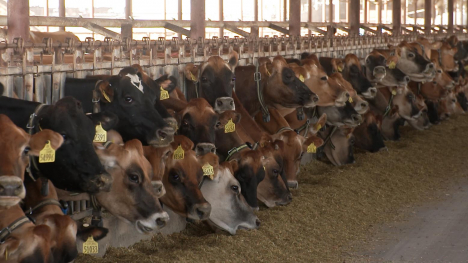
Many California dairy producers have made fighting climate change a high priority. Recent adoption of certain laws has helped them in achieving their goal.

USDA projects best acreage and production guesses for 2026. Wildfires and an avalanche top weather headlines. Turning waste into an investment in your operation. And, commodity market analysis with Shawn Hackett.

President Trump's use of the Emergency Powers Act is disallowed and USDA lowers the number for planted acres of wheat, corn and soybeans.
Kate Gordon has watched American energy policy evolve for two decades across multiple presidential administrations. Her frank conversation about rising utility bills, surging demand from data centers, the complicated truth about coal's comeback and whether an all-of-the-above energy strategy still exists in America or whether we're now just picking winners and losers.

Shawn Hackett discusses the economic and commodity markets in this web-only feature with topics of wheat, corn, soybeans and other topics of interest.

Shawn Hackett discusses the economic and commodity markets of wheat, corn, soybeans, live cattle, feeder cattle and lean hogs.