Karen Braun discusses the economic and commodity markets in this web-only feature with topics of wheat, corn, soybeans, Brazil and China.


Karen Braun discusses the economic and commodity markets in this web-only feature with topics of wheat, corn, soybeans, Brazil and China.
Transcript
[Paul Yeager] Welcome to the table for the Friday, February 13th, 2026 installment of Market Plus Karen Braun. Back with us, Karen, you were a guest for us on our live show in L.A. Claire, you were here on a panel before this, your first time solo. You are coming off of a big week, big two weeks. You were not necessarily to many time zones away, but on the other side of the world. In Brazil, I had to cut you off about cattle, so you get used to that.
[Karen Braun] That happens.
[Yeager] Tell me the importance of or beef is having in Brazil right now. So did that set you up enough?
[Braun] Absolutely. Okay. And again, I have to bring back China because it's all about China. So, Brazil has in 2025 they had a record beef production year. And a lot of that was driven by Chinese demand. Exports to China up hugely from the year before. So, it's kind of a really different story in Brazil right now versus the U.S. I mean, the U.S., you know, the cattle supply is really, really constricted beef supply just really, really, really strained. Whereas in Brazil total opposite, they have record production. They're able to thrive. And of course, the exporting situation. Brazil. And you know we listen to you know the stats and all. You know all the improvements that they've made. They've increased capacity by 94% in 15 years. I mean, that's almost doubling capacity in 15 years. And so, when you think about just it's hard to wrap your head around that. But yeah, like they are their logistics are just expanding. You know, every single year they're able to do more and more and more. And you know, you don't talk about the logistic problems that you used to talk about ten years ago. I mean, you still do talk about some of them, but not in the same way. I mean, there's not as much backup at the ports anymore. You know, you don't have these long waiting times usually. So, things, things are moving a little bit more smoothly, but there's so much more to do.
[Yeager] So, what used to be maybe a talking point or impacting our prices here is gone away. Is being reduced.
[Braun] So, it's shifted because you don't you don't talk about really those huge delays at the ports anymore. Now it's more about, okay, how can you know? How can the middle of the country Matto Grasso be accessed? And so, you know, when I was there, we were told basically, I don't know, in 4 to 5 years they're expecting the railroad to reach central Matto Grasso. Now it's only in the southeast. But, you know, their rail network is not like it is in the U.S. So that and the road network isn't either. So, so those things, though, could be only a few years away from being sorted out or at least brought to the next level. So. So that if they do that, that's just going to, that's going to only help them continue to supply the world.
[Yeager] Well, let's look at what their current supply is with Ryan in Iowa. He a lot of great questions. We're not going to get them all because I'm talking sorry Ryan's question. First I hear rumors Brazil is having some quality issues like mold with soybeans coming out of Mato Grosso. Is this a big enough issue to convince other countries to pay for more expensive U.S. beans?
[Braun] You know, I, I don't really know that it is yet. And northern Mato Grosso, you know, where beans are planted first and then harvested first. I mean, it's a rainy it's a rainy spot. So, this is a this is a common problem with these areas. But, you know, I have seen more reports. It's definitely a thing in the short term. But right now, I do think it looks like a short-term issue for right now. But it is something to watch. I mean, I think, you know, February soybean exports for Brazil are supposed to be a massive record. So, you know, we'll find out here in a couple of weeks how those went. And, you know, did they meet expectations maybe were there a little bit of delays.
[Yeager] Is the big destination for their exports to China. Or is India come in and shoehorned a little bit into that?
[Braun] 75% of Brazil's soybean exports go to China.
[Yeager] That hasn't changed.
[Braun] That hasn't changed. That actually hasn't changed in a really long time. It's just that both demand, like Chinese demand and Brazilian exports have expanded together, but the share has actually been kind of constant 70 to 75%. I think that's really interesting. Just because, you know, you kind of wonder what is Brazil's production capacity, what is China's demand capacity? I mean, those are the biggest questions in my mind.
[Yeager] But you could argue that the two have grown in the same stride for stride, partially because they've been working together a little more. And the one country is getting bigger. I mean, all these different things. So, if you do as Bradley, Nebraska wants to know, if you do have these bad beans and you have to blend them off, are the U.S. beans worth the premium? China's paying. So, I guess really what a lot of people want to know is a can this rally keeps going? And is it because of any of these reasons.
[Braun] Right. Well, you know, I still don't really think it's enough right now to have China come back to the U.S. You know, unless there is this trade deal which takes fundamentals off the table. I mean, you know, when you're when you're buying more expensive beans for political reasons, you know, fundamentals don't work. That's not a, you know, quality issue. That's not a, you know, delayed shipment issue. That's just a completely political thing. So, you can't it's really hard when that enters the mix to really kind of sort things out. But yeah, no, I think right now it is still a very short-term issue. But it's still early. It's still early. You know, we're just getting started with the export season and a lot can happen in Brazil. I still.
[Yeager] Okay, one more Brazilian question kind of ties in just a tiny little bit. And we're going to skip Philip. But thank you Philip. By the way, the guests on this week's MtoM podcast, Gary in Wisconsin. This is an infrastructure question. Brazil has always had this infrastructure thing. What are some things that are actually holding them back from being more acres back from large acre growth?
[Braun] Yeah. Well, they actually have had large acreage growth. They have increased their soybean area for 19 consecutive seasons now. I mean, I don't know what crop or region you can find a stat like that. I mean, that is just that is unheard of. So, they are expanding their acres. But I think in terms of really, you know, being able to take that next step up is, is really, like I said, the infrastructure. I mean, you don't have the railroads like you have in the U.S. You don't have the road networks like you have in the U.S. And it takes a long time. I mean, Mato Grosso is humongous. So, building that road that, you know, they're actually expanding the road. So, it's now two separate roadways. And I had the pleasure of being stuck in truck traffic on BR 163 in Mato Grosso. I think it's a rite of passage for any visitor there. But you know, but the bean trucks. It was filled with trucks. And so, I think that that is still a limiting factor. But if they ever sort that out, oh, man, the potential is huge. But it will take a while.
[Yeager] Take a while. All right. Let's go northern hemisphere for a moment James in Minnesota. And this is a question that's coming, especially when you look to the West. Is it too early for a dry weather rally?
[Braun] Yes. And the reason I say that is because we remember back to February of last year when all the meteorologists were saying, and no, no digging on meteorologists because I am saying I am a meteorologist. Okay, I understand my position. Okay. But we were told, you know, that that there could be really a bad drought in 2025 potentially. And I know a lot of people didn't sell because of that potential. And so, I think a lot of people will be jaded, you know, to hear of any kind of drought concerns at this point in the season, just because, you know, you did not see that happen last year. You saw the exact opposite happen. So, yeah, I think it's too early just because of what we just experienced last year and how it did not pan out the way that, you know, we were told.
[Yeager] And in certain areas I'm thinking basically I-70 north that has been to Minneapolis. That's kind of a donut there where there's not been a lot of moisture. However, the southeast to the east coast different. The west is pretty dry. We're going to hear stories very, very soon about Colorado snowpack and what that means for everybody who takes water allotments. I guess if you put it through that scope with stuff that's already dry, not what could be dry, right? What's the impact?
[Braun] You know, I think you can definitely go into a season kind of dry and then recover. I don't think that that's fatal. But I do think, you know, we're sitting here in February in Iowa at 60 degrees. And it's been really, really mild up in the northern Plains as well and dry. And I think a lot of times when you see a warmer February, especially in the North, sometimes that is a precursor to some of our drier seasons. Maybe not, you know, at a 2012 scale. But, but I do think that that is maybe a warning flag. I'm not completely sure, but to see this, this weather in February, just so mild and just, you know, lack of snow and precipitation, it's something that I think we should be a little bit concerned about, but not terribly concerned.
[Yeager] Yeah, just Iowa in general. We had a lot of snow in December and in January and it's gone. But yeah, you know, shorts, the shorts weather. Be careful when you have those white legs showing up. Let's do, to do. Could we go down. Oh, let's go Ken in Michigan Ken had a question about sorghum. And this is something Glenn, thank you for your question. We did kind of cover that in the in the analysis section. What do you make of the increase in Chinese imports of U.S. grain sorghum? I know there's a corn quality problem there. Will it develop into corn imports? Again, something we covered. But let's look at it from the sorghum standpoint. Karen.
[Braun] Yeah, I mean, I think that it just speaks to China's need for grain imports. I mean, they, they have to cover their needs. You know, us sorghum is priced right also it checks the box of just kind of goodwill and showing that China is purchasing U.S. goods. So, I think there's, you know a few uses there. But yeah, I think that is that a precursor to the to the Chinese corn imports potentially maybe. But for me, like I said, I think that it's going to be really watching that corn price in China and kind of looking at how trade unfolds here in the next coming weeks. And, you know, we're kind of listening for maybe some more confirmation as to, you know, what does China plan to do? You know, especially on the soybean side. But then, you know, are we going to further roll back tariffs, have another trade truce for a year. What does that look like? That's really where I would see a lot of optimism potentially for all U.S. products. You know not just soybeans or sorghum or even corn.
[Yeager] And is how long can your optimism last. Can it last to when we start turning the planters?
[Braun] Sure. But you know, you're only ever one tweet away from everything just turning overnight. So, and that is the reality that that we're living in. And we know that we've lived it. So, we're kind of used to it. But you never fully get used to it. So, you know, but as long as everything kind of keeps going, you know, as is, I, I don't really see a whole lot of, you know, super heavy news because, you know, we did get a giant crop in January from the USDA corn crop. And so, you know, was all of our bearish news out of the way at that point. Maybe, maybe so. And I think a lot of people thought that, you know, back in January. So, you know, how much worse can these numbers get. You know, now we're increasing corn exports so even further. So, you know, I it I'm cautiously, cautiously optimistic. Now in planting.
[Yeager] That'll be the headline 2026 Karen Braun cautiously optimistic. Do I have it right?
[Braun] Sure.
[Yeager] All right. Print it Karen. Thank you. Appreciate it. Great insight.
[Braun] Yes, thank you.
[Yeager] Karen Braun everybody. And next week we are going to have a story about turning waste into investment in your operation. And Shawn Hackett is going to sit there and have a conversation. Thank you so very much for joining us. Have a great week.
Trading in futures and options involves substantial risk. No warranty is given or implied by Iowa PBS or the analysts who appear on Market to Market. Past performance is not necessarily indicative of future results.
Watch More
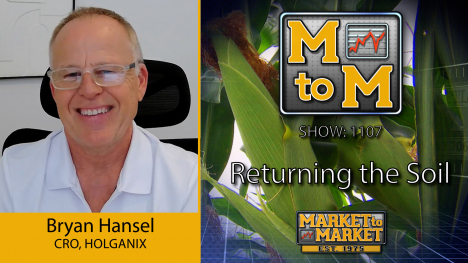
A regenerative agriculture startup says its soil probiotic can cut fertilizer use by 40%. Bryan Hansel of Holganix explains the science behind bottling nature back into the ground.

New tariffs heighten U.S.-Canada trade tensions, USDA backs $10 billion in emergency farm aid, and cattle producers confront continuing market pressures.
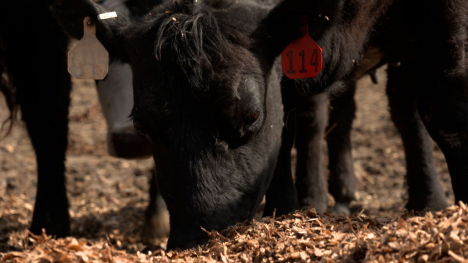
Despite historic cattle prices, many producers still aren't expanding their herds. White Oak Pastures owner Will Harris explains why.

Weather concerns, global conflict and renewed Chinese buying are supporting grain prices. Don Roose discusses whether corn could continue climbing and how producers should approach the market.
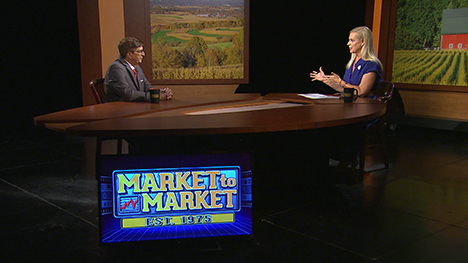
Weather concerns and global conflict are adding risk to corn and soybean markets. Don Roose discusses whether seasonal lows are in and how producers can protect prices without giving up potential gains.
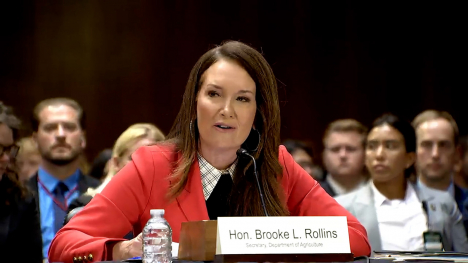
USDA Secretary Brooke Rollins supports $10 billion in direct aid for farmers facing high input costs and losses during the 2026 growing season.