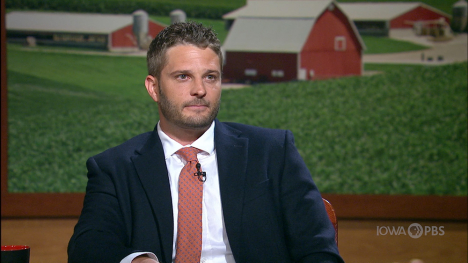
Always be looking towards the next crop. Ted Seifried has thoughts about ‘27 in our Market Plus.


Hogs have a new development and movement partner in the trade according to Ted Seifried. We also spend a lot of time on what more/less fertilizer means this year and looking at the major impact that could be coming in 2027. Here’s our Market Plus that also includes his thoughts on the survey participation (or lack thereof) means.
Transcript
[Paul Yeager] Welcome back to the table for the Friday, April 17th, 2026 Market Plus segment. Ted Seifried is with us now and Ted, a lot of good livestock discussion, but we did leave out hogs and I did have an emailer over the week that just said, hey, don't forget about us. You mentioned the crush part last week. The story was China is taking care of their own meal. They're coming up with these new concoctions. What's that doing to the A, the hog market and B, the meal export market in this country.
[Ted Seifried] Meal exports have been strong. And a lot of that goes back to what we were talking about in the main program. Is that soy that soy dollar program that they had in Argentina sort of left them a little bit tight on beans at the end of their marketing year, right? Because I mean, they've got beans that are going to get harvested here pretty soon. So, you do wonder how much longevity there is in any sort of strength in soybean meal. But soybean meal in the last week or so, the strength there has really been the driver of strength or relative strength or sideways trade in soybeans, I guess. But yeah, did you want to talk about hogs?
[Yeager] I want to talk about hogs because there's also a theory starting to develop a little bit of steam of hogs are finally going to be the counter to beef. But then beef has its sell off towards the end of the week. And maybe that throws that theory out the window.
[Seifried] Yes, to some extent. I think that is that's half the equation. Paul. The other half of the equation is the major recovery that we've seen in the stock market. Right. I think a lot of the talk that was that was coming from a lot of the talk of pork being the new beef was coming from. Oh, wow. Big drop in the stock market. A whole lot of concern about what geopolitics are going to do to the global economy. People are going to start spending less money and now start respecting these high-priced beef prices when they go to the butcher's counter. But then you have a big recovery in the stock market and you say, oh, well, everybody's going to keep spending money like they have been. There's nothing saying that people are that that beef demand is slowing down. So, you know, in the main program, you said that the hog market had been down nine consecutive days. Yes, sir. Yes, sir. Absolutely. Has. Look at the stock market. It's been up, what, ten consecutive days? It's not a coincidence that those two things happen, right? They are related in my mind. They're related.
[Yeager] So, like we used to say, we tied the stock market to the cattle market. You're now saying the stock market is tied in a way, but the opposite direction.
[Seifried] Yeah, in the opposite direction. Because, you know, we had to your point, we had developed the narrative that, you know, if people are worried about their 400, one is worried about their finances, that they might start choosing the cheaper protein alternative, i.e., pork. But when you have a recovery in the stock market, that narrative doesn't really hold. It's true. And you see that reflected in the cutout values that were down pretty sharply this week. The good news, Paul, is that we are now headed into grilling season, and demand for proteins as a whole starts to pick up. So, I am hopeful and I'm optimistic. Even though we did have three consecutive closes now below the 200-day moving average in in in lean hogs, I'm optimistic or want to be hopeful that we do find some footing here pretty soon because you know, these down days haven't been as severe as what they had been, you know, earlier in this break off the highs. I'm hoping we find some footing and start to bounce back here fairly soon.
[Yeager] A lot of great questions for you. You always draw out the attention of everyone. So, thank you to those who submitted questions. We're not going to get to them all, but let's start with Glenn in Ohio. If we could, because he has basically the story we've been talking about for quite a while with increasing prices for fuel and fertilizer, along with the current weather-related disruptions and planting progress, will accurate acreage reporting from NASA be even more of an oxymoron this year, as there could be a low participation rate from farmers?
[Seifried] Well. Hi Glenn, and there's three questions in there. Yes, that I counted.
[Yeager] So, I'm done. Now you just take it from here.
[Seifried] Yeah, right. Well, okay, so first of all, you have the high-priced fertilizer. And what's the effect of that going to be on acres. Then you have the question of whether. And then finally, what was his last part of the question.
[Yeager] Lower participation.
[Seifried] Yeah. And what do we do. We trust surveys or what is what do we how do we read acreage? So, let's start with the fertilizer. Yeah. You know, you had a reporter earlier on the show saying, you know, how much fertilizer had been bought and the odd man left out is definitely the smaller farmer. That's the acreage that that is going to be in question. Now, if we have the weather to tie it all together, if we have the weather to keep planting, we will keep planting corn, but then yield might be a question, especially for those smaller operators. So, one way or another, I do think we've taken we are going to be taking something out of the production of corn, probably, but I don't think in and of itself, the fertilizer, high price fertilizer is going to cause a massive drop in acres. It's got to be that combination of high price for and planting delays. So, like go back to 2019, we were still planting corn after June 1st. We want to plant corn. We historically or traditionally think that if we have problems during the planting season, if weather issues during the planting season, that's when corn acres drop. Well, not necessarily, but in a year like this, when we have high priced fertilizer and if we have planting delays, that's when your corn acreage might start to drop. Now, I don't think it drops tremendously. I'm currently using a number of 92.4 million acres for corn. I think, where you see the effect of high-priced fertilizer is in the upcoming crops. The next South American growing season, and potentially our next growing season. That could have a very profound effect. And what that might mean is that at some point during the growing season this year, the market might figure out that we have to carry over as many bushels, 2 billion plus bushels into next year in order to cushion the next production number that we might see. So, I think that's one reason why I have a pretty favorable outlook for corn going forward. And then, you know, finally, do we trust surveys anymore? The that's a problem, right? The participation not only is really down, but you have to question the answers that are being given. Even I mean, last year's debacle over acreage coming in 4% higher once we see the registrations with crop insurance just means that these surveys are not to be trusted right now. That being said, when we see the planted acreage survey at the end of June, I think the likelihood of us getting a final number higher than that this year is a lot more diminished than what it was last year because of the fertilizer situation. I don't think we're going to see these surprise corn acres, but you can't put anything past it. I don't really know how to look at acreage and the surveys versus what we were going to see on the final, because last year really, really hurt the confidence level of what we can say. The accuracy of these surveys is.
[Yeager] And like you were talking about with South America and the issue there in Argentina, and that it's not just here, it's not just here. Can we do Bradley and Nebraska's question, because you mentioned looking ahead and maybe we're going to see some of this moving forward. And Bradley was wanting to know, should producers start marketing 27 corn? Should they sell cash futures to an HDA or hold for higher levels?
[Seifried] Right. Yeah, I, I, I'm always an advocate for this time of year to be looking at the, the, the next crop. So yes, I'm always looking at, you know, hey, let's make some sales in 27 and 27. Prices are pretty decent. Now, that being said, if we have a big acreage problem based on high priced fertilizer, I see that coming for next year. So, I want to look at next year's an upside potential for 27. So, I am saying yes, let's make sales up to maybe 10%. But I want to do it with what's called a synthetic strategy. And what that is, is that we're making hdas, we're making cash sales, but then turning around and buying calls, even if they're a little bit further out of the money, I know we're paying a lot for them because the time value or we're doing where we're buying a call and then selling a further out of the money call in order to cut that time value down. But having some sort of real ownership strategy or some sort of way to participate in the upside, I think is very key for that 27 crop.
[Yeager] Okay, we're going to get to something else about the 26 crop in a minute. I think I'm going to probably set you up to do it right now. So be prepared for what we've rehearsed beforehand here.
[Seifried] I'm always prepared.
[Yeager] James in Minnesota is going to be our next question if we could. James in Minnesota was asking, can the higher price and fertilizer change the corn dynamics enough to cause Ted to bring out the corn hat? So, we've already talked about this a lot, but I just wanted to put the words into the record. Corn hat. Ted, what crop do you feel the most positive about given everything you've just said? Because I'm going to have a hard time trusting your answer given what you're about to say.
[Seifried] Okay, okay. Well, Paul, here's the thing. I am pretty fundamentally bullish corn at this point for a number of reasons. And by the way, this is the travel corn hat. Okay. I really wanted to bring. I have to apologize to the viewers. I really wanted to bring the normal corn hat, but it just wasn't going to work out this time. So, we did this one just so that we had something. But like I was saying earlier, I think the biggest effect that the high price fertilizer might have might be on next year's crop and the planet Acres that we might have for next year. That being said, it means that old crop is going to put a premium on the bushels that we have left. We will potentially start to price ration old crop in order to bring as much of that cushion into next year as possible. So, I do think that the way we're set up, the way that the funds have now cleared out of some of that long position at a time where we're getting into planting, where we might have planting delays and that might really bring the conversation of lower corn acreage out and all those things come together. I really am optimistic that we have a much more seasonal year this year for corn, which means putting our highs in June or July, and I would not be surprised if once we get the ball rolling, if we get the ball rolling. But I think I think we might if we start to get into that rally, some of these more bullish, longer-term conversations start coming out of the woodwork and we might get into a bit more of a fever pitch for corn. So, I don't know. I think there's a potential there for corn.
[Yeager] I don't try to hold your feet to the fire too much. Are we talking a –
[Seifried] I would very much like to say in December, corn. I think I'm pretty confident we'll see a five in front of corn. I was saying that even at Commodity Classic a couple of months ago. But yeah, I'm. I'm now feeling like, you know, July even old crop sees a five in front of it.
[Yeager] Okay, I know you got the corn hat on, but this is a bean question too, because there's areas that put beans ahead of corn and planting. We are on the 17th of April as we sit here tonight and record this. At what point does the weather story for part of the Corn Belt, when we know the other part is planting? I mean, we have these huge amounts of comments on our Facebook page. Just a simple question. Everybody's got a different tale of what's going on. How's the market read that. And how does that influence? I guess just focus on beans for a little bit. And corn.
[Seifried] I was really surprised to see how much beans on my way over here today, to see to see how many beans were out there already. You know, we've gotten to this not habit. We've realized that planting beans earlier than later works, right? It's a different mentality than what we had years ago, which was, let's plant corn first, then we'll get to beans. We like planting beans early and it gives good results. So, look, I unfortunately, I don't know what to say about exports for next year. I don't know what our relationship with China is going to be next year. And we know that China is make or break for our export program. So, I don't know if we need the acreage or not for beans, but they're going in and with high price fertilizer and all the talk that we have, I think there's a good chance that we have some pretty good bean acreage this year. So, you know, I don't know, for me, we had the big drop the limit down day in beans. And ever since that day in the early or early half of last month, we have been absolutely sideways because we have a market that really doesn't know what to do with itself. I think the biggest reflection of that is look at the USDA's report last time around, they increased crushed by 35 million bushels, which they I think absolutely should have done. I think they could actually be forced to move at another 30 million bushels higher. But then they cut exports by 35 million bushels as well. So, we're treading water in beans waiting for the next story. I want to see the price action that we've seen this week, or even the last couple of weeks, seems to be leaning positive. Could be led by corn higher. Could be influenced, could be talked into going higher by corn. But I can't say that I'm inherently bullish for the soybeans from a fundamental standpoint, but there are always. Beans are always the one that could have explosive upside potential if things change. If China does start buying aggressively.
[Yeager] That's right. Or many other factors that are sure. So, all right. Did we cover all your checklist?
[Seifried] Yeah, I think so.
[Yeager] Okay. I appreciate it as always. Looks good. Ted. I'm sure we're going to hear about that. See what people say. Is this the first time you've ever worn it?
[Seifried] I think this this one has been on this show once before years ago. I've had it for a while. And again, it's the one that's packable.
[Yeager] It travels well. The travel hat.
[Seifried] Yeah.
[Yeager] Available at gas stations all across the Midwest.
[Seifried] Should be.
[Yeager] Ted Seifried. Great to see you. Thank you so much.
[Seifried] Always a pleasure, Paul. Thanks for having me.
[Yeager] All right. That is Ted Seifried. Next week we are going to have a story with one egg producer who is expanding his supply chain, one small farm at a time, and Dan Hueber is going to be here to break down the commodity markets. Thanks for joining us. Have a great week.
Trading in futures and options involves substantial risk. No warranty is given or implied by Iowa PBS or the analysts who appear on Market to Market. Past performance is not necessarily indicative of future results.
Watch More
Brad Matthews talks weather, cattle, and corn in our Market Plus.
Brad Matthews discusses the commodity markets with stories of weather, seasonality and Iran all in the mix this week.
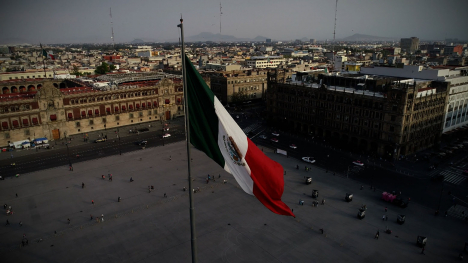
This week, the Office of the United States Trade Representative held the first of three bilateral negotiating rounds with Mexico.
Entering the final review of USMCA without Canada. The battle blueberry growers face after harvest. And, commodity market analysis with Brad Matthews.
The White House adds detail to the new trade deal, while China dodges the details. The drought continues to hammer the south and west. We’ll look at the ticking clock facing the dairy industry. And, commodity market analysis with Sue Martin.

The White House announced this week that President Trump has secured “historic trade deals with China” after his visit last week with President Xi.