We get to the China and weather story, but first our Market Plus with Mark Gold includes a special thank you in addition to thoughts on corn, soybeans and wheat.


Mark Gold has seen a lot in his 53 years of working with commodities. We hear what year stands out and why this year has its own set of challenges. Here's Market Plus with Mark Gold.
Transcript
[PAUL YEAGER] Welcome to the table for the Friday, June 12th, 2026 installment of Market Plus. Joining us now, Mark Gold. But first, let's go back to February 8th, 2008.
[MARK PEARSON] And a very special guest analyst, Mark Gold, joins us as well. So, both of you, welcome to Market to Market. And Mark, good to have you here. These prices -- this is Disneyland without going to Orlando.
[MARK GOLD] No question about it. You know, when you get historic prices like this, we've all been waiting for beans in the teens for 30 some odd years now. We now not only have beans in the teens, we have wheat in the teens. The march Minneapolis wheat bases, the option --
[YEAGER] Who's that guy?
[MARK GOLD] I don't know, some younger version of myself, I guess.
[YEAGER] I asked you in the 50th anniversary gathering we had back in August about what you remember from that program. You had had some interaction with Mark Pearson, is that right?
[GOLD] Yeah.
[YEAGER] You maybe had been at a couple of conferences. I always ask you about speaking, but when you were called to come to the show. Yeah. What's going through? What was in your mind that day sitting next to Sue and Mark?
[GOLD] Well, you know, Mark and I had gone back several years before that, so I felt comfortable being with him. You know, Sue was a formidable force in these markets. And, you know, you just try to hold your own and not look like an idiot. And, you know, hopefully it came off as something positive. You've had me back for a few years after that, so I guess it went okay. But yeah, I just remember thinking, you know, I'll do my thing. And if people like it, I hope they do, that's fine.
[YEAGER] Well, I haven't exactly said what we're doing and why we're showing this. So, 2008 is your first appearance. June 12th, 2026 is your last appearance. Mark Gold is retiring. How's that sound?
[GOLD] Well, it sounds pretty good. Mainly to my wife. Not so much to me, but my wife's pretty happy about it. After 53 years in the business, you know, it's just time I'm 72 or will be in July, and it's just time to, you know, go do some things. We've only been married seven years and we want to travel more, do some things. I want to play a little bit more golf, things that I haven't had time to do and, you know, get some rest.
[LAUGHTER]
[GOLD] You know, sleep a little bit. 53 years in this business takes its toll.
[YEAGER] Well, you're a young 72.
[GOLD] Yeah, I hope so.
[YEAGER] Spry. You're looking great right now. There's a question. The audience had a great response to, to, to your announcement. I know you've told your clients this is the first time it's on a broadcast. So, Joel in Oklahoma does have a question for you here in your goodbyes, what commodity year will you remember the most in your career and why? And Joel says, happy retirement.
[GOLD] Oh, thank you, Joel. I appreciate that. You know, really that's an easy question for me. 1983. It was the I was 29 years old. My dream since I'd been in the business had become I wanted to become a millionaire before I was 30. And in 1983 I made over $1 million trading. And that's the year I will never forget. I've never quite equaled it. Not to that level. I've had another million-dollar year after that, but 83 was the one that's a 29-year-old kid. A million was a million bucks back then. Now with, you know, Elon Musk, a trillionaire doesn't seem so good. But back then I was pretty happy with it. And I'll never forget, I remember specific days and trades and things like that.
[YEAGER] And I think you also remember, and I've asked you about this before, you know, some of your speaking engagements with people I've heard you described as one heck of a closer when it comes to when you're speaking with people and getting them signed up. And the part of the people, obviously is one thing you're going to miss. But, you know, farmers can also be a little indecisive for your needs at times. So, where's the balance to that of you enjoyed them. But come on, do what I have suggested.
[GOLD] You know, I've always tried to present myself as somebody giving them an alternative to what they've been used to for the last 40 or 50 years and try to take the speculation out of it. I never intended on winning everybody over. I knew that coming from the city, being a city kid, you know, it was going to be a tough row to hoe. But I believe that we had the ability to give him something better, something easier and less stressful. And I always felt, look, it's here. If you like it, great. If you don't, that's okay too. There's plenty of other advisors out there.
[YEAGER] Well, speaking of stress, how about the last few weeks in the markets? And I think that's where we're going to start with Hillsview Farms in Iowa, because they've been paying attention like everyone else. How low will corn and beans go before we see a rebound, or have we already seen the highs?
[GOLD] Well, we made some pretty good lows this week in the corn. Haven't been this low in quite some time. And the funds are now out. They've liquidated 330 or 340 thousand contracts of corn in the last six weeks. Now that they're out, I can be a little bit more positive on the corn market. The weather has been good, except there's too much rain in a lot of areas. It's still pretty dry. You go out to South Dakota in in southwest South Dakota and into parts of Kansas and Nebraska. We still have a lot of dryness out there. So, you know, can we see highs? If we get a summer market, we turn the heat on. Yeah, we'll rally. If we don't, we're going to probably see $4 December corn.
[YEAGER] The next couple of questions. I'm going to kind of merge together because I think there are going to be kind of tied a little bit. And you've already answered. Jeremy in Michigan was asking, what's up with wheat? You said no demand. You talked about that in the show. And it's there's a weather story there. So, Robert in Iowa, I guess I'll go with his question if I could, because Robert's is pretty simple. And I think you just talked about it, though, why the sudden drop in corn and beans in the last three weeks? Is it truly only the funds?
[GOLD] Well, I think it is the funds. But why did the funds bail? The funds bailed for two reasons. Crude oil prices have gone from their highs down to $84 here today. And the other thing is just the weather changed. We didn't have bad weather. We had a good we got the crops in the ground and probably record time out here. And everything looks pretty good for the most part. And you had those two things together, lower crude oil prices and pretty good weather, and the funds long up to their eyeballs. That's what happens.
[YEAGER] And I was going to ask you this during the program. So, thank you for setting me up here. I'm supposed to set you up. Sorry. The crude why is crude impacting beans as much, if not more than corn?
[GOLD] Well, it runs over into the soybean oil market. Soybean oil market has been incredibly strong. And even when the crude oil is broken, you know, 3 or $4 a barrel, you know, the soy oil is lower, but we're still at some pretty hefty prices here. We're only about 4 or $0.05 away from contract highs out here. So, it hasn't fallen out of bed. And that the reason is you look at countries like India, they're having all kinds of problems. They're importing oil in a big way out here. That's positive for the soybean market in the long run. But you know, they always they used to tie soybeans and silver together. Well, that's out the door. And I think they're going to pretty much at some point disassociate soybean oil and crude oil.
[YEAGER] You've also tied oats knows things. Yes. Is oats telling us anything right now?
[GOLD] Oats just keep, you know, moving closer to three bucks. I think the contract lows around 290. You know it knew it on the upside briefly. We made new highs on the oats. It looked great. And then everything just fell out of bed. I was very disappointed in that. The market looked like it could have moved a lot higher six weeks ago. It didn't. We've moved lower. And now the question is where do we go from here? I'm hopeful that the funds are out of the corn. Now we can rally the corn. The wheat, they're short 70, 80, 000 wheat. Hopefully we can rally the wheat. The beans will still be the issue until we know they're out of the their positions there.
[YEAGER] So Mitchell's question is then what's it going to take us to get a summer rally? You've kind of talked a little bit about some of the scenarios. Is it truly only tied to weather?
[GOLD] Weather in China.
[YEAGER] Weather in China.
[GOLD] If China comes in, which we hope they do, and they live up to some of their agreements, which they haven't done a good job of doing that in the past, you know, who knows where these markets can go? You only have a 300-million-bushel carryout in the beans. China comes in, takes 25 million metric tons. It's a lot of beans, changes the whole complexity of the market. And the Chinese are smart enough to know they're buying breaks. They ain't buying rallies out here. And now we've got a pretty good break. So, between the weather and the Chinese, we could have a market. Now, those are two big ifs, but we'll see where they go.
[YEAGER] Yeah. So, Scott, you got your question answered there because he was asking how low do we go until China buys American commodities and it is on breaks. Last week you could have said they came in and maybe we'll find out next week. There were some sales to unknown. Would it surprise you if there were some sales to unknown?
[GOLD] No, it wouldn't surprise me because we're getting pretty cheap. I wouldn't be surprised. In the next two weeks whether they start a program. If the funds continue to liquidate here, they're going to be the buyers. And, you know, I've always said when the funds want out, take it when the funds can't have enough of it, give it to them. And I think that's going to be the case here.
[YEAGER] I asked Matt last week where the funds going. Where are they going with their money right now? Is it all about these IPOs that are out there?
[GOLD] You know, certainly that's part of it. You know they've gotten hammered, hammered in the beans, the corn and the wheat. I don't know, you know how much money is out there, I don't know. I don't think they're going to have trouble attracting new money. And these IPOs. There's a lot more down the pike coming in the next six months. Maybe that's where it's going. It's not going into gold. We've seen pretty good break in gold. It's not going into silver. And some of the other commodities out there, certainly not going into cotton or milk. So, there are places the money can go. Hopefully we want to see a shift into the grains out of some of the other things that they've been in, and hopefully they'll come back, push this thing higher again. I hope we catch them flat footed in this wheat market. Nice and short and something happens positive there. But we'll see.
[YEAGER] Well yeah, we have acres coming at the end of June. I want to close with Chris in Nebraska. This is we also had Dan in Nebraska was asking about school room but Screwworm. But this one is if the Screwworm is such a big deal, if it gets to the U.S., how has the Mexican cow herd not been completely diminished because of it?
[GOLD] You know, I wish I had a good answer for that. Do we know what's really going on down there? I don't know that we really do. We know that there are cases been shown up. The border has been closed. You know, the border is closed. It's not going to open any time soon. So, the cattle market knows all that. And it really hasn't shifted much in the last week. And again, I think the bigger picture is what we saw in that last cattle on feed report. I think that's more significant right now.
[YEAGER] And you could argue that we've been trading this worm for 18 months.
[GOLD] Yeah, exactly.
[YEAGER] Once we had it in Mexico and confirmed that that was. So that's what do you always say? It's always baked in. It's always already being traded.
[GOLD] Yeah. And I think that's pretty much the case here. And you know, if there's ivermectin works that'd be a great thing. We don't have to worry about it again. But. I don't know how they've dealt with it. Is there division of agriculture so much better than our USDA? I doubt that. So, I don't know what it is. I think Secretary Rollins has done a pretty good job trying to keep this thing under wraps, but now it seems to be spreading and went from 1 or 2 animals to seven, maybe eight animals. Now. I'm hoping that it doesn't go beyond that, but as long as the box beef stays good, the cattle market is not going to fall out of bed.
[YEAGER] All right, last question. Do you want to be better in retirement at your drives, your chips or your putts?
[GOLD] Putt for dough, baby. That's where I certainly need a lesson.
[LAUGHTER]
[YEAGER] Line it up a little bit better now your eyes will be better because you're not up so much earlier and not staring.
[GOLD] At the screen all day. Exactly.
[YEAGER] Well, thanks for staring at us over these years.
[GOLD] Thank you for all the opportunities you've given me on the shows. And you know, it's been a great pleasure to work with all of you. And your staff is great here. And I just really want to thank you for the opportunity.
[YEAGER] We always appreciate it, Mark, great to see you. Thank you so much. Best to you on what's next.
[GOLD] Thank you.
[GOLD] Mark Gold one last time. Thank you Mark. Next week we are going to talk about one family's love of farming and how that has cultivated something bigger than the farm itself. And Karen Braun is going to be here to offer analysis. Thank you so much for watching. Have a great week.
Trading in futures and options involves substantial risk. No warranty is given or implied by Iowa PBS or the analysts who appear on Market to Market. Past performance is not necessarily indicative of future results.
Watch More

New tariffs heighten U.S.-Canada trade tensions, USDA backs $10 billion in emergency farm aid, and cattle producers confront continuing market pressures.
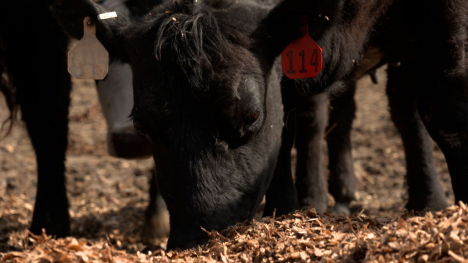
Despite historic cattle prices, many producers still aren't expanding their herds. White Oak Pastures owner Will Harris explains why.
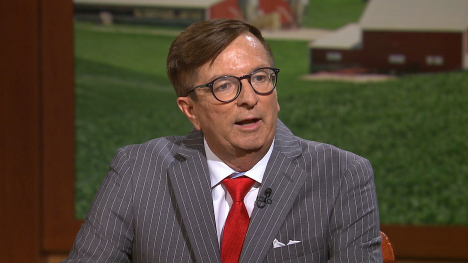
Weather concerns, global conflict and renewed Chinese buying are supporting grain prices. Don Roose discusses whether corn could continue climbing and how producers should approach the market.
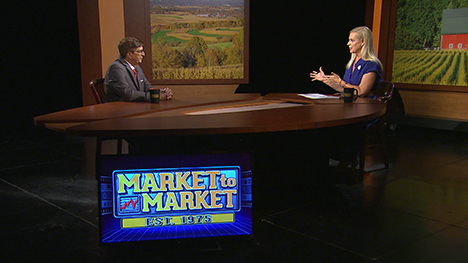
Weather concerns and global conflict are adding risk to corn and soybean markets. Don Roose discusses whether seasonal lows are in and how producers can protect prices without giving up potential gains.
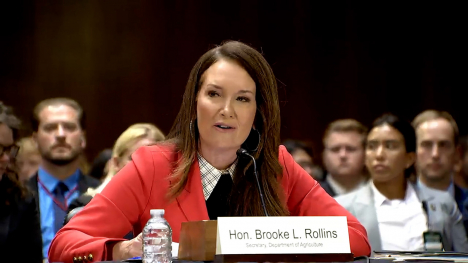
USDA Secretary Brooke Rollins supports $10 billion in direct aid for farmers facing high input costs and losses during the 2026 growing season.
President Trump announced new 50 percent tariffs on many Canadian imports, heightening trade tensions with America’s second-largest agricultural export market.