Is the market too comfortable with a trendline corn yield? Ted Seifried discusses the assumptions driving prices and what could change the outlook in this week’s online-only Market Plus.


The market is trading trend line yield right now. This and more with Ted Seifried in our Market Plus.
Transcript
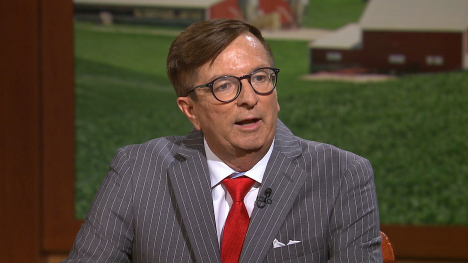
[Paul Yeager] Welcome to the table for the Friday, July 10th, 2026 installment of Market Plus. Joining us now, Ted Seifried Ted, you and I have sat across the table from each other for years. I can usually tell when you're ramped up, amped up about something, you had a different look in your eyes today following the support. And when I initially was going to call this report neutral, you took my head off. Why is it so bullish?
[Ted Seifried] No, I made you change the copy. No, if you look at the report and while you know, compared to analysts expectations it wasn't, it was within the range of guesses and so on and so forth. It was an extremely wide range of guesses. But the between the lines things of this report is what really gets me excited. For one, it is extremely rare for the USDA to decrease supply and for new crop corn that came in in the form of lower beginning stocks. And then yet also increased demand. Generally speaking, if you have a decrease in supply, you have a decrease in demand, increase in supply, increase in demand. Not this not the case. It's rare that you have those moving opposite directions and giving us a sub 1.8 billion bushel carryover. Man, that is I think that's a lot more fragile than it seems years past 1.8 billion bushel carryover. You know, it's a comfortable carryover. But with the amount of demand that we have, the stocks, the usage ratio is a lot tighter at 1.8. And then like I said, if you cut away at that 183 national average yield, which again, I want to stress this at the moment, and I think the reason why corn wasn't up, you know, $0.25 on Friday was because we don't have a reason to cut that 183 national average yield down just yet. That's why the USDA didn't do it. But if you do have a reason, if we start to believe there's a reason that we're going to cut down from that 183 national average yield, each bushel is about 80 or so. Yeah. Each bushel per acre, 84 million bushels. So I mean, that adds up very quickly. You cut out three three bushel per acre to that 180, like I talked about. I mean, that takes us below a 500 million bushel carryover. If you're not cutting demand aggressively or yeah, 1.5 billion bushel carryover, that is really tight for this day and age for stocks. From a stocks usage perspective. So we should be extremely sensitive to any weather concerns from here to the end of the growing season.
[Yeager] I have questions on weather, but I have questions about seasonality for just a minute. We prior to this week peaked around Mother's Day. Oh, for a few weeks. Normally this report in July doesn't give you the fireworks that the fourth does. July is always that time when it's like, I got to clean it out. I'm not going to get a good price. We're going to the doldrums. What does that say? That we are counter to what normally happens in July of what potential could be?
[Seifried] Yeah. So that's the thing about the timing of this report, right? I mean, you kind of wish that the quarterly grain stocks report that we had at the end of June had been known previously. You kind of wish a lot of these numbers had been thought about or factored into the market earlier, because now we are to the point where if we don't get a weather issue somewhat soon, which, by the way, there's a there's a ton of concern about weather for next week, for that matter. And if these, you know, high pressure ridges keep coming through, that's going to really make us concerned about how we're going to finish off this corn crop. And then it's going to carry over into soybeans as well. But yeah, seasonally we're looking for highs sometime around this time of year, you know, between now and the end of the month. Basically. So to have a rally at this point, it's going to have to be completely driven by weather. Like I said earlier, the reason why we weren't up $0.25 on this report today, Paul, is because there isn't a reason to really question that. 183 national average yield. We're going to have to have multiple weeks of weather that really makes us think, oh, wow, look at these conditions coming down. Oh, wow. We're experiencing a ton of heat, right? During pollination. Oh, wow. The condition of this crop is really going backward fast. If that's the case, the stage is set, the powder keg is set for corn prices to go sharply higher, I think.
[Yeager] Well, thanks for doing the work. To answer. Mike Allen Iowa's question. Dale and Iowa's question. Eli and Iowa's question. All three were about the corn market. Dan in Nebraska was asking let's go. Dan. We were going to do Dan during the show, but I didn't quite get it in. But I need to talk about this because this is about the weather and a phenomenon you have not talked about. Dan in Nebraska asked us on Facebook, what do you think is the biggest misconception producers have about Super El Nino and how it could affect corn and soybean markets? How should farmers adjust their marketing strategy if weather volatility becomes much more extreme?
[Seifried] You know, I think a lot of people think super El Nino is going to have a massive impact, massive negative impact on our growing season. And that's not, generally speaking, the case. It doesn't necessarily mean that with the super El Nino would potentially mean it for other countries' production. I think the Brazilians and the Argentinians have to be very nervous about their next crop. Australia's got to be really nervous about their wheat crop. In fact, the USDA has already cut Australia pretty aggressively, and I thought it was pretty early to do that. But they're already looking at the El Nino and the impact there. So yeah, again, I'm not sure what the rest of our growing season looks like. It seems like we're going to have this back and forth between periods of rain and cooler weather. And these ridges. So which, which of those two things is going to dominate the rest of the growing season? That's the big question we're all trying to figure out right now what the market's trying to figure out right now. But El Nino is really a bigger thing. The super El Nino, that's a much bigger thing. I'd say the next time we're really going to be talking about that is as we get into the winter months for South America.
[Yeager] For South America. All right, let's go to Mike in Iowa. And because you talked about beans for a little bit. So we're going to transition. There. Was this our last chance to sell $12 beans right here?
[Seifried] You know I don't know. Again, that all comes down to weather and China right. There's renewed optimism that China is going to buy the 25 million metric tons. I don't know why I'm still kind of skeptical of that. I think China, you know, lots of times says things and then does different things. It's good to see them starting to buy. If they do buy and yield comes down in beans, then you have a lot of upside potential in $12. That won't stop us. But if we get through the rest of the growing season without any major issues, that 53 national average yield is there, and China does buy. But either only buys the 25 million metric tons or fall short of that, which I think they could potentially, then, yeah, I don't know. It's going to be tough to justify over $12. So maybe the answer is maybe the beans are the biggest wild card on the board right now.
[Seifried] All right. Let's stick with China and soybeans because Jeff and Indiana has a couple of theories that he wants to float by you with the what's the real story about China buying in the US? If there's a Kafka owned barge loader on the Mississippi, how are they not buying all the time? We only have government data to go off for that information.
[Yeager] Is that a first? Is that an accurate statement? Is there China on the Mississippi?
[Seifried] China owns a lot of assets all over the place in the United States, in Panama, in Brazil, everywhere. China owns. I mean, they're very, very interested in grain movement around the world. So that is whatever. But that doesn't necessarily mean that every boat that's loaded there is going to China, right? But I will say, I think they do all of these things with the intention, intention of stuff to go to China. But again, it's a business and they do multiple things. So yeah, I don't know. You know, I think China is back, you know, 5 or 6, I don't know, let's go. Maybe ten years ago I really did want to have a good relationship with us. But then political things have happened. We've, we've kind of decided for a number of reasons that we want more fair trade with China. We want a more fair trade balance sheet. And we really at least trade for trade war. 1.0 was very much centered around intellectual property. It's in their culture to say, hey, we're going to copy this and make it our own. That's an honorable thing for China in our country, that is lawsuits. That is not an honorable thing. That is not okay to take people's ideas. And that's just a cultural difference that we have. Right. And so, I don't know, I don't feel like our relationship with China is ever really going to be naturally good again, at least not in the foreseeable future. I think if China is buying from us, it's because they're trying to gain political favor to keep their export business going with us, keep political things good with us. If at any given moment, China doesn't feel like they need that or they don't feel like things are going well, then they're just going to stop buying. They're not going to buy.
[Yeager] And you've said before on this program, I think you saw it right there and said it. China and the US relationship for a while seems very transactional.
[Seifried] Yeah.
[Yeager] And that hasn't changed. I'm not hearing you say that that's changed.
[Seifried] Right. Well it's changed from China used to buy from us because it made sense. Dollars and cents. It was based on price. It was based on availability. The time of year that we're available versus South America. It was always based on value. Now, I think the transactions that they're making are politically driven. It's a political transaction. That's the currency that they're trading in. Now. There's always going to be that extent to China that they're going to look for the cheapest. And if we're the cheapest, we will maybe, regardless of politics, be in favor with them as long as we're not in the heat of a trade war. But it seems like the buying that we're getting, especially when it comes from Cofco, the buying that we're getting right now feels very politically driven, and that's the currency that they're trading in at the moment.
[Yeager] I feel like I'm going to play a game show host here. I'm going to give you three options of questions that you want to answer. Do you want to talk about Iran? Do you want to talk about the first ten days of July, or do you want to talk about the national yield trend?
[Seifried] Wow, all of them. I don't think there's that much to say about Iran. Okay.
[Yeager] So sorry, Roger in Nebraska.
[Seifried] Well, I don't know what the question was, so my apologies. Roger. Let's go with national yield.
[Yeager] Okay, so that's Dan in Iowa. He wants to know, Ted, what National corn yield and national soybean yield is being traded right now by the managed funds trend line three above or three below.
[Seifried] Oh, that's a great question. I think that we are. I think the market is trading trendline yield right now. I think the way that we saw the report, the reaction to the report today, like I said, I, I think the building blocks were there for corn to potentially be up $0.25. If as a whole, we didn't believe that 183 national average yield was possible, we were only up $0.09 because for the moment, believing that that 183 is, is what it is. And you look at conditions for both corn and soybeans, while they're not as good as this time last year, they're right around average, which means average means trend line. For what it's worth. Right. So I think we are trading a trend line at the moment. Now fast forward a week or two. If we're deviating from the trend line in either direction, that will have a very significant impact on the market. And as we've been talking about this entire show, if you start cutting away from that trendline yield in corn or beans or both, this report left the building blocks for, I'd say, the possibility or maybe need for demand rationing.
[Yeager] You save that for the end.
[Seifried] Yeah,
[Yeager] Man, you know how to end with a cliffhanger.
[Seifried] You know.
[Yeager] It's like you've done this one time before. That is probably one of the most action packed 22 minutes we've had with you in a while.
[Seifried] Yeah, there has been a lot to talk about today.
[Yeager] Ted Seifried, as always, thank you so very much.
[Seifried] Thanks, Paul.
[Yeager] It's Ted everyone. Next week we're going to look at the rural veterinarian shortage. And we're going to have the commodity market analysis with Naomi Blohm. Thank you so much for joining us. Have a great week.
Trading in futures and options involves substantial risk. No warranty is given or implied by Iowa PBS or the analysts who appear on Market to Market. Past performance is not necessarily indicative of future results.
Watch More

A regenerative agriculture startup says its soil probiotic can cut fertilizer use by 40%. Bryan Hansel of Holganix explains the science behind bottling nature back into the ground.

New tariffs heighten U.S.-Canada trade tensions, USDA backs $10 billion in emergency farm aid, and cattle producers confront continuing market pressures.
Despite historic cattle prices, many producers still aren't expanding their herds. White Oak Pastures owner Will Harris explains why.
Weather concerns, global conflict and renewed Chinese buying are supporting grain prices. Don Roose discusses whether corn could continue climbing and how producers should approach the market.
Weather concerns and global conflict are adding risk to corn and soybean markets. Don Roose discusses whether seasonal lows are in and how producers can protect prices without giving up potential gains.
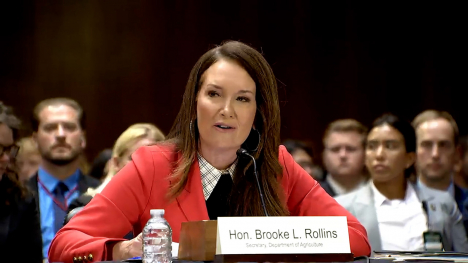
USDA Secretary Brooke Rollins supports $10 billion in direct aid for farmers facing high input costs and losses during the 2026 growing season.