Balance sheets and boxes to check were key parts of Ted Seifried this week when it comes to corn.
From Powder Keg to Fireworks: Ted Seifried on Corn’s Historic Rally
Share


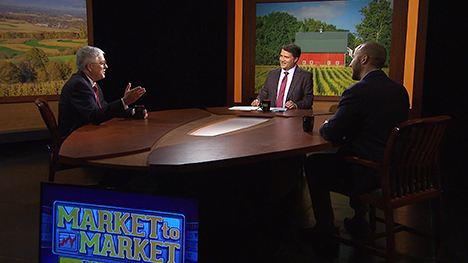
Corn has provided a lot of optimism in commodities, coming off one of the best Augusts in 50 years. Demand may be shifting away from Mexico, as more cattle could stay on their side of the border. As Ted Seifried said in Market Plus, the model has changed — and we also hear about the competitiveness of the U.S. in the export market.
Transcript
[PAUL YEAGER] Welcome back to the table for the. Friday, September 4th, 2026 installment. Market Plus Ted Seifried. Still with us here, Ted. You put out on X last night. A question to have, questions we had healthy response. Yeah, the X questions were good. There was one about the sale of the Lakers and how it tied to hedge funds and health of the economy. The jobs report on Friday reverses course from the month before, and adds a bunch. What's the state of the overall economy right now?
[TED SEIFRIED] Well you know, I mean that jobs report coming in much better than expected. That really opens the door for higher rates. So that's a double edged sword right there. I think the chances for a quarter hike on the next meeting jumped maybe 10%. Now sitting at about, I think 80% roughly. So very likely we are going to see interest rates creeping higher once again. That is longer term, not terribly bullish, right. So yeah, the state of the economy at the moment is good. In fact, it's good enough that we can start talking about raising interest rates. So again, double edged sword. The question that I think you're referring to is am I worried or am I scared of the sale of the Lakers? Basically. Are we looking at the potential for an AI or a tech bubble? That's the way I read it, man. I don't know. What am I scared of? Wet AMD needles in your eye. That's really what I'm scared of. Paul. Like my mom has that. It's terrible. If look, if you were going to try to put a needle in my eye, there's no amount of sedation that's going to. If somebody is getting a needle in their eye today, it's not going to be me, Paul. Just saying.
[YEAGER] Did I miss something? Did we go off script way more than normal?
[SEIFRIED] Just saying things that I'm scared of. Yes. The point is, is that I don't lose sleep at night at the moment about an impending AI bubble. I do think that is a thing. I think that will eventually happen. And bubbles when they burst. Well, go back to 2008 2009. They have a negative effect on everything. They cause what's called deflation. They mean that purchasing power of the US dollar is more, meaning we don't have to pay as much for things. So, you can have something where a cycle of higher priced grains can get derailed by something like that. So yes, it is a concern of mine. It is. Is it something that's going to happen overnight or over the weekend? I don't think so. But these are things that I do think we have to be concerned about longer term.
[YEAGER] Okay. You mentioned a checkbox or two, and it's been a couple of weeks since you've been on crop tour. We're going to get a WASDE report next week. So, we're kind of in this middle. We've got whispers of $6 corn, $7 corn highs here sticking above 13 and beans. Yep. Let's go through your checklist right now of what you like in corn.
[SEIFRIED] Yeah. So, we have seen the first part of the powder keg in corn that we talked about last time I was here. Will we see the second part or not? I don't know. The first part was the corn markets realization of a lower production number. We've spent all month of August factoring that in. I think for the most part, we've done that at this point. Now that you have the funds, pretty much record, well, not pretty much record long for this time of year in corn. And the second highest, second largest fund long position that we've ever seen. And you have the natural seller of the producer out there. I worry that we could see a deeper correction. Now, could we extend that into higher highs? Could we see $6 plus, could we even see $7? These are very real possibilities that could come to fruition. I would say from December into the first three months of the new year, 2027. But there's boxes that need to be checked for that to happen. The super El Nino that we're talking about, that has to come to fruition. I mean, it has to be in play during the South American growing season. It has a negative effect on South American corn and soybean yields. If that happens, then that could limit their supplies, limit their export availability, and really add to our exports. The issue with Ukraine, if Ukraine can't start exporting corn back like it was a few months ago, or for the last couple of years, that adds to our exports. If I if I start lowering the production number, but then adding to exports and my carryover in corn goes from right now I'm using a 1.55 roughly. If that gets down to a 1.2 and that stocks, the usage is below eight or a low eight, that's when I can start justifying the 650 to 7 and a quarter corn. It is possible. But again, there's boxes that need to get checked. They're not going to get checked in the near term. They're going to have to get checked later on in the winter and early next year. But it is possible. And that would be the second session or the second coming of that powder keg.
[YEAGER] When's the last time your balance sheet looked like this?
[SEIFRIED] Yeah. No, it's the tightest that it's been in a while Paul. For sure. And I mean, I have a stocks usage ratio under ten. In fact, just a little bit over 9%. And the thing about that, you know, the market says anytime we have a, a stocks usage number under 10%, that's bullish. Yes. But take context into consideration. It is bullish when we're talking four and a quarter for 50 corn. Is it bullish when we're at 550? That's the thing that that you have to ask yourself. Because if you're at 550 already and you look at a balance sheet that says, you know, 9.25 on a stocks to usage, you say, well, this is maybe adequately priced into the market for now. But again, if that, if that export demand becomes less inelastic or more inelastic and we have to start adding to it, maybe China starts buying as part of that 17 billion US ag and ag related products. There's a meeting on that later on, about 20 days. Greer even said that there's going to be some agricultural announcements by both countries leading up to that. If China starts buying corn, you can throw a correction out of out of the window, because then I am adding to that, that demand, the export demand while lowering production. My stocks usage does justify higher prices than what we have now, would justify higher prices than what we have. Now. That again, another box to check. We have to check the boxes in order to do that though, if the boxes don't get. Most people are expecting. But if we start. If that's the big box that could get checked soon. If that gets checked soon, no more correction and we. We start. We start factoring in higher prices for corn.
[YEAGER] I have something next to me that I'm going to give them eventually. You know it's coming, but I need to get in a couple of other.
[SEIFRIED] Paul's demand rationing the corn hat.
[YEAGER] I am, I am.
[SEIFRIED] What's going on?
[YEAGER] Oh, which is a perfect transition. Of course, Brad in Missouri is where I want to start because Roger, Nebraska, Mark and Nebraska, Gary and Wisconsin, Joel and Minnesota, William C all great questions. Ted kind of covered everything you asked. Those were fantastic. But let's go. Brad. In Missouri, if we could. Exports of corn to Mexico have been strong for some time now. My question is how much of that was to feed cattle not allowed in the USA and now that we will be allowing those cattle in to be fed, I would assume that will reduce the number. That's something I haven't heard you discuss yet.
[SEIFRIED] It's a great question. Mexico has been a wonderful partner for us, for our corn export demand for the last few years. Yes, some of that has been spurred along by them feeding cattle in country themselves, rather than sending us feeder cattle. Thing about that is, I think over that time frame, which was a couple of years really, they've kind of changed their model. I don't think they want to be sending us as many animals as they were previous to that. I think they want to now feed them out because they've built up that infrastructure and they've been doing it and they're saying, well, why don't we keep the value add here? So, I don't think we're going to see corn demand in Mexico slip dramatically unless there has to be some sort of price rationing event. But I also don't think we're going to see the same number of animals coming over, at least not in the near future, than compared to what we had been seeing before. New World Screwworm was a thing.
[YEAGER] And that's been asked several times by folks here this summer, this year, specifically with that border closed. They've been asking about that question. One other thing I want to do one more cattle question, if I could. Joel in Oklahoma is next on the on the list there, he says, as a cattle producer, I fully realize that the market instabilities are here to stay in the beef trade through the midterms in November. So, he's saying, is this a market driven because of drama.
[SEIFRIED] Market driven because of drama? Well, look, anytime you have potential or actual government intervention into a market, you're going to have drama. That's how that works, right? I'm not a big fan of that. But you know, that's kind of where we stand with the cattle market at the moment. You know, the dynamics of the cattle market have really changed over the course of the last year. Right. What hasn't changed is the number of animals out there. We're still really tight on animals, but what we've done to offset that is feed to higher weights. We've offset some of the loss of production by the higher weights. So, more production per animal. We've also brought in a lot more beef from Brazil, Argentina, Australia than we than we typically do. We usually bring in something. Now we're bringing in more. So, we have offset some of that supply issue. That's been the big reason why we've come off the highs. Part of that is government intervention. Part of that is just natural dynamics of a market where we go from here. I don't know, I found it interesting, the story that you guys were doing on the heifers for retention, LRLP. I don't know if that works or not. I don't know if that is going to work, but is the first real step that we've seen by the administration to do something that would potentially rebuild the herd. Everything that we've heard about up until this point has been about bringing in beef from other places. I don't like it. Market doesn't like it. Us ranchers don't like it. But the idea of, of, of having a program to keep heifers from going to market and retaining them for breeding purposes that might actually whether this is the way they do it. And this, this version of that works or not, the fact that they are looking for ways to, to up that heifer retention. Well, to me that says longer term, they might find a way to actually regrow this herd to some extent. So that I think might be the most long term bearish thing that I've seen coming from the administration.
[YEAGER] There is a way we could continue on the livestock tradition or position, but I want to go to another one of your specialties that you'd like to talk about, and that's biofuels. Matt, in Minnesota had a great question here about we just barely got into it at the end. Everything has a bullish setup, but we still need to see bushels move into export markets. We know biofuels are competitive to petroleum products, and there is still positive margins of both corn and soy. Is the U.S. Still competitive in the export markets?
[SEIFRIED] Yeah.
[YEAGER] And what changes that?
[SEIFRIED] What do you mean?
[YEAGER] Well, I mean --
[SEIFRIED] Yes, we're competitive in the export market. And the main reason for that is because Brazil is using a lot more of their ethanol internally, okay. They're using a lot more corn ethanol rather than their traditional sugar cane ethanol. So not only are we competitive on the global market for exporting raw corn, because Brazil is using more of it, keeping it off the export market. Yeah. Corn me, Paul.
[YEAGER] Yeah. This I think this is where you're going. I think.
[SEIFRIED] Yeah. But also, they're using a lot more of their, they're making more ethanol, but they're using that ethanol internally. Only about 5% of the ethanol, the corn ethanol that they're making goes to export. So yes, we should remain very competitive on the global market for, for both our ethanol standpoint and also from our raw corn export standpoint, Argentina is the major threat. But Argentina could have some pretty significant problems if this super El Nino hangs on into their growing season. That's another one of the boxes to check that we talked about this far out on whether you can't say that with certainty, but El Nino is one that we have been pretty good at predicting.
[YEAGER] A lot of stuff's lined up this year on it.
[SEIFRIED] Yes. Now does super El Nino happening? Very likely, yes. But does Super El Nino have the effect on Argentina and Brazil that we would expect? That's the part we're not 100% sure on. So that's the one that we have to wait and see. We can't check that box. I don't think I mean, we can recognize the fear of that or the possibility of smaller crops in Argentina and Brazil, but I think we actually have to see it happening before we can check that box for sure.
[YEAGER] Well, I was going to say 100% sure the internet's going to love what just happened. But we did check the box of corn hat from this week's show.
[SEIFRIED] Well, you know, it's been two in a row, which is I don't know if we've done the corn hat. Two of my visits in a row, but I feel like after the strongest monthly gain of August, monthly August gain in December corn that we've seen in over 50 years, it was justified to bring the corn back out. We had the corn hat the last time, encouraging the powder keg, encouraging the potential for the rally. Now we have the corn hat celebrating what's just happened.
[YEAGER] Well, we celebrate you when you come. Ted, great to see you.
[SEIFRIED] Great to see you too, Paul. Thanks for having me.
[YEAGER] Ted Seifried everybody. Always good to have a conversation with Mr. Seifried. Next week, Congress prepares for the stretch ahead of the midterms and the battle between cattle ranchers and environmentalists over wolves, along with the commodity market analysis of Matt Bennett. Thank you so much for joining us. Have a great week.
Trading in futures and options involves substantial risk. No warranty is given or implied by Iowa PBS or the analysts who appear on Market to Market. Past performance is not necessarily indicative of future results.
Watch More
China trade talks, harvest delays, corn demand and Wisconsin dairies plan for the next generation.
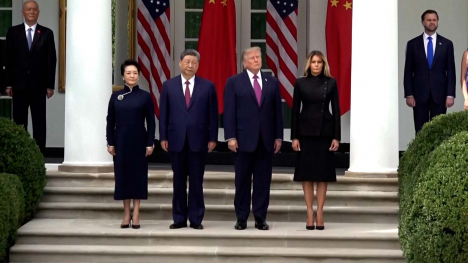
President Trump hosted President XI in Washington, DC., but the news for agriculture was only a 60-day extension of the tariff rollback.
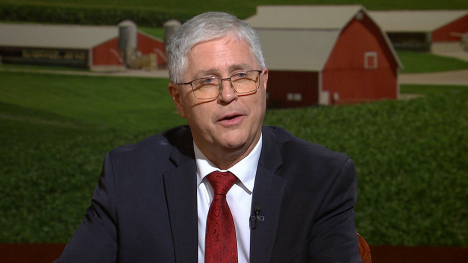
The week brings no news from China. Wheat continues to struggle because of the Black Sea. Rainfall distribution hammers beans. All this and more in our Market Analysis with Arlan Suderman.
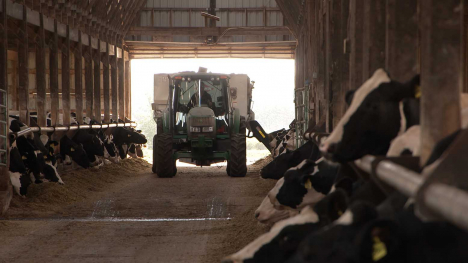
Passing a dairy farm on to the next generation can be hard, but two operations in Wisconsin are making it work for each of their own styles.
Rain distribution affects beans and uncertain times make end users reluctant to stick necks out.

The recent return to higher commodity prices has helped keep the farmland and cash rent market strong.