StoneX fertilizer expert Josh Linville analyzes why input costs remain elevated with phosphate and nitrogen prices in the top 10-15% historically while grain values lag. Key factors include China cutting phosphate exports by 50% among other issues ahead in 2026.
Global Story Keeps Fertilizer Prices Stubbornly High Even With Lower Grain Prices
Share


There’s a big wave building in the fertilizer sector. Josh Linville from StoneX is back with us to talk about the impact of tariffs, demand and reduction in usage is having on the major products of UAN, phosphate, urea, potash and NH3. We discuss the impacts of relations with China, Canada and India along with the value of an end to the Russia-Ukraine war and peace in the Middle East. Many in agriculture focus on the importance of trade talks with China dealing with soybeans, but Linville gives a major reason fertilizer needs to be a part of the discussion as well.
Transcript
[Yeager] There's a new way to stay connected and know what's happening with Market to Market. When you subscribe to Market Insider, one email and a lot of information awaits you. Go to markettomarket.org and subscribe to Market Insider. Welcome into this installment of the MToM podcast. I'm Paul Yeager. Josh Linville is a frequent guest when we talk about fertilizer and Josh fertilizer is something that I think we've discussed numerous times. Your job with StoneX is to just follow fertilizer. So I think we've maybe talked 4 or 5 years ago, for the first time in that five years since Covid, have we finally gone back to, quote unquote, normal, or will there ever be normal again?
[Josh Linville] That's the problem. It's been so long, I'm not even sure what normal is anymore. I've gotta go deep into the records to figure what figure out what that is. But I would say no. Unfortunately, when you look around the world and I'm going to set potash aside potash, when you look at it, it's actually decently valued. I'm not going to say good, because I don't want to have the mob with pitchforks and torches coming down to get me. But potash is the closest thing to normal that we have. But when you look at a lot of the nitrogen prices, when you look at the phosphates and things, they're all still very, very high priced versus themselves are all still very, very high price versus grains. And the scary thing is, to your point, start talking. Five years ago, we're talking 7 or 2020, those are some of the best values that we've seen across a lot of the matrix. If we look at it from nowhere near that. And I know that's what a lot of people are sitting there upset about. They're looking at the input side and saying, these are all incredibly high. Look at the grain side. See, this is all incredibly low. This is a bad part of the equation of it.
[Yeager] Well, since it's been, you mentioned 2020, I'm pretty sure everybody who's come on market over the years has said, well, you know, farmers might just have to reduce fertilizer. That's all we said out loud. I mean, nobody's really done that, have they?
[Linville] We've seen a little bit on the phosphate side this fall. Now it's too early to tell. Now, as I'm looking at the window, you know, we get a big snowstorm here in Kansas City. So you start to kind of lean into that whole idea that, hey, this thing may be done for the fall, even bigger snowstorms to the north of us. So we might have to start that conversation, but we're not quite there yet. There's still time before Christmas to be able to shut down the fall season, but from what we're hearing from a lot of people is like, yeah, demand has been lower. It was lower last year. It was lower still this year. And a lot of that has to do with just the lack of the supply. That phosphate market has truly tried to push buyers to scale back, to look at alternatives to mine the soil. But potash, nitrogen. Yeah, that demand has not gone away. That demand, even though we all talk about it, complain about it, should be lower. We're really good at raising crops. Were really good at these big, big yields. The offset of that whole conversation is well, really, really big yields mean we rule out nitrogen by the phosphate, a lot of potash from the soil. And that has to be replaced if we want to continue that process again.
[Yeager] Back to 2020. At the time, in the summer, commodity prices had fallen a little bit there. Shortly after the lockdown. And then we've just kind of been rallying up, prices are low, below cost of production for some people. That's clearly not enough to offset the fertilizer balance, right?
[Linville] Absolutely. And this is where a lot of the times when I talk about the fertilizer markets, when I give these presentations and we just go through everything, we're talking a lot more about the global stories, the global things that are affecting us and out there. It's not until the last part of the conversation that we really start to get into the local part of it, because, again, our values are going to ebb and flow with the world, and this is frustrating. People say we produce our own stuff here. You're right. But we're still an importer of product and even if we produced everything we needed here, if it's a free market, if our price gets too low versus the rest of world, our exports are going to start picking up and all of a sudden we're going to lose those supplies. So we have to maintain a balance with the world. And when you look around the world, you've got situations with China, you've got India playing catch up on the back of bad government policy. You know, the Russia, Ukraine war situation, European nitrogen production being down. There's just a massive list of things that my presentation a couple of years ago was literally the first 2 or 3 slides was just a line item. This is wrong, this is wrong, this is wrong. And it's which thought a lot of it. There's still some of those big, big items that are sitting out there.
[Yeager] Are those are the big items you just mentioned Russia, Ukraine.
[Linville] Russia, Ukraine is still a very, very big one. Yeah. Those are those are usually the highlights in a lot of my conversations.
[Yeager] Yeah. That hasn't changed.
[Linville] No.
[Yeager] And what's going to make that change?
[Linville] Hopefully time you know India has been doing better. In fact they've just wrapped up a little bit of a purchase center here. It looks like they'll be sitting good on urea. They've got the head on phosphate. You know, we've continued to see Russia, Ukraine peace talks in the news. And hopefully that turns into something. And if that turns into actuality, well maybe we could start to see cash flows. You know, cheap Russian cash flows back to Europe restart their nitrogen. There's some paths here. But the problem is it takes so many big things coming together to have the end result be, hey, fertilizer supply demand is finally back to normal. It's one of those parlay bets that once a lifetime hits. It seems like today.
[Yeager] Okay, December of 2025, you just made a presentation, a week ago or two weeks ago. What's the lead slide right now? And has that changed?
[Linville] It depends on the product. But I would say when we're talking nitrogen, it is a combination of Chinese exports for urea. It's a Russia-Ukraine war for modern hydrogen. You and standpoint when we are talking about phosphate is the China export flow or in this case the lack of their normally the world's largest. They're half of what they normally are. And there's not enough production around the world to make up that difference. Potash. It's like I said, well valued from what you would consider normal. But there's a lot of increased production that is still kind of being delayed a little bit because of the whole Russia-Ukraine war. It's hard to expand productions when you've got a war going on, so we hope that we'll even get better when that thing starts to go away.
[Yeager] Your colleague Arlen Suderman, I'm sure if I look to your left or behind you, I'd see him sitting at a desk, probably doing the exact same thing Arlen has talked about. The deals with the Trump administration, the Xi administration in China, and soybeans is the word that we always want to see included. I know it to you, yes. Fertilizer. You want to see it included? Have we seen fertilizer included in any of these discussions? In trade talks between these two nations?
[Linville] No, it has not. Unfortunately, when it comes to fertilizer is a completely different conversation. Anything that we've been seeing on the green side. And again, we'll go back to talking about phosphate when we're talking about China, because that's the biggest story. We think it's twofold. You know, everybody's like, why is our exports so much lower? Why are there normally 8 to 10 million tons of phosphate exports in this year? We think they're going to be around 4.5 million. Well, part of it is they're trying to grow their own food. They don't want to rely on the US to buy their stuff or rely on the rest of the world. They want to build their own. How do you raise more crops? You put more fertilizer on it. And so we think that the agricultural demand has jumped up because the government is pushing for that. The other side is to look at battery manufacturer. What's the new technology that everybody's pushing for? It? Phosphate based. Well, who's one of your bigger battery manufacturing countries out there? China. So we think the industrial side is also higher. They just internalize it. They don't have to export like they have in the past. So from that standpoint they're like, yeah, we need to buy these soybeans. We need to get these folks coming. But phosphate, it's not even a conversation point.
[Yeager] I want to go in a direction, but I better not. I guess my follow to what you're saying, then Josh is. It sounds like soybeans are an afterthought. And we really do need to be talking about this phosphate story with China, I think.
[Linville] So, I think that needs to be part of the conversation and not just the US. When you look at it, we haven't brought fertilizer in from China since the first Trump administration. That first Trump administration put big tariffs in place is kind of retaliatory thing. And they've remained. And so even if China were to all of sudden increase their exports, well, they're not going to come here. They have plenty of places around the world to send their product. They don't have to target the US once you remove the tariffs. And even then, I don't want to say that we're not an important demand point, but we're second, third tier, if you will. There's more important places for them to target. There's the Asian markets, there's the Australian markets before they have to think about coming this direction. The thing that would truly help is if the entire world press on China and say, listen guys, we need these exports. We need these to pick up. Because if they increase those exports from, let's just say, 4.5 billion to 9 million, yeah, maybe we don't get that direct offset. Maybe they don't send those ten directly here. But adding 4.5 million tonnes to the global supply that impacts prices around the world. It doesn't matter where you farm, it doesn't matter where in the world you're listening to this from. It's going to affect your prices in a positive light, in a lower price situation.
[Yeager] Okay. Let me go back to the first thing quick, and we'll come back to that. So the tariffs have lost their effectiveness in the story, the tariffs side of it.
[Linville] We have from a US standpoint.
[Yeager] Yeah.
[Linville] From everything we can understand the Trump administration has come out and said for the most part fertilizers are no longer a part of these tariff rates, these tariff wars that we've got against the world. We're back to free flowing markets. We do not think it goes back to stuff that they did in the first term. We haven't heard anything in terms of China, but a lot of these other ones that were just recently placed out for a second term start up, this is where we think that fertilizer was removed from the equation.
[Yeager] Okay. So then go to the China perspective. Then you don't really, you just like the American farmer. The administration wants the American farmer to do. Well China is going to want their phosphorus companies to do well. So why would they lower prices unless the market absolutely collapses?
[Linville] Yeah, it's one of those situations though. We are looking at ours from a free market point of view.
[Yeager] Right.
[Linville] China's not a free market. China's you know, they're communist. They are going in the same reason why they start to slow down their phosphate. They start to slow down their urea exports, because when they start to see all these things happen around the world and prices start to skyrocket, inventories got tight. Well, they were the combination stepped up and said, wait a minute, we need to take care of our own people and shut down these exports, accomplishing two goals. Number one, we've got more than enough supply for our own people, so we don't have to worry about it for the world. And it lowers our farmers' prices. More competitive with the rest of the world. So it's a different approach to markets. We are free markets. Well, you import, you export. And except for the, you know, tariffs and all that stuff that we've had, that's not exactly a free market. But China has a different way of doing business. They're looking at it from a ten 2030 year plan. We're looking at, well, what's going to happen next week.
[Yeager] Right. And that becomes the challenge of the two nations and the way markets are viewed. And then India is kind of in the middle.
[Linville] Yes. And then you got India whose farmers don't really see all this global volatility. They're the biggest democracy in the world. But their farmers get their fertilizer prices set at a very low level. Well, that's well below world replacement. And so nobody in their right mind would ever bring product in. So the government has to subsidize that difference between the global price and that farmer price. And that's one of the things where the government kind of stepped on their own in their approach over the last year and a half, they got way behind our stockpiles because they were slow to respond to a bullish market. But yeah, they're a weird mix as well. Not everybody in the world operates the same as we do here, right?
[Yeager] Some countries have taken what we've done and they've taken it for their own uses, and we've taken a few things from other countries. And it's kind of a hodgepodge. We at least have that with the free market system that we have.
[Linville] Yes.
[Yeager] Okay. So if the president would take as much interest in the fertilizer market as he has the beef market, does that keep you up at night at all? Josh, if something like that would happen.
[Linville] Yeah. I'm not a fan of government intervention and free markets. I'm a big believer in the free market. It will figure itself out, give it time. The problem is the government approach to this has been well, okay, let's send some subsidy payments. I am cool with that because a lot of this farmer hurt that we're seeing. It's because of these terrorists, because of economic policy and they've been, you know, bearing the brunt of this entire thing. There needs to be help. There needs to be something to get through this year, to get through next year. But at the end of the day, free markets will figure themselves out. But that's just not the world we're living in today. Not with the fights we've got going on, not with the way some of these other nations are reacting.
[Yeager] And again, back to Arlan, I always say, you know, StoneX has such a good pulse on global things. Your people that are in China, your people that are in Brazil. Let's talk about South America then, what is their story and how are they impacted by some of the same things as we compete with that Brazilian farmer? In soybeans specifically.
[Linville] They're going to deal with some of the same stuff. They're looking at a lot of these fertilizer prices and say, this doesn't make a lot of sense. Now we look at it from a very price specific point of view. We look at the number and we say, well, that's higher. That's low. They will look at let's take Brazil for example. And this is where a lot of our ratio conversations come from is just kind of lending it from those guys. They look at the value between them. They're sitting there saying, I don't care what the price is. I'm looking at the relationship between the fertilizer and the grain. How many bushels do I have to spend on that fertilizer? And nitrogen is where it is, you know, you know what is but phosphate. We've seen some cutbacks there as well where they're saying this price is very, very high. If I can get through a season here without putting it on, you know, or even a limited application rate, I'm going to do that because its value is on the upper tier. We're talking top 10 to 15% of highest ratio values ever. Well, this is when I need to be scaling back. And once we get back to a point where all of a sudden it's a decent value again, I'll start to resupply that phosphate back to the soil.
[Yeager] So then all of a sudden the market starts to react. If the United States and Brazil are both cutting back in their use, that reduces the demand. Am I following along in the economics 101 class here?
[Linville] Yes, absolutely. It's a global situation around the world that are subject to these free markets out there. You know, the free fall in pricing have seen a lot of that demand fall back because they're just saying, I cannot afford to do this.
[Yeager] Let's go to the producer in Kansas and Missouri and Iowa, Illinois, who now looks out the window and goes, well, I'm done. I now can just have a whole another month to stew about what to do. I've already probably made some commitments in November. December. Well November. To what I'm going to do for next year. Does anybody really look at prices to determine what they're going to plant right now for fertilizer.
[Linville] I think some do. I think for the most part, when you look at it, people stay on the rotations and all of the conversations that we have, for the most part, you've got probably say 45% of your acres. You know, we'll go to get 45%. It's going to go to the core. Maybe you get 5 to 10% that are going to shift just based on some of the market factors out there. So maybe we'll talk about that 10% that might have a little bit of an impact based on work prices. But you know, again, Thanksgiving talking to the family, we already know how many acres we need to put anhydrous on. We know how many acres are going to corn and beans next year just because that's what the rotation is, and that's what's worked in the past.
[Yeager] Yeah. Okay. So if I've made my decisions, guide me through some ways to navigate prices and hedging or future buying or holding, waiting, praying for the market to fall, is there a magic answer right now? Josh?
[Linville] There's not unfortunately, all of the stuff we can do today, we are still subject to what the market is today. There are some things I'm watching very, very closely that I think could make this thing better. There's some things that I think could make it worse. When I look at things that could make it better, like I said, we're talking about the situation where there does seem to be some progress with peace talks between Russia, Ukraine now, don't get me wrong, I don't think they're going to wake up tomorrow morning. We're going to find out, oh, there's peace and everything's going back to normal. But if we can get more progress, if we can get peace between those two nations, and if Russia demands normalized global relationships return and they demand that their gaskets go back to Europe, and also the European nitrogen production turns back on the 25% that's off line. That's a lot of things we can start to kind of cratered this thing. That's an opportunity. Now can that happen fast enough before next spring season? I don't know. That takes a lot of that's a heck of a parlay that to have come together. You know, a lot of that still comes back on China. Now, we have seen Q1 futures pricing starting to fall off. We've seen some depreciation there. I think it's about as low as it's going to get. But there is some help coming on that side of it. But again that all hinges on is China going to are they going to export or not. Right now I tell you, I'm about 95% certain they are not going to increase that export flow. If I wake up tomorrow morning and they said, yeah, you know what, we're going to export another 3 billion tonnes. I literally wouldn't blink. I'd be like, oh yeah, that 5% happened because it's China. You never know what they're going to do. So there are opportunities. And I think the biggest thing we can watch for is it's so easy when the markets get like this, to just want to stick our head in the sand and just not pay attention to it and just heck with it. I don't want to look at it. It's depressing. It's sad. It makes me mad. I don't need that in my life. We've got to have more conversations and just, you know, what's going on. As a great market gone up, the fertilizer market slid back and is a little bit of an opportunity. There. And just keep a more close eye on it because you fewer and farther in between opportunities means we get to watch more often. And I still I'm a big advocate for if you're looking at buying from inputs, sell some outputs. I still when I look at farm marketing I look at like manufacturing, right. It's just inputs and outputs. It's so much more than that. But it's really when it comes down to the marketing side, that's what it is. And so if you're going to buy some fertilizer, if it makes sense, sell some of next year's grain. If you're buying some chemical, if you're buying some C, whatever it is, sell some of that grain. If it's a good decision. And a lot of people, well, what if it goes up? You know what, if you buy that layer, sell that layer in. If your worst decision made you money come yell at me all year long, don't care because that means you had yourself a heck of a year. I will take that criticism.
[Yeager] You want to. I just put your phone number and email now on the bottom of the screen, Josh.
[Linville] Hey, I'm used to getting yelled at by my wife. I can take it from some other folks.
[Yeager] Be careful what you wish for. I had Ernie Goss from Crane University. I asked him, just before Thanksgiving. I said, you know, give me the biggest story. And he cited Russia, Ukraine as the biggest story right now. I don't know if it's necessarily for the same reasons you are citing, because it would help the wheat market, of course, instability, but it also would the reason you say it is more because of Russia's production of some of these components that we need for fertilizer. Is that right?
[Linville] It's part of that. It's part of their production. It's also a little bit of your production. When you look at Europe as a whole, they on the nitrogen side were a region that in the past. No, we really looked at what they produced is what they needed. And they kind of lived on this island. Nobody paid much attention to them. But when this whole Russia Ukraine thing started up, well, Europe obviously pushed back and said, we've seen this play out before. Yeah, we've seen a lot of world wars come through our area and this is how it starts. We're done supporting you. We're not going to take these gas flows. Well. What happens to European gas when you lose your cheapest supplier. Their price structure actually really, really high. And all of a sudden their production went from unchanged for years and years. If they dropped it. Also, now they only produce about 75% of normal. That's a major loss. That's about three, 3.5 million tons of urea not being produced per year. That's about 2 million tons of u n not being produced per year. They are a big importer, a big demand point. That's not normal by any stretch of the means. So if we can get these peace talks going and we can get those cash flows going back, if we can get that started back up again. Olson. They go back to just living on their own. That's better supplies. That's lower demand. There's a fantastic one two punch that leads us lower pricing.
[Yeager] Yeah. It's like that. You could use the analogy of the three legged stool.
[Linville] Yeah, it's absolutely right. A competitor. Yes. And that's the thing. It's more supply. It's less demand. It's another competitor back in the space. It wasn't there before.
[Yeager] Yeah. Okay. Speaking of peace, Middle East, I know that's not the same global scale of things that you're talking about with Russia, Ukraine, but there is some key components that go through that hot zone right now. What do I need to watch there?
[Linville] Right now it looks like every piece is holding right. We don't really see a major fighting. We're not seeing what we'd seen over the last year. And it's important to remember from a U.S. perspective, half of our urea comes from the lakes region. So when we see these things go off and also you had the Israel Iran thing going on and Israel Palestine and get all these, you know, everybody's picking sides and the fighting was picking up. You really had to worry. Well, what does this mean for production of nitrogen going forward? Are we going to see these production rates in a worst case scenario. Well now there's peace. That removes another war time premium. That removes a little bit of the angst, the emotion, the worry that was in the marketplace before. So the longer they can hold on, the better it is for the farmer because your price should fall. Should should, should is a very key word. A lot of the stuff I say, yeah.
[Yeager] Canada, what's the big story there? I mean, those tensions between us and them have kind of, I won't say waned, but they're not on the front page as other regions. I'm sure it's not the warmest of phone calls at times. But what does that relationship mean to my farmer in the grain belt?
[Linville] It can mean quite a bit. We share a lot of stuff between our borders. Fertilizers absolutely include. I mean, the biggest thing we need to watch is potash. We're seeing a lot of less government loans being given to potash mines. And what they're looking at is they're saying, oh, massive amount of our product comes from imports. We are reliant on the rest of the world. Well, most of the imports. Canada is our biggest supplier. It's like a close second. So fortunately, a lot of this fighting that we've been having back and forth, we've never seen fertilizers included in the rates because of the North America trade agreement. They're a part of that system. But let's say relations continue to fall apart. Well, we're going to lose our biggest potash, or we're going to pay a higher price for our potash. There's a lot of nitrogen that goes back and forth between our nations. Canada gets a lot of their phosphate from us. So if it started to get to the point where it degrades down to where fertilizers are included in these tariffs, we've got some problem. But so far it seems like it's backed up from that. They're going for the high level, you know newspaper you know talking points. That's where they're going after fertilizer has been left alone. Thank goodness.
[Yeager] So thank goodness on that. But not thank goodness on other things okay. I just want to make sure I'm on my scorecard. As we, as we close, 2025. Of course. Peace. We're watching, trade. This is what it is. As I look to ‘26, is there anything different that's going to change? Is there, is some emergence of a synthetic something that has, you know, artificially, being created in a lab that's going to allow me to use that as an alternative eternity and skip the UAN, the urea, the NH3 or the potash or whatever. Is there any of that on the horizon in ‘26 and beyond?
[Linville] There is nothing that we have seen that we are confident enough that makes us want to cut our fertilizer forecast. I'm not saying that there isn't something out there that doesn't fit the bill, but a lot of stuff that we see is like, well, this releases more of the phosphate, the potash, the nitrogen from the soil. And that's great as like but unfortunately, don't you still have to replace those? Yes, eventually at eight, sometimes when you get some of the price. Let's take policy for example. If it can get enough to the plant and give you a year or two, or maybe this thing starts to correct lower, maybe that's all we need, but I've not seen anything that doesn't end with, yes, you still have to replace that nutrient that you draw from the soil. You were just allowed to draw more out of there. But again, I'm not privy to all the information out there. Maybe there is something we've missed. But like I said, we have kept our S&P globally unchanged because we've not seen anything that's like Bangla gone. This is it. This is the game changer.
[Yeager] But what if I doubt it? In 26 it could be 27 less acres or planted all of a sudden for various reasons, it's not just fertilizer inputs but it's just profitability. That's something that's in the algebra. Right?
[Linville] Absolutely. It's still something we're watching for 2026. What if all of a sudden you know let's just say soybean prices start to skyrocket and corn's like I don't care what you do I don't. But you know we've currently got our 2026 number of 93 million acres for corn. We drop that to 88-90. That's a massive amount of fertilizer demand that falls off the table. You look around the world, if you know any of these types of things can change it. I know we always get a little bit of grief when we get to June, and we start talking the next fertilize year that starts July 1st, we start talking the next fertilizer year. We start talking a year after grain picks like, oh, it's too early. I was like, you've got to have an idea. You have to have a point of view on what the grain is going to look like, to build an idea, what the fertilizer demand is going to look like. That number can and absolutely will change. But you have to have a starting point where else you're in the dark for the first 3 to 6 months of the fertilizer, you're.
[Yeager] We don't like to be in the dark. That's why we talk to you, Josh. That's the whole reason we're here.
[Linville] I try.
[Yeager] It's always appreciated. As we wrap up, I wanted to talk about tariffs. I wanted to talk about demand. I wanted to talk about reduction. I think we've hit all of those three things. India, China, Canada, again, all major headlines. We slipped in the Middle East. We slipped in India. We did talk India. That's on the list. What have I missed?
[Linville] Really, at this point? One of the big things, I think, and I'm going to talk more from a local level, is the value chain, the logistics, that differential. I spent a lot of time talking about Nola, New Orleans, Louisiana, because that's our biggest liquid market. That's basically Nola used a fertilizer as Chicago is to corn. And a lot of people would be like, well, I don't buy my stuff in North. You're right. And you don't sell your grain in Chicago, you sell locally. It's release conversation that need to be had. But when you look at how the farmer has been set up, very high input prices, very low output prices, it's a very bad relationship. What is the reaction? I don't want to do anything and rightfully so. But the next layer, the retailer and the retailer sitting there saying, well, my customer is looking at very high input prices, very low output prices. I don't want to take the risk. I'm not going to buy anything. The distributor looks at the same thing. I'm not going to buy it like the importers see the same thing, and I'm not going to buy anything. We still think there's going to be 93 million acres of corn next year. And I'm not going to sit here and say, if you don't buy, it's not going to be there. Oh my. You know, I'm not looking for the views and clicks and stuff like that. I'm not going to be that sensational. But this is a market that is set up to be starting from behind because of the way the market has been set up. If we hold on to 93 million acres of corn, and all of a sudden we do see a demand wave, whether that's because the grain prices increase, because the subsidy payments go out, whatever it is, the longer we wait, the more that water bill to have the dam, that dam is going to break that wave. The higher water level gets, the more that wave is going to hit. When it does come, logistically speaking, there's a reason why the product moves during the times year that it does. It's to spread it out and even it more. You try and show up just in time, demand into a very tight window. The market is going to pay for just in time logistics. So that's one thing that does keep me up at this. And listen, it's you know, we're not even finished with 2025. We have time. I'm just saying don't sit on this and think, if I just show up April 1st, I'll be okay.
[Yeager] Well, it's like the producer who tried to buy plastic bags to put grain on the ground in August, and there was only one piece of plastic left in all of North America. I mean, it can happen, right? Yeah, that's a legitimate thing. We did not have the major low water levels on the Mississippi, like, we've had in the last couple falls. However, December 1st, it's going to be ice pretty soon. Just given the way the forecast is in the week that we're recording this. So that is going to change. But it's not that different than normal. You know, above a certain point, you know, below a certain point, of course, you're always moving Memphis and with it, Memphis. Still Nola, it doesn't really close. Right?
[Linville] Right. Yep. It continues to move in. That's the thing I like people were talking earlier in the year. We did had some low water levels and we dealt with some high water levels. And the thing is these have become normal. When it first started happening, it was a shock and oh my gosh, how do we get through this, these barge companies and that guys, that captain, then everything the crews on the boats, they have done a phenomenal job of learning how to operate in these higher stress environments. Yes. Each barge takes less product. Yes, each tow takes less barges. But they have done really, really well at circumventing this very tough relationship. So even when we see these things happen, they've done a fantastic job. So it's not been the impact like we thought it would have been in the past.
[Yeager] Yeah. And back to your just in time comments. I mean, that's really what we talked about in ‘21 and ‘22. We found out that this country was all about just in time and the system was all now we've decided it's not a good thing. Prices. That's the high water level. Where are we now? Are we still are we making our way back to just in time or are we beating? Are we good at putting stockpiles back? Government surplus? Yeah.
[Linville] From a fertilizer perspective.
[Yeager] Well, let's specifically fertilizer and then yeah, speculate on other things.
[Linville] I would say we probably ran most of the phosphate and potash out now. Phosphate demand of course being lower, but so were supplies. That's a big reason why the prices are high. We think that we're going to be probably coming out of this fall season into the winter. Lower, not empty, but lower on stockpiles. You and the overall supply side is very, very tight. But that's because of a lot of different factors out there. Our own domestic production, you know, going down for repairs, lack of inputs or import, possible bigger outputs. There's a lot of things lined up there. Urea. We're kind of where we need to be for this time of year. So again, it depends on the product. There's some that's a little more stressed out, but I'm not willing to sit there and start jumping up and down, say, oh my gosh, we're in trouble because we have to do something today. We're not to that point. Now we do the same interview for 69 days and we haven't changed a whole lot. You're getting a different version of Josh.
[Yeager] All right. Put that down on the calendar okay. We'll do that. Josh Linville from StoneX. Always appreciate your time and insight. Great to see you and chat with you.
[Linville] Absolutely. Have a good winter.
[Yeager] Yeah. Well, what you've just told me, I don't think it's going to be a little harder to do. But what we'll do, what we can't. All right. That's Josh Linville from StoneX. And you know him from all of his fertilizer reports. And you know us for our weekly MTM podcast, which comes your way each and every Tuesday. We will see you next time here from Market to Market. Thanks for watching.
Watch More
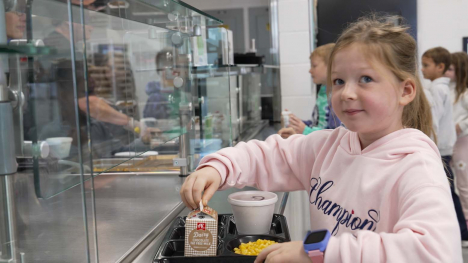
An Iowa school district connects local farms, food hubs and students through the lunch tray.
Naomi Blohm and Ted Seifried question USDA’s corn yield surprise and weigh China’s soybean demand.
Higher USDA yields pressure grain. Plus, opportunities/costs of putting local food on school trays.
How grain prices rally this winter w/Naomi Blohm & Ted Seifried on USDA, China demand & S. America.

Farmers rarely seek mental health help. Farm Dog offers care from people who know farm life.
Wet fields threaten harvest delays, diesel raises farm costs and rural population growth is uneven.