Future of Farming Iowa as the state's teacher of the year explains why agriculture education matters beyond the farm - a story with Melanie Bloom.
Iowa’s Teacher of the Year Mixes Farm Crisis and Innovation in Shaping Rural America’s Future
Share


Melanie Bloom's first exposure to agriculture? "About five minutes after I was born." Now Iowa's reigning Teacher of the Year, Bloom has spent her career opening doors for students who never imagined themselves in agriculture. The surprise? Seventy percent of her vocational ag students don't come from full-time farming families. Yet they're discovering careers in everything from biotechnology to food science—fields the agriculture industry is desperate to fill. This year she’s criss-crossing the state talking career-connected learning and work-based experiences. Bloom reveals why agriculture has more jobs than qualified workers, how the industry has evolved beyond traditional farming, and what it takes to choose education "by choice and not by chance" every single morning.
Transcript
[Yeager]
There's a new way to stay connected and know what's happening with market to market. When you subscribe to Market Insider, one email and a lot of information awaits you, go to market to market.org and subscribe to Market Insider. Hey, I got a guest this week. It's Melanie Bloom. And you're be like, okay, fine. Who is it Paul. Who are you Melanie Bloom. Other than let me see if I can get this right in order, reigning Iowa teacher of the year, vocational agriculture teacher, teacher at, Sioux Central High School in Iowa. Farm wife and farmer. You do it all. You were a consultant on the, classroom project from market to market. Yeah. And, I could keep going. What do you like of those four? Which should be number five that we don't know about you?
[Bloom] One. Mom, I have three amazing teenage daughters that are also involved in agriculture. And that's probably the most important job I'll ever have.
[Yeager] When did you get involved in agriculture, first?
[Bloom] I think about five minutes after I was born.
[Yeager] You were born, you were born to farm parents, correct? Yes. Where at?
[Bloom] My parents bought a farm up west of Milford, in 1980. So just in time for the farm crisis.
[Yeager] Bought high? Yeah, that's a tough time to get in. Yeah. So they did. Your parents have a history and why? They wanted to buy a farm?
[Bloom] Yeah. I mean, they were both farm kids, so, my husband and I both hail on both sides of our family. Five generations back northwest Iowa, farm families, several, several generations. And so, my dad used to say, like, we don't have any ancestors that weren't farmers. Once they got to the United States in the 1860s and 70s. So, it's not that it wasn't a choice, but, it was pretty easy for them to think about doing that.
[Yeager] You and I are close enough to know where we can share this exact story of growing up. When we did, there wasn't necessarily always a conversation. Come on back to the farm. Plenty of room, plenty of space. What was that conversation like for you? Oh yeah.
[Bloom] I knew in high school that I wanted to teach ag. And so the conversation at the time when I graduated in the late 90s, back in the last century, the conversation was go teach for a few years, and then if you want to come home and farm, we'll talk about it then. I know a lot of college classmates, and you probably had the same thing whose parents encouraged them not to farm. And I think there was a big delay for our generation returning to the farm. In fact, we're seeing probably some of our classmates just now coming back to farm full time as adults.
[Yeager] I think that's why we are in the careers that we are in.
[Bloom] Absolutely.
[Yeager] Because it wasn't a plenty of room for us. At least that's me. And it sounds like for you too.
[Bloom] Yeah, yeah, there was room. So my dad was killed in a farm accident just before I started teach, and that was pretty traumatic and crazy. And a lot of stuff happened around that. There was probably space and room, but at that point, my trajectory was set, and I was really excited to be a teacher.
[Yeager] But education, why? I'm sorry, I forgot to ask, did you have a good teacher of this subject when you were growing up?
[Bloom] I had several teachers at Lake Park that were phenomenal. I really, really enjoyed them. And they did a great job of just, stoking, stoking the fires, you know, the interest.
[Yeager] For education or for the topic of agriculture in the classroom?
[Bloom] Both. Both. Yeah. I was really excited. So, in 1995, I think then state president Scott Herald visited our agriculture classroom, and he had us go around the classroom and ask, answer, what do you want to be when you grow up? And I said at that time, I thought I was going to be an elementary teacher. And he looked at me and he said, but you enjoy agriculture and you want to teach, why wouldn't you be an ag teacher? At the time, there were not very many female ag teachers, and so it just had not occurred to me. But that was that was kind of my waterfall moment, watershed moment. Where I thought, why not.
[Yeager] Iowa State?
[Bloom] Iowa State.
[Yeager] And when you start and you look around, they're in the late 90s again. How many females are in the classroom with you?
[Bloom] So our class at Iowa State, Ag ed. It was probably pretty balanced, 50-50, which at the time, you know, that was really about the time that that tide was starting to turn. When we look at agriculture teachers across the state of Iowa today, at about 350 of us, we are 60 to 70% female.
[Yeager] Well, yeah. I was going to ask you, if you go to the class now, I know it's not balanced.
[Bloom] It is not balanced.
[Yeager] What changed?
[Bloom] I think we see a lot of young females just really excited to get involved in the agriculture industry. And I think we see a lot of males, finding a lot of satisfaction in Mike Rowe really push the dirty jobs. And I think that that has really risen in popularity for our young men. They love being outside, working with their hands. And sometimes education is not perceived as a dirty job, a dirty enough job, maybe for some of our young men.
[Yeager] If you step back a little bit in agriculture or the jobs, or those going into the field, of course they're not all in education. Right? But is it the same gender balance that it is that you're seeing in the classroom?
[Bloom]I don't know those numbers when I talk to. So I spend a little bit of time with Iowa State and their career services office. Mike Gall was one of my favorite people to talk to every year. What do you see? What are the trends? The high dollar, high demand jobs, seemed like they were maybe trending a little bit more female. Again, the more hands on, the more physical jobs. Obviously. Still probably trending male.
[Yeager] Yeah. Still. Yeah. Say it I still I still look at those pictures. I look heavily at Iowa State and I still I see in the grain marketing class it's a lot more women and it's you know, I just and the people communicating with the show, what do you want to get into. And communications is a big thing. So is the marketing side of things. So what is pushing us there? Teachers like you?
[Bloom] We'd love to blame it on teachers like me. I, really just keep looking at there are some tremendous opportunities in the agricultural industry, we're told by employers left and right. And you maybe hear this too. There are not enough people available to fill jobs, from all levels, from highly educated to, entry level, straight out of high school. There just are not enough people to fill all the jobs that there seem to be in agriculture. So when we talk about unemployment rates, it doesn't seem to be quite the problem in the agriculture industry. We tend to have more problems finding people to fill the jobs.
[Yeager] And we can now get into the geopolitics of northwest Iowa, southwest Minnesota, wherever it is. It doesn't matter where you're living, there's just not as many people in those same of those communities go to work.
[Bloom] Right.
[Yeager] I mean, there's just not as many people. So that’s part of the demand side of the equation.
[Bloom] Absolutely. Rural areas especially, usually a lot more specialized. Right. Like if you've got a degree in something, you're probably not going to find the perfect job within a short drive. But there are jobs that exist, if you're willing to be remote or mobile, if you're willing to retrain, if you're willing to add to your skill set, grow your resume. There's so many opportunities in agriculture.
[Yeager] Who are the students in your classes? Oh, my goodness. And where are they from? Are they on farm?
[Bloom] That's a great question. I have not looked at that. Those stats, in a year or.
[Yeager] Again, because you're technically not in the classroom.
[Bloom] I'm on sabbatical right now.
[Yeager] It's just a weird situation. But we'll go back to last year.
[Bloom] Well, we'll talk about that. So, as of last year, if I have 50 or 60 high school students, I would say maybe 30 to 40% come from a home or one or both parents farms full time. And that's, that's probably being very generous. The majority of my students do not live on farms or they do not live on full time farm. So, hobby farms, or part time farm operations, but the majority are not. And those are probably the kids that I get most excited about recruiting into agriculture, because they have the least opportunity at home. Right? Our farm kids can go home and farm, or, you know, part time evenings and weekends and, and probably have a few more opportunities to come home and farm full time than what you and I had, as students ourselves. I really love, though, bringing those students in that maybe don't have a strong ag background, but oh, I like science and I didn't know that. And so you think about biotechnology and food science and all of the ancillary industries that go into making the food, the feed, the fiber, the fuel that we use up here on consumer, consumer grocery carts and shelves.
[Yeager] Well, I was going to ask you what motivated those last two thirds? But you're saying that. So how long have you seen that trend where it's been a or is it always kind of been in your career about a third hour on farm.
[Bloom] Yeah. And again, I think that third is probably a little bit generous. Some of those third, you know, maybe grandpa farms full time and Mom and dad have a job in town. And so we'll be generous when we say a third. It's probably more like 10 to 15%, I think out of my freshman class youth last year, I had 20 students in my freshman class. I believe that there were three that raise their hand, that said that they had a full time farmer in their direct family, grandparents or parents.
[Yeager] And so then of your students, do they want to return to the farm, or do they want to return to one of those specialized jobs that you were referring to earlier?
[Bloom] I think a lot of our high school students don't know what they want to do, and that's okay. And I think that so that's one of the things I get to talk about is teacher of the year this year is that career exploration work based learning opportunity where students can try some things on for size. So agricultural education, we have since, since the Smith Hughes Act in 1917, when again funding was appropriated by the Federal Congress. Agriculture education has always had what we call today supervised ag experiences for our students, where they have jobs, where they start businesses, they do research. It might be a service learning project. It might be a school based project. All of them are aimed at helping students explore careers. And I think that's probably the most exciting thing that we do, because we have so many students that get into some of those projects. I'll share, last year I had a couple of kids just go over and job shadow at Wells Blue Bunny and Lamars, which is a little bit of a drive for us. But they came back and they were telling their classmates, like, did you know that you can just taste ice cream for a job? You know, I know it's more than that. But that was their take on it. And they were so excited that that was a job that they never thought about. And so being able to share some of those, they seem out there, but those are careers for a lot of people. And being able to share those with students and kind of open their eyes like, hey, there's some really great opportunities out there and, 4 or 8 years from now when you are finished with your education, her jobs we've never even dreamed of, that will be available for you. I think those are the exciting things for our students to think about.
[Yeager] Are you the biggest, you as a general vocational agricultural teacher, are you the biggest way that we can maintain rural Iowa and rural areas and maybe pump some people back into it?
[Bloom] I would love to say yes. I would love to say that, a lot of these s.a.t projects turn into businesses. We've got several former students in the career or in the community, and, and I keep on talking about how they are the humans that are making a bigger difference than I ever will. Those 250 kids that have graduated from my program, because they have returned to start businesses, to volunteer in the community and to raise their family, locally, because they believe in the lifestyle that they enjoyed growing up. And they believe that they want to provide that for their own kids. Those are the kids I am most proud of. They make the most difference, and they're the ones who are going to build the communities. Maybe, hopefully I've been a conduit or I've helped in some way, shape or form.
[Yeager] So if we go back to that 75 to 70% that aren't necessarily directly on the farm, yeah, you are already putting people back into to agricultural-same jobs. I would say that.
[Bloom] Seems to be the trend. And that's what we're most excited about. And when we talk, ag teachers, when we get together and visit, it's just so exciting to hear, you know, the success stories of those kids who, maybe don't really know where they're places in high school, they don't really know what they want to do. And all of a sudden they find that thing that makes them light up. Maybe it's working in the greenhouse with plants, and maybe it's grooming pets. Or maybe it's, breeding crops and livestock and genetics, whatever it is that they discover, maybe in an agriculture, agricultural science course in high school, at least gives them something to go off of for the students who don't come back and work in agriculture. I just love that we've got so many kids, and it seems like we're really heavy, like going into the medical fields. We got lots of doctors and nursing students that really enjoy agriculture courses as well. At least we get to talk to them about food and nutrition and health and how those things are all linked. And those are some really, really interesting conversations. When you're talking to students and we talk about labeling, we talk about claims made, we talk about processing, we talk about the ingredients list. I think those are pretty critical for consumers to understand, too.
[Yeager] All the ingredients. Oh, what's inside of our food? It almost sound. We were going to avoid politics as best we can, but we know that that is what people care about. It is, and they do. And they have it's just it's absolutely top of mind right now when we hear about, I think the last time you and I saw each other in person was back in August when the Omaha movement was strong, very strong. We hadn't seen the report yet. And when we see it release, people are caring about this type of thing and they are trying to say, what can I do? What can I grow to make a difference and make it healthy? So you know that in that sense, somebody is doing some advertising for you to help keep people interested in what it is you're doing.
[Bloom] We love that.
[Yeager] Okay. When you get the call, first you get nominated to be teacher of the year. Oh my gosh. When you're nominated to make that list, I'm guessing it was pretty exciting.
[Bloom] When I first got the email, I thought it was spam.
[Yeager] And this is just the one to say that you were being.
[Bloom] You've been nominated. Yeah. Yeah. Yes. I, it took me a couple of days, and then I went and talked to a couple of my mentors and said, hey, I got this email, like, what do you think? And, and both of them that I talked to, both of them really, really strongly recommend to like go through the application process, go through the process. It's just great. Reflective. It made me think about what I was doing in the classroom as a teacher. And it made me think about why I do what I do. It was just a really, really great process to be able to think through those. And then also, it's been a lot of fun to talk about agriculture.
[Yeager] And so then you go through that process. So it's not just they give it to you. You actually had to do work to get to that point. You had to do your own homework of sorts. You know, that's crazy. Yeah. So when you get the call, the email that congratulations, Hadley Bloom, you are Iowa's teacher of the year. What was that reaction?
[Bloom] I was stunned. I had never put myself in that category. I never thought that I fit there, say it's imposter syndrome or whatever you want to. I just, I still joke, like, I'm not sure they got the right guy for the job, but it's been a lot of fun to be able to represent rural schools, public schools, agricultural education, work based learning. Like just all of the things that I care so deeply about, it's been a lot of fun to talk about those things.
[Yeager] Well, I was going to say, yeah, make me your speech. Like, if you're on the pageant circuit and you have to say, if I was elected Teacher of the year, I would do what? What did you think when you were named to now, have you has that changed?
[Bloom] I think one of the things that I like to talk about the most is we have 38,000 phenomenal teachers in the state of Iowa, and we don't talk about the really good ones enough. We hear, you know, on the news sometimes about maybe the ones that, maybe not as well liked. But we do some amazing things in educators classrooms, and I've visited so many classrooms this year, and I've talked to so many educators, and I love the stories. They care so deeply about what they do. And I continue to talk about like, we chose this, right? I'm an agricultural educator by choice and not by chance. There was no chance involved. I choose every single morning to get up out of bed. I choose every single morning how to start my day. Unless we get the cow called it. The cows are out. I choose every single day that I'm going to keep being an ag teacher. And maybe today I'm not going to be a stellar ag teacher, but maybe tomorrow I'll be above average, or I'm going to do something just a little bit better today than I did from yesterday. That's a choice that we make.
[Yeager] I'm not sure if Iowa has selected, vocational agriculture teacher before as teacher of the year. Was there one before?
[Bloom] So this is a fun story. When I was getting ready to go out and student teach, that will tell you how old I am. The Iowa Teacher of the year 2000 came and visited our class doctor Tom Paulson at Morningside. Now when he was the teacher of the year, and he was an agricultural educator as far as we know, we're the only two. So it's a small fraternity. But it's been a lot of fun to visit with Doctor Paulson about what we do. And then just also to work with all of the other agricultural educators in the state just to continue to promote what we do and not just agriculture education. Right. Like you call us vocational, but we talk about career and technical educators, and we talk about all of the service areas, right, that are helping to prepare students for careers and job skills. I take it a step further, and I think every teacher can be career connected, right? I've talked to elementary teachers who bring in celebrity guests for spelling tests, elementary teachers who have jobs in their classroom, and students fill out applications for classroom jobs. I just I love all the ways that we're trying to expose students to job and career skills at much younger ages, maybe than than what we've seen.
[Yeager] So I talk about the rural area. Let's go to the metro areas because you've had the opportunity to go, you said in all these classrooms and all these places. Do you get that furrowed brow? What is she going to teach us? So I don't need agriculture I don't care. I live in Cedar Rapids, Des Moines, Iowa City, Sioux City, whatever big city. I got a city in my name. Why does this matter?
[Bloom] I have been welcomed with open arms everywhere.
[Yeager] And I love not saying I love it. I'm not saying that you haven't, Melanie, but what I'm saying is, you there, clearly some people who still think, you don't know what you're doing because you're from the rural. Or agriculture is farming. Yeah, right. I think just getting to share that story, how we're so much more than just production ag. When I hear people talk about, well, I'm, you know, they're just going to go home and farm. They don't even need to go to college. Like, I've heard that at all levels of education, and not just recently, but for years, they just, you know, just finish high school and go home and farm.
[Bloom] You'll learn what you need to know from a neighbor. Nope. My husband is a farmer. It's not easy. You don't just pick that up. And especially when you think about the business management, the technology, like some of these farmers are like computer scientists, right? The technology that they're running and a lot of the technologies they're using was developed by farmers, right, who don't have computer science degrees. So you just think about, like, the amount of learning and, and work that has gone into those inventions and advancements in agriculture. They've started with people who have learned how to think, how to problem solve, how to find better ways to do things.
[Yeager] Do we find that there's areas more receptive to that pitch than others?
[Bloom] Likely, yeah.
[Yeager] And I mean, and I say areas I mean geographical areas. Yeah.
[Bloom] Yeah. For sure. I think the areas that are more rural tend to understand, you know, because they see the equipment on the roads. I think in some places you go, people see the equipment on the roads and they're, they're a little frustrated by it because it's the, it's the, the traffic jam. Right. And maybe we don't, we don't always connect that with the labor that goes into the food and feed and fiber and fuel that we utilize. I do also think that there's a little bit more reception, especially among we've got, this next generation millennials and Gen Z now really, really interested in producing food like human food crops. And it's been a lot of fun to see some of the, the different, different growing systems kind of come back into some popularity where we're growing some human food in Iowa, and I'm really excited about that. I think there's a place for everybody, and I love seeing the local foods movements, the local marketing, the production meats, livestock, crops, all of it. It's just a lot of fun to see the next generation. My grandpa or my great grandpa might have a farm, but I've never been on a farm, and they pick themselves up by the bootstraps, and they're figuring it out how to grow that food. And it's been, interesting and fun and rewarding, to watch that, like, it's not as easy as it looks. And if they stick with it, right. It's a long haul.
[Yeager] Is the 2000 definition of traditional agriculture, I'm sorry, to say farming, I want to say farming, is the 2000 traditional farming definition the same as it is today. And will it be the same in 2050?
[Bloom] When you talk about commodity production, that probably is not going to change drastically, right? Corn, soybeans. We see a lot of consolidation in those industries. And you guys talk about that a lot on farm on Market to Market. And I have to admit, I spent a lot of time watching Market to Market as a kid with my dad on the couch. Mark Pearson was in our home every Friday night, and it was everybody was quiet, to make sure that we caught all of it. It's, as a core childhood memory. I think for a lot of us, but when we think about the innovation that's happening in agriculture and we think about the value added agriculture, we talk about sustainable agriculture, we talk about all of our natural resources. And I love how so much of our industry is willing to learn from people who are doing it differently. And so even our commodity guys are listening to some of the small scale, production systems are finding ways to do things differently. We think about, I miss Bill Northey deeply, dearly.
[Yeager] So to a lot of people.
[Bloom] I know, he was, he was a wonderful human being. And I loved his take on the water quality and what the Gulf hypoxia issues. And I just thought his leadership there, is, was such a good example for us to follow. And, when we voluntarily do things better, we all win, right? And I just I love carrying that water, but I'm teaching, for our students to to think about.
[Yeager] Do you know Bill Northey, I guess I should say, was the former secretary of agriculture for the state of Iowa. Went to work at USDA for almost four years. I think it was almost the full term. That's the whole, like, discussion to me right now in Iowa that I continually have, especially in this podcast and just in general. And I think, again, back to when we saw each other was at the Iowa State Fair. That is what I talk about all the time with people of what a great marriage of rural and urban Iowa together. Yeah. And it happens all across the country, some more than others, but it truly is on. You are in the middle of the metro where you put those Iowa State Fairgrounds like it is in Wisconsin. Same. It's in Milwaukee there. You know, they're then you start to kind of matter. It's not as yeah. Metro is when you get to other states. Right? Have you found there's still a willingness or do you, have you helped make a willingness of trying to have people from who's got who've got, you know, 50th Street on their address versus 250th Street in their address from some rural spot?
[Bloom] Yeah. I again, we're rural, right. And I don't have a lot of experience in the metro areas. And so when I, when I speak and when I share, it comes primarily from that rural experience. And I'll throw this in. 50% of Iowa students are educated in rural schools. And so there's a lot of people out there that operate on this rural mentality, right? We're going to take care of it ourselves. We're going to figure out ways to do it better. We're not going to wait for somebody to come in and show us we're going to work. And I love seeing especially again, you know, my former students that are getting out there trying some crazy things out, doing some different things and then sharing what they're learning, you know, farm farm, field days, farm walks, but then also interacting with folks who maybe have less experience, folks from town, folks from urban areas and on social media now.
[Yeager] Well, let's talk about the 50% that of the suburban areas, because I think of, you know, the Milwaukee's, the Ankeny. We're in Johnston, growing. Huge metro suburban areas. Two of those have very, very strong agricultural roots. Yeah, but not a lot of people might know, like in Johnston for you drove by the pioneer facility to get here? Yeah. In Ankeny, you drive by a John Deere cotton picking, cotton picker manufacturing, tillage. Man, if they're in those areas, and I know that there are schools that they do those partnerships. So can you, do you feel like maybe your work as a teacher in general, in this subject specifically needs to be in the suburban schools?
[Bloom] I think we need to be focused on all areas. Right? We've got a lot of agriculture courses and FFA chapters in those rural areas. They are becoming more, right. Cedar Rapids, Ames, Waukee, that are growing some great Ag programs and FFA chapters are kind of in their infant stages, you know, in the first five to maybe ten years in a couple of those. So it's really exciting to start hearing from those teachers. And while we're a one teacher program, right now, but we're probably going to be, you know, 4 or 5 within just a few years, 4 or 5 teachers, which is amazing in Iowa because most of us have been single teacher departments for decades.
[Yeager] Well, you brought us home, Melanie, because that's where I've been leading to this question right here, right now. At the end, I want you to make a pitch to the principals and the superintendents and the school boards of the state. Any state doesn't have to be Iowa. Why do they need to continue to support the programs that you are teaching, whether it be Kansas, Nebraska, Iowa, South Dakota, whatever state? On why they need to hope that that program goes from 1 to 4.
[Bloom] Teachers are career and technical education programs have demonstrated time and time again to improve graduation rates, because we're providing opportunities for students who may not feel like they fit somewhere else. The students that don't necessarily enjoy athletics, the students who may not be gifted art students, we appeal to those students who like to do dirty jobs, right? Or who are really interested in working with their hands. They're great opportunities for career skill development, career exploration. And, and that's hard to do that really, intentionally in core academic classes, we've got phenomenal teachers who do write English, math, science. They do. They talk about careers. But we maybe have a little bit easier time of that because of some of the infrastructure that we have in place was career and technical education recently.
[Yeager] On Iowa Press, on the show here at Iowa PBS, there was a program all about AI. Yeah. And it was I mean, there are certain tasks and topics that we can use that for. It doesn't do that dirty job. It doesn't always, it might help you, do some, some of the calculations on the genetics, but I don't know if you trust it. So I mean, there's opportunity for that technology to put the two together. How has that changed here just in recent years?
[Bloom] Absolutely. I think it's going to continue to impact what we do and how we do it. You and I both know, though, if the water main breaks overnight, if the electricity goes off, there is no substitute for hard, hard labor done by people who know what they're doing. Experienced professionals who've worked to learn the skills and who know how to problem solve, especially in those kind of critical situations. I think that labor, we can talk about technology and mechanization all we want there is always going to need to be a human being directing it.
[Yeager] What has been the, have you done the schedule that you have to maintain this year? Has it is it kind of a carbon copy from every teacher of the year, or were you allowed to tailor it a little bit?
[Bloom] All teachers of the year have a platform that they'll spend some time talking about. So my focus this year has been on that, that career connected learning, work based learning, and just kind of, again, sharing that water, so that maybe more people can provide those opportunities for students across the state. And we've got some schools doing a great job of it, and we've got some schools asking questions like, we don't maybe have a lot of employers in rural areas where students can get really diverse work experiences. And so how can we provide some of those opportunities, maybe in the school building or in-house or, get a little bit more creative with those other items? I'm also working on an ag heritage curriculum, for the America 250 project. So we'll be talking a little bit about the heritage of the agriculture industry in Iowa. And that has been a lot of fun to dig into. I enjoy history, I enjoy agriculture, so it's just a really nice intersection of a lot of interests for me.
[Yeager] And your tenure is getting close. What do you got, 3 or 4 months left before they name the next one? Isn't it usually about April?
[Bloom] May or so? They head to the next one. Oh they have. Yeah. So they usually do that in the fall. And then she will officially start on July 1st. So there's an overlap period here for the next six months or so. Or we'll get to work together a lot. And she's going to do a great job. Stephanie Fritz from Sheldon. So another road. Oh, northwest Iowa. All right. We're really excited. And she's really focused on interventions for math and reading, and I'm really excited to learn about those, as a career and tech teacher. Like, I kind of get siloed in high school area. And so as I've learned more about, like, the science of reading and some of the things that we're starting to do with literacy and math in elementary, I'm just really getting excited about, how we're providing some really great instructional strategies for our students.
[Yeager] Yes, you've been on sabbatical for a year, but are you looking forward to getting back into the classroom?
[Bloom] Yes, I miss my kids a lot.
[Yeager] Do you know? Do you miss that grind?
[Bloom] I do actually, it's, this schedule this year. It's really irregular. And so, one day, one day, I can be on the road to, you know, to faraway places in Iowa and back again. And the next day, I'll be in the office working on curriculum. It's not a set schedule, and I don't always know exactly what to expect every day. So it's been a lot less predictable.
[Yeager] And it's allowed you to maybe work on weaning calves if that needs to come up at home.
[Bloom] I mean, I'm at home, mom.
[Yeager] Or did you run the grain cart at all or the combine?
[Bloom] I didn't this fall, so I've been, I've been on the road quite a bit and I haven't been out on the farm as much as is. Maybe I could, but we also have teenagers on the harvest crew, and, they've got, they've got some guys pretty well dedicated and so usually when I've got time evenings and weekends, that's when they've got the most help on the farm anyways.
[Yeager] Yeah. That's true. In the final moments, you I mentioned helped us on our classroom project, grade us. How have we done since you consulted us? Have we kept up our end of the bargain? And, I mean, are there because I hear from teachers that they use us in the classroom? Yeah. Make a pitch, I guess, to someone who hasn't used us in the classroom yet. Why you felt it was important to give your time to that however many years ago?
[Bloom] What I loved about that project is at that time in education, we were transitioning from the teacher putting a film strip on for the entire 45. Yeah, you laugh because that's how you were taught to, 45 minutes of film strip or, or a video, to where we're doing a little bit more discrete units of information. So we might use a 5 to 6 minute video clip. And you guys did a really, really good job, really early on, of putting together their short video clips that we could utilize to introduce a subject and grab students interest and then dig in to the information a little bit more in a meaningful way. And so I loved that aspect. I, you know, even as a, as an experienced teacher with a few years under my belt, like, I tend to kind of gravitate towards the same things over and over again. And I know I need to get back into that library and look at it, because I'm sure there's some updated resources. That would really help when students and I love it when students come into the classroom and they ask questions. Well, I saw this or I heard this, or what does this mean? And I love when I can go pull a market to market clip up, because it's almost always going to be really solid information from experts in the industry. And I don't have to fact check it. And that's really helpful.
[Yeager] We appreciate your time then. Yeah. That was fun to help make that, and to think that, you know, Matthew Eddy, also helped us, who was his own has now taken his own path and gone. Yeah. And, to think that we're in classrooms or to not just in living rooms where you got to be quiet. But we know that people watch the show wherever they go. And I always want people to be involved and answer questions. So just let it be known your students. I'd love to have some on if they want to, you know, if they have a commodity question or something for any of our analysts, that's always a thing. Send us an email anytime. [email protected]. Y
ou can be in the, have a discussion. Maybe it'll help get extra credit. Maybe we need to go back to that little thing. Maybe maybe get those teachers to offer up a little. You can make it onto the show. You get to maybe teach the class next week. I like that that's a little hard.
[Bloom] Well, you never know. We got to recruit our teachers somehow. It'd be.
[Yeager] Different. Melanie, congratulations.
[Bloom] Thank you so much.
[Yeager] So when I saw your name came through and I. I had heard a whisper that it was coming, and, one of our guys, who's now my boss again, had worked at D.E. At the time, and he just could not stop talking about how wonderful you are. And I said, I know, right. We know. Melanie Bloom, teacher of the year for the state of Iowa, also at South Central High School in Iowa. And that is this installment of the MtoM podcast. I’m Paul Yeager, thank you so very much for watching. We will see you next time. Next Tuesday. The next episode of this podcast comes out. We'll see you then.
Contact: [email protected]
Watch More
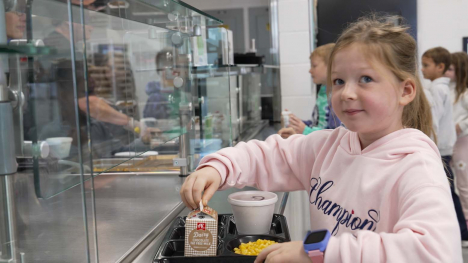
An Iowa school district connects local farms, food hubs and students through the lunch tray.
Naomi Blohm and Ted Seifried question USDA’s corn yield surprise and weigh China’s soybean demand.
Higher USDA yields pressure grain. Plus, opportunities/costs of putting local food on school trays.
How grain prices rally this winter w/Naomi Blohm & Ted Seifried on USDA, China demand & S. America.
Farmers rarely seek mental health help. Farm Dog offers care from people who know farm life.
Wet fields threaten harvest delays, diesel raises farm costs and rural population growth is uneven.