We break down why most farmers underestimate their true cost of production and how this impacts profitability. Shay Foulk explains the "base hits and doubles" approach to farm management, discusses overcoming fear and ego in marketing decisions, and emphasizes the critical need for transition planning regardless of age.
The Value in Knowing Your Cost of Production Can Be a Formula for Success
Share


Hitting singles and doubles is more important than home runs when it comes to marketing your grain. Knowing what cost of production is the most important thing in being able to make solid contact according to Shay Foulk. His role with Ag View Solutions is to help that percentage who may have an idea of where the profitability line is, but going for unknown future dollars and cents are part of the fear and ego. There’s always FOMO, but what are you missing if you don’t do anything? Making plans is simple. Start now. Don't wait.
Transcript
[Yeager] It's that cost of production. We always need to know what the cost of production is. How many times have we talked about it on Market to Market? Several. We're going to do it again today on the MToM podcast. I'm Paul Yeager, and this is an installment of things that you should, could, maybe need to do. Need is a strong, but we’ll find out. Shay Foulk is going to let us know his viewpoint. He is an Iowa native. Turns out this little farm that you see here. He's probably driven by it. We just didn't know each other growing up, but there’s a couple of years difference in age, but very close in geography from La Porte City, Iowa. I'm from Jesup, Iowa. Those are not that far apart. Next school district over. So just a few miles there. But he's now in Illinois. He is part of a company called Ag View Solutions. His job also, he still farms. He's retired military. Well, not retired fully. We'll get into that. And what that's all about. And we're going to discuss what his business is. It sounds very similar to something we did with Chris Barrons, who also is with this same organization. So we will talk about cost of production, the importance of doing it right now, understanding it right now and why you need to act, how every farm is different. And, that is, a big part of what we are going to discuss today and where they're headed. So I'm looking off at my notes right now because there's so much that we're going to cover. I wanted to make sure I got it. All new installments of this podcast come each and every Tuesday. Let's get to shake, shake. Do you remember when they put the car on top of the Tastee-Freez in La Porte or not?
[Foulk] I do remember when they did that and, what I really remember is just the wonderful ice cream that came from there growing up. So many days were spent going from the pool there in town, over to there, over the Tootsie’s Ice Cream.
[Yeager] It's not very often we could talk about such close areas. I mean, I always reference this picture behind me, the Shady Grove place. We're not that far apart. You're Black Hawk County, or were you? Because if you're north of that one highway, I think you'd still be Black Hawk County, right?
[Foulk] I am a native of Black Hawk County. They're in La Porte City and actually had a fair amount of family. The Brandt family came from over in the Jesup area. So closer and connection than we might think.
[Yeager] Who would have thought? So what was you know, what was young Shay thinking? Was he thinking this this farm was going to be his, or were you one of those. I'm down the line. I got to come up with something else.
[Foulk] I knew that I loved what I was doing, and, you know, we worked with dairy cattle, raised up the bull calves there from birth to finish on the one side of the family and row crop on the other. I just, I knew I love being outside working on the farm and went to Iowa State with the intentions of an agronomy degree and see where the world would take me. And it took me a few different places, but a great place to grow up.
[Yeager] Speaking around the world. You've also served our country around the world in various capacities through the military. Was that part of the plan, too?
[Foulk] When I was in high school, I thought I wanted to be a marine, and my dad talked some sense into me and said, no, you're going to go to college first. And, as we were, as I was going through, Iowa State University, that calling came back and realized that was something that I needed to do. So I joined the Army, went with the 75th Ranger Regiment to Afghanistan twice, and then, recently got back from a deployment with the Illinois National Guard to Iraq. So I don't know if it was always part of the plan, but that's where life led me. And glad it did.
[Yeager] Are you still active? Reserve? Or is your time with the reserve done now with that deployment.
[Foulk] In 2027, March of 2027, I'll be done. And, you know, that'll be 12 years time in service. And I'll be happy to be moving on. Just enough going on with the farm and seed business and, you know, consulting side.
[Yeager] So agronomy at ISU was the study. And what it was with that?
[Foulk] You know, I envision myself at that time of being an agronomist for a company, and seeing where that would take me loved helping people, loved working through the decisions that were being made there, and didn't quite know if I was going to have that opportunity to do it. And our own farm operation, especially knowing I was going into the military, by that point in my career, there's a lot that's up in the air. And, you know, being able to take that, apply it into our farm operation and, and try new things, that's been well served. I guess I would say the best part, though, is, I met my wife in college, so that was the best money I ever spent.
[Yeager] And I hear you. I can second that because, north of Peoria to La Porte, that's not exactly like neighbors.
[Foulk] So it's 212 miles, a few left turns and a couple right turns, and I'm home.
[Yeager] So, yeah, not like you've made that trip before, no?
[Foulk] Once or twice.
[Yeager] What? What? So is that how you ended up there was because of her? Yeah. So Peoria area.
[Foulk] Met Hannah in college, and she followed me, for the time in the military, on the active duty side to Savannah, Georgia. Lived down there for five years. And then we knew that we were ready to leave active duty and decided, you know, that home was going to be the place where we had an opportunity to come back and be a part of her family's farm operation and seed business. And, when we made that transition in 2019, that's where we took the opportunity to also get involved with, consulting, which is the family side with, Chris Barron. And then and then my mom, Melissa.
[Yeager] So at this point, is Ag View the company or does that come along later into the picture?
[Foulk] Ag View Solutions was started, formally in 2014 by Chris. Chris Barron had been doing the work on the consulting and cost of production side. Since 1992. And so looking at, how do you formalize that? Take the work that was being done with farm operations, you know, cost to production leads to other things you have going on in your business. How do we structure the business? How do we transition the business? And that was a natural progression. So that five years before we came back, was spent developing those processes and procedures. And as I integrated into the operation that's gotten us to where we are today.
[Yeager] It sounds like maybe you should have been an agribusiness major, rather than an agronomy major. I mean, maybe feel that you're learning on the fly here.
[Foulk] You know, I would say learning on the fly was probably a great way to describe the first couple of years. And the beauty of it is, we were living and breathing it, too. And that's that, I think, one of the most important things about the work with Ag Solutions between Chris and I and the other consultants that work with us is we all farm, we all live and breathe the same challenges that we're helping people work through and work with and their operation. And so it's learning on the fly. But the best part of it is you get to work with some of the best operations in the world. You get to help them with what they're doing, and then you also get to bring that back into your business as well.
[Yeager] If they're the best operations in the world, what do they need you for?
[Foulk] The best operations want to continue to get better. And I don't say that as a way for people to think, well, if I don't have it all figured out, then I can't, you know, can't work with, nobody has it figured out. There's two types of people that we work with. There's people that are doing exceptionally well, and they want to continue to get better. And then there's people that realize that they need help because they want to get better, and they want to do exceptionally well. And, both categories are really fun to work with because they care, you know, they care about their operation. They care about the success of their business. And that's what we're here for.
[Yeager] I know you have some, a future working relationship with Matt Bennett and Matt's conversation with me the very first time I talked to him in person or on the phone was about cost of production. And it sounds like that's extremely important in what you're talking about. Would you say that cost of production are your three most important words that you have to work with every day?
[Foulk] Yes, I would, I think that's a great baseline. And part of that is if you don't know your cost of production, you can't figure out anything else. It's really hard to know where you're going if you don't know where you're at.
[Yeager] And Matt has often said the exact same thing. If you don't know what the expense is, how can you complain about a certain price of something? But if you don't know what that is in relationship to what you're putting out in the field, it's worthless that information and you're not helping anything. What's the percentage of people that is maybe not understand their full cost of production?
[Foulk] Over 80%. And, people, people might throw sticks and rocks at me for saying that. But, let let's flip that on its head. Let's say that 20% don't know. The 80% that think that they know are probably not accurately accounting for a lot of the line item expenses, particularly around equipment cost management as well as the return to management category. And I say that from the perspective of with equipment in particular, if you don't account for what you're going to write a check for to replace that equipment down the road, as well as the variable costs of the fuel, labor, overhead and other expenses that you have, you're doing a disservice to your cost of production today because it all boils back down to marketing. And if you're not marketing with the true cost of production in mind of what it's going to cost to replace that equipment down the road, you're missing the mark. And a lot of times it's 20, 30, $0.40 or more on that cost of production side that you just you have to get a better pulse on.
[Yeager] But it's so hard for some to not see beyond today and think of and and have to account for the future. Or is it again that same 8,020% that have a hard time looking past today?
[Foulk] I would say that's a fair estimate. And, I would also say it should be hard, you know, this, but the work that we do should be hard. It you should challenge yourself to do the best that you can do. And, you know, there's a saying that I had a flag made up that said commodity markets are ruthlessly efficient. And if you are not also ruthlessly efficient with understanding your cost of production, you're putting yourself in a poor position.
[Yeager] I cite this often on the TV show and on this podcast, an old statement from Walt Hackney, who analyzed our livestock for years and he would say in his line of work with the animals that they would hang. They knew what each animal, what it needed for break even, and then to make the profit. And he would always say, how much money do you want to make? It's mostly greed. It's once you get profitable, it was time to move that animal. No matter what, that is still holds true today as it did 20 years ago in livestock.
[Foulk] I will say. I mean for all of agriculture. Let's compare it to baseball. The podcast we do is called the Ag View Pitch. And the foundation of that was it's a lot easier to hit base hits and, doubles than it is to hit home runs. And the operations that we work with that have been successful in the last five years, no different than the last 50 years, are almost always the operations that hit base hits and hit doubles. And they're not swinging for the fences. They might have had some opportunities that came along, but taking that cost of production, setting your margin target, which is what Walt was referring to once you have your margin target, Matt, you got to like print that chart off of your cost of production and staple it to your forehead if you need to, or put it on the mirror that you look at it every day and say, If I'm above this line of breakeven and my margin target is being met, why am I not making sales? And it's a good question.
[Yeager] Do you know anybody that's hit the top?
[Foulk] I dunno, I thought, I thought maybe you might of with all the people that you've met over the years, but I have yet to meet that person.
[Yeager] And that's, that's the part that is said. Everybody to my right or left when they come on the show says the same thing. Nobody hits the top mark. Goals, phrases, top third. So top third is that same concept of baseball. Base hits, doubles, more doubles, less home runs. Is it ego that gets in the way? Is it is it ego that gets in the way from us, from pulling the trigger on that sale? Is or isn’t it? We just don't know what our cost is and that's why we didn't make a sale.
[Foulk] It's fear. And ego. The ego is for the people that know, or I should say, think that they know their cost of production and want to hit the home run. It's fear for the people that don't know their cost of production, don't know where to start, and then say, well, I can't make sales because I don't know. And that's not a good spot to be in.
[Yeager] I said, last week to some people that were curious about what I do but don't know 100% about it. And I say, you know, here's the thing about farmers, they are the original FOMO people. They are the ones. The fear of missing out is the fear of making a sale is rooted from the very first time that a farmer sells a good at the market. Is that right?
[Foulk] I think it is. And it's not just fear of missing out from marketing opportunities. It's land purchases. It's, rental relationships. It is the right piece of equipment for your farm lineup. You can get paralyzed with those decisions. And that's where, you know, for the people that you said, well, they got it all figured out. Well, they don't have it all figured out from the standpoint of they want to continue to make their operation better. And that's where that's where the perspective that, you know, the business on the absolute side, that's where we come in and give that perspective and share experiences. And as much of it is, here's what not to do as here's what you should do.
[Yeager] Well, yeah, I was going to ask who picks up the phone and what's that? What are those first words that they say to you? I need help?
[Foulk] I would say 60% pick up the phone and say, you know, I need help. Actually, what they say is they say I have a bit of a unique situation, and there's really not that many unique situations out there.
[Yeager] But.
[Foulk] You know, we entertain that prospect and say, well, maybe it is a unique situation. And I say that not to not to poke fun at anybody, but we can. We can feel in the 20 mile radius that we live in, that it's a unique situation, the perspective that we have. We work with people in 25 different states and across Canada there are solutions to the unique situations. You just may not be aware of it. And so it's 60% people calling and saying, hey, we have this specific issue, and then it's 40% people saying, hey, we've heard your stuff. We saw you present. We've known people that you're working with. We know people that are in your peer groups. We want to be a part of that. They recognize the benefit that it's brought to others that we've worked with, which is cool to see.
[Yeager] I'm going to use again, the farm behind me as a reference point is the competition of that farm across the road, or is it somebody somewhere else that is my greatest competition as an individual producer.
[Foulk] Competition lies within the amount of risk that you're willing to take. So a lot of times the most competitive person in the room is the one that you look at in the mirror every day. And you're fighting against the comfort level basis of where the farm is today. And if you're okay with that moving forward, or if you're willing to adapt and change to what the world is asking you to do. Again, knowing your numbers, being competitive on a rental, on a land ownership, on a equipment, strategy from a minimum viable scale, there's a lot of things that come into play there, but I would say that there is still enough opportunity to exist, for any size operation to take advantage of that. Just what risk are you willing to take?
[Yeager] And I'm going to take that question a little different. Two is because we often we talk about backyard itis. We see what happens in our neighborhood. We talk about what rain fell or didn't fall in the neighborhood. But again, everybody's situation is different, right? When you're talking about, what's my risk tolerance? What are my loans at? What is my, what's my note due to the bank is different than somebody else who might I might look at that farmer going by with the rundown machinery and go, oh, I'm way better than them. Or what do they know that I don't?
[Foulk] I would say that the example I give there is the farm that's a mile up the road from where our farm operation is today. We're not even playing the same game. We're not in this, you know, it's different land on base. It's a different rental base. It's different lines of machine. It's at that point, other than the crops that we raise, it's not even the same game. So that's where I say having that internal inspection is what's most important because we have people ask us all the time, not only from cost of production, but from a management as well. I'd like to benchmark, you know. You could benchmark the exact same acreage operation in that picture you have on your wall with one here in Marshall County, Illinois. It's going to be totally different variables. So again knowing where you're at and making those decisions internally is what drives the important decisions. And you can have all the numbers right in the world. But until you talk to someone that has an overview of what else occurs or can come in and poke holes or say, and a lot of times what we do to policy is for confirmation. Police people want that assurance to know that they're doing the right thing. And there's value in that, because if you're uncertain on whether you're on the right path, that can cause you to make decisions that you don't want to make or that you're not making appropriately. So, a lot of our business styles back down to that, to.
[Yeager] Are you a long term, I mean, what's the long term game there? Because once I get someone set up, once I spend time with you that I, I get calibrated the way I need to go. What do I need you for? Long term?
[Foulk] Yeah, it's a great question. And we always from the view solution standpoint, we never want to be a leech on anyone's business. We have people that hire us for one year. They get all the problems figured out that they wanted help with. And then, you know, they go on their merry way. They'll probably still listen to the podcast or attend the conference that we put on or something like that. Our whole purpose is to get people graduated, so to speak, to the next level of farm management that they want. And so if it's the baseline cost of production and then they, you know, need some business structure help or they're going through transition planning or they want to be part of a peer group, we offer those services as a sort of natural progression. But a lot of times people will hire us. And then, you know, we have some people that have worked with us for a decade. We have people that hire us every couple of years as they have different business needs. The cool part is those operations that are the top of the top. They have constant decisions that they want and need that perspective on, and we enter into their farm business as a strategic partner. You know, we are part of their advisory team at that point. On how does your business grow? How does your business change? And there's a lot that goes into it, but that's our commitment.
[Yeager] I don't know, every meeting that my father went to growing up, that was farm related. I mean, some were the co-op, some were boards and things like that. But the meetings of today are somewhat similar to before. He always learned some marketing advice and things like that. But is everybody going to those meetings now, today that need to or are so many of them just soaking up your podcast or how are they getting information? And tell me about the two differences between an in person versus, I'm just listen, one way in my ear to what you're saying.
[Foulk] Well, listening is one thing, but when I go and work with an operation or any of our consultants do, we kind of lovingly say it's like, opening up your underwear drawer, and then here, take a look at everything that, you know, it's the financials. It's the family dynamics. It's, here's the things that have occurred over 30 years that have led us to where we are today. Again, you can get the perspective on what to do, here's what not to do. But having a very practical application and being able to utilize that in your pharmacy is kind of the next step. So I do everything that I can to provide as many free tools and resources and decision making spreadsheets as we can, because there's just so many decisions that need to be made. But when it comes down to the big ones, you know what? Can we not afford to mess up? It's the transition planning. It's how do we structure the business for the future? It's how do we set up collaborative opportunities with another farm operation? There's a lot that goes into it, and you need to plan accordingly.
[Yeager] How well do you do what you talk about professionally in your farm, and how do you think about it? I mean, you mentioned I'm a farmer, I can speak your language. How are you doing right now and handling all of this?
[Foulk] It's really easy to throw a rock in a glass house. So you got to be very cognizant of that. As much so one of our core values on the ag side is transparency. And we share everything that we're doing in our farm operation with the people that we work with. I'll show you my financials. I'll show you our business structure. But we live and breathe it. So like I said, we just went through transition planning. The folks that I have in my office downstairs right now are working through transition planning. And so I would say, if I were to give myself a rating on that, probably an 8.2, and that's only because I have the advantage of having worked with so many operations on knowing what not to do. But there's there's room for improvement. And, the deployment to Iraq here, over the you know, it's been eight months now since we've been back, but we were gone for nine months. That's a long time to be away from a business. And, you see, when you stress test your systems like that, that there's some things that you don't have in place as well as you should. So that was a steep learning curve on our end, but also a good opportunity to say, hey, what do we need to do? What do we need to improve on? It's a process. You know, we tell people all the time transition planning is never done. It's evergreen. Your business structure, the decisions you make on cost of production and management. You're never done learning and growing and running your business. At least if it's it, it's what you're passionate about.
[Yeager] Well, so nine months ago, you didn't even get to really plan. You came back just in time to plant.
[Foulk] I came back on April 12th and I started planting on April 13th. I planned, I told my wife, I said, I'm going to go out and just just see how conditions are. Well, 80 acres later. The only reason I stopped at 10:30 at night is because I legitimately ran out of fuel. And the tractor, we had a faulty, faulty gauge and, you know, it, and it was a blessing. The team had everything ready to go and planting went smooth. Harvest went smooth. So there's, you know, there were some shining lights or.
[Yeager] Well, let's talk about your year then. In the field, what stressors were there from Mother Nature that fell and didn't fall at the right times for you?
[Foulk] You know, we've seen as we're recording here in 2025, we've seen a few years and my area of Illinois of dry finishes that make for fast harvest. Or excuse me, fast harvest. And what we were just talking about this morning with the folks in my office is. That's not normal. You know, it's not normal to be done with harvest in 30 days, and not have major breakdowns and not have, you know, getting stuck in mud or fighting weather. And so that was a blessing. All through the growing season, we had pretty timely rains. I would say, you know, in our operation, it was a record soybean yield as a little above on corn. So really a great year, to, to come back into and you get quite regional on some of those things. But as we end 2025 with some of the government assistance and with the yields that a lot of people saw, it's maybe not as doom and gloom as was portrayed to be. And so you got to be a little careful of that narrative that you tell yourself to. Maybe it's not as bad as always, made out to be.
[Yeager] Well, how does one navigate then? Because you can't plan for the weather. You just know the weather is going to be variable. You just know that. So how do you mix in, smart, chemical, timely purchase, seed purchase, grain sales with that whole 75% unknown of what the weather is going to do to impact at all. How do you walk me through that?
[Foulk] You build systems and you put plans in place and, you know, famous quote is everybody has a plan until they get punched in the mouth. You still have to have a plan. You know, and coming from the military side, you don't go into a targeted operation without having a plan. Everything changes when you hit the ground anyways. But you have to have a plan. You have to have a foundation and I would say more important than a specific plan for 2026. As we record here today, I have systems in place of what we are going to do. You know, my intent is to plan on these days, but if we can't do it, we're going to plan on these days. And if the chemical plan goes like this, then we'll do xyzzy. And if it doesn't, then we're going to go to ABC. You have to have those systems in place. And getting the right team in place really helps too. And so that's a lot of what we navigate is, don't focus so much on what the price is doing. Have a marketing plan in place, don't focus on what the weather's doing. Have a crop plan in place, have a cash flow plan in place. Those systems are much more important to the longevity of businesses. You know, and several famous generals have said, you know, an amateur worries about strategy. An expert worries about logistics. And we get to work with operations that have figured that out really well. It's not so much about the execution of the strategy. It's about how do we how do we manage all this? And there's a lot to it.
[Yeager] We also can't control policy or politics that are impacting as we try to sell grain or try to buy inputs and whatever challenges they're facing right now. How do you help us navigate that scenario? That's always changing, no matter who's, at 1600 Pennsylvania?
[Foulk] Yeah. And it's, you know, you've seen enough administrations over the course of your career to know that there's positive impacts, there's negative impacts. I would say ultimately the biggest decisions come down to what does the weather do and where is the inflation, you know, and some of that is controlled by global events. Some of it's controlled by who sits at, you know, the white House, what the current administration is. You can only manage what you can control. And if you can't control it, there's very little that you can do to manage around that other than here's the data, here's the criteria that we're working with. What are we going to do with it? It's just too overwhelming to try to plan around that. So manage accordingly.
[Yeager] Depending on when someone listens to this, they might still have a day in 2025 to take action. But the tax year will be done January of 2026. What do I need to do? What are three things that an individual producer landowner, needs to think about as they start the new year?
[Foulk] You need to have your cost of production dialed in. You need to have an estate or transition plan in place, regardless of where you're at in your career. If you're 35 years old and have a couple of kids, you need to have a plan. If you're 65 years old and have no one coming back to the operation, you need to have a plan in place on what that looks like. And then finally, you need to work on your systems. You need to understand how you do business, why you do business the way that you do. And if it's important for you to translate that to the next generation that's taking over, you need to take time to do it because transition planning takes time. Management decisions being handed over takes time. Start now. Don't wait. Here's a realization I had last night. My daughter's four years old. I'm 32. In 28 years, she will be my age. I just took over the farm. I need to be able to retire by the time I'm 60. To give her the same opportunities. If she wants to be involved and people don't think of it that way. A lot of people that we work with are, you know, 65, 70, and they're just now starting to think about transition. I would posit that the next generation doesn't have that advantage. They don't have that opportunity. You have to start planning for that today.
[Yeager] I know we don't have time, but you just opened up a whole nother box of stuff because we still have 70 year olds buying land with cash and not, I know it's business and I know it's, it's it's the way it goes. It's the free market. We can do it if that person can buy on cash, it's better than buying on credit. If I'm the seller, I get that. But help that person who might be 60 north of 65, still buying land. I mean, yes, it's a good investment and it's a good opportunity, but it's also not necessarily helping that next generation either.
[Foulk] Yeah. And if you have someone coming back and you're looking to secure a stable land base for the next operation, that's one thing. I guess what I would say is most of the time, operations that are very strategic get to a point where they separate their real estate business from their operational division in the farm. And just make sure you understand what that distinction is. You got to be careful not to make your identity on the farm. And I think that's where you come back to that ego or, just tying your personality to you are what you do, not who you are. And I think just being cognizant of that is quite important.
[Yeager] What we've done here is hopefully help some people say, I appreciate your time. Thank you so very much.
[Foulk] Thank you.
[Yeager] Check out the AG View Pitch podcast. He uses baseball. It's like he knew me already. See, that's the beauty of it. I'm Paul Yeager. Send me an email [email protected] for any story, tips or feedback I would love to hear from you. We'll see you next time. Bye bye.
Watch More
Naomi Blohm and Ted Seifried question USDA’s corn yield surprise and weigh China’s soybean demand.
Higher USDA yields pressure grain. Plus, opportunities/costs of putting local food on school trays.
How grain prices rally this winter w/Naomi Blohm & Ted Seifried on USDA, China demand & S. America.
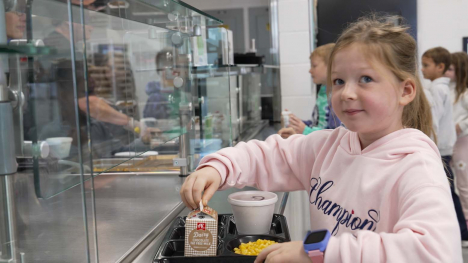
An Iowa school district connects local farms, food hubs and students through the lunch tray.
Farmers rarely seek mental health help. Farm Dog offers care from people who know farm life.
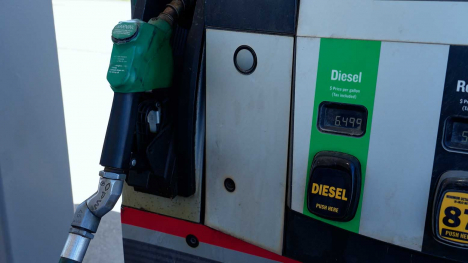
Rising diesel and freight costs squeeze farm margins and could reshape plans for the 2027 crop.