This inside look at the TV show's most watched stories of 2025 presented in podcast form. Paul puts together some behind the scenes information on how the five were selected, the efforts to get them all in the spirit of radio legend, Casey Kasem.
Most Viewed Stories of 2025 on Market to Market
Share


This inside look at the TV show's most watched stories of 2025 presented in podcast form. Paul puts together some behind the scenes information on how the five were selected, the efforts to get them all in the spirit of radio legend, Casey Kasem. The stories look at the issues of water, trade, government aid and cattle. The word swampbuster will be a big one to remember 2025 by but it was immigration that resonated the most with you this year.
Transcript
Paul Yeager: I'm a huge fan of counting down. I'm a huge fan of the countdown shows, whether they be year end reviews where we look at the top stories. Oh wait, that's what we're going to do today. Or if you're Casey Kasem, we're not going to stop until we reach the top. So today on the MToM podcast, we are going to talk about the most viewed stories on market to market in 2025. What does that mean? Well, I'm just going to go off views. I'm not going to necessarily say it's the most important story, but it's the one that connected with you the most because you watched it the most. Popularity wins in this situation. So I'm going to share a couple of stories, going to show you the full stories. And then next week we're going to talk about the most listen to podcasts and some of the other most watched videos on our website that weren't stories. How's that for a tease? So the next two weeks we're going to look back. You know, some years we've collected the team. We've talked about the biggest stories that are happening in any given year. This year, it's pretty much just one topic. We'll cover that on the TV show in a couple of weeks. But first we're going to talk about the most viewed stories. And we're going to start at number five. The fifth most watched story on our website is actually one of the newest. And it's talking about the $12 billion government funding over trade and tariffs from the Trump administration. Here's the story. It was a lead. It wasn't even a very long one. But Peter Tubbs had this story where farmer relief soon is going to be revealed.
Peter Tubbs: This week, Secretary of Agriculture Brooke Rollins suggested the long-discussed financial relief for America’s farmers will be released next week.
Secretary Rollins confirmed the bridge payment plan during a Cabinet meeting at the White House.
Brooke Rollins, Secretary of Agriculture: “Just a couple of days ago, China announced that they were going to halt all purchases from Brazil, because they had found some irregularities in the soybeans they are buying from Brazil, and what that means is that a continued signal that this country, and our farmers, produce the best, highest quality corn, sorghum, etcetera in the world, and what you have been able to do is open those markets up, and again, move to an era where the farmers are not so reliant on government checks, they have the markets to sell their product. Having said that, we do have a bridge payment we will announce with you next week.”
Ad-hoc and disaster aid is expected to reach $40 billion dollars, the highest single year of relief payments since 1933.
There are questions surrounding the sourcing of the relief funds. The Wall Street Journal reported in September that the Commodity Credit Corporation had only $4 billion dollars in its accounts.
Sen. Charles Grassley, R, IA: “In order for this to happen, I don’t think the Secretary’s got enough money to fulfill the figure that I’ve heard from the White House, that this aid might be somewhere between 10 billion and 14 billion. And I think it’s going to take an appropriation from Congress to make up the difference.”
The 43-day shutdown of the Federal government is being blamed for some of the delay in delivering aid.
An analysis of USDA data by the Farm Bureau suggests that the 2025 crop year will be the third consecutive harvest where production costs exceed crop revenue. Every major and large specialty crop is expected to be unprofitable in 2025. Corn and soybeans alone are estimated to lose $22 billion dollars.
For Market to Market, I’m Peter Tubbs.
Paul Yeager: The next two stories are from the same source, Great Lakes Now it's another PBS show based at, well, the Great Lakes region out of Detroit. And these two stories are about water. And there's one of them that has a strong Iowa component to it, which is how Iowa PBS and Dave Miller helped out with this one. But first we're going to talk about dam removal. It has been a hot topic for many people who live along rivers, and they have strong feelings about it. But let's look at the story, from this is from late July dam removal from Great Lakes Now.
Located on a tributary of the Kalamazoo River near Allegan, Michigan, the Swan Creek Dam helps manage water flow and provides residents with recreational opportunities such as fishing and kayaking. But this dam is coming down because the Department of Natural Resources wants the river to be colder. Fish biologist Matt Diana explains why it's a necessary step.
Matt Diana – Senior Fisheries Biologist, Michigan Department of Natural Resources: “Cold water streams in Michigan are imperiled because of global climate change. We're seeing, we've already seen in the last decade over a two degree increase in water temperatures. When there's impoundments on the system that just exacerbates the issues.”
An impoundment is the artificial lake that forms behind a dam. As river water backs up, the sun can heat the water in an impoundment more than it would heat a flowing river and the effect can be surprisingly large.
Matt Diana – Senior Fisheries Biologist, Michigan Department of Natural Resources: “They're creating water temperature warming, in addition to what global climate change is causing. Our monitoring here shows it heats it up about 10 degrees.”
That's enough heat to cause some major stress for certain species of the Great Lakes region, especially for trout.
Matt Diana – Senior Fisheries Biologist, Michigan Department of Natural Resources: “So as the waters warm, we're starting to lose more and more trout. We use a threshold of 68 degrees for trout survival. Above that temperature they don't grow well and they don't survive well.”
And that's not the only trouble dams cause.
Matt Diana – Senior Fisheries Biologist, Michigan Department of Natural Resources: “There's a number of different impacts that dams have on river systems. The most obvious one is fish migration. In the Great Lakes, we have a lot of fish that rely on river migrations. All salmon and steelhead, lake sturgeon, which are a threatened species. We're seeing lake whitefish have really important migrations in the streams. You know, so if a dam is in place that limits the migration, that limits the habitat that's available to them.”
Dams also block downstream movement of sediment which can deprive the downstream river system of an essential ingredient needed for fish habitats.
On top of this, many dams around the Great Lakes region have another problem. They're old. In some cases, they've outlived their usefulness and they're expensive to maintain. Swan Creek checks both of those boxes.
Matt Diana – Senior Fisheries Biologist, Michigan Department of Natural Resources: “This particular dam was built in 1937. A lot of dams were built around the early 1800s, mid 1900s, and then a lot of hydro dams were built, associated with kind of World War II. All of those dams are old. The concrete used, the construction used are usually 50-year type construction. So most of them are past their living lifespan.They're either requiring maintenance or constant, kind of Band-Aid fixes in order to keep them in place.”
The hefty cost of maintenance and repairs deters some from taking action. But ignoring aging dams presents enormous risks. When older dams aren't maintained, a breach or a total failure can occur, and that can spell disaster to the surrounding area.
Lynn Coleman: “There it goes. There it goes.”
Matt Diana – Senior Fisheries Biologist, Michigan Department of Natural Resources: “Midland, Michigan is a good example of a dam failure and the kind of impacts that are that happen when a dam fails.”
Gayle King, CBS Mornings: “Breaking news coming from Michigan this morning.”
The 2020 failure of the Edenville and Sanford dams in Midland resulted in over $250 million in property damage and extensive harm to the fishery. To help prevent disasters of this scale and defend against climate change, a wave of dam removal projects is happening right now in Michigan and across the U.S..
Matt Diana – Senior Fisheries Biologist, Michigan Department of Natural Resources: “As these dams age, they're really not serving a purpose other than creating an impoundment. And, so we're looking at opportunities with these dams instead of repairing them. There's a lot of money out there to do things like removals, through grant programs and state funded programs to try and improve fish habitat.”
A recent influx of state and federal money allows the DNR to remove more dams than previously financially possible. The DNR prioritizes dam removals in a number of different ways.
Matt Diana – Senior Fisheries Biologist, Michigan Department of Natural Resources: “One way we prioritize it is by the risk of the existing dam. Dams are rated as high to low risk based on what would happen if they failed. So a dam in a city might be more high risk because if it failed, it could flood houses and even cause loss of life. So those become high priority dams from a safety aspect.”
The DNR prioritizes low risk dams based on how big of a boost the fishery will get from removing them.
Matt Diana – Senior Fisheries Biologist, Michigan Department of Natural Resources: So one factor that we use is how many miles of stream is a dam blocking off from fish migration? So in this case, we could remove a dam and, and open up 40 miles of stream that fish moving upstream couldn't access in the past.”
Twenty miles upstream of the Swan Creek Dam, is where the Otsego Township Dam was removed in 2016 returning this stretch of the Kalamazoo River to its natural state.
Matt Diana – Senior Fisheries Biologist, Michigan Department of Natural Resources: “This dam was removed because it was failing and because it had contaminated sediments behind it. So if it failed, we would have had contaminant sediments go downstream.”
Since removal of the dam. Researchers from Western Michigan University routinely monitor the area.
Though their fieldwork isn't complete, the team has seen a clear shift in the types of species present in the water since the dam was removed.
Sara Diller, Ph.D. Student Western Michigan University: “We see a lot more species we typically see in a river. they're more adapted to riverine conditions, whereas where the dams are in place, we see species that are more adapted to lake-like conditions and where the dams have been taken out, we see more sensitive species. They're intolerant to pollution but where the dam is still in place, we see species that are more pollution tolerant.”
Matt Diana – Senior Fisheries Biologist, Michigan Department of Natural Resources:We've seen a shift from lake-like fish populations. So things like common carp, largemouth bass, bluegill to more riverine and are what we call lowdic systems, where it's smallmouth bass as pike, which are neonative and more appropriate for a river ecosystem.
And that's good news for the fishery.
Matt Diana – Senior Fisheries Biologist, Michigan Department of Natural Resources: “The kind of information that Western Michigan is collecting here is really valuable to US fisheries managers. We take this kind of information and we use it in order to evaluate these projects and see if there's any need for additional, restoration. My ultimate goal with these projects is to see the river look as natural as it did before the dam was here, restore the fish habitat and really create better fisheries for the public in Michigan.”
Paul Yeager: We'll go back to the other Great Lakes now story in a moment. But first we're going to a guy who's been very popular on our YouTube page this year and in our podcast, it's Doctor Darryl Peel. Every time we have him on, many of you listen to what he has to say about the cattle markets. In fact, there's a funny video of the word I said the most while recording podcast this year was cattle.
No surprise here. This is Doctor Derrell Peel, and this is the discussion we had back in early June. We saw what happened in October, in November. But this discussion comes back, in June. This is a shortened version of what was a longer, more podcast.
[Peel] Yeah. You know, this is completely unprecedented in a number of different ways. You know, from just the internal fundamentals of the industry, the normal dynamics that we deal with or from the supply side, and then, you know, add to that all of this, political environment that we're working in now, the macroeconomic environment that we're working in now. And then, you know, we've had some unique things here with some animal disease issues and other things. So, yeah, when you put all that together, there's never been anything that I've experienced like this.
[Yeager] We were running up, though, prior to Screw Worm being a headline maker. Right?
[Peel] Oh, absolutely. You know this. In fact, I don't think Screw Worm has relatively little to do with where we're at in terms of prices and the movement of markets right now. It's one more factor. And it's and it's kind of adding to the situation. But, you know, this is not a market driven primarily by the, you know, by the border closure or anything related to that. We're in again, the supply fundamentals in this industry are in a situation we've not seen, maybe ever, but certainly not in decades.
[Yeager] The last time you and I spoke was after a massive report last year that said the smallest herd since this date. Then we went and added it to it this year with inventory lower than before.
[Peel] Exactly. Yeah.
[Yeager] Why is it not? Why are we not getting more inventory?
[Peel] Well we will. You know, it's been a slow process. I've spent a lot of time in the last few months studying previous cattle cycles to try to understand the one we're in now. And, and one of my main messages for producers for many months now has been, you know, I know you remember what happened about a decade ago. We had a cattle low in 2014. We expanded to 2019 and started down again to where we are now. and I said, I know you remember that, but this one, even though some things about it are similar or at least some of the fundamental causes are similar, there's some very important differences. This time it's going to be different and has played out thus far to be different. And I think it's going to continue, to be a little bit different story as we go forward.
[Yeager] You mentioned already some of the factors that make it different, but is there one, if you had to pick just one favorite child that made this happen for this run up? Is there one?
[Peel] It's tough because I think it's a list of things. But, you know, you can easily say, well, the last two lows were caused by drought or exaggerated by drought. The industry has been cyclical for 150 years, but it's turned out the last two times we've had droughts, right at the low point of inventory that has exaggerated those lows. What's different this time, fundamentally from the last time, is that the drought, a decade ago, was very regionally pronounced. It's primarily here where I'm at in Oklahoma and Texas. And what happened to us was very severe, and it was severe enough to change the national numbers. But not everybody in the country went through that drought. And so they were prepared to respond more quickly coming out of the drought. This time, we've had multiple years of drought that have been pretty much around the country. It's kind of moved around a little bit in emphasis, but everybody's had a turn in the barrel this time. And so the overall impacts to the industry have been much more widespread. It's taken longer for recovery. And I think that's what we've been experiencing the last couple of years. And we're still not out of it. We just can't seem to really get a clean break on this drought at the moment, we're in pretty good shape in the Southern Plains, but there's still a lot of issues in the central and northern Plains and in some major beef cattle areas. So, it's been a long, slow process and will continue to be, I think, a lengthy process as we go forward.
[Yeager] Let's go off the farm to the grocery store. What's the consumer's role in all of this been? [Peel] You know, in this situation, obviously, everything is tight from the bottom up. Right? So, as you work your way up, the implication is, of course, that sooner or later, beef production will fall more than it has. We have not dropped very much in the last couple of years, even though we peaked the overall beef production in 2022. But we haven't really dropped much, certainly not in the last year. We were actually pretty flat last year. I say all that to say that we've got record high consumer prices, retail prices, wholesale beef prices. and that was, that was actually in place on sort of steady supplies of beef. As we go forward, we're going to have less beef. Beef supplies are going to tighten up. And so that's going to continue to support higher prices. You know, probably the biggest question I've had for many months in my meetings is, is there a limit to demand when, you know, when do we top our demand and we just haven't seen it yet? Beef demand has been remarkably strong. It's a real testament to the industry, continuing to produce very high quality and very consistent quality beef in recent years. And so, the consumer demand has been remarkable as we go forward with a tighter supply, we're going to continue to see higher prices. I think, you know, I don't think there's any real relief for consumers for the foreseeable future, in this thing, because we've actually got to make things tighter, as we start the rebuilding process, when we save heifers and pull them out of the feeder supply side of the industry, then we're going to make, we're going to make the, the, you know, the beef part of this, the retail part of this even tighter, for quite a few months. Eventually, of course, we lead to higher production. That's a couple of years at least down the road. You know, as we've said, the supply fundamentals are just extremely bullish right now. Extremely tight is going to get tighter because of the normal dynamics of rebuilding the industry. and consumer demand has been stellar up until now. It is somewhat surprising honestly. I've looked for problems for a couple of years. We just haven't seen it.
Paul Yeager: Now back to Great Lakes Now and a story about water. There's no water in this picture that you see behind me, but the term swamp buster really resonated with many of you. The comments on this, both on our Facebook page as well as YouTube, were plentiful, and people had lots of opinions about swamp busting. David Miller helped put together a little bit of this story, along with Great Lakes Now from Detroit PBS. Here is that story.
John Gilbert is a fourth generation farmer. He and his brother Greg raise hogs, beef cattle and soybeans on 800 acres of land in Hardin County, Iowa.
John Gilbert, Gibraltar Farms, Hardin County, Iowa: “In this era when we have virtual this and virtual that and virtual just about everything, the land is probably one of the realest things we have. And it is really something we need to be cherishing because quite frankly, all life on earth depends on how well we look after our soils.”
Nearly 120 miles to the east, Steve Besler and his wife Elle Guidant own a farm near Worthington, Iowa.
Elle Gadient, Besler Century Farm: I grew up on my family's farm. Oh, about 20 miles southeast of here.
Steve Besler, Besler Century Farm: “It's something I've always loved. My first task as a kid was to put eggs. And from there we went to bottle feeding cows. We dairy farmed and raised hogs growing up. Farming has been in my blood and it's thick as can be, so there is no doubt in the farming out of me.”
It's safe to say that for Steve, Elle and the Gilbert brothers, farming is a way of life. But there's a pending court case that could impact their way of life by stripping away what many environmentalists consider to be the last guardrail against the destruction of precious wetlands.
The case is CTM Holdings, LLC versus USDA, and the guardrail is a provision in the U.S. Farm Bill called swampbuster.
Katie Garvie is an attorney with the Environmental Law and Policy Center in Chicago. She's intervening in this case, representing Iowa farmers.
Katy Garvie, Environmental Law and Policy Center: “I don't have any reason to doubt that the plaintiff feels genuinely and subjectively aggrieved that he's not allowed to do whatever he wants with his land and get free money from the government. But that is not a legally cognizable injury.”
Jim Conlin, a hedge fund manager in suburban Chicago, is challenging swamp buster by suing the federal government. His investment firm, CTM Holdings, owns more than a thousand acres of farmland in Iowa.
The land at the center of this court case is a 72 acre parcel near the small town of Delaware, Iowa, population 140, which Conlin rents out to a local farmer. About nine acres of that land are considered wetlands. Under the swamp buster provision, the USDA pays Conlin in the form of subsidies for not plowing those nine acres.
Conlin argues that the swamp buster provision is unconstitutional.
Jim Conlin, CTM Holdings: “And the reason I say that is because the federal government prohibits it from being used for anything that has any economic value at all. You can't farm it. You can't build on it. You can’t clear it. You can't take the stumps out of it. And the underlying land is probably worth 20,000 an acre, if you could. It's worth zero. It's actually worth less than zero.”
But Swampbuster is purely voluntary. So why doesn't Conlin just opt out of the program?
Jim Conlin, CTM Holdings: “You couldn't participate in any of those programs that would make it difficult for a farmer to rent that land, because the federal government's involvement in agriculture is pervasive. It's difficult for a farmer, a renter, for example, to operate without USDA support.”
Conlin maintains that the nine acres of wetlands on his property are not always wet, and are not connected to any other body of water.
Jim Conlin, CTM Holdings: “I've never met an actual real farmer that has anything good to say about the wetland laws and regulations. They despise them. I don't know who the hobby farmers are that are near there, or what environmental groups they're part of, but if you interviewed 100 farmers in Iowa, various sizes, I don't think you could find one out of that typical hundred that would share that view.”
But contrary to what Conlin says, there are about 2,000 farmers in Iowa and South Dakota who are fighting to save swampbuster.
Gilbert and other farmers are concerned about increased flooding on their farms if Conlin wins and swampbuster is overturned. wetlands slow water down, storing floodwater and preventing it from inundating farms, homes and riverfront towns further downstream. That's why Steve and Elle are concerned.
Elle Gadient, Besler Century Farm: “We're downstream from the land in question in this lawsuit. We're about 12 miles southeast of this wetlands in question. And this is far greater than one stream and one wetland in Iowa. This directly comes down and affects us and affects our neighbors.”
A recent study conducted by the Union of Concerned Scientists found that 30 million acres of wetlands in the upper Midwest, including the Great Lakes region, provide nearly $23 billion in annual flood mitigation for homeowners. Over the long term, the study estimates that protecting these wetlands could prevent between $323 billion and more than $700 billion in residential flood damages in the upper Midwest. But for Conlin, this case comes down to the rights of landowners.
Jim Conlin, CTM Holdings: “I'm pro-environment. I'm I'm, I'm pro collective action, but I'm also pro property rights, which is if you're going to take from me for the benefit of society generally, including me, you have to pay me.”
For the farmers fighting to keep Swampbuster, the lawsuit hits closer to home.
John Gilbert, Gibraltar Farms, Hardin County, Iowa: “Those of us who work the land will leave footprints and shadows on the land. You know the ethic we have, the relationship we have with the land is totally foreign to a lot of the outside people who are coming in and basically prostituting the land.”
On May 29th, 2025, a federal judge ruled against CTM Holdings. CTM and the Pacific Legal Foundation said they planned to appeal, but no appeal was filed before a July 28th deadline.
Paul Yeager: And then there's the topic of immigration and labor. Labor specific labor, specifically in the state of Texas. John Torpy traveled to Texas about a year ago and was able to get some insight from the Texas Secretary of Agriculture. And then this story aired. It's actually already re-aired with an update. We're going to show you the original one. But what's happened is the comment section of YouTube. I've never, ever seen that many comments about a story, and it just took a life of its own. Remember, if you do engage in our conversation online, please be respectful of your friends and neighbors. Have good discussions. That's fine. If you swear we're going to hide it. I'm just going to reiterate that again. But this story is about South Texas farmers, and it first aired back in April of 2025.
John Torpy: Sun drenched fields along the banks of Rio Grande River provide the landscape south Texas farmers need to grow citrus and green leafy vegetables for consumers across the country. But a steady, reliable labor source that is paramount to bringing south Texas commodities to market is in short supply and many growers are worried their crops, and their profits, will be left to wither in the fields.
Dante Galeazzi, President and CEO, Texas International Produce Association: “We can grow anything we want in South Texas, right? We're only one of three places in all of the United States that can grow fruits and vegetables in the dead of winter.”
Galeazzi is the President and CEO of the Texas International Produce Association, an advocacy organization for foreign and domestic produce operations in Texas. Galeazzi believes farmers struggling to find crews to work in the farm fields of south Texas is directly related to harvesting the specialty crops particular to this area of the country.
Dante Galeazzi, President and CEO, Texas International Produce Association: “In Texas we grow 60 different fresh fruit vegetable crops. Only six of them can be mechanically harvested. So that means 54 other crops require a hand harvest. Now, we have largely depended on Mexico to provide us with the workers for the last century. Our government has put together a program called H-2a, and that gives foreign workers a visa, which is a permission to temporarily be here in the country.”
The H-2A Temporary Agricultural Program, commonly known as the H-2A Visa Program, provides farmers the ability to bring seasonal agricultural workers from other countries into the U.S. legally for up to one year to plant, perform field work, and harvest crops.
Texas Department of Agriculture Commissioner Sid Miller notes there is an abundance of H-2A guest worker slots available. But it’s the harsh financial penalties for hiring illegal workers which has decreased the number of undocumented individuals entering the United States.
Commissioner Sid Miller, Texas Department of Agriculture: “We have a guest worker program, a legal migrant worker program, which is what we should have. We had about 78,000 slots. Okay. So we could get 78,000 workers up here to harvest our crops on a temporary basis since then. Now we have almost 400,000 slots, so we've got 400,000 legal migrant workers up here. So that's, you know, that's 300,000 less illegals that we don’t need.
Overseen by the U.S. Department of Labor, the program helps producers meet their operational needs at critical times during the growing season. However, some growers have discovered navigating the ins and outs of the program can be time consuming and expensive. The agencies who arrange for some work crews also pay thousands of dollars per guest worker between application fees and to day to day expenses. Some farmers see the option of hiring illegal immigrants as a way to save on costs and get the work completed on their farms.
According to data from USDA and the U.S. Department of Labor, between 2020 and 2022, 42% of farm laborers in the United States were undocumented.
Dante Galeazzi, President and CEO, Texas International Produce Association: “Here in Texas, the equivalent for using that program is somewhere between paying this person $20 to $22 an hour. But if you don't have enough of those folks and that cost continues to increase because of the cost of regulatory compliance, what are the farmers going to do? They start to have to shrink their crew sizes. And that's even more difficult when you can't find the crews out there. And so this problem expands. And it's not just unique to Texas. It's our entire country is facing this.”
Galeazzi says farmers in south Texas have limited options when they are facing tough production decisions. Choices on what crop to plant can depend on what kind of labor the farmer can afford.
Dante Galeazzi, President and CEO, Texas International Produce Association: I can grow watermelons and I can grow onions at the same time. And both would help me become profitable. If I don't have enough workers, I have to pick one or the other. And the problem with that is it goes back to that crop mix scenario, right? What if too many people grow watermelons or too many people grow onions and you gambled on the wrong crop? Now you're not making a profit that year. ”
NAT SOUND BREAK
At the Pharr-Reynosa International Bridge, over 50,000 trucks a month bring products of all kinds from Mexico into the U.S. Twenty thousand of those trucks only carry fresh produce, making this crossing the number one port of entry for produce from Mexico.
Tony Martinez, Primo Trading Services: “The majority of what's at the grocery stores right now is, is, is imports. Because the United States, sadly does not does not, produce enough to sustain itself. That's fact. I feel that's that's a reality that as an industry, we need to do a better job of educating the consumer and letting them know, hey, you know, we do rely on imports.”
Tony Martinez is vice chairman of the Pharr - Reynosa International Bridge board and a managing member of Primo Trading Services, a fresh produce brokerage. Martinez farms in both the U.S. and Mexico and acknowledges having farms on both sides of the border has provided a way for him to navigate labor issues that impact the region.
Tony Martinez, Primo Trading Services: “People used to grow peppers in Rio Grande Valley. Can't do it anymore because it's just so labor intensive. You know, green beans in the valley can't do it anymore. It's just so labor intensive. And, you're just not going to get the hands to to do it. /We're able to shift it to Mexico. And we can we can plant it cheaper over there. And the labor is, is is, although it is difficult in Mexico as well, but it's not as difficult as in the United States”
To help fill the gap in the ongoing labor shortage, south Texas producers, farm advocacy groups, and agricultural officials are looking to Congress and the next Farm Bill to help change the farm labor landscape.
Dante Galeazzi, President and CEO, Texas International Produce Association: “The farm bill is the single biggest investment that the country makes to keep agriculture modern and satisfying the needs of the American people./ What we're asking for is for the government to invest in building the tools that farmers can then buy to make efficient operations. .”
Commissioner Sid Miller, Texas Department of Agriculture: “First time in my lifetime we have an agriculture trade deficit, and it's going to grow this year from $32 billion to over $45 billion. AG trade deficit. That means we're going to buy $45 billion more food than we export now. We can't sustain ourselves if we're dependent on some foreign power to feed and clothe us That's when we're in jeopardy of losing all of our freedom. So that has to be turned around that that's going to have to be a focus. And that's not going to be easy to win those customers back.”
For Market to Market, I’m John Torpy
Paul Yeager: Next week, we will look at some of the most listened to and viewed podcasts from the MTA, and also a couple of other stories that have resonated with you. And there's one podcast that has new life. Why? We'll explain next week on the MtoM podcast, I'm Paul Yeager. Thanks for watching. Enjoy this. Happy New Year and we'll see you next time.
Contact: [email protected]
Watch More
Higher USDA yields pressure grain. Plus, opportunities/costs of putting local food on school trays.
How grain prices rally this winter w/Naomi Blohm & Ted Seifried on USDA, China demand & S. America.
An Iowa school district connects local farms, food hubs and students through the lunch tray.
Naomi Blohm and Ted Seifried question USDA’s corn yield surprise and weigh China’s soybean demand.
Farmers rarely seek mental health help. Farm Dog offers care from people who know farm life.
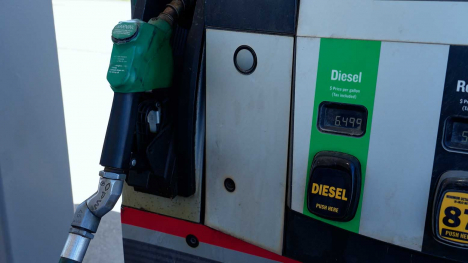
Rising diesel and freight costs squeeze farm margins and could reshape plans for the 2027 crop.