This week we feature five of the most listened to MtoM podcasts. These highlights may align with your listening habits and one will surprise you - I know it did us.
Casey Returns For Another Countdown - Our Most Popular MtoM Episodes In One Place
Share


The annual look back at the most listened to MtoM podcasts has two themes and a big surprise. Land and cattle were big topics for us this year and one other episode came out of the recent past to crack the top five. Also in this episode are two other videos you found on our YouTube page from our tape library.
Transcript
Paul Yeager: last week, we looked back at the top stories watched on market to markets YouTube page. What resonated with you? Kind of a fun way to go back. You also will soon see a some of the top stories, maybe not the ones most viewed, but the ones that had the most impact. And if we would add up the one topic of trade all together. Clearly, it would be the most watched topic of 2025 now we're going to dip specifically into the MtoM podcast, because I want to do some highlights. I'm not going to do the whole thing because that would be like a six hour podcast here, but we're going to talk about some of the longest or some of the most listened to and watched MToM podcasts. And also, at the end of that discussion, I'm going to tell you what are two of the most popular videos on our YouTube page that aren't stories, but they're very much connected with all of you. So we're going to start first with a story that's actually an old one that has had new life. And that is conversation with my old banker from the 1980s my old family banker in Jessup, Iowa. His name is Sparky Duroe. We also released the farm crisis documentary on the Iowa PBS YouTube page, and that seemed to lead to rewatching of this story of what it was like to be a banker in Iowa in the 1980s farm crisis. Here's a part of that interview with Sparky duro. 1972 we haven't hit the inflation yet of the 70s, but that came real quick. So you had like three, four years before things came and changed in a hurry.
Sparky Duroe
What 16, 20% interest, and we never got that high in rural banks, but it was, it was a real challenge. What you're How are you going to handle it, and how you did it? But then it came to the 80s, and then it just kind of collapsed and got a lot tougher.
Paul Yeager
There's nothing in us in a book that can prepare you for that that time, what was, I mean, I was gonna save the heavy stuff for later. But geez, let's, I guess we'll jump into that now. What banks were going under, everywhere, farmers were going under, and how did you survive?
Sparky Duroe
Well, we did an awful lot of farmers home loans. We actually went out and picked up a lot of new customers and did Farmers Home Loans because the production credit association was going to foreclose on them, and we worked them through it, and settled with PCA on some and helped other ones, and I did certain amount of counseling with someone that never did business with me and helped them through it. It's pretty tough, I guess my least favorite memory is having to tell somebody, you know, he had to change what he was going to do the rest of his life. And he didn't go home. He disappeared, and he was gone for a day or two, and it scared me. I thought he gone committed suicide or something. No, he just wanted a job, and he went to Waterloo and slept overnight in his truck, and he worked up and down the street until he found a job in Waterloo. So he had a job. So he go home and tell his wife that couldn't farm anymore, but he had a job. It scares you life. You know what it does to people?
Paul Yeager
Were there a lot of days where you, I'll just say, dreaded coming to work at that time?
Sparky Duroe
No, I don't think that much. We were too busy. You know, when you start doing Farmers Home guaranteed loans, just astronomical amount of paperwork. I remember going to Washington, DC, there were bankers and lobbying and a person of farmers, home, administration and US Department agriculture said, Well, these applications are easy to fill out. I told him I had a degree in agriculture, and I've been to graduate school, and I damn hard to fill out, and it's almost impossible sometimes to get them done correctly. And your guys are saying they're written so you a seventh grader can fill them out. You're crazy, but it was. You just had to stay at it. Tremendous amount of detail to do anyone was
Paul Yeager
the bank you talk about, the Iowa Bankers, we, I've discussed with them about the ag economy of today. It's not the same. It's still based on the same things. But were there other organizations that helped guide you to figure out a path for the bank, or was that just something your gut figured out worked for this community and how you guided these walls? I had three
Sparky Duroe
or four close friends that were in banking that we talked an awful lot, and you either worked at it or you were going to go under. In other words, you had to switch to farmers home, the examiners were very difficult to work with when they came in and examined you, but they tried to be fair, but yet at the same time, it was so difficult to meet their their regulations, so to speak, and but you just kept pushing away at it. Kept working and working and working. You finally got through it all.
Paul Yeager
Do you still see some of those farmers that made it through then around town?
Sparky Duroe
Yes, and they came right on back in the 80s, or after the 80s and 90s, or 1000s the last 2030, years, and were very successful, had good, productive lives, and left a lot for their families when they finally passed on, you know, they made it, but there probably was more of them that needed to, but you couldn't hardly do it. Get everybody what was the
Paul Yeager
not say scenario, but what was the makeup of trying to figure out who was going to get a chance to farm another year, or two. How was that determined? I mean, was it all balance sheets? Was it age of the farmer? Was it
Sparky Duroe
almost all balance sheets? Age didn't make much difference. Yeah, and what you could do, if you know family and just so many things on each one of them. You know,
Paul Yeager
You know, we mentioned Dr. Derrell Peel is always popular whenever we put him on this program, whether it's in podcast or in the broadcast. And this was no exception. We're going to go to the November 4 discussion with Dr Peel where he talks about the cattle complex living up to its name, Doctor, I have read your name in print way more than I have, and I've always been sensitive to it, because I know you which one of the media's surprised you that called or emailed that wanted
Derrell Peel
to talk to you about cattle. Oh my gosh, I've had calls from lots and lots of people. And really, I guess the way I would answer that is that it really goes back to earlier in the summer, when, kind of the the, you know, the public broadly and the media broadly figured out that cattle, that beef prices were high. And I started getting calls from national media at a level that normally don't worry about cattle markets, but they do care all of a sudden when it affects consumers. And so that's kind of what started it. And then, of course, in the last few days, we've added a wave after wave of political statements and things to that that has just ramped it up even more. So the short answer is, I've talked to it feels like everybody on the planet in the last 10 days,
Paul Yeager
and now Paul, and now we're talking to Paul, yeah, really, we're at the end of the planet here.
Derrell Peel
Oh yeah, it's all good. It's still going but,
Paul Yeager
but I know the people who are watching this, they know how focused you are on this market. How much you know about the market? Have you had to you know now your work is so important to an audience that you may maybe didn't pay attention to as much before. They didn't know who Daryl Peele was, and they didn't understand the livestock market. Have you made any new believers or people who sign up for whatever it is that you're talking about?
Derrell Peel
Probably so because it, you know the thing about these kind of situations, and honestly, in that sense, it's a lot like what happened during the pandemic. Same thing, we had lots of calls from people trying to understand very complex supply chains. Now we're trying, and it all comes back to the basics of how the cattle market works. And again, to a lot of people that don't really understand the, you know, the cattle industry, high beef prices just sort of seem to appear. They came up very suddenly. How did that happen? What can we do about it? Well, anybody that knows the cattle industry knows that we've been building to this for several years, and we've seen it coming within the industry. It isn't an instant thing, and certainly there's no instant cure once you're in a situation like we're in right now. Just from the standpoint of the way cattle production works, you know, there's no quick fix. So I've had to explain that over and over and over again to a lot of people at levels that just don't know that and don't worry about it most of the time.
Paul Yeager
You understand markets enough to know that sometimes the market doesn't always tell the story immediately of what's happening on the ground. A, how long has this run up been going, but B, when did it start before the run up?
Derrell Peel
Yeah, that's exactly, you know, it, it? That is the story. And so I recently wrote a newsletter article trying to relay the fact that you know, from the last cyclical peak in cattle inventories, cow inventories, specifically in 2019 we started a cyclical liquidation, but then the drought took over, and it was really a drought liquidation that pushed us way farther down on inventories than we intended to be. So we've been building for this since 2019 since the liquid air 2020 really, when the liquidation started and and so we find ourselves in this hole. And then, of course, one of the things that happens in 2021 and 2022 was peak beef production. All Time, record beef production in the US. But that was in part caused by the liquidation. The nature of the cattle industry is when you have more animals than you can keep. In this case, it was not really more than we. Wanted, but more than we could keep because of the drought. How do you how do you pare those numbers down? You eat your way out of that inventory. So beef production went up in 2022 and then after that, it starts coming down. And then once you get pet to the point where now you're critically short of productive, the productive part of the industry, the breeding herd, then beef production really starts to fall, and that's what we're seeing right now. And of course, we all know in the cattle industry that the next step is we have to save enough heifers out of that tight supply to start some rebuilding, which means that tight supplies have to get tighter before they can get better. Three, four years down the road,
Paul Yeager
2025, and the end of 2020, of 2024 was part of our season long celebration of our 50th season of Market to Market. And part of that was taking the show on the road. We did that with Kristi Van Ahn-Kjeseth in February of 2025 for a full discussion how to get to know we got to know her, how she got onto the program. And we also took audience questions from Cherokee, Iowa back in February of 2025 here's part of that discussion.
Kristi Van Ahn-Kjeseth
So I was actually born in Iowa. I was born in Algona, and then I grew up in West Bend. Lived briefly in Okoboji, and then I like to say my parents had a midlife crisis, sorry, mom, but then we were in Arizona briefly, and then moved to Alexandria. So I've been in Alexandria since I was in third grade. And so
Paul Yeager
every time I ask about a town, Kristi says, Oh, I lived there. Oh, I live there. And you, you have relatives that are still in Iowa?
Kristi Van Ahn-Kjeseth
Yes, my grandparents live in Dows. I don't know if anyone knows where that is. It's right outside of Hampton, yeah, Mason City, yes. So, in fact, the first weekend in August every year, Dows has a celebration called corn days, and we pretty much double the population in that town that weekend when everyone comes down and I swear people are just like, oh, look, it's all the Rocco's coming like, and sometimes we like to really throw it out with, like, matching shirts, even it's it's pretty intense.
Paul Yeager
So that's a big thing for family unions. It's also a big thing at the Iowa State Fair. People will come to the fair and it'll be such and such family. It'll be the Bruxfort Family Day, and that year they're wearing an orange, yeah? Or the next year, the next day will be a group of families. So you're one of those
Kristi Van Ahn-Kjeseth
family, yeah? So we actually grew up always eating tacos on Fridays. Not sure why this, this came about. I think most normal people go for like, a pizza or something, much easier. But so we actually have, like, my grandparents, last name is Rocco. So it says Rocco tacos, and that's usually our shirt vibe we go with and then, you know, we keep growing off of that. Now we do like a bags tournament in the front yard, as everyone's driving like downtown to go, they can see us playing our bags tournament. It's just we're a sight to be seen.
Paul Yeager
You have this connection to agriculture. Did you always think you wanted to be a farmer? You wanted to be a market analyst? What is it that young Christie wanted to do?
Kristi Van Ahn-Kjeseth
Yes, my mom's probably giggling back there, so we're not going to talk about that first one that I wanted to do. But I've always loved numbers, so I am a big number cruncher, so I think that's one of the biggest things. When I look at the markets, when I look at commodities, I love to compare carryout levels. I love to compare kind of statistics of saying, you know, what usage did we have here? And so way back in the day, this is a family business. So when I was in high school, my dad ran the business, people would ask me what my dad did, and I'd be like, I don't know. He works with farmers. I don't know, and but I always love numbers. So initially I went down to the U to get a finance degree. I wanted to be a big finance corporate. And then slowly but surely, I realized I'm not the corporate type. So having a family has always been really important to me. I have a great family. I'm very close to everyone in my family. And so I realized that that lifestyle is probably not what I wanted shortly before I realized that, I think my dad realized it for me before, that my dad has a really great job of, like, chirping in your ears, you know, to kind of guide you in a direction. And so he started kind of saying, why don't you just come work for me. Why don't you, you would love it. You'd be great at it. And slowly but surely, he kind of won me over. And that's when I transferred from the U and the cities to NDSU so I could get some ag background. So I did not grow up on a farm. That's where I lack is that, you know, when you're talking about that side of things, when I did the crop tour, that was eye opening to me to see the agronomy side of things. It's really neat to see that side and how there's so many partners that come to help a farm succeed. I love that you have all those niches and avenues. But that's how I ended up getting into it was the finance side of things that I still to this day. I love numbers, so I started, I think I got my series three in 2009 so I worked my freshman or my senior year of college at the. Still worked for my parents and then graduated, and have done it since
Paul Yeager
number two on the list. Again, Dr Derrell Peel from Oklahoma State University. This is the June discussion that we had. This is the full discussion. The condensed version was one of the most popular video stories we had on the TV show. But this is the discussion from June of 2025, with Daryl Peele, the relationship between the US and Mexico, the US and Canada. We still ship a bunch of cattle, go back and forth over the borders, finished, unfinished, fed, slaughtered. I mean, there's all of that stuff. Has any of that been impacted yet that shows up in data?
Derrell Peel
Well, it's just beginning to show up in the data. I mean, obviously we closed the border, so you can immediately see the, you know, the decrease in cattle imports from Mexico in terms of the screw worm related concerns that we have. And again, you know, in total, Mexican feeder cattle imports are equivalent to about 3.2 to 3.5% of our calf crop. So they're not a major part of our supply, but it's a noticeable part. If we keep the border closed now for much of the rest of the year, and I wouldn't be surprised if that doesn't happen, then we're going to wind up getting something like a million head less cattle from Mexico that we normally do. That's enough, particularly in a situation where we've already talked about how tight feeder supplies in the US, that will certainly contribute at the margin to the kinds of, you know, price supports that we're seeing in terms of the, you know, the supply driven market in the US so but again, it's evolved over time to get to be a much more complex situation on the North American continent, because we do have, we have some bilateral trade of cattle. We tend to import a lot more cattle, but we do export a few cattle to Mexico and Canada, especially Canada, and there have been times when we've exported significant numbers of feeder cattle to Canada, and then we have bilateral trade of beef products. And again, it's not just beef in the aggregate that matters here. It's specific products. It's a it's a function of transportation issues, particularly with Canada. You know, we trade roughly similar products, in some cases, with Canada, but the economic driver of much of that trade is simply the fact that both countries are wide east to west, and it's closer to ship products north and south in both countries than it is to ship it east and west. And so a lot of that's just basic transportation economics when it's similar products and so well, you've got all these things of specific product mixes and the market trying to sort out who wants stuff the most in terms of particular products, what the preferences are, what the value is, ultimately, as well as these logistical things. And then, you know, in the case of cattle versus beef, there's a time lag there, but they are connected. So if you you know, it's kind of like a balloon, if you push on one part of it, you can push it in, but it's going to pop out somewhere else. And so all of these things tend to be connected over time.
Paul Yeager
The internal monolog in my head has been debating how to ask this question, but we're going to do it this way. Has anybody, if the scoreboard is all ultimately money and profiting, who has come out money ahead in everything we've just talked about is in a better spot financially than they were two years ago through all of these economics of the higher price for cattle.
Derrell Peel
Oh, I think it's pretty clear right now that the market is, is, is oriented towards the cow calf sector. Okay, so the cow calf guys are in the driver's seat. We find ourselves smaller. We didn't necessarily plan to be here. It was Mother Nature and the drought that that pushed us to be, you know, a million heads smaller than we were even a decade ago at the previous low, and the market is really focusing market incentives at the cow calf level, telling us, you know, we are smaller than we need to be from a market standpoint. And so the incentives are there. And as I said earlier, what that means for the rest of the industry, this very complex industry we've talked about, is that is that the price pressure is coming from the bottom up, and so the cow calf guys are clearly in the driver's seat with with calf prices and with returns to the cow calf level, everybody above them is dealing with the fact that they're buying and selling either cattle or cattle and beef or beef products or whatever, but they're all driven by a margin, kind of a relationship where the bottom tends to be increasing farther and faster than the top is. And so you know, everybody's struggling, if you're even a stocker producer that simply puts weight on calves as feeder cattle, feed lots, buy feeder cattle, sell fed calves. Cattle. Packers buy fed cattle, sell box beef. Even retailers ultimately are going to feel part of this, particularly once we get into the tighter beef supplies. So the margins are being challenged. For everybody above I think Packers have actually carried much of the burden up until now. They've struggled the most feed lots have actually not struggle as much yet as I might have thought they would, but I think they will see more challenges as we go
Paul Yeager
forward, and usually when it's the packer that's in the driver's seat, that's when we get Congress involved. That's when there's hearings, that's when there's and here, I'm not saying people are feeling sorry for the packer, but they can see the packer isn't winning, and some consider that a victory, too.
Derrell Peel
Darryl, well, I suppose so. You know, certainly it's a big change from what we had, certainly during the covid period and all of the disruptions we had then as the supplies were beginning to tighten through this process. And so, yeah, I don't think probably anybody at the producer level really feels sorry for packers, but I do hope they recognize part of what we tried to explain before is that the dynamics of this industry tend to average out over time. And you know, clearly, packers did bank a lot of money at some points in time through that, they're giving it all back and then some in some cases now, and they're going to continue to struggle for at least another couple of years, and they know it at this point, so it's a long term game for them as well, even though they turn over cattle very quickly.
Paul Yeager
And the number one most listened to podcast of the MT om in 2025 is again, a topic that gets a lot of traction, and that's land. And we've had a couple of those. And if we add them up again, they would be it would rival some of the trade stories that we've done on the TV show. But this is Tim Koch from Farm Credit Services. We're going to talk about Midwest land prices. So give part of this a look as he talks about the survey that they did, and see if it kind of jives with what you're hearing or seeing. And it's just kind of always interesting to hear what's said from different vantage points. So this is the most watched story on our YouTube page of the MtoM podcast from 2025 has there been, has land, farmland always, kind of, I won't say, chase the stock market, but kind of moved in concert with it a little
Tim Koch
bit, you know, I don't know that I could consider myself a student enough to to give you the history of what the stock market does. Now, I do think there is a tie. You know, land values loosely follow real estate, or, I'm sorry, interest rate. You know, trends, as you know, does the does the stock market? You know, there's been periods of time where, AG, real estate has been a alternative investment for people that might be in the stock market. So as we see people that, you know, want to diversify out of the stock market. AG, real estate has, during certain periods been, been a time of that. So I think some could view it as kind of counter cyclical, as opposed to really tracking exactly, you know what that, what that does, and how it tracks.
Paul Yeager
I think I'll say my follow up for that once we get into the report, because I am curious about who is buying land, about, you know, what things that? But you just had a survey. How often does do you do this survey? Yeah, so maybe I'll
Tim Koch
tell you a little bit about our survey. There's lots of real estate surveys. Ours is a little bit unique in that we have staff appraisers. So twice a year, Our appraisers appraise the same farm that they've done for for decades. So we have 93 we call them benchmark farms. And what that basically means is we've identified farms across the eight state geography that we lend in, and we reappraise those to get a sense of what the real estate market is done, what the trends are, how the values have changed. Now, the reason we approach it that way is that allows us to hold the quality static. So other surveys just take all the real estate sales in the state of Iowa, average them out, and see what that has done from a price trend standpoint? Well, in certain periods, you got higher quality land selling lower quality land, and it can create, you know, some noise, and what that survey is and what it does. So once again, back to ours. We have our appraisers value those farms every six months, and that's how we identify the trends that we publish when we talk about real estate values.
Paul Yeager
That sounds very scientific. Well, I don't know
Tim Koch
if it's scientific, but it's consistent over time. Now, I think the other thing that's important for us to understand is there is no exact. Science and real estate values. You know, we can say that. You know, if you look at the state of Iowa, our data and trends would show that real estate values are softening a little bit. The USDA just recently reflected their numbers, and it shows actually a small increase in value. So I think it's important to understand that, you know, there's a margin of error that's probably plus or minus one or two or 3% in that and we really focus on what the trends are doing. Are the trends, you know, stable, flat or moving up or down significantly in any direction.
Paul Yeager
And if I read the release correct, this is the second consecutive drop, at least for Iowa.
Tim Koch
Yeah, in Iowa, we saw a little bigger drop at in our year end survey, and then the June one saw a pretty modest decline, just just down, I think a 10th of a percent was our, was our Iowa number.
Paul Yeager
Anything driving that in particular? No,
Tim Koch
you know, I think the things that are driving, you know that real estate value are the three primary things we talk about all the time. We mentioned interest rates being one of them, supply and demand is another one. And then the other thing is, I'll call it producer sentiment. You know what's what do the primary buyers of, AG, real estate view, the outlook is for agriculture commodity prices. If we think about the environment we're in right now, the outlooks not great from a commodity price standpoint now, especially if you drive across most parts of Iowa, I understand that maybe some of the rain we've got over the last period of time has changed some of the outlook, but it looks like we're going to have really good crops across most of the Midwest, specifically the western Corn Belt, which is putting pressure on commodity prices. So I don't know that we're, you know, headed into a period of significant decline and, you know, losses, but the outlook is probably not the same today as it was, you know, two or three years ago, coming off of, you know, some really good prices.
Paul Yeager
Do you get the sense that this is tied more to commodity prices than it is interest rates.
Tim Koch
I think the environment we're in now, if we call Iowa down to flat from a real estate value trend, I think one of the key drivers there, you know, if we just look at the commodity price outlook, we should probably see much greater softening in real estate values than we've seen now, the other dynamic that exists, specifically in Iowa is we're seeing reduced number of real estate sales. So if we think about a component of any industry and driver of price, it's that supply and demand dynamic, and today, there's more willing buyers than there are willing sellers, which is propping up real estate values at a time where interest rates and commodity price outlook would tell us they should be going lower.
Paul Yeager
All right, now I'll ask my follow up from a few minutes ago, who are these buyers?
Tim Koch
You know, we're seeing most of those buyers continue to be producers. You know, our data would not suggest that we're seeing an influx of buyers that are investors. Now, there's always that segment of it depends what you call an investor, right? You know people from Chicago that are just buying Iowa, AG, real estate as the source of diversification. That's not what we're seeing now. Somebody who grew up in Iowa on a farm, moved to Chicago wants to own a good piece of Iowa real estate. I call those, AG, informed investors, to an extent. And then the other thing that's really not truly reflected in some of our data, the economy as a whole, has been really, really good, and so recreational property continues to be in pretty high demand, and most of that is not producers. That's more of that investor segment. But to get back to your question, most of the demand, most of the purchases, are coming from from producers.
Paul Yeager
I teased early that we were going to have two videos that were not podcasts, that were not stories, but were some of the most watched on our YouTube page, and they are part of our look back series. We've been showing old episodes of Market to Market. More of those to come in 2026 but these two episodes, or these two videos, I should say, are not stories, but they're old video clips. They're the long form of the. Video that we have shot, whether it's combining corner beans, like in a field like here, or planting, but these are two of the videos Peter Tubbs found in our library and we posted and you watched. The second most watched video from our classic video archive is North Dakota wheat harvest From 1994 here's just a little bit of that. And now we'll flip to the most popular video that wasn't a story or a podcast from 2025 on our YouTube page, and it's one that I did not expect to be the most popular. You're watching it now. It's the Midwest, or, I'm sorry, it's the Minnesota silage. It's based in the Midwest. Come on now, be with me now. You know what I'm trying to say, the Minnesota silage, this classic video is available on our YouTube. We'll have more long play videos like this to come in 2026 as well as those classic look backs each and every Tuesday on the MToM podcast. So here's a chance to catch back up on what you maybe missed and what's resonated with people. And go, I did miss that one. I'm glad you linked to it all. The links are available on the description of this episode, especially on our Market to Market page, and a reminder to sign up for the market insider newsletter. We talk about all of these things in there each and every Monday morning. I'm Paul Yeager, next week on the MToM podcast, we'll go back to the guests and find out what clicks with people in 2026 I'm Paul Yeager, thanks for watching, listening or reading however you consume this podcast, we greatly appreciate you. And if you have any ideas for me, send them my way, [email protected], we'll See you next time.
Watch More
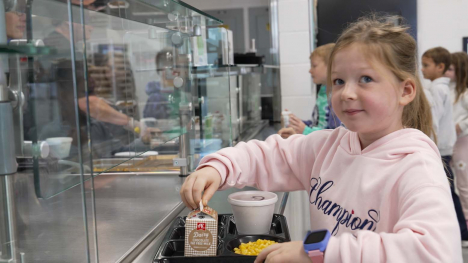
An Iowa school district connects local farms, food hubs and students through the lunch tray.
Naomi Blohm and Ted Seifried question USDA’s corn yield surprise and weigh China’s soybean demand.
Higher USDA yields pressure grain. Plus, opportunities/costs of putting local food on school trays.
How grain prices rally this winter w/Naomi Blohm & Ted Seifried on USDA, China demand & S. America.
Farmers rarely seek mental health help. Farm Dog offers care from people who know farm life.
Wet fields threaten harvest delays, diesel raises farm costs and rural population growth is uneven.