The nuance of trade policy: how tariffs impact American agriculture and rural communities biofuel tax credit 45Z.
Group Seeks Fair Deals in Trade Including 45Z and Tariffs
Share


Trade negotiations take time, nuance, and sometimes a hammer. All three have been used by administrations with different success rates. Fair and free are not the same thing, especially when it comes to trade. Patrick Rosenstiel, founder of Farmers For a Fair Deal, joins us to discuss how his new organization is helping rural communities understand and advocate for policies that keep economic benefits local which include the 45Z biofuel tax credit and current tariff strategies. We also discuss policy debate on complex issues like grid regions and tax credits into terms that matter on Main Street.
Transcript
Announcer: The Iowa Soybean Association is driven to deliver for Iowa's 40,000 soybean farmers. We're proud to provide objective agronomic research, a helping hand with soil and water stewardship, and timely industry news powered by the soybean checkoff. Learn more at Iasoybeans.com.
Paul Yeager: We're all in this together. It's crazy that a line from High School Musical is going to get talked about today in the MtoM, so is an exchange from the West Wing, which I have written about before in the Market Insider newsletter, describing trade. It's not nuanced. Well, or is it? It's not simple that we know for sure. And trying to make sense of trade policy, trade ideas, things for helping rural America is always something we talk about here on the MToM podcast. I'm Paul Yeager. Thanks for dialing us up. This week. We're going to talk with Patrick Rosenstiel. He's with Farmers For a Fair Deal. It's a new group. He's based in Minnesota. So we're going to talk about Minnesota and Iowa and Illinois and Wisconsin and the Dakotas and everything that matters on rural Main Street. And what matters in the farm fields is what matters in those communities as well as large cities. So we're going to cover a whole lot of topics today when it comes to trade and ideas that are being floated around. One thing that did come up was 45Z will talk about energy policy just a tiny little bit. We'll also talk about trying to understand what's going on with the current administration and their ideas of tariffs. We'll talk about energy. We'll talk about a farm bill. We'll talk about a lot of things. And if you ever want to send me an email, it's [email protected]. If you have an idea or someone that we should talk to, maybe it's you, we'll see you on the other side of this discussion with Patrick. Patrick, you've been around the country, spent a lot of time. The Midwest is there. Where's that farm background that we all cling to and want to talk about? What's our common ground here on farming?
Patrick Rosenstiel: Well, our common ground is I'm a consumer of food and rural products. I mean, I think that's my common ground. I grew up in a place called Freeport, Illinois, which is in rural Stephenson County, in Illinois. Moved into the suburbs, you know, so I'm kind of proof of, you know, my parents moving from rural communities into suburban America. I live in Saint Paul, Minnesota. Right. But my life has taken me throughout rural America. I mean, it started kind of, American politics. And I have left that field for younger men who are more interested in tilting at windmills, and gotten into the solutions economy. So I can't even count the number of diners I've eaten in rural America. I've been in all 99 counties in Iowa. I've been in every county in Minnesota and Illinois. You know, that's just kind of where life takes me, and I. I love the diners. I love that I've been in front of the grain elevators. I've talked to the farmers and, and my, my common ground with farmers is I absolutely believe that the vitality of rural America contributes to everybody's life, urban and suburban and, and and frankly, I don't think enough Americans understand that. So that's why I start organizations to educate them on these issues.
Yeager: You had me at Freeport because the Freeport Pretzels is still one of the greatest nicknames of any school.
Rosenstiel: Wow. My parents are Freeport pretzels. My dad, started in the restaurant and bar business there, a place called Duffy Muldoon's. And my grandfather was Lee Rosenstiel, who owned Lee's market. So if anybody, ever shopped at Lee's market, you know how much my family has relied on farmers and service and quality? All of the values I attribute to rural America.
Yeager: And then you mentioned all 99 counties. So you know what we call that in Iowa? We call that the Full Grassley. You've done the Full Grassley. What do you call it? Minnesota and Illinois then if you go to all counties?
Rosenstiel: I get the full Grassley. I understand it. And Senator Grassley has been a huge champion for a lot of issues. I actually think this country is better off because people like Senator Grassley were willing to serve. And I can tell you that.
Yeager: Well, so part of his thing, with going to all 99 counties is to know what is going on in rural and in urban areas. And you mentioned food off the top of China together. Why is it that food policy is important in both of those areas? And is there common ground to the way we see food policy beyond?
Yeager: We all eat.
Rosenstiel: Well, I mean, so first of all, we all eat. I mean, I don't. I don't think that's like a I don't think that's a trivial saying. I think the contributions that rural America make and that farmers make to energy policy in America for example, I think that's under understood or not understood. I don't know if under understood the word, but like so and then I think the healthy vitality, economic development of rural America, is kind of the heartbeat of the country's economy. And, and the idea that, you know, when a lot of your guests and I listen, watch your show, I mean, a lot of them talk about the total value chain from rural America. Boy, I don't think people quite understand that, where I shop at Kowalski's and Saint Paul or where I shop at Cub in Saint Paul, how much or every time I turn on my lights or, you know, the values that actually drive sort of, the American Republican democracy, you know what I mean? I don't, I don't, I don't know that a lot of people spend a lot of time thinking about that. I know that I spend a lot of time thinking about that. And I know I am absolutely grateful for the contributions. And I don't know how to answer your question beyond that.
Yeager: So I don't think anybody does. And that's what I was glad that you didn't have an answer, because we've yet to figure it out. But one of the things that we all are beholden to is trade, whether it's between states or it's what is grown here and what you take in, off the shelves, off a couple foods. That's the easy tie. That's commerce more than it is trade. But let's talk about Farmers For a Fair Deal. A explain the name and and the focus of what you're trying to do.
Rosenstiel: Yeah. It's interesting that you talk about trade because my life has taken me. I went from, you know, the foreign restaurant industry to American politics and, and then I've transferred into kind of the solutions economy, more on sort of the public education and public, public affairs space. And my life has taken me to a lot of cool places. Right. So for example, global trade. Right. There was not really a nimble, citizen focused education organization around trade. There were a lot of cool people doing things around it. You know, talking to policymakers in Washington, but not a lot of grassroots activity going on around it. Right. And so I started a long time ago, a thing called the Trade Alliance to Promote Prosperity that continues to be an active sort of organization that, when I listen to your guests talk about fertilizer inputs, I know about Moroccan tariffs, right. And I know how those tariffs impact the inputs to fertilizer and how that translates through the value chain very much in a negative way sometimes. Right. So like the Trade Alliance to Promote Prosperity, I've interacted with almost every association group in the, in the trade space. I've worked with the Farm Bureau and the Farmers Union on a lot of different things. Sometimes when they overlap. Very powerful voice for American agriculture, right? Because when they agree, they agree and they weigh in and they do it at the highest levels. Farmers For a Fair Deal, I know about rural hospital closures, rural hospital closures and clinics and what that means for rural American rural economic development. So I've interfaced with all of, you know, those association groups by creating projects of my own. What I thought was missing and I don't want to say missing, but what I where I see a vacuum and this is why I started Farmers For a Fair Deal, a long answer to a short question where I see a vacuum is in this idea that I think they're a very good association groups educating the policymakers on things like all of the things I just mentioned. Right. But what seems to be missing is sort of a nimble sort of education group that can educate the public on kind of nuanced issues that have really important outcomes. Right then, if we educate them, motivate them, if they're aligned with our solution, and then advocate, create a vehicle in which they can advocate for Main Street on these issues because, well, lobbyists are good and association groups are good. What I have come to learn is that when motivated citizens get engaged in issues that matter to them, that's when good policy gets made. So that's why I started Farmers For a Fair Deal. And we're relatively young, but we have a proven track record. And what I'm doing is, you know, I got it. I got an advisory board to start because I believe in being advised, you know, we're not a member driven organization so we can be nimble and that we can educate the public. And what we want to have is members called citizens weighing in with members of Congress. Because I'm not going to be a lobbyist. I am going to be a conduit to organize communities, to advocate on their behalf for issues that matter to them.
Yeager: Well, we're going to spend the next half hour on that answer alone. Let's because okay, you mentioned nuance. Tell me the nuance difference between fair trade and free trade.
Rosenstiel: Well, I mean, I think fair trade or negotiated settlements that open, you know, that open the door for American farmers in foreign countries. I definitely think that tariffs, can belong and trade, good discussions as long as the end goal is to open up markets for American products and American ingenuity, whether it's agriculture or technology or anything else. Right. So, I think that negotiations are good and that our negotiators at the USTR need to keep our citizens in the front of their mind as they're negotiating these agreements. And then if there are tools that allow them to advance the negotiation for our products, you know what I mean? Whether that's tariffs or something like that, the end goal ought to be to reduce barriers and increase access to American products. I mean, you know, you know, every trade agreement has nuances where expert trade negotiators are involved. And I just don't want to. I don't want to be anything I'm not. But philosophically, I think that's the difference between fair trade and free trade. I mean, I think you have to have fair boundaries. I think you definitely have to win in these agreements in order for them to make sense. And then, you know, non-fair trade I think is simply obstruction, you know to commerce globally for the purpose of obstruction. And I don't support that. For fair free negotiations between sovereign countries to determine how their companies can have access to markets in a way that's fair to the goods and services that they produce. And, you know, I definitely think that balance had flipped over many years in the U.S. So I support everybody going in there working the best deals I can for American farmers and products, but really nuanced stuff like 45 Z, which is rulemaking at Treasury and OMB. You know what I mean? That's kind of a what's a fair deal for farmers there? You know, those kinds of things we're digging into to.
Yeager: You mentioned it flipped. Was there one moment or was it a cascade of events?
Rosenstiel: Well, I think in an effort to open the global economy, you know what I mean? In a very real way. I'm not reading that right now. I'm reading the story of Huawei, you know what I mean? And I don't know how many people know why way is, but it was the big Chinese company that sort of drove Chinese entry into the WTO, you know, so we're talking about and it's not just about China. It's, you know, there are plenty of tariffs on agricultural goods in Europe, you know, and they've been there forever. You know what I mean? And so like when the current administration talks about reciprocal tariffs, you know, what's the purpose of the reciprocal tariff. Is it to drive down the barriers to entry for American products into other countries and then have an equal footing? You know what I mean? If that's the motive of the current administration, I would say from traits standpoint, you know what I mean? I think it makes sense. I would support that. I would support that goal. It's clearly creating some headwinds in the rural economy right now, which is showing up on food shelves too. You know what I mean? So all of those things are complicated. And if I had an answer and could wave a magic wand, maybe I could fix some of this stuff. But, I mean, I just think having the discussion is important so that people can understand it in a way.
Yeager: Well, you also mentioned nuance. It's hard right now in media and trying to explain certain things. Nuance is out the window, it would appear to me, and so much because I go back to an episode of The West Wing, years and years ago, where the press secretary is talking to, basically, I take it as the trade rep or somebody who used to be heavily involved with trade of the other political party on the plane, and they're discussing, we need you to talk about trade. And he's like, I'm listening to you guys talk about an eight word answer. I needed to be in. And he says, trade is not it is incredibly complicated. And you cannot explain trade in eight words. So we need headlines and we need soundbites to educate and get a message out. For some people, how do you balance the nuance and the boil down seven word answer to help people understand?
Yeager: Because you and I can talk trade forever, but we still might not understand certain things. And somebody else who's watching this might not understand everything, so we're not going to solve it. I don't really have a question. I'm just saying it's got to be hard to balance the nuance and the seven word answer for you. Well, for all of us.
Rosenstiel: Yeah, yeah. And I don't focus on seven word answers, but I do try to take complicated issues and boil them down to their essence, at least based on research. You know what I mean? So that I understand what I'm talking about. And then I understand medium, right. I understand that the way that people are consuming information matters. And so, you know, for example, 45Z, I just want to talk about that for a second. The way to maximize that credit, you know what I mean is to use electricity through special contracts. Okay, so this is the complicated part of the process. But in the end, what matters is like, okay, well, if we're going to have a policy, as the United States government that says we want a $1 tax credit for biofuel production. Now, the real purpose of that is because if we have a $1 up to $1 biofuel tax credit, right, if that stays in the region in which the energy is produced, that's clearly a real economic development play that makes a great deal of sense. So at the level of my life, let's just say I'm the farmer in row, you know, or pick your pick, your pick your city close to your rural community, closest to the pretzel hood. You know what I mean? Like like if what I'm interested in is making sure that that dollar stays in that footprint. Right? And if the way to maximize my deal is through these 45Z’s maximize the credit, well, then the biofuel production, you know what I mean, will support great infrastructure in that Miso or SP region right now again miso esp what is that? While there's an electrical grid right now, all of that can be condensed down into a very simple you know, you're my age. You remember schoolhouse Rock. You know what I mean? I'm just a bill. Yes. I'm only a bill. And I'm sitting here on Capitol Hill. That's how most of us learn how law was made in America if you're our age. So it's like understanding the medium, breaking it down and doing the research for them so they understand how their entire region's going to benefit. And one of our things on 45 is 90% of biofuel production is done in the Midwest. If there is a tax credit for up to $1 produced, we want to make sure that that tax credit stays in the electric grid region in which it's produced, because then it will do it. This will drive demand for biomass, which is good for farmers. And it will allow biofuel producers to invest in the grid, which is good for the diner, which is good for the feed and seed, which is good for the rural clinic, which is good for all these things. And our purpose is to simplify those things in an honest way, fully backed by research, because, you know, if you want to understand what I'm saying, you'll just go to FarmersForaFairDeal.com and you'll be like, oh my God, these guys did the research for us. They've simplified this for why it matters when our number one export is our kids. You know what I mean? Meaning rural America, which I want to stop. Like I want to make sure that rural kids have opportunities in rural America. That's the only reason I'm focused on these issues. And I don't know, that's how I get again. That's how I try to do it. I hope that I do it effectively. I hope I do it a little bit more effectively because I agree with you. This doesn't get done by a tweet, that I agree with.
Yeager: But that tweet, though we live in a world, undoes a lot of the nuanced work that's been done by all these people who've sat in the meetings. And that's when I have sat in combines and talked to farmers who get frustrated that all the work that they have done through an advocacy group and gone to trade missions, to have all their work undone by a bunch of words in one screen, feels frustrating to them. So that's why it's hard, I think, for some to read a web page and go, yeah, yeah, they're for me. But you can do all that work, but it can be done just like that. That's the frustrating part, I would think.
Rosenstiel: Yeah, but that's why that's why we do shows like this to make sure they understand that we know how to translate it in very simple terms for them. We also understand the seven word tweet. You know, I mean, to talk to our customers' customs like our customers, the farmer, our customers' customers is the member of Congress. And what I'll say is like, congresswoman, Miller-Meeks, you know, understands this. None understands 45Z. Johnson gets it, Fischbach gets it. You know, there are members of Congress whose job it is to do what's right for American farmers. And the ones that I'm talking about are doing the right thing here. They're advocating with Treasury and OMB while they're making the rules to make sure that the rule operates in the way it was intended, right, to support the region. And so some of it's like saying, hey, if you don't trust us, trust them, you know what I mean? Because they're doing the good work on the Hill and supporting the policy to make sure if we're going to have up to $1 per gallon tax credit, let's make sure it goes to the regions in which these biofuels are produced, because that's what got our that's why we passed the bill. Right. And so their job is to do that for our customer, meaning yours and mine, the people we're trying to educate through a program like that. And then, you know, we play a little watchdog on that too. You know what I mean? Do the right thing or don't do the right thing if you're so. So I just want to thank those congresspeople and I'm sure I'm missing a whole bunch from the region. I'm sure if I talk to the majority whip, Tom Emmer, he would be like, yeah, you know, rural counties in my district. And this makes sense for rural Stearns County, you know, so you got good people in Nebraska, South Dakota, North Dakota, Iowa, Nebraska, Minnesota, Illinois, Wisconsin, all these people trying to do the right thing. And I and I and and I, I'm pretty sure OMB Treasury and the white House, you know what I mean? That's their constituency. Do they need to listen to these people? So just being in the middle of that and being nimble enough to get smart enough to know what to do on all sides of it, that's kind of it's why I started Farmers For a Fair Deal. I mean, they're going to be really good at it. I'm going to be kind of good at it or I'm going to be really bad at it. I would suggest my track record is that we'll be really, you know, we'll be really good at it. And we're not in it for one issue. We're in it to win it for rural America.
Yeager: Let's go back to Stearns County, because I'm guessing if you're at the diner and you're conversing, whether it's Stearns or Buchanan County and Stearns County, you're going, well, I don't want anything that's going to go to Springfield, or DC. I needed to stay in my county. And you talked about that, that you need those credits, for example, are the things that need to benefit those that are there because they're the ones doing the work. But how do you, you still have to convince the people. I mean, you can. The people in Springfield are still constituents, too, and they can't produce the corn field to give them the biomass credit, but yet they're going to benefit from it. So it is always and I'm always asking the rural and urban partnership and divide have to they exist and we're always trying to find an area. So when you say region, generally speaking, what's the region? Because I could argue eight states as a region or eight counties is a region that we all have to think about and why it's important. It stays local versus national.
Rosenstiel: Well, when it comes to 45 that's really easy because what pulls it all together is the electric grid. Right. So if though if you're using electricity from the source and it stays in the region, then the biodiesel investment, the biofuel investment stays in a region that supports the entire grid. And all of these communities on some other issues like trade. Right. There's a divide, but there's not really a divide. What you do is you have consistent voices having the kinds of conversations you have, and you put them in front of enough people so they start to understand. I was on the radio talking about this the other day. I got kids, High School Musical, right. We're all in this together, right? So. So, for example, I'm a Minnesotan who grew up in Wisconsin, so I'm a Packer fan. I'm kind of conflicted on a lot of stuff. You guys are probably Bears fans in Iowa or whatever. But like, so. So we're all in this together in Minnesota, right? It's not like you can ignore the rural economy in Minnesota and have a healthy, vibrant urban and suburban cow. You just can't, you can't do it. And I think most people, when they're exposed to that idea, you know what I mean? They understand it. They believe. But I think one of the things that pulling us together right now is the cost of food in supermarkets, right? Inflation on food, it's like, hang on a second, are there investments we can make in rural America that help us drive down the cost of food in supermarkets? USDA has done a good job bringing people together on food quality. Food quality is not a rural issue. It's not an urban issue. It's a rural, urban and suburban issues. And then I think the one thing most people misunderstand is how many people live in rural towns and cities that are absolutely dependent on a vibrant rural economy. And that's where, you know, that's where things like, you know, I've been involved in telecom issues for rural America, rural clinics, the stuff we've gone over before, the visa conversation that you were having the other day, I mean, like one sixth of America lives in towns and cities of less than 30,000 people, that is rural America, one-sixth of the country lives in the top 100 cities. Okay, so there are as many voters there, as many people there, as many citizens in rural America as there are in a hundred urban areas. Right? So two thirds live in the suburbs, right? Well, if we all tried to live a suburban way of life, we'd all be hungry, let's put it that way. So that's what I think it's again, it's the purpose of Farmers For a Fair Deal to have these discussions so everybody understands. Look, I'm. I'm slipping on ice in my street. You know what I mean? Because a city can't plow my road. That's okay. I get it, you know what I mean? If I had the right equipment, I'd probably be okay. But, you know, not having access to the products and commodities and energy source that rural America is, that would change my life in a much different way than slipping on a street, you know what I mean?
Yeager: So I totally do. Are not getting your road that is a mile long, that has two farmsteads on it. I mean, why should I do that when there's so many more people who live on my suburban street than there. But they both matter. You have to that one mile road could be the connection between the grain bin and the processing plant that you try to take up. Okay, I'm going to go back for a minute. Each week I have to sit and think about the buyer and the seller. Those who need a product higher or lower, they're sometimes the same person. Let's, for example, talk about the beef market. Right now, the cattle market, it's really good for certain people. It's not so good for other people. We're kind of stuck in the middle here on the farm, because not everybody is involved with putting animals on their place. But we look at what's going on in the cattle market and go, well, is that fair? Is that the free market at work? Does the government need to get in action? Will tariffs change anything? Should they change anything? Should we import beef from Argentina? I could go on, but it's complicated. It's back to where's the nuance of that. What are you following any of that cattle market and how there's conflict and between the producer right now.
Rosenstiel: So I'm following it in terms of the trade policy a little bit like that. But my confession to the audience and then we Catholics, I confess all the time about what I know and don't know, I don't know any I mean, I don't know how to raise cattle, you know what I mean? Like, I don't know. I do know that there are significant headwinds as it relates to input through the entire value chain. Right. And so like, there's not a silver bullet to any one problem. So I know that as well. I just know that if I'm talking to cattle producers and if I'm talking to cattle consumers, you know what I mean? And I am a cattle consumer, like, I, I enjoy my beef products and I'll buy them from a butcher and I'll buy them from the store. So I know that I'm on that value chain somewhere. I just what, what I do know is that pluralism works, right? And now I'm getting into like, political theory and stuff like that so people can I took too much political science and believe me, I never learned anything about politics and political science. I want to be really clear about this, but pluralism does work right? There. There are cattle breeders, cattle farmers. There are people who provide the inputs meaning the feed. You know, the feed is being driven by a discussion you had on your show a couple weeks ago, or I guess, I don't know how many weeks ago around fertilizer inputs. You know, that gets expensive and drives the cost of cattle. There's also Argentinian imports that are 2% of the market that are probably if I listen to your experts on your show, who I believe more than almost anybody else is experts on your show, because they're there every day doing it. They'll tell me that a 2%, you know, import from Argentina is not going to move the price of beef on the shelf. Right? Like, I don't know if people believe that's going to work or not work, but I've heard experts talk about how it won't. So I think what's really good is to say, okay, ultimately what are we working on? We're working on helping people consume more protein through beef being available right now. What are the best policies that the federal, state and local level? I don't want the federal government plowing your street. I want your local government plow on your street. I don't want the state government negotiating trade policy because there's an article one, section ten of the US Constitution. But in the end, if the federal government, the state government and the local government got together and said our number one priority is to drive cattle consumption, which is good for the market and good for the consumer, that we got to either trust that they're going to do that. But I'm a Reagan, maybe trust but verify, right. And if they're not doing that well then ultimately who's accountable. Right? I think the American people get what they vote for by and large, you know, so so in the end, that's why I kind of focus on the citizenry, because them armed with all the information, the policymakers having the information from the experts, everybody pursuing, you know, sort of their goals. If ultimately our goal is how do we drive down without price controls? Because that just drives it up. You know, I think we all have seen enough history to know that doesn't work. And I'm a free market guy. So again, long answer to a short question. I hope it's useful to somebody.
Yeager: You're being too kind. I've asked way too long a questions today. Patrick. We're getting to the end, so I need to, I want to, discuss tariffs for a moment. Between the time we record this and it gets published, or even in two weeks, we could have a Supreme Court ruling on tariffs that changes this discussion. But from where we sit today and have this discussion before we hear from the Supreme Court, are the tariffs, do I say fair or working or are they serving a purpose? I mean, I guess how would you describe the current administration's view on tariffs and the benefit for, for rural America?
Rosenstiel: So I think, like most of your guests, I'll hedge on that. I mean, it's a story being written right now. I, I don't I don't, I don't judge things immediately. I think history is the greatest judge and I think things are playing out. I, let's put it this way. If it leads to, I would say, with my Farmers For a Fair Deal hat on if it leads to more exports for American agriculture because better trade negotiations are negotiated, then I'd say it's, it's it's played out. Well. I think that's a story that's still being written. And I would I guess I would rely way more on your other guests than me to determine whether or not they worked. I can I can promise everybody who listens to this that I'm going to have my ear to the ground on it, and I'm going to have my ear to the ground on it with that general thought in mind, which is, does it allow us to send, more beef, more poultry, more soybean to Europe, China, Canada, you know, South America, Latin America, you know what I mean? Wherever it's needed, does it allow us to create more fuel from biomass that becomes an export for American agriculture? I mean, that's the frame from which I'll view it. And to say, is it working or not working? I mean, it's been the policy of the United States government for very less than a year now. It's really starting to take shape. And I think Treasury, I think USTR, I think the administration are taking the challenge seriously to use every tool in their box to negotiate the best deal for American producers and agriculture and technology, and whether or not it's going to work, I guess I got up, you know, I got to I got to see more. And I think they have to see more. I think everybody has to see more. I, I don't, you know.
Yeager: Because being nice to someone or giving them platitudes hasn't worked necessarily. But, hey, here's a 50% tariff. Let's see if that changes your attitude. That's kind of what we're at right now.
Rosenstiel: Yeah. And that's a big change. And I mean, I think you'd agree. And you're following this as much, if not more than I am on the trade side though, a trade alliance to promote prosperity. I pay attention, a lot. That's a big change in policy, right? You and I both agree that's a big change in policy. So it'll be interesting to see. I've also seen that tariff used to negotiate new trade deals with country. And I think countries, which I think is ultimately the goal of I got to take the white House on face value there and the administration and Bassett and all the people who are working on the USTR at face value, the reason they're doing it is to negotiate better deals for American products and services abroad. And, you know, the idea that these are anything but retaliatory tariffs, that's what they are. There have been tariffs on U.S. goods that have been unfair to U.S. producers. I mean, I say I think that's true too, you know, so.
Yeager: Let's, close on policy for a moment. The Stearns County farmer, the Buchanan County farmer, the Polk County resident. Do they think there'll be a farm bill at the U.S level, in 26, or will it be in 27 and from a Farmers For a Fair Deal act? Where do you see you paying attention or having conversations about that topic?
Rosenstiel: So I will say that if there is a farm bill, Farmers For a Fair Deal will be in it with the voice of the Buchanan and Stearns County farmer. I mean, I'd love to hear from anybody at Farmers For a Fair Deal what they know about the farm bill and a farm bill, and if there is going to be one and if there is one, what do they think would be in the best interest of rural development? I'd like to hear that from the citizens. I'd like to hear that from the people on the front line. And I guess the only thing I would say is if there is a farm bill, our intention is to be in it with the point of view that I've expressed, you know, sort of on the show today and, and, and we want to be a conduit for activity there. There were all kinds of other association groups that can get involved in that game. I would just identify who are the ones who are carrying my water into that conversation. And, and we'd love to carry the water that, the kinds of things that we discussed today into the farm bill.
Yeager: Patrick, it's always fun to have a fun discussion. I hope we were able to get some nuance, but also some, some broad points.
Rosenstiel: Yeah, I enjoyed it. Thanks so much for having us. Really grateful.
Yeager: My thanks to our production crew at Iowa PBS, Sean Ingrassia, Kevin Rivers, Neil Kyer, Reid Denker, Julie Knutson, and David Feingold. The executive producer of Market to Market is David Miller. I'm Paul Yeager. We'll see you next time on the MToM podcast.
Contact: [email protected]
Watch More
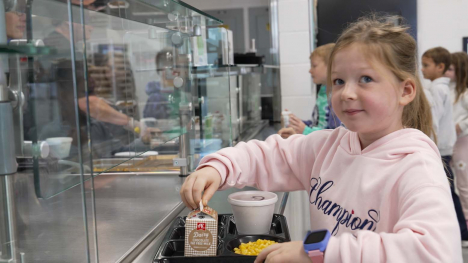
An Iowa school district connects local farms, food hubs and students through the lunch tray.
Naomi Blohm and Ted Seifried question USDA’s corn yield surprise and weigh China’s soybean demand.
Higher USDA yields pressure grain. Plus, opportunities/costs of putting local food on school trays.
How grain prices rally this winter w/Naomi Blohm & Ted Seifried on USDA, China demand & S. America.
Farmers rarely seek mental health help. Farm Dog offers care from people who know farm life.
Sue Martin examines grain stocks, harvest risks, soybean demand, energy costs and livestock markets.