Gbenga Ajilore analyzes how recent policy changes are creating challenges for rural communities. Topics include rural hospitals facing closure as ACA subsidies expire, electricity price increases amid clean energy program cancellations, and concerns about state-level management of food assistance programs.
Healthcare, Energy, and Food Security Under Pressure in Rural America
Share


There are always many balls in motion when it comes to an economy and way of life. Economist Gbenga Ajilore is back with us from the Center on Budget and Policy Priorities. He talks about the mounting healthcare crisis in rural communities in the distance to drive for service and the increase in cost for that very care. We also get into the energy sector and what the cancellation of $300 billion in clean energy investments has done to rural communities. We’ll close with changes and lost efficiencies in food assistance benefits.
Transcript
Yeager: There's a new way to stay connected and know what's happening with Market to Market. When you subscribe to Market Insider, one email and a lot of information awaits you. Go to markettomarket.org and subscribe to Market Insider.
There's a whole lot of policy to make sense of in this world. And today we're going to try to make sense of three things. We're going to talk about health care specifically in rural areas. We're going to talk about the impact of doctors that are or are not in your community, how many miles you may have to drive for care. We're also then going to discuss energy and what it means for higher electricity prices of guess what? Supply and demand are at play right now. We're going to make sense of why and what could happen. We'll put maybe some Band-Aids and some longer term solutions out on the table for discussion and for your thought. We'll get also into a little bit of climate when it comes to the energy side. But then we're also going to talk about the tariff side and what that means. We'll talk about taxes. We're bringing back a guest that we had on, just a few months ago. And he used to work at USDA, but now he's at the Center for Budget for Policy Priorities. It's our friend Gbenga Ajilore. And, we pick up, with something very personal right at the beginning of what's going on over his shoulder. And by the way, if you're ever curious about what's going on behind me in this podcast studio, we're going to start writing about some of the things that are on the shelf here in the market. Insider newsletter. I really would like you to subscribe to that. That is a good way that I can update you on what's going on with the show and share some other fun little stories. I had a pretty good one in last week, that I think you might enjoy. So sign up at www.markettomarket.org and just scroll on down from our homepage and subscribe to the Market Insider. It's free. Comes every Monday, unless it's a holiday. Then you'll get it Tuesday. But today is a Tuesday and you're getting a new MToM podcast. I'm Paul Yeager. Enjoy this episode. I have to start with what's behind you. I asked you before we started rolling. That's from Dune behind you?
Gbenga Ajilore: Yeah. So it's from the movie Dune. It's a Lego set of what was called the off after so many huge Lego fan and also a huge movie buff. So that just a great intersection.
Yeager: Is that your escape, movies?
Ajilore: Movies? Yes. And Lego is just one of those things where sometimes the news gets to be too much and it's away for a couple hours just for me to get away from everything.
Yeager: And I guess we'll get really personal. Is that something kids that you've done over the years? You've done that with your kids? I know I did with mine.
Ajilore: Yeah, it was actually it's a funny story because my son was a big Lego fan, and I remember I was like, you know what? This is so much fun. I wish I had this when I was a kid, but then I was like, wait, I have a job, I have money, I could do this for myself. So then I sat and I once a month we'll build Lego sets together.
Yeager: Oh that's fantastic, I love it, I love it. We have so many in our basement now that they're older. They're, you know, upper teens. So I'm looking at that going, well, can't get rid of that. That was a good investment. And things.
Ajilore: Unless you have a big house, it just takes up so much space.
Yeager: Yeah. It does. I would like to go back to what we left off on, a few months ago when we last talked and we talked about real economic things. You have a history at USDA. You understand a lot about the policy side of things. You're now on that outside. So you have a different perspective of what you did before. But let's talk, specifically about rural health care. I just listened to, I'm listening to all these governors as they go back in the legislative sessions, and they're all have plans for rural health care and how we're going to improve certain things. Is that a state discussion? Is that a federal discussion that needs to be happening about rural areas, specifically in that broad big box of health care?
Ajilore: That is a discussion for everybody - federal, state, local plan for the private sector because it impacts everybody. You just think health coverage is something that everyone needs and it's also expensive. And so we have to figure out ways of making it affordable. And so that's why there's a lot of talk about it. And we have this year the Affordable Care Act. There was, you know, subsidies that made it affordable for people that are now no longer there. And so people have to figure out what is it that they can do to either keep health coverage or actually drop it because they have to put money elsewhere, like food, like housing, like energy prices.
Yeager: What happens when people drop health care?
Ajilore: So what happens is that people still use it. You know, if you get you break your leg. You're not going to just like walk it off. You have to go to the hospital. You go to the hospital, you get taken care of because the hospital is still going to take care of people, whether they can pay or not. But now, because you don't have health coverage, because God has to eat those costs now, at some point the hospital can only eat some of this cost, and then they have to figure out the other things to do. So now they're going to drop services or worst case scenario. And this is something that all rural communities have experienced and seen over the last 20 years. You have rural hospital closures, which doesn't do anyone any good.
Yeager: Or you're having rural hospitals taken over by metro, organizations that might they swallow it up because there's other reasons for them to take on some of that. That smaller hospital is that do you know much about if that's a good thing or a bad thing.
Ajilore: It's going to be a good thing if they could maintain services. But then what I worry about with the ACA consolidation is that then they start making decisions, not for the local community before the corporate headquarters in a large major city. And so sometimes they'll look at they'll say, well, the services don't pencil out. And then what they do, they cut certain services. And a lot of times you look at some of the more expensive services, ObGyn services, and that harms the community. So if the you know, if there's consolidation, if, the larger hospital chain takes it over and able to maintain the same level of services, that could be a good thing. But we often don't see that case because it doesn't work for the bottom line.
Yeager: And people have to drive farther for care.
Ajilore: Yeah. And, you know, it's one of those things where depending on how the roads are, you think about infrastructure or transportation, know if people have access to cars, what's going to happen there. So you know, what was normally say, a 30 minute drive might now turn to a 90 minute drive. And if you have like a heart attack or things like that, timing is of the essence. So that makes it even more difficult.
Yeager: And it doesn't always then become, we don't have services there. But there's also that issue of recruiting the staff, whether it's nurses, administrative and the doctors, to some of those areas, that's a different issue. But it's also tied to the larger corporation. What are you hearing? Is there certain states that are doing a good job at recruiting doctors to rural areas?
Ajilore: Well, one of the things that and this actually brings up a topic that, you know, I wasn't really thinking about, but you think about immigration. And so one of the biggest, you know, health for rural health workforce, doctors and nurses is with immigration. And there's a lot of IT policies now in terms of like, I think there's about the gold visa or the $100,000 or even the mass deportation, things like that, that has a particular harm for these communities, because that was what, you know, you think about people who move to rural places. A lot of people migrate are going to these places because it's cheaper. There's job availability for the rural health workforce. And so that's, you know, one thing that, you know, one more thing that governors in states are kind of to figure out and deal with is like, how do we attract that? You know, part of it, there's been the Rural Health Transformation Fund, where a lot of states had a lot of ideas about the workforce. But if you look at the broader context of the ACA, enhanced subsidies going away, the cuts that are coming to Medicaid and now with immigration restrictions, it's just makes things so much harder for these states and localities to be able to recruit a health workforce.
Yeager: Is there something building that, if everything goes not ideal or even partially ideal, that we're setting up for some? Is there going to be some moment we wake up on a Tuesday and some mass, something happens. I'm not saying a mass tragedy, but just all of a sudden you mentioned 60 to 90 miles. I mean, what's the worst case scenario that can happen here?
Ajilore: Well, I think one of the things is that we're already experiencing that, but it's just not as public. There's a lot of these communities that have been going through this for so long, and, you know, we're making strides with, you know, affordability through the Affordable Care Act. You know, other a lot of stuff that we did at USDA Rural Development was developing, you know, a broad economic development plan we had focuses on, you know, communities and communities building up and having more agencies. And now we're reversing that. And so I think it's going to be like a steady drip where six months from now, a year and a half from now, we look back and say, oh, what's happened to this community? What's all these policies building up that seemed disparate, but put together have been very harmful for these rural communities.
Yeager: Health care is a massive thing. And I don't think, if we spend the next six days covering it, I think both will get tired, but B, we won't solve it. So is there any Band-Aids that can get us through, or at least start us in the right direction of having a healthy discussion and maybe making some tough decisions that can have good results down the road?
Ajilore: Well, we've already seen it in the House. They passed the extension, a three year extension of the subsidies, and that's a start. And, you know, the Senate are having conversations about that. And so that is a Band-Aid of just, you know, you're able to extend that. Now, you know, people are looking at increases of monthly premiums, you know, say for, you know, individual about $150 or $3 a month, you have an elderly couple looking at $2,000 a month that they have to pay. You bring those subsidies back. Now that's $2,000 a month in their pocket to now be able to afford food and or things like that. It's a Band-Aid, but it's going to be helpful. So like, that's something really simple that is happening right now. They just need to get it across the finish line.
Yeager: We'll get to electricity in a moment. Let's go to food. SNAP is a big part of USDA. But there's this push. If we ever do get a farm bill, that it might not be a farm and food bill, it might be a farm and it might be a food to different things. In Iowa, the governor has said she did not want federal money for food assistance. She's now going to do things inside but get some other financial help. What if snap cuts done as each state again, has taken up a patchwork approach that used to be much more of a federal government answer in the past?
Ajilore: This is something that actually worries me, because at least with the federal government and we've seen this, they've been able to run deficits and debt to be able to pay for food, you know, for a lot of things. But what the state does, they always have to balance the budget. So now, for the first time ever, states are going to have to pay a certain percentage of that. And if they do that, you know, say that we talk about households is that if you have to spend more money in one place, you're going to cut somewhere else. And I worry about for the states, where are they going to cut? So some of them it's going to cut in terms of eligibility and spending less on food assistance. And you know, we have to look at the population that we're talking about. We're talking about people working. Families are trying to put food on the table who get a little bit of assistance. There's not a lot of assistance. You know, we're talking about a lot of money to be able to just have three square meals a day. And so now if they're going to cut, that doesn't make it more difficult. You think about that. Some of them, it may become so expensive that they're actually going to say, well, we'll just, you know, leave it to the private sector. And we know the private sector is not going to do that. And so that's the biggest concern is how our state's going to respond to having to spend money. When you don't have a lot of money, they're not flush. And so the question is what are they going to do? And what does that mean for these people who are just trying to put food on the table?
Yeager: But there's an argument that the federal government shouldn't be doing deficit spending either. And, that's been a big push of the majority party. And so there's not probably, as much of a, I don't want to say appetite, but that's really the best word for increasing deficit spending. I mean, we all lived through DOGE a year ago. We're still dealing with that, and it's not going away in other places. And so that's a headwind for this discussion, too. I'm guessing if you look for a federal solution.
Ajilore: That's right. But when we talk about increased deficit spending, it's not just spending. There's two sides to that ledger. There's revenues. And so at the same time we're cutting spending. We're also cutting revenues. For example, look at the estate tax. They extended that. They had an exemption of 15 million per couple that, you know, anything under 15 million, you're not taxed. Now, that's not a lot of us, right. You know, our, you know, many generations not going to be able to do that. What they did is they actually extended the exemption to 30 million per couple. And so that's a loss of revenue that could go to putting food on people's table. They can go to providing health coverage to be able to help hospitals remain viability. So if you talk about increased deficit spending, we have to look at the revenue side. And at the same, you know, that was one thing. If you're maintaining the same level of revenue, but we're not we're actually cutting revenue. And so that's the thing we have to focus on if we're worried about deficit spending. And so that's why I always talk about you know, that's why I worry about to be able to have food assistance for people.
Yeager: But it's some of those rural areas where that's those are the lawmakers based in rural areas pushing for that extension. They call it the death tax. Because it's farmland that is going from generation to another. And they are some of the ones asking for that cap limit or no cap at all on that side. So, yeah. Are you saying that maybe some of that is a little short sighted? And what are folks calling for?
Ajilore: Well, if we're talking about farmland, we're talking about people who are subject to a state tax. We're not talking about families where we get a $30 million exemption. There's not a lot of families. It's about maybe 0.1% of all. And this is across the country by 0.1% of all farmers that would be subject to the tax. And that might say subject to the tax, I don't mean paying for it. I mean actually filing a form to be able to say whether they need to pay it or not, the actual people who need to pay it, it's even smaller. And so I'm thinking like maybe 2000 families that would actually have to pay the estate tax. Meanwhile, you look at, I think it's like 5 million families that get food assistance, you get 22 million people. We have the Affordable Care Act, a lot of those in rural communities and so the question is, who is the government for? Are they for those couple of thousand people who would pay the state tax for the millions of people who want to put food on the table and to be able to get coverage?
Yeager: Food has become a hot talking point. It was a major part of the government shutdown, that we had food assistance. You have states and individuals. There was a push of, well, maybe it's not the government that needs to be involved, it's churches and local organizations. Is that a long term solution to this problem?
Ajilore: Not at all. And we saw that when we actually had Snap for a couple of weeks in November not being paid out, you know, you look at food banks for every meal that they provide SNAP or provide nine meals. So we take SNAP away. That's eight meals that people are not going to be able to find. And the thing is, we have to go back in history. There's a reason why we started these programs to begin with. We think about the New Deal, we think about the Great Society. We had a huge percentage of people in poverty who were not able to put food on the table, and it's not in the private sector. They had opportunities to do that, but they didn't fill in the blank. They're not going to fill in that gap. That's what you know. There's a role for government. There's a purpose for government. You know, government needs to provide a floor because nobody else will. And so I think we've gotten away from understanding that government, you know, good government is good and that it's just a floor for people to be able to raise up.
Yeager: And there's more numbers in. We haven't. We always joke about farmers being so optimistic, but the average person is optimistic of well, next year I'm going to make more money, I won't, I'm not going to be in that category. Therefore, I'm not going to support someone who's going to cut, to for making more, how am I trying to say this, more people are optimistic they're going to make more money next year. I mean, it's just flat out. And that's not the case.
Ajilore: But it's also a good thing to be optimistic. But I think what we're missing and what's missing in that conversation is that value of community where supporting my neighbor and supporting that person across the street is going to benefit me. So yeah, this year I'm not going to take snap, but there may be a point where things turn sour. And then I might need that, but then the next year I won't need it. And so just because I don't need it this year doesn't mean I won't need it in a future year. But the other thing is that it's okay if my neighbor needs a little helping hand this year to get me, to get him or her, over the hump next year. And so one of those things is that you know, staff food stamps, these all these programs have helped people move up and kind of get mobility. And it's that floor. And when we raise the floor that gives people a better opportunity to hit their ceiling and that and when other people hit the ceiling, that's better for all of us if we don't take it.
Yeager: More of a net, not a dependance.
Ajilore: Yes.
Yeager: Okay. And then go with then I'm going to keep going on with what you just finished. If because if you're not making a certain amount of money, you're not paying income tax anyway.
Ajilore: That's true. And so that's one thing. But again, it's like when you get, you know, you think about, you fall off and there's a net there, you bounce back up. Right. And when you bounce back up then you can start climbing again. And that's what we want. And then people start climbing. They pay some income tax. They you know, revenues. But you know, no matter what you still pay sales tax. You so pay other taxes. There's other things that people don't pay into that we don't talk about.
Yeager: Oh tax debate again another seven hours and another seven days. We could get in that. Bingo. Okay. Let's discuss one other thing here. Your role with USDA refreshes again. What it is that was kind of some of your focus on your last time there at the agency. Yeah. So I worked at the Rural Development Mission area where we basically do everything for rural communities. We look at businesses, we look at energy, we look at housing, we look at infrastructure like wastewater, high speed internet, things like that. And basically supporting a community for them to develop not just to survive, but to thrive. And there's a push in the rural states that we cover with market, that there's always the push to help communities, in rural areas for many reasons, not just those who live there, but those who work there. One of the big things, again, it's legislative season energy. We're talking about grids. There was this word used for a while, clean grid. Now I don't hear that as much. I just hear grid infrastructure. Tell me the difference in the appetite that you're hearing about in America right now. Is clean grids still a thing?
Ajilore: It's not really a thing. One of the things that kind of concerns me is that when I was at USDA, we made a big push to do transition, transition from fossil fuels to clean energy. So like solar, wind, but even going to, like, hydro, geothermal, just you know, an all the best strategy, even nuclear. And we had a lot of programs to be able to support that, you know, and with the Inflation Reduction Act, we put a lot of money into that. And then that started last year. The administration pulled the plug on a lot of these projects and then continue to do that, even with the one big, beautiful bill that cut $300 billion in clean energy. And a lot of it was just investment, like electrical vehicles, solar panels. But the biggest thing there was that it was helping people save money, helping businesses save money, lower their energy costs. And now we're seeing communities start to struggle with that. This year.
Yeager: And part of the reason that I understand that there was support to cut some of those things was they were seen as government subsidies to an industry that doesn't need it. I didn't understand that argument. Did you?
Ajilore: I don't understand that argument either, because phosphate industry has been having subsidies for decades, and so and that has been taken away. But I think a lot of it that we missed. And again, this goes back to my thought about good governments. Good is that a lot of times certain industries need support to be able to develop and build. We see electric vehicles all over the place, you know, Tesla's and Ford's and Chevrolets and people or, you know, hybrid cars. And that's been very good. And we've seen the positive impacts on that, where people are able to save money and not have to deal with the fluctuations in gas prices. Now, there's been a lot of investment for that back in the 2000 and then the 1990s, where like that helped develop that industry so that they have less of that now. And so a lot of it is like government subsidies are not inherently a bad thing, and they help actually strengthen economies. And so we actually even see that now, especially in Iowa with, you know, ethanol. And there's a lot of push for e-15 and, you know, sustainable aviation fuel and like trying to develop more technology and innovation. That's the role of the government. And so that's a good thing. And we were on track to develop that. And so, you know, helping with innovation and technology and economic development but also helps with the pocketbook for everyday Americans.
Yeager: But for everyday Americans we’re seeing lower gas prices than we did a year ago. And crude oil below $60 or right at $60 today as we speak, when it opened on the on the board. That gets to be a little problematic for the ethanol industry because they need oil to be a little higher to make ethanol seem a little more attractive. Kind of a tough spot for those looking to support at least the ethanol side of the ledger right now.
Ajilore: Yeah. I think one of the things we have to look at is we can't look at it individually by, you know, thing by thing, where we have to look at it in terms of what's the broader energy package. And so ethanol is one part of that. But then solar and wind is part of that. And the fossil fuels are still a part of that. And so we have to look at the whole package of like, what is it that's going to be helpful. And if you know, if it's not helping with ethanol industry, then you want to start seeing like, what are some other alternatives so that you don't put all your eggs in one basket. And if it's not working here, then maybe that. And then that's where the government subsidies do help, where you kind of make it, these companies able to figure out, okay, what are some of the other things where we can diversified portfolio so that we can weather those ebbs and flows so that if oil is low one time, you know, we able to shift towards another one. And if it gets higher then we can go back to ethanol.
Yeager: Another way to say eggs, all the eggs in the basket is all of the above approach to energy policy.
Ajilore: Exactly. And that's something that we should pursue.
Yeager: And that's gone away. Is it going to take us to keep looking at these higher electric bills when I get my energy bill to keep going up and up and up before I say, you know, I need some we need some alternatives here.
Ajilore: We do. And I think that's the beauty of some of the work that we've done, and not just during the Biden administration, but in previous administration. I want to bring up one program called the Raw Energy for America program, which was to support, farms and rural small businesses to do clean energy investment. So solar, wind, hydro, hydro, geothermal. And there's examples for the last 20 years, these businesses and these farms that have put on solar and are seeing much lower costs. And so when we see these higher electricity prices, all we have to do is look at these examples and say, oh, there is an alternative that works. Let's advocate for that. Let's push for that to be able to, you know, benefit like they're benefiting.
Yeager: Well, I, I look at the electricity industry and and just electricity I shouldn't say industry electricity and the demand for it is high which there for simple economics high demand, high price. Therefore you can raise rates but electric groups are, they're regulated. They have to ask to raise rates. Consumers of energy and electricity. We're kind of stuck right now I think.
Ajilore: So I'm glad you brought up the economics of it where it's higher demand pushes up prices. What lower prices is greater supply. And so that's where the clean energy comes in, where you have more options so that you're not reliant on 1 or 2 utilities. But there's other options. And you know you get personal solar where you're able to get, you know, get back to the grid and people get money back. And so I think that's where the having the diversifying your basket of energy products is going to be helpful. So to increase supply as the same time demand is going up is a way of, you know, mitigating those price increases.
Yeager: And there's also a concern, that electricity, to create it where it's going, some of these areas I'll use my backyard, there's huge data centers within 30 miles of me right now. Those are pretty big energy users.
Ajilore: And that's why of the big alliance in a room is the data centers is something that's really like pro communities, where you have to worry the kind of concern about how do we deal with that? You know, data centers come in. And I think one of the things that we don't really talk about is that especially with AI and things like that, the benefits from the data centers are broad, but the costs are very localized. And so the question is, as we have data centers coming in and hopefully having community engagement input as like how are these being able to benefit and not bear the cost of higher prices? And sometimes it's the issues with water use and things like that that we have to have this holistic approach to these data centers, but understand what's happening to these communities and trying to mitigate any of those harms.
Yeager: And I think of the program we're using to record this interview, there is an option for AI clips and magic. This and that all takes part of that energy. I know I'm contributing to it, in my industry and using it. That's what powers so much of, you know, putting things on television and having the ability to hold it in my hand and watch what it is I'm doing. I know I'm a part of it, part of the problem, but it sounds like there's still some solutions out there. Again, I guess I'll like what I did in health care. Is there a band aid that can get us to, maybe some better policy? In the short term before we get a better solution long term?
Ajilore: I say the biggest thing is to reverse the cuts. And to those programs and those projects that were halted so that those projects go because, again, it goes back to increasing supply and doing an all of the above approach. Some communities want nuclear, some communities want solar, some committees don't want any of those. But you have to give the option to the community. And we always talk about, well, the federal overreach. This is overreach. I'm stopping these all these projects. I think there was a project out of, the coast of Rhode Island of wind power where I was like 95, 96% complete, and they just pulled the plug on it. And for what reason those people wanted it. There was community engagement. There was a whole process in that. And that's the kind of overreach that we can't do, because then you're not providing the options. And so you have the higher demand without the increase supply and everyone's paying higher electricity prices.
Yeager: I had a trip to Europe in December, and I was in a part of Germany where we were we were going into the country off of the Rhine River, and there were wind turbines off to the side, and then I'd see solar panels, and then all of a sudden there was a massive pit for a coal plant. The coal was going across the road to the nuclear plant.
Now what I was, I asked our tour guides and some locals. I said, are the wind turbines everywhere? Are the solar panels ever? This is no, those are only being used to run that coal facility. So the Europeans always get this reputation of they're all green energy, but they're not doing it again. Small slice of what I'm doing. That doesn't sound like there's there's still an appetite for coal. Just like there is an appetite for coal in this country and for oil. So what's going to quench that appetite? Fill it?
Ajilore: I think part of it is, and I always go back to the community aspect of it, you know what, some communities are not going to want it, but they don't have the options for transition. And so I think if we create these options for transition, because a lot of communities said, okay, you tell me not to do coal, but then there's no other alternative for me to provide energy. But if you provide that alternative, then they could see that transition and then they could see the benefits of that. You know, I grew up in Southern California in the 80s. And, you know, we had such a smog problem where, you know, I lived in a valley and there days where I couldn't see the mountains. And I was like on a weekly basis. And then over time, there was a shift towards, you know, you know, less smog and, you know, having the cars and regulations that kind of cleared the air. And I go back there and it's clear all the time. But part of that is because there was intentional policy, but there was also transition. You see electric cars, you see hybrids all over the place. And but the thing is, that was our options for people in California. Now you go to other places, there aren't those options. And so we have to provide those options for people to be able to envision that transition away from polluting industries.
Yeager: I've only been trying to poke and prod you a little bit here. Benga, through this discussion, I want to leave us with this as we start 2026. Do you have 1 to 3 priorities for the federal government level? That something that could happen and benefit a lot of Americans here in the first in this year? What can we see? What should we be looking for?
Ajilore: So the first thing we didn't talk about, and it's something that's going to be top of mind for a lot of people are tariffs. You know tariffs have been impacting you know especially the agriculture sector. We've looked at you seen tariffs on steel fertilizer, aluminum. That's really made it difficult for farmers as raise prices you know grocery prices food up you know the grocery store. So it may impact. So I think the first thing would be tariffs. And eliminating most of the tariffs. There's always there's are good reasons for having tariffs. But this way the tariff scheme that's been going on and kind of the haphazard way you know, it's on one day it's off. One day it's 50%, one day 25%, the next day that just doesn't work. So a more sensible tariff scheme is the first thing. I think the second thing is supporting low and middle income working families. One of the things that we are going to see this year is that that one big, beautiful bill is going to be implemented this year. So we're looking at cuts to Snap and food assistance, which we talked about earlier. We're looking at cuts at Medicaid. That's going to be hitting especially rural hospitals and individuals hard. And now we're looking at these tax cuts. We're just going to reduce revenue and increase deficit. So we talked about deficits. It's not just about spending but the revenue side. And that's going to impact people. So finding a way to reverse those things just to help support people support you know we talked about the states. They're going to have to start paying for Snap. And it's going to make their, you know, world difficult. So reversing those things that's I think those are the two things that I'm looking at right now is both the tariffs and the implementation of the mega bill that's going to harm especially rural communities.
Yeager: I know we we didn't quite cover tariffs, and I had a discussion last week about it on this program, heavy. And the thought there was the tariffs are and serve a purpose. And you kind of just said some of that same thing. There are reasons there are tool some don't like them being a hammer. If the if the Supreme Court, throws out the hammer that the administration's using right now, what's that mean for America?
Ajilore: So what that first means is that the tariff that they're going to rule on are the reciprocal tariffs. That's the one where they have the baseline of 10% on all countries and that other countries that are much higher. So those are going to go away. There's still plenty of tariffs that are out there. Tariffs on China, tariffs on Canada. And so we'll still see some tariffs on things. But one of the things that we'll see depending on how the administration responds is lower prices of certain goods. Because now those tariffs have gone away. Some of the businesses that have to pay tariffs you start will have to figured out the mechanism, but they're actually going to get refunded for paying those tariffs. Because I remember now at one point they're tariffs on Chinese goods. That was 145%. And there were businesses who paid that and that really hurt them. So that's going to see some of the money back for them depending on how the administration does it. But I think that's the biggest impact we're going to see is lower prices. And some of these businesses getting a refund for the tariffs that they paid for.
Yeager: And when that ruling happens, we'll probably have to have another conversation because we'll know a little bit more and we'll see what some of their thinking is in their ruling. And I always enjoy our conversations. Great to see you again. Thank you so much, Gbenga.
Ajilore: Thank you very much, Paul. This was fun.
Yeager: Once again, sign up for that newsletter at MarkettoMarket.org. Our production crew here at Iowa PBS, which is where I am and Market to Market are based. Sean Ingrassia is the production supervisor. Reid Denker, Neil Kyer, Kevin Rivers, Julie Knutson, David Feingold. The executive producer of Market to Market is David Miller. Andrew Batt is our general manager, and Cameron McCoy is our boss In between. Hopefully he's listening. We'll see you next time. Bye bye.
Watch More
Chris Robinson weighs corn recovery prospects, soybean price levels and the rebound in cattle.

Minnesota’s Keepsake Cidery combines heirloom apples, traditional cider making and direct sales to help a small farm thrive.
New farm relief, a food safety honor, Minnesota cider and commodity market analysis with Chris Robinson.
Chris Robinson answers viewer questions on corn yields, crude oil and cattle, and explains his soybean outlook.

Huub Lelieveld receives the 2026 World Food Prize for six decades of work advancing food safety.
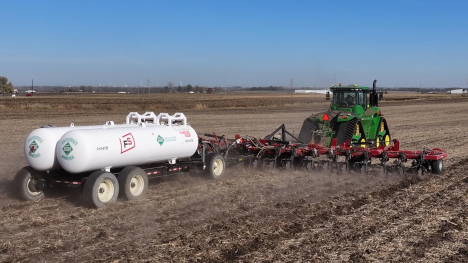
New federal plans target farmers' fuel and fertilizer costs through direct relief and investments in domestic fertilizer production.