Farmer conversations in Ohio and Idaho as producers dealt with extremes in precipitation during the growing season.


2025 had ups and down and not everything in our big country synced. There were ebbs and flows in moisture, good growing conditions and outlook for what’s next. We met two farmers in 2025 - Jamie Kress from Idaho and Ben Klick from Ohio. This was our third conversation with them. Ben was in the middle of hauling grain while Jamie was riding out a winter storm during some commodity meetings in Washington, D.C.
Transcript
Yeager: All right, it's time to close the books on 2025 and our fiber conversations. Today we are going to have our third check in with farmer Ben Klick from Ohio and Jamie Kress from Idaho. You know, if you've listened to the other episodes with them, how this year has kind of been an up and down. We're going to find out how it finished and kind of peek ahead to 2026. So Ben was busy the day we talked to him, trying to move some grain around his area, and it was getting ready to be cold and maybe some snow. But Jamie, Kress, she had hopped on a plane and was in DC for some meetings with some of her friends at the National Association of Wheat Growers. So she's in DC for policy meetings. Arrived just in time for a big winter storm. So we'll talk about that a little bit. And just kind of what that means, for what's going on back home. So that's what we're going to talk about here in this installment of the MToM podcast. I'm Paul Yeager. Thanks for checking in with us on this podcast, which comes out each and every Tuesday. We're always glad that you give us a chance. And now let's wrap things up with Jamie. And first, Ben. I had this whole setup. I was going to do something about Ohio State. Indiana. I was going to do football. Just what kind of a weird year it was. But then it's just really dumb cold right now. What's it like for you today?
Ben Klick: Yeah, I tell you, actually, at the current moment, it's about 37 degrees in probably 35 miles an hour winds. It's been a very breezy day. We're trying to do a multitude of things like most farmers this time of year, haul grain and work in the garage and, try to clean up some fence roads and things of that nature. But, burning, burning brush wasn't really, a good option for today, as we thought it might start out the morning as. So we had to kind of limit ourselves on that this afternoon.
Yeager: So otherwise the brush would burn and end up in like West Virginia or something.
Klick: Yeah. It was, actually we had a south wind, so it was going to blow all of the fodder, corn fodder and everything to Michigan, which, you know, I don't want to give them all my, my good and B and K, you know, we got. That's right. It's not them guys up north.
Yeager: So don't give anything away for free.
Klick: That's right.
Yeager: You're also sitting in the cab of the truck. Are you hauling two today?
Klick: Yeah. Yep, yep. So as again, as most guys are, Well, not most guys. I am one of those poor guys that have to drive truck every day. We don't mind having to haul in the slop and the salt and the stuff, but everybody that doesn't have to drive every day can, you know, kind of pick and choose more on their days of hauling and that's what's kind of funny. The weather lines have been very short, really in and out. We've been hauling into a buggy plant up in Bellevue, Ohio, north northwest, north central Ohio area there. And, it's just been slow. I mean, right end of the pit dump in and out. I mean, very, very odd for this time of the year. So, other than that, it's just been, basis of creeped up. Actually, we have a positive basis today in January, which is very unheard of at our local buggy plant usually where usually were, you know, 1015 under, more so than not. So that's kind of crazy. Kind of crazy this time of year. So it kind of goes to show you that there's at least in this eastern corridor, there's not the green either out there or guys aren't coming off of it yet. So which is odd for this time of year. So.
Yeager: Well, I was going to make you speculate. What do you think it is?
Klick: I, I know just from my connections, especially here further east in Ohio and Pennsylvania, that my, you know, the elevator I've mentioned that my sister works for. They only took in about 60% of the grain that they typically do in a normal year. Corn and beans. So I know they're short on both that. And that's the same story for majority of the places around here. And then, you know, the 77 was kind of the cut line here, for, for rain and weather. And I know the further east on seven east of 77 you went, the worse the yields got. We've, you know, finalized everything and we were eight or 5 to 10 bushel less on all of our buying acres in court acres and maybe a few bushel higher. But nothing nothing to brag. Home about, put it that way.
Yeager: Well, that was you mentioned the snow. I was going to ask you, what's the snow cover? Like, right now?
Klick: Yeah. So we got a couple inches. We got winter wheat planted here at home. I'm actually staring out here, out my left window. Where we're at here directly, we got two, three inches of snow on the ground blowing around. And they're talking and squawking about some big, big, big snowstorm coming up. I will see if it makes it here over the weekend, but I know the places we all feed into are getting phone calls less than right. Guys wanting to get feed and stuff ahead of the weather over the weekend into next week. So that's going to kind of make for a busy rest of the week for us in the truck side of things. So now maybe, maybe won't get anything on that. But they're talking ten 12in of snow possible for us. So that'll be interesting.
Yeager: Yeah. See we're going to miss that by the time this airs we'll know what really happened. But the reason I ask about the snow is and you mentioned the weather line this year. I kind of watched where you were at and you were like on both sides of it a couple of times this year. Do you think you ended up on the dry side or the wet side? That was the bigger impact on your yield.
Klick: Yeah. So when we talked in the sprayer there this summer, we were in a just monstrosity of rain. It just it couldn't stop raining. So we had the wettest June on record and the driest August on record. So the rain shut off the last, adequate rain we got. It was like the 24th of July. We had like 6 to 8 tenths on most of our farms. And then we didn't get another drop till the middle of September. So, I mean, we could even buy a do in the morning, in the morning, let alone a rainfall.
Yeager: So because usually if it rains so much, the root system doesn't go, is that correct? Did that hold out?
Klick: Yeah. I tell you, we were fortunate with our creeks and most of our corn acres were planted the first two weeks of May, just the way it turned out on the ground, the way it caught on. And that corn did just fine. Test weights were off, but yield was okay. Now, beans was on some of our heavier farms this year, so it was a little wetter in the start. They suffered greatly as obviously as we know, no rain in August and September doesn't usually lead to good things in soybeans, especially here in the Eastern Corn Belt. So, that led to subpar yields for the second year in a row for us. So there's a lot of sour taste in the mouths of farmers as far as growing soybeans over here, I'll tell you that.
Yeager: And was that where they were they late into the ground because of the moisture? Yeah. So if they would have been maybe normal planting date, that story might have been different.
Klick: Yeah. The beans we did get in relatively on time the beginning of May turned out a couple bushel better, but there was not as many of those I would like to have as, as as you know, most of us getting the test for so.
Yeager: I want to go back to something you said about, your basis and you're talking and the 60% number that, you know, just not coming in. Are you tracking things that you pre-sold or selling because basis is what it is right now.
Klick:Now. So for soybeans, typically, usually will do hedge to arrive contracts. And I'll set our basis, you know here in this in January. And it's just worked out good that we were able to take advantage of some of those $11 plus, soybean market rallies and, and actually capture a decent basis on top of that. So that was a win. Now, I wish I would have sold, you know, everything in the bin, but, you know, you know, that's just the joke about because every farmer, you know, it's always hindsight's always 22, no matter what. Same with corn. You know, when corn was creeping up there on the on the, you know, March contracts, basis for corn here have been anywhere from 25 to 50 over so far. Again, because guys aren't coming off of it and there's just not the quality of it for the feed mills that need it. Right. So wish you would have sold some more of that for 90 corn that, you know, than we did. But, you know, oh, we sold some. That'll get us covered for what we need for, you know, land rents in January and those kind of things. And, and, we'll kind of be patient on the rest, you know, because, you know, God forbid we'd sell more to profit. And, you know, we'll wait. And it's always going to go up. Right? It's always going to continue higher during the trend.
Yeager: So I'm sorry, were you in some type of time warp in the last. Yeah.
Klick: That's that's right, that's right, that's right.
Yeager: When you saw that news from the government, I mean, what did it say for Ohio and did you dive into it?
Klick: You know, I, this is funny. This is my personal, this is my personal kind of conspiracy theory. Right? So, you know, when we talked about a nationwide increase of 2 million acres of corn. Right. So I look back personally from all the text, emails, the social media posts about, you know, make sure, you know, they were talking about this, this, this payment coming here in the beginning of 2026. And, you know, get into your FSA office, update your acres, make sure everything's correct. Right. And they were at that time, in my opinion, they were talking about, you know, corn the payment for corn acres was going to be greater. So you can't tell me that there was some people that might have, in my opinion, maybe fudge some lines a little bit. And there we are. Now we have two main organs of corn because the corn payments $21 more an acre or whatever it is. Right. So but that's just my theory on it. I don't really think there was two main more acres of corn. I also don't think we had a 186 yield average across the United States, either. Even my friends in the Western states I talked to had good yields, but not enough to where I think it would carry, like in some past years we've had substantial yields.
Yeager: So you are not alone in that first theory that that is one I saw floated here today or yesterday online. The second one about the numbers, the way we explained it on the show, at least with the discussion that was given, is there was all this silage man, that's a lot of acres for silage. And can the Dakotas really compensate for less in Iowa and Illinois? That's the those are those two things that I just not sure everybody online is buying.
Klick: Yep, yep. I would agree with that. I would agree with that. And although who knows with the way this beef market has trended, maybe there was some more silage put into a bunker than I thought, you know. But at the same time those guys still got to buy feeder calves like we are. And I know our barns aren't as full as they typically are, just with the raw price of what it cost. But feeders in a barn and have my legs, so, so I don't know, I don't know, I, you know, there's party that's like, yeah, I wish I, I don't know, there's just so much uncertainty and, and these reports and I just feel like they personally I feel like just they just get worse every year. And the dramatic, the dramatic, ties to the market, it has the, you know, good or good, bad or indifferent, is, is overdramatic in my opinion. And, I mean, there's a lot of money lost or, or gained, but more times lost in the market after these change, jerk reactions from these reports. And that's what's really frustrating.
Yeager: Again, one more thing on the basis, because this is the next story that I'm curious about. Is there going to be or are your neighbors and you yourself going to keep those bean doors welded shut, no matter how much the basis improves to kind of to get you to rethink, no matter what that prices. I mean, is that enough to, to make you scratch your head and go, you know.
Klick: You know, I think, you know, I'm personally I like basis contracts. I know my my dad and I bicker on that a little bit back and forth, but I think if, you know, in this time of the year, if we can take advantage of some good basis and haul in and, and, you know, play the market the way you want or even, like, on beans, free DPI is a big thing now. So why do I want to sweep a barn in July if I don't have to? I'm trying to spray and do everything else, and it's 150 degrees when I could clean them out. Now for free DPI through September, then just pick up the phone and call what I want. Right? So, that's a big one because these places are needing the grain, right? Especially with, going into the fall with this new Louis-Dreyfus plant coming in and central Ohio, that's going to eat up a lot of beans. So that's going to be really interesting as we go forward here into the 2026 crop season, too. So see what acres do.
Yeager: If you had to grade 2025, do you have an assignment for it?
Klick: I'd give it a C-minus. I give a C minus. We had a beautiful, you couldn't ask for a nicer harvest. I mean, beautiful weather, yields obviously weren't there, but I'll take the nice weather if you're going to. If you're going to have a bad crop gala field, at least it's going to be a nice weather. Get it out. Rather having a mud it out or snow it out. But corn was okay because the corn turned out good or average, and beans were just subpar. But that's second year in a row. So, I guess, you know, like, every year you learn something, you learn things to maybe adapt and change. And I think in the the times you're in with, downward market trends and high input prices, it's obviously it's inevitably going to make us better farmers, better businessmen, crunch numbers, better pay, maybe maybe pay closer attention to things that need addressed, both on the farm and financially and all all aspects. I think you're going to make us better growers, in my opinion.
Yeager: You mentioned your animals. What's your outlook for them?
Klick: So it's funny, I, beef for $0.60 off the high. We sell everything on the rail. So beef for $0.60 off the high. And now they've come back 30 to $0.35 so they can stay in. If they can stay where they're at now, no complaints. So I'll take that over again after a dramatic, you know, a, tweet from the president or whatever, you know, made the markets just completely overreact and fall in their face for a hot minute. If we could just kind of stay where we're at at a modest. You know, I call this a modest price and margin. I think we'd be just fine. But we both know that's not going to happen.
Yeager: So what? Since when? Any urgency or temptation to hold back any animals?
Klick: No, in my opinion, because all that does is, all that's going to do more days on feed. Feed is expensive. If they're ready to go, they're ready to go. And you contract some with cash. Some. So as long as we can keep playing that adequately enough, I think we'll be okay, in my opinion. So, I, like I said, barns aren't completely full. Like, they should, like we have in the past, but we're at like 80% capacity, so kind of see how that plays going forward. You know, feeder prices haven't done nearly the up and down or I guess I should just say down like the fat price did there for, you know, a few weeks or a month and a half. So, but I think if things kind of maintain their balance now, I think, I think it'll be okay.
Yeager: Do you have everything booked, paid for or at least, spoke. Locked. Anything locked in for 26 years. We. So 26.
Klick: Yeah. So this is the first year we basically didn't have hardly anything prepay as far as inputs for fertilizer and chem ago now obviously seed we did that like normal. But, and I'm glad we didn't. I mean, we thought about spreading some potash last fall and glad we didn't. Let's come down a little bit. But now how far is that going to come down. It's they've, you know, the your pot of ashes and your daps and maps at least locally here have kind of just settled out. They haven't really done much here the last couple of weeks. So thinking about pulling the trigger on some of that, I know on our farm, we looked closely at our soil test levels, from last year. We got samples pulled, and I think we're going to cut back on our map and depth. And at least for corn wise, we're going to look into some more phosphates in the liquid form for corn to get us at a little cheaper cost for the year and spread straight potash on beans, so we can hold those levels for a year on beans and get by and add in some microbes to the sprayer. And I think that's the route we're going to go this year to shave some corners a little bit.
Yeager: And do you have any flexibility on if you get a wild here to change any acres from one crop to another, or is everything there locked into we.
Klick: We were 100 acres heavy on corn last year, and we're going to be another about 75 acres heavy on corn this year. Just for the simple fact of in this general area with the bases we've had and or maybe looking at ten year having and the yields we've been able to raise with, with our current weather patterns as far as wet early and dry late, if those continue, corn is more conducive to grow here in Northeast Ohio.
Yeager: So even with the base of the bean facility that's opening up, that might change that dynamic.
Klick: Yeah. Now we'll see how that plays out. Absolutely. Yeah. That facility is supposed to take, beans and every acre of beans in an 11 county surrounding area in Ohio. So that won't be they'll be pulling beans from a long ways away. Yeah, big, big facility.
Yeager: More time in the truck for a lot of people.
Klick: Yeah, yeah, for dump pits open 24 hours a day, seven days a week, all electronic. It's going to be really, really nice.
Yeager: So wow, the neighbors are going to have to catch up.
Klick: Yeah. Oh, yeah. Well, it's funny what we've talked about. The older facilities, older companies that have an updated anything. They're going to maybe be hurting a little bit once the new dog comes to town. And the farmers see the convenience factor and how nice that is. Right. So we'll see how it plays out here.
Yeager: Competition supposed to make you stronger a little bit.
Klick: That's right, that's right.
Yeager: That's right. Ben, I appreciate your time during 2025. And here, as we start 26 was great to get to know you and hope to connect with you again in the future and just see how things are going. Because it's always fun to hear.
Klick: Absolutely. It's been my pleasure. And I've enjoyed getting to talk and meet with you as well. And, I get a kick out of it. I've had multiple people message me. Hey, I saw you on Market to Market. I'm like, oh, my goodness, you know. So that's been kind of funny to get text that people watch me on their laptop in the morning drinking coffee on a Saturday morning.
Yeager: So, I need to send you one of these pens so you can sign all those autographs. It sounds. Yeah.
Klick: Yeah, that's. Yeah. There you go.
Yeager: Your speaking fee just went up. Yeah.
Klick: That's right, that's right, that's right.
Yeager: All right, Ben, thank you so much.
Klick: Hey. Thank you.
Yeager: Of course, Jamie, you had to go to DC to get snow, right? Because there's not a ton of it back home, is there?
Jamie Kress: There is not a lot of snow back home in Idaho. Ironically, my husband's actually doing some mowing this week. Getting some fresh patches cleaned up around the farm. It's abnormally dry for us at home in terms of snowpack. Usually we'd like to see upwards of two and three feet at the 6000ft level. And we have none. So, yeah, I decided, why not? Why not find some snow? I'll come to Washington, DC to do it.
Yeager:You could put some in a jar and take it home to, you know, I'm sure.
Kress: Its a reminder.
Yeager: We'll get to your husband in a minute, because I'll talk about some of the photos he posted since we last chatted. But you're in DC. It's the middle of a snowstorm, but you're there for meetings, right?
Kress: That's right. So every winter, the National Association of Wheat Growers, the U.S. Wheat Associates, and the National Wheat Foundation all gather for a week in Washington, DC. We get our farmer network together, our staff from around the country, and we talk policy. We educate ourselves on pertinent things that are taking place here in the nation's capital. And probably one of the highlights is networking and visiting with the fellow farmers. When we have a minute of downtime.
Yeager: And everybody is fantastic navigating their text right now about, hey, look at my home, look at my home. Especially you've got your Oklahoma, Kansas, Arkansas, Mississippi people that are right.
Kress: Actually, just before I hopped on with you, I got a message that said all of our meetings today are delayed. We're going to push them back several hours to try and accommodate people who are still trying to get into town. I think we might be a day or two till we get everyone.
Yeager: And you got a couple days until you have to leave. So hopefully we can let the weather thing work through the system.
Kress: That's right. And if there's one thing farmers can do, we can go with the flow. We can figure it out, right? We get it done one way or the other. That's the same with meetings here in town.
Yeager: Is that kind of a ‘25 finish for you one way or another?
Kress: It was another, right? If it was, it was good to put an end to what was at our house. Kind of a frustrating year. I think the last time we talked, we talked about lack of moisture. We talked about hot weather. We talked about crops that didn't meet their potential. And that was really frustrating. So it was in a way, it was a relief to just be done and close. The book on 2025 is the commodity year. But here we said, I guess we have a fresh year. We actually have, we had a fantastic, August, September, October when it comes to precipitation. Mother nature finally showed up at our house and we got eight inches during that time frame when usually we would get three. So in terms of water and a full profile, that's nice. Usually the snow is what fills our profile. So it feels a little strange. But we're happy to have some water one way or the other. But I'll tell you that low, the low commodity prices across the board is just hanging on and kind of that cloud that won't go away.
Yeager: Right. And you're not alone. What it name the crop? It's been the issue. Let's go to the challenges that August rain. Bring in what your plan is for the next year, because I think you've told us a couple of times how, you know that a little bit of moisture is good, but you need it. I mean, you balance so much that I just don't know if everyone quite has to do what you do to make sure that crop comes up.
Kress: Right. So for some of your people that might have forgotten or not be familiar, I'm in southeast Idaho in a high mountain desert environment. We're farming. The low spots are about 5000ft. The high spots are 60, 200ft. We were pretty arid. We have maybe 12 to 16 annual inches of rainfall. All, dry land, rain fed environment. So, for us, it's a it's a science and an art that we've kind of figured out, but it is a little it is a little finicky, right. Timely rains really matter. And that was one thing that was nice to finally last fall, pick up some of that rain. So we do stick to a pretty consistent rotation on our farm. We don't deviate, too far from what the plan is. So what that means is I'm not chasing new, exciting things or chasing a high market or trying to avoid a low one. We are pretty consistent. So this last fall, we put in that winter wheat like usual. Were all the winter wheat was soft white spring this year or so. Like that doesn't make any sense. Soft like winter. All all of the wheat was soft white winter wheat this fall. We also put some winter canola in. And the great thing for us is we'll start seeding as early as late August, if we can. This year. Waiting on that rain that I just mentioned. We did a lot of the seeding in September, so the bulk of it was in September.
Kress: But we had a long warm fall which let those plants continue to grow well past, Halloween, which is really unusual for us.
Yeager: We and I looked at it a little bit, because does that cause problems when stuff grows so much in the fall?
Kress: It for us? Not usually. We can't. We never really get too big per se because it is a cold place. We'll get our first frost actually in September. So I actually like where I am if I can get the crops we're going established. Maybe I'll, maybe I'll come back and tell you I changed my mind on that. But to this point, at this point in our farming career, we've never gone, oh, no, these this is too big going into fall. So, Okay, all is well. And I.
Yeager: Interrupted you earlier, so.
Kress: I was going to tell you that, the other fall crop that we put in was an Austrian winter peak, and that's new for us. We do try a few things here and there to our rotation as a seed varieties improve and, and, we can take advantage of things that might grow in our climate. We always try something new when we can. And so we did 45 acres of that drip. And we'll see. Typically we have experience with peas, but typically it's a spring planted pea for us. So we'll see how that goes this year. Hopefully they've survived. We have had some colder temps. This last week without snow cover.
Yeager: So and and that's when you say colder because of your elevation dynamic. Right. I mean, you've got several different elevations you have to navigate. So weather can be both good and bad for you when it's cold or snowy. If it doesn't hit everything.
Kress: That's exactly right. It probably just sounds chaotic, really, when I talk about that elevation in the high, the low and what's going on, and then, you know, the summer's different than the winter, etc.. But, the one thing that we all have in common is when you get into those single digits and you've got a plant that's exposed to that cold winter air, that's rough. So that's where we need that, that snow cover to insulate the crops during the winter when it gets brittle.
Yeager: We're talking optimism at ‘26. I'm going to go back to ‘25 for just two more things. What was the worst? What was the best crop?
Kress: Oh, worst crop. It was anything planted in the spring? Just just broadly. So that for us would have been the spring wheat. Safflower is an oilseed that we grow spring canola. Just. There was not the moisture in that soil to help those crops, mature and establish properly and just be healthy and strong. So anything that was a spring crop, we didn't get the potential out of it and the yield that we would have liked. So that was that was rough. The winter. So then the flip side is that winter wheat, winter canola tended to do a lot, a lot better because it had more moisture to grow on. And, it was healthier when June turned off hot.
Yeager: So and then as you look to 26, he talks about the new crop, the new pea that you're trying. Are you trying or are you as optimistic in January of 26 as you were in January of 25?
Kress: Oh, that's a tough question. I think that in our household, we're probably still worn out from 25. So it's hard to tell you if I'm any more optimistic. From a water perspective, we are definitely sitting better today in the soil moisture profile than we were this time last year. So that's something to be excited about in terms of growing a crop. And we all it's it's kind of hurdles right. There's hurdles all along the growing season from getting the plant established either if it's in the fall or if it's in the spring. But getting the plant established and growing and healthy and timely rains, I mean, there's very significant hurdles across that whole process. And so, so yes, a big hurdle right now is having water. And at the moment we've got that.
Yeager: And I don't think you have a ton of livestock around you, do you?
Kress: So there is livestock in my valley. And as a matter of fact, my husband's family had, we always had beef cattle, for about 100 years, actually. And he and I found that out about 7 or 8 years ago because it was we store all of our commodities on farms. So he spends the winter time being a truck driver and doing all of our equipment maintenance and repair. And what our issue that we had was that, it was just getting very hectic. So having wheat in Idaho, where we are, you'll typically have your babies, your calves in January, February, and you're finishing up at some point in March, which also happens to be when you're trucking and and like I mentioned, that shop work. So we decided as our farm acres grew that, that we'd cut those, livestock out. But I'll tell you, as a grain person right now, I would really love to cash a few cattle chicks. I remember, I remember as it been too long. So, it is big for someone to have a bright spot right now.
Yeager: Well, yeah. And I guess that's what I was going to. Maybe more. Have you talk about the expanded around you? I mean, because we always think of your area with high grazing spots and big amounts and you always hear, oh, we can't graze there because it's too dry, or we can graze there because we have. I mean, I just didn't know what you knew about some of those neighbors.
Kress: Right? We've got a lot of public lands grazing in my part of Idaho. So there's a lot of the federal and some state owned lands that are available for leases for grazing. And you're exactly right. It really depends on what kind of snowpack we've had and what kind of rains we've had as to how long that pasture is able to supplement and to feed the pears that go out on them. So the last few years, it has been a little dry and it's been difficult for cattlemen. They've had to maybe feed, longer in the spring than they want to, or start feeding earlier in the winter than they want to or find, you know, get creative. Finding places where they can put those animals when they're short on rangeland.
Yeager: All right. You are dressed to go to policy meetings. So I want to talk about policy for just a moment if I could.
Kress: All right.
Yeager: Because the USDA report that came out a couple of weeks ago was a big, big deal for corn and soybean. What was it for those of you in Wheat Country and the impact because of that relationship between corn and wheat when it comes to the market?
Kress: Right. So wheat is really a follower to corn. And we like to think of ourselves is that rising tide raises all ships scenario. Well, when corn see something like they saw in that report, we follow them down. And so it's frustrating. In our world as farmers, it's causing us to ask a lot of questions about the process and how these numbers are calculated. And when. And I think I've seen and social well, and I don't know if social media is the best place right to get the the information, but I've seen a lot of farmers maybe taking more interest in the surveys, and wondering, well, hey, I haven't got a survey. I'd like to be in their survey. But there's room for that. That conversation about making sure we have good adequate numbers, but, for sure, that was a frustrating report to have, because right now we need any positive momentum in a market that we can get. And, so for wheat, we certainly want corn to succeed. And as a matter of fact, year round 15, that was something that, we were excited about. And we were actually trying to help them places that we could to help that be successful this past weekend. And, so we were disappointed as well, when things just didn't come together the way we had hoped.
Yeager: There was speculation on our show Friday, with our analysts that possibly this is a kick it down the road to when it's more politically important for someone to make a vote. And that's not, probably reassuring to hear to someone who wants or is looking for assistance now or a boost in the market now.
Kress: Well, that's exactly right. So the bridge payment is helpful. You know, and we always are appreciative of any time that the lawmakers are listening and trying to help. But we are not, we're not a crowd that likes to walk around with our hand out. Right. We much prefer to grow the commodity and prefer to market it in the proper channel and make the money that way. And so when we have, when we have these things that have the potential to increase that price for us at the farm gate, that's really what we strive for. And it's hard to tell a farmer, hey, I get that your budget doesn't look good. I get that you are booking seed. I get that you're booking fertilizer, I get that you're making plans and budgets are in the red. Just be patient. It'll happen at the right time. That's not a message that sits very well. At the farm and in the household over winter. So hopefully we can get some progress.
Yeager: Well, what's the focus of the meetings here this week? Do you have is there one just scheduled? Here's your optimism. Oh.
Kress: So the optimism shows up. I'll tell you in the hallway. It shows up in the evenings when we're having dinner or, you know, folks are joining each other, in the bar or having the conversations. I feel like we're eternal optimists. But at the same time, there's a lot of really big things that we're working through. So I guess on the positive side, the one big, beautiful bill last summer really provided a lot of good key pieces that we would have normally seen in a farm bill. It's really nice that we had, you know, the increased reference prices, the opportunity to fix base acres. There's people out there that don't have vice Acres for one reason or another. We've got some good insurance provisions. So that's, that's an optimistic side, right. Of the things that happen in the one big beautiful bill. But, we still don't have some of the technicalities that we need in that standard farm bill. So, we need to move the math and find out of this kind of temporary program that was stood up in the one big, beautiful bill that needs to be permanent. The funds need to be permanent in math and ef and being a farm bill, the credit title needs to have some updates and improvements to ensure that we can all still get loans because we know we need them this year. So those are a few, you know, farm bill related things. It seems like that's all we've talked about. And I guess it is all we've talked about for a few years. We have a, you know, some policy things like math. It was not a very friendly report in terms of wheat, talking about, you know, it's frustrating to have, on a public stage have the role of whole grains diminished in a diet. So we we need to talk about how we can approach that and, and make sure that the consumer still has confidence in grain products when they're at the grocery store. So it's a lot of it's a lot of the typical things that you'd expect, making sure that we still have access to, a lot of our crop protection tools.
Kress: It's the full range and it's good to get heads together, though. I will tell you. That's where I get optimistic, I guess, is when you bring, a group of farmers into a room with an issue, and you bring years of very unique life experience with people that want to solve something, you can have a really dynamic conversation and you can come out with, some answers, not just complaining, but some answers and some ideas about how to move things forward. So that's something that's always energizing to me. By the time we finish a week here in DC.
Yeager: As long as everybody can get there, I have that. Otherwise everybody's going to be remote. It's going to be like it was a few years ago where.
Kress: I know.
Yeager: This person because they're stuck at the airport in Huntington or something.
Kress: You know, I'm telling you, it's a little apocalyptic here. It's really odd.
Yeager: I'm not laughing at the apocalyptic part, but I get how a storm can it can can just slam a community like that. That's a large city. Good thing that the metro runs underground.
Kress: Yeah, it still can move. I will tell you, they as I'm looking at the forecast and looking at packing warm right. I thought my warm attire back from home does not work in this town. Right. It's a different set of clothing and, and gloves and my boots. But I think they. All right.
Yeager: Appreciate you showing up to a meeting in a Carhartt. I think it would be fine.
Kress: I think we get some attention. I mean, maybe that's what we should have done is to really stand out. Yeah, well, you're the ones there. You're the ones who made it of course. You know, it's like, imagine if you're a policy person in a congressional office, you're like, of course the farm group's made it. They can make it through anything. You know. It's exactly right. It's really, one of the guys last night mentioned the the most harrowing thing for him was actually just letting somebody drive him from the airport to the hotel in the bad weather. He said it was, it took a lot to sit in the back seat and just let it happen, because that's exactly right. We can get where we need to go. We're not scared of much unless somebody else is driving in a city.
Yeager: Right? I totally get that, Jamie. I totally get, and thank you for your time in 2025 to chat and get to know more about your operation. And I've been paying attention to southeast Idaho a lot more. And it certainly helps us a ton. So thank you for all your time.
Kress: Yeah. Thank you. It's been a lot of fun to visit with you. And, hopefully we've shared a little bit of a journey that your viewers and listeners have been able to enjoy.
Yeager: Sean Ingrassia is the Iowa PBS production supervisor. His crew of Reid Denker, Kevin Rivers, Neil Kyer, Julie Knutson and David Feingold make this podcast possible through their technical support. David Miller is the executive producer of Market to Market. I'm Paul Yeager, your host and editor. I'll see you next time here. Send me an e-mail if you want [email protected].
Contact: [email protected]
Watch More
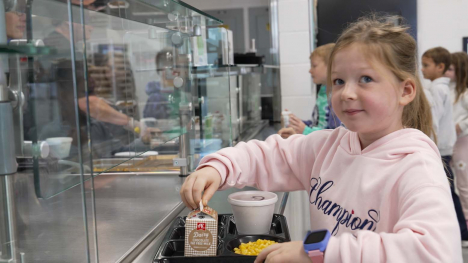
An Iowa school district connects local farms, food hubs and students through the lunch tray.
Naomi Blohm and Ted Seifried question USDA’s corn yield surprise and weigh China’s soybean demand.
Higher USDA yields pressure grain. Plus, opportunities/costs of putting local food on school trays.
How grain prices rally this winter w/Naomi Blohm & Ted Seifried on USDA, China demand & S. America.
Farmers rarely seek mental health help. Farm Dog offers care from people who know farm life.
Wet fields threaten harvest delays, diesel raises farm costs and rural population growth is uneven.