A sudden fertilizer price spike forced farmers to reconsider purchases, crop rotations and production costs. North Dakota farmer Adam Ladwig describes what happened on his farm and inside a meeting where approximately 100 producers from 18 states raised concerns with the Federal Trade Commission about fertilizer pricing, transparency and industry consolidation.


Fertilizer prices can change a farm’s plans before a seed enters the ground. North Dakota farmer Adam Ladwig had purchased about half of his fertilizer before a sharp increase in nitrogen prices. As prices continued to climb, some sales and quotes were temporarily halted, leaving farmers uncertain about both cost and availability.
Ladwig was among approximately 100 producers from 18 states who met with Federal Trade Commission Chairman Andrew Ferguson in Texas. Farmers raised questions about pricing transparency, industry consolidation and whether a small number of manufacturers limits competition in the fertilizer market. According to figures shared during the meeting, five or six manufacturers control approximately 90% of the potash and phosphate market and about 70% of the nitrogen market.
The conversation also examines how fertilizer costs affect crop rotations, yields and future planting decisions. Ladwig explains why farmers cannot simply apply significantly less fertilizer without risking the production needed to cover seed, land and other operating costs. He also discusses using precision agriculture to apply different amounts across a field and reduce fertilizer use without sacrificing crop performance.
Transcript
Yeager: Antitrust, collusion. Government intervention. Sound familiar? Pick an industry in agriculture. And we could be talking about any of them right now. But today it's fertilizer. Recently, the head of the Federal Trade Commission went to Texas. About 100 farmers from across the country were in this location and had the ear of the head of the FTC, who is interested in what's going on in the fertilizer industry. Is it just there's not enough players? Is it? There is high input costs for the fertilizer, therefore the price is higher. Or is it something more? We're going to talk to a farmer in North Dakota today who was at this session recently and had conversations and heard what was discussed. His name is Adam Ladd Wig, and he is a farmer in the town of Windsor, North Dakota. So if you go Aberdeen to Fargo in the middle is where you find his farm. We'll talk about how things are going there, what their crop update is. So if you want to know what the corn looks like in North Dakota. And by the way, is that the corn Belt? We'll ask in that question, but then we'll spend the majority of the time talking about fertilizer and consolidation. That is the topic that is happening. And farmers are facing, especially in his area and many other areas. So today fertilizer is the topic. But there is something for everyone in this interview. If you have any feedback for me, send it to me. Paul Yeager, by the way, that's, me, host of this podcast. Send it to me at Paul Dot Yeager at Iowa. PBS.org. New installments of this podcast come out each and every Tuesday. I love hearing from you. Subscribe for that Market Insider newsletter. It comes out every Monday. Now let's get to our conversation. And Adam, who is a member of the North Dakota Corn Growers Association. Are you ready for Ndsu to be moving to the big the big time? Are you tired of beating up on all these one double AA teams? I'm sorry FCS and go FBS. Are you ready for this, Adam.
Ladwig: I think so. I think we've been asking for a long time whether it actually, is a positive thing or not. We'll find out here shortly.
Yeager: What is your connection to North Dakota State University?
Ladwig: So I am an alumni there. I graduated with a degree in crop and weed science here in 2010.
Yeager: Was. So you're on the home farm right now or is this a different place?
Ladwig: Yep. This is on the home farm here. Well, I'm actually kind of a an implant under the farm. I took over for my father in law, so farm with my father in law. But I've been on here for 13 years now.
Yeager: So then where did you grow up?
Ladwig: I grew up in Oaks. So I'm literally just, southwest of here, about 20 miles.
Yeager: So then I would. I would put the town of Gwinn or between Fargo and Aberdeen, South Dakota. Is that about right?
Ladwig: Yep. That's about perfect. Dead center in the middle there.
Yeager: So describe what it looks like right now here in early summer. Out the window.
Ladwig: Yeah. Right now it's well right now it's raining. We keep getting rain I guess here lately it seems like it's rained every day, but, crops are starting to take off like crazy. We started, a little chilly. Things here, started planting beginning of May. Finished up here last week, but, corn has taken off like crazy. The last two weeks have been 90, 90 degrees. 80 degrees. Plenty of moisture to go. So things are still a little brown, but they're turning green really, really quick.
Yeager: When you say May is when you started, do you start before May if you can or was it just not an option this year?
Ladwig: It just wasn't an option. This year for our ground. I know there was a few people that were able to start, but ground conditions for us just weren't quite there. It was cold, so that kind of held us off, too. But we normally if it's if it's April, the ground conditions or at least it will go in April. Most of the time here, regardless of what the temps are, soil temps or air temps, just because we get narrow windows here to actually get a crop in. So, if we could have started in April, we would have, but we just didn't get that opportunity this year.
Yeager: You say crops. Tell me all the ones that you have.
Ladwig: Yep. So we grow corn, soybeans and pinto beans here.
Yeager: You're in the pinto beans area?
Ladwig: Yep. We are. We're in a little. We're in the smaller pocket. It seems like northern North Dakota is kind of the bigger pocket for, the edible bean market. But we are in a little bit of a narrow band here that does grow. That will be your, whether it's pintos or navys or reds. Those are probably the most common in this 30 to 40 mile radius.
Yeager: And when do they go in relationship to corn?
Ladwig: There at the end of the month. Normally, or we shoot for the end of June to beginning of or end of May to beginning of June. Excuse me. So we just finished up last Friday, actually, when I got back from the fertilizer meeting that we talked about, got back home at two in the morning and woke up early and got finished up before it rained again. So, yep.
Yeager: The joys of serving on a board and having meetings somewhere else. You do have to pause the farm activity from time to time.
Ladwig: Yes, yes we do. And it gets to be tough sometimes, but we're grateful that we have some, great help to be able to get things done when I have to be gone or have an opportunity that opportunity to be gone. But yeah, it gets to be a little tough sometimes, but yeah, it's a it was a good thing.
Yeager: You're in that 15 to 20 year range of experience in, in agriculture and farming. I'm curious. There's this discussion in the last five years that the Corn Belt is absolutely, positively moving north. Do you agree with that sentiment? Are you in the middle of that corn belt now?
Ladwig: I feel like we are, whether people want to agree with me or not, but I would say the primary rotation for, for sure, the southeast part of the state, is definitely corn, soybeans. We've we've lost a lot of our, variety of crops that we normally grow. They're coming back a little bit, canola in our area. It hasn't been this far south ever that I know of. So with some of the oilseed crops, it's getting a little bigger. But, the economics of wheat just aren't there. And the economics on corn, soybeans is kind of what's drove that. And we're able to grow pretty decent crops here.
Yeager: Well, you answered what I was going to ask is what's the driver on that? And so if it is profitability, you got to grow more of it. And you're going to need some inputs to, to help you get there. What has been the overall let's just start with the highest level. What's the fertilizer situation for you right now in trying to get a good corn crop?
Ladwig: As far as the fertilizer situation goes, I was fortunate and unfortunate. Bought about half my fertilizer before, the most recent spike in fertilizer prices. Normally we for us, we end up buying a lot of our inputs in July and August of the previous year. And we kept hearing about a specifically on the nitrogen side and the phosphate a little bit, but not as much, but a reset that's going to be coming here. In this summer, the summer of ‘26, back in July, August. So I kind of held off a little bit. Then, it got a little wet last fall, so we didn't get a lot of fertilizer on anyway. So it wasn't all that ambitious. And a lot of our nitrogen. We like to wait to put on till spring. But I had about half my half of my fertilizer inputs, but. And then, yeah, the spike happened, and I tried to get as many as bad as I could before that, or pretty close to what I thought my acres were going to end up at. And, unfortunately, I had to pay some of those high prices at the end of the year that when I ran out, but overall, I was in a okay spot, I guess. But it hurts the pocketbook a little bit, I guess. And it makes it makes it tough to really get too excited about this year's crop. At the end of the day, hopefully we can make money on it. But commodity prices are going to kind of dictate that as well.
Yeager: You mentioned nitrogen. What was the other fertilizers you say that you usually use?
Ladwig: So nitrogen, phosphate. So the big ones around here are either map which is 152 or Mez which is 1240. Oh. And then potash, in a lot of our later ground, we use, so the biggest spike for us was the urea or the nitrogen, the whole nitrogen market, whether you're using the liquid version, the drivers and, but the phosphates have been high for a while now. Last fall, they were higher, actually. So they did come down just to touch, the nitrogen, when they get around, war started, they took off and skyrocketed like no other.
Yeager: Well, prices I want to talk about in a minute. But I want to talk about availability because there was a story going around that was sent to me that said, okay, here's the price. And then like a day later, it's this. And then two days later, it's this, and then it's, oh, wait, never mind. You can't even buy. Did you have any of those conversations?
Ladwig: Yes we did. It was one of those. Like I said, I didn't have all my inputs. But you heard about this, and you hear it's going to skyrocket like crazy. So I was able to get some of it back before the big, big spike. Like I said, I ended up paying some of the higher amounts because it stayed up. At the price that it did for a while. But availability wise, we were the product was here, I guess, we weren't able to not get it. It was in the. So that happened in the beginning of March. So we weren't even in the field yet. I mean, we were froze up, but they did shut off the market for a little bit to be able to buy the products. Even though the product was already here.
Yeager: So if it's not available at all, that means you're looking at plan B and C. Let's go with plan A reducing spreading, thinning as much as you can. Is that what plan A was initially?
Ladwig: That's part of planning I would say plan A would be more if the availability issue was actually there. It would probably be switching crop rotation. Like I said, we hadn't actually been in the field yet. So, at that point it would probably be switching to a crop that doesn't require as much fertilizer. So, I mean, soybeans would be probably the number one ticket item. Pinto beans for us, obviously is another big crop that requires some fertilizer, nitrogen fertilizer as well. But soybeans would be the best option. We're fortunate enough to have some of our soil fertility beauty tests built up for as far as, the phosphates and the potash go, and. But that would be our next plan. Would be to, kind of break up our crop rotation, what we normally do, and go to something that just requires a little less inputs.
Yeager: How close are you to implementing a change?
Ladwig: It got to be close at the end. Just like I said. Fortunately, I had some inputs bought beforehand. And then it's gets to be tough to control weeds, to really manage the farm as a whole. When you start breaking up that crop rotation. So just by doing some averaging on some spreadsheets, I found out that, I mean, I can make the rotation work as is, versus hurting my yields. It tends to be when we go soybeans on soybeans, our yields get, hurt by hurt by that. So we're going to bean, kind of a economical situation either way. So the end of the day, I feel like we have a better opportunity with corn. Even with the fertilizer prices being that high. But like I said, we were able to average that cost out a little bit.
Yeager: So in a way, you had options because you hadn't done as much in the fall.
Ladwig: Correct? Yes.
Yeager: If you had done everything in the fall, you would have been in a whole different situation. You would have been absolutely stock.
Ladwig: Yep. Pretty much. I mean, the, the, the economics wouldn't be there to go to soybeans at that point. I mean, if you already had your nitrogen fertilizer out there and I know a lot of people had that, but add that in that aspect as well. I mean, you had your fertilizer out there for the most part. So it wouldn't be as big of a deal because the spike didn't happen until March.
Yeager: I'm going to guess you have a pretty good relationship with your fertilizer person. And that's a lot of text messages. All right. Are you getting any were you getting real time updates, or do you feel that they I mean, the next one up above you, the one that's making you're making the connections to their stock as well. Right. And what are they telling you at any, any of this moment.
Ladwig: Yeah. So, at this moment, well, when it was happening, I guess we were getting the updates that prices are going up the next day. They're going up, just like the story you had told. Going up, going up. Then it hit the weekend and they're told the halt, all sales. And then they were told that they are unable to, keep any quotes that they have quoted the previous week, which is, I hate to use the word, but unprecedented is just the common word that we use these days because normally quotes are good for at least a week. You know, in our area. But yeah, they, they halted all quote sales and it is going to be whatever price is on the sheet the next week and they still don't even have one. So yeah, it was it was a frustrating kind of area. But then we got into season and, and it's one of those things where you just get in go mode and it for me, I guess, like I said, I had at that point, by the time I was about out, I had 90 to 95% of my fertilizer bought. But that extra 10%, it just, it's going to be what it's going to be type of a thing. You don't even ask a price because there's not really a, you know, option outside of that.
Yeager: Yeah. And that's the point that, that's, you're not alone. We're in. Now put on your North Dakota Corn Growers hat, because you can also have group chats with there. And you're also hearing things. What type of information are you getting and sharing with the other farmers that you're on that, that board with? And is it any different information or is it the same everywhere?
Ladwig: Yeah, it was the same everywhere. Everybody kind of had the same situation. And I would say a lot of people probably checked outside of their, normal places of business just to see what was happening as well. I mean, normally you get whether it's you get stuck or it's just you have that relationship with, the person that you normally do business with at whatever co-op you're at. But there was a lot more channels being checked, whether it's, Oh, just from the wholesale market, a different co-op down the street. Anything like that. But I would say the message or the communication was all the same from everybody at that time. And I guess, we'll get into that. But it sounds like the message was the same all the way up and down. The corn belt in the southern Mississippi River valley. The message was the same from everybody I've heard from, I guess.
Yeager: So tell me about. We've kind of alluded to it a little bit. You had a meeting with the Federal Trade Commission. Tell me how that started.
Ladwig: Yeah. So there's been a group of states, kind of a lot of these, Corn Association states started this, I don't the talks about the fertilizer industry, and the how we're facing some unfair challenges. So it all started there, last year. Really? And then, probably a month ago, I would say I could be wrong on my time frame, but, we learned that the chairman of the FTC, Chairman Ferguson, was going to be coming down to McKinney, Texas, to meet with that ended up being 100 of US 100 producers from 18 different states. And we were able to kind of voice our concerns within the fertilizer industry. And, then he made the announcement there that, they were launching an investigation into, the fertilizer industry for unfair practices for, antitrust policies or antitrust laws.
Yeager: Who's leading the messaging in and talking to the FTC at this point, when you're with 100 other growers from 18 states in Texas?
Ladwig: Yeah. So we had there was actually a panel there, that we kind of had, I think a lot of our execs have been leading the conversations on that situation. But we had some producers on a panel that kind of led the majority of the conversation. We had a couple producers from Iowa, one from Arkansas. Rice producer. The corn producers were from Iowa. Retailer and retailer from, Texas. And one I don't remember if it was Louisiana. I apologize on that, but, so that was kind of the panel, that they were they kind of had a scripted talk to talk to the FTC about, the things that they're seeing in the industry. And then we were able to open it up to the audience and kind of let all the people in the audience ask the ask questions. It got to be, it was good talks. We were kind of asked to focus strictly on the fertilizer things and not make it a situation where we're just complaining about something. As farmers, when we start hearing other complaining, we tend to kind of jump on the bandwagon and complain with them a little bit. So, we tried to avoid that. And I think the conversations were good and we didn't really get to that point or too far into the weeds on that. But, the conversations were good around that point.
Yeager: Yeah. And another thing and another thing, that's what they wanted to avoid, I'm guessing.
Ladwig: Yeah. So that's what they wanted to avoid. And like I said, it was getting to be, you know, you can only cover so many things in, a short amount of time and keep the messaging there before, you know, people start to get agitated because it is a frustrating situation for all of us. And when you have somebody in the room, like that where you don't ever really get to see him in a room, I guess with you with that group probably won't happen again in quite a long time. We're fortunate to be able to have that opportunity to have the chairman there. But. Yeah, when people get a person of, that has some authority that they tend to want to jump on the bandwagon as well.
Yeager: I'm not sure how to ask this, because I think this is part of the, I'm guessing maybe some of the things you were told ahead of the meeting to keep it on the anti-competitive side of things is that the only part of this story that's putting fertilizer higher? I mean, I hear and read and I've asked and I've talked about, well, it's because of the inputs, because, what makes the fertilizer is in an area. But yeah, we have oil, but we have natural gas, but we have how much of that blender was served to the head of the FTC and the questions from the panel and from you in attendance.
Ladwig: Yeah. So I think, the biggest like you said, the biggest part of it was probably the antitrust, the, the pricing issues. And, Well, pricing or non transparency of pricing, I guess I would put it because it a lot of the talk happened to be, the Southern Mississippi Valley guys. They have a little different story down there. So a lot of what they focused on is that, the manufacturers are actually becoming retailers down there. They've been undercutting the retailers and, they don't really have the true co-op mentality or true co-op style down in that area anymore, because, the manufacturers kind of kick them out, I guess, in a sense, where in our area we still have the co-op style, but our co-ops are still, purchasing from only 1 or 2 of these manufacturers. So that was part of it. Then I guess another part of it was, and I'm not 100%, up to date on the story out of Iowa, actually, there was a, antitrust suit. Back in 2024 from the FTC that, one of the big fertilizer companies that bought out a nitrogen plant in Iowa. So there was, good conversation around that from some of the guys that were there, that actually got interviewed by the FTC and it was our question or their question, I guess more so because I wasn't as familiar with that situation is, you know, is the FTC going to do something about this or is it going to be just like what happened in Iowa two years ago?
Yeager: Did you get an answer?
Ladwig: No, I guess not. Not a straightforward answer. But, in my opinion, I guess for the chairman to be there, I know they're serious about it. And how I understand that they've already sent out subpoenas on some of these things. So, I believe they should have. There's something that they're chasing after, and I hope they find all the evidence they need and can get. But I don't think the chairman would come out to us and meet with us in that setting if there wasn't something there, and if they weren't serious about it.
Yeager: Well, and I've, I've seen the, you know, the fertilizer companies. I mean, I've seen enough hearings on Capitol Hill, pick the industry that get brought in. And unfortunately I don't always see a resolution. Everybody gets their question in. They get to live what they need to and say, this is a problem in my district or in my state, but at what point is the words and the actions? Where does the rubber need to meet the road for you? Adam.
Ladwig: Yeah, we just we have to see change in the industry, whether I mean, ideally we would like to see more fertilizer manufacturers. I know there's there's one in North Dakota that's trying to get started, but there's others in other states. And like I said, the example in Iowa that there was a fertilizer plant there and it got out, but not out by the big company. And I guess if that's not, a form of monopoly, then I guess I don't know why it is because you're just you're taking out that, competitiveness in the marketplace.
Yeager: Well, and it sounds like when you're talking about the Mississippi Gulf, folks, that sounds like pretty much vertical integration in this situation. And that. Yes, the anti competitiveness. Did you were you given numbers or what are the numbers of, you know, in the beef packing industry, you know, it's 4 or 5 companies that control such a huge percentage. Is there is there a number that goes with the fertilizer industry that, that you share or were it was shared to you?
Ladwig: Yeah, there's 5 or 6, manufacturers that control pretty much, of the potash and phosphate industry. It's about 90%. And for the those same 5 or 6 and for all, about 70% of the nitrogen market. So I guess those were the numbers that were shared. Yeah. It's, it's a small number of manufacturers, and it tends to be where, a lot of these manufacturers, when you get into our area, there, we only have 1 or 2 manufacturers that we're actually dealing with no matter what. Cooperative. So it gets to be less in areas, I guess.
Yeager: Well, is there a possibility that you could find a third to you know, it's like what we talk about in certain places for selling your grain. If I have the co-op, the ethanol and the feedlot, whatever, and I'm in the middle of that triangulation, I can maybe get a better price. Is that a possibility with this next company that you're saying is trying to form in North Dakota? That would help as well.
Ladwig: Yeah, I it would definitely help. Whether they can stay in business long enough, without seeing a big check that I mean, that's what I'm concerned about is the same thing that like I said, I hadn't heard the story from Iowa until I talked to some of those folks. And if the same thing happens, we're just back to square one again. And again, that was an FTC investigation. So we're we hope that the same thing wouldn't happen. But the other part of that is, whether they can get enough business, to be competitive, I know they would like to have some of these retailers, and I don't know if the retailers would want to go away from the people they're getting fertilizer from already. Just for the fact that, they might be put in a tough spot, I guess, as far from the wholesaler perspective. So it could be, A12 gut punch there. There was rumors of that happening, whether that's true or not, that some of these manufacturers already were threatening that, but, yeah, the funding issue, the biggest thing for the new plants is to get funding. And it's very difficult to get funding without, knowing what your market's going to be and having committed, people to take your product before you even start the plant.
Yeager: I've heard in your state there is a new soy crush plant. And then I hear that there is this. So there is appetite for starting these types of things, farmers are interested in and creating that competitor to the other ones to, to basically help everyone. Right?
Ladwig: Yep. Absolutely. Yeah. We just, the crush plant up in Castleton. They came on line here two years ago. And really, there's a few in the state now. There's, ethanol expansion happening. So we have the things there, I guess. And we have the appetite. Yes. For, creating some competitiveness in the market versus the old style of just strictly going to the co-op and that's it.
Yeager: Because last I checked, North Dakota was a state that had some oil and some natural gas. You're in the you're in the ballpark there for two of the ingredients that are key for what you need. Right. That hasn't changed.
Ladwig: No. Nope. It hasn't I guess we have it there. It's just giving it to the right place where they want to build these things. And that's another issue is, making sure you have the resources in place before, before you build something as well.
Yeager: I'm going to go back to the retailer for a moment. And what we were just talking about there also being squeezed you'd have to imagine and it can be off the record comments that you've had with people. I won't say your person because that'll be easily traceable, but clearly I'm sure that they are under pressure and their margins probably aren't as big or as long can hold a thin margin like a larger company can. I mean, so the middle is the squeeze. You feel like you're getting squeezed, but the middle really is. It's that middle. It's that retailer that probably is the biggest concern, outside of your own right now. Right?
Ladwig: Yeah, absolutely. And I guess we're seeing that in the, the retailer market as well. Consolidation beyond belief. We've lost a lot. And we don't have the co-ops or the retailers that we used to around here. I guess their locations are still there, but it's a different name under a bigger company. So the squeeze is on for them for sure. And, we can't afford to lose anymore. Really? Or it goes back to the same thing. I mean, we have, an issue with competitiveness in the fertilizer market, but we're getting to the point where we're having a issue with competitiveness in the retailer market as well.
Yeager: Okay. Secretary of Angus talked about this. I've seen press conferences that she has done, you've you've got the FTC. You need the president's ear. You need some other things to change. What is Adam, as we sit here on the today is the 3rd of June, so we know a lot of things can change. You should have buffered that at the very beginning. What's the perfect solution that can come from all of the meetings and the conversations right now?
Ladwig: The solution is going to be is hopefully we can get enough evidence for the FTC. You can get enough evidence to, bring a lawsuit forth. That was one of the biggest thing is, they kind of want to make sure that they have all their ducks in a row to be able to bring a lawsuit forward, because, there, it'll just end up being a lawyer. Battle. But as of now, I wish I could say things would just change immediately, but that's not going to happen. So I think as far as the FTC goes, that would be the solution is, being able to sue the fertilizer industry and, confirm that there is antitrust laws being broken. And I know the DOJ has been, investigating as well on other issues. So, I mean, there's a lot of eyes on that industry right now. Within the government. So I hope there's a quick solution. But I'm also, I know sometimes how the government works, and that tends to be a little, a lot slower than us as growers want, especially, I guess. But, it just it's a little bit of a slow moving ship on that front.
Yeager: Because you're trying to get legal things, dotted and crossed and followed and justice and all of those things. I get it. But yeah, it is a slow moving ship, which isn't necessarily going to solve your issue for this year's crop.
Ladwig: No. Absolutely not. And that's why I'm I guess I'm on the front where, unfortunately, that's not going to be the case. But hopefully we can get it for next year's crop. But, I'm. Probably a little on the pessimistic side for that as well. We'll see. It depends on I don't on the fertilizer thing specifically. Like I said, a lot of the times people buy in July and August fertilizer for the next year. And if we don't see a reset, I can see a lot of people holding off probably longer than they normally would. Unless there is a reset and what that reset looks like or price decrease. I know specifically urea for whatever reason. Last week, over a ten year period that went down to just about $150 a ton. So a significant amount right after right after planting. So convenience there. But so, yeah, I'm, I'm pessimistic as far as something happening as quick as we want it to, but I'm hopeful that, you know, when we can do something for two years down the road.
Yeager: Well, okay, that's that's where I was going to go. Because we've talked about on the show several times, this fertilizer thing, no matter what happens, if it's instantly done, it's still impacting 27 crop, no matter what.
Ladwig: Yep, yep. It's just a.
Yeager: Matter of trying to not impact. 2829.
Ladwig: Yeah. And that's I guess at this point for me that would be our goal is to hopefully we can mitigate causing any damage or hurtful as to our 28 crop because I, I think we're kind of set in stone in a way. I mean, things can change. Obviously they change quick all the time as we see, but hopefully, hopefully for the 28 crop doesn't hurt it. But I think 27 we're going to be pretty well stuck in, a tough spot again, as far as inputs go.
Yeager: And I'm going to ask the, the non person who might not be doing what you do on a daily basis. They will ask me, why don't you just use less of it. So therefore you're not as dependent on what's going on. And we kind of talked about that a little bit. You can switch crops but can you really slow down the applications and make certain things spread with the trade off of. Yeah. But then I don't grow as much or have as an opportunity to withstand whatever. I mean, those are the those are that's the dialog going in your brain right now, isn't it, Adam? And what you've been thinking about for months.
Ladwig: Yeah, absolutely. And I guess we're trying to do some of those things the way it is. I mean, we're doing a lot of the precision egg, things where I mean, we're applying, different amounts of fertilizer to different spots in the fields. We're trying to reduce, fertilizer use as much as we can without hurting or impacting our crop. So at the end of the day, fertilizer isn't our only input, so we have to pay for all the other inputs as well. I mean, there isn't anything that's, cheap these days. I mean, fertilizer is obviously the one that's went up the most in the last five years, but, I mean, we still have rents to deal with. We still have, the seed costs to deal with. They're all extremely expensive, and we still have to get achieve a certain yield level to even come close to having an opportunity to break even. So if we start reducing one input enough, it gets to be a tough struggle. I guess if we don't get the yields that we're looking for.
Yeager: It is going to be something to watch and the stories are never done. And so in the next six hours discussion, Adam will cover all the inputs and other challenges that you're facing right now. Because man, it's not fun on many of those fronts.
Ladwig: No it's not, but it's one of those things where I guess as farmers, we kind of deal with these challenges every day and we hope we can, come out on the other side. Well, whether it's even or ahead, obviously ahead, we all want to be ahead. But as long as we can keep on working. I mean, that's been one of the struggles, I guess, or concerns is that we're we were losing a lot of farmers every single year, especially in the last five years. So, we just hope we can keep chugging along and, doing the best to improve our methods that we're doing and I guess hope for the best.
Yeager: That's all we can do. Adam, thank you so very much. Appreciate the time.
Ladwig: Yes. Thank you very much. I appreciate it.
Yeager: We are produced at Iowa PBS. Our production supervisor is Sean Ingrassia. His crew is Reid Denker, Kevin Rivers, Julie Knutson, Neil Kyer, and David Feingold. The executive producer of Market to Market is David Miller. I'm Paul Yeager. We'll see you next time.
Watch More
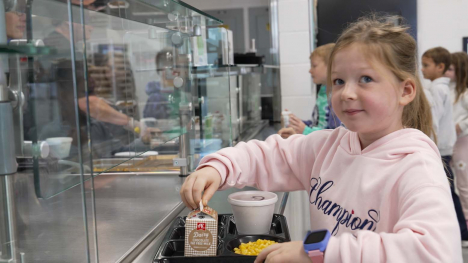
An Iowa school district connects local farms, food hubs and students through the lunch tray.
Naomi Blohm and Ted Seifried question USDA’s corn yield surprise and weigh China’s soybean demand.
Higher USDA yields pressure grain. Plus, opportunities/costs of putting local food on school trays.
How grain prices rally this winter w/Naomi Blohm & Ted Seifried on USDA, China demand & S. America.
Farmers rarely seek mental health help. Farm Dog offers care from people who know farm life.
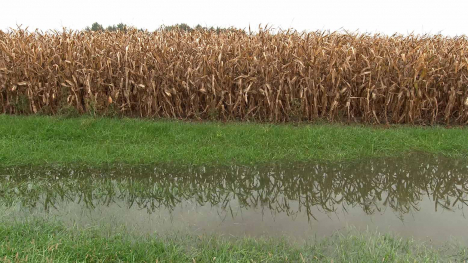
Heavy rain leaves western Corn Belt fields soaked, threatening harvest delays and crop quality.