Payouts for struggling agriculture producers may be on the horizon. Farmers navigate changes to U.S. labor policy. And, commodity market analysis with John Roach.


On this edition of Market to Market ...
Payouts for struggling agriculture producers may be on the horizon. Farmers navigate changes to U.S. labor policy. And, commodity market analysis with John Roach.
Transcript
Brooke Kohlsdorf: Coming up on market to market. Payouts for struggling farmers may be on the horizon. Farmers navigate changes to U.S. labor policy and commodity market analysis with John Roach next. Coming up on market to market payouts for struggling farmers may be on the horizon. Farmers navigate changes to U.S. labor policy and commodity market analysis with John Roach next.
Announcer: (Pioneer) I wouldn't be here without my customers. Yeah, I'd like to thank the customers. They're, they're very dear to our hearts. It's about the people that you're working with and the relationships that you have. Thank you, thank you, thank you. Thank you from the bottom of my heart.
Announcer: Tomorrow, for over 100 years, we've worked to help our customers be ready for tomorrow. Trust in tomorrow. Information is available from a Grinnell Mutual agent today.
Announcer:
Kohlsdorf: This is the Friday, December 5th edition of Market to Market, the Weekly Journal of Rural America.
Hello. I’m Brooke Kohlsdorf, Paul Yeager is away this week.
The Fed’s preferred measure of the nation’s economic health came out this week. It shows the nation’s economy isn’t burning as hot as expected.
The Personal Consumption Expenditures Index, the total amount of spending by individuals on goods and services, rose 2/10’s of 1% in September. A little less was spent on food and clothing while a little more was spent on gasoline.
The annual PCE settled at 2.8%, almost 1 percent above where the Fed would like to see it.
This information is expected to push the FOMC towards cutting the interest rate that banks charge to lend money.
The Mid-America Business Conditions Index hit its lowest level for 2025, falling to 49.5 - just below growth neutral.
Supply managers in 40% of the 9-states surveyed reported wages were failing to keep up with the cost of living. Those same managers were concerned about tariffs, inflation and slowing economic growth.
The promise by China to buy 12 million tons of U.S. soybeans by year end has been pushed back two months. Treasury Secretary Scott Bessent says the deal is still on track but China can now make good on its agreement by February of 2026.
While the White House has promised additional new markets for U.S. commodities, the concern over tariffs continues to be an issue in farm country.
Since September, the Trump Whitehouse has been promising to help make farmers whole as they wait for exports to pick up.
Peter Tubbs has the story.
Peter Tubbs: This week, Secretary of Agriculture Brooke Rollins suggested the long-discussed financial relief for America’s farmers will be released next week.
Secretary Rollins confirmed the bridge payment plan during a Cabinet meeting at the White House.
Brooke Rollins, Secretary of Agriculture: “Just a couple of days ago, China announced that they were going to halt all purchases from Brazil, because they had found some irregularities in the soybeans they are buying from Brazil, and what that means is that a continued signal that this country, and our farmers, produce the best, highest quality corn, sorghum, etcetera in the world, and what you have been able to do is open those markets up, and again, move to an era where the farmers are not so reliant on government checks, they have the markets to sell their product. Having said that, we do have a bridge payment we will announce with you next week as we're still trying to recover from the Biden years..”
Tubbs: Ad-hoc and disaster aid is expected to reach $40 billion dollars, the highest single year of relief payments since 1933.
There are questions surrounding the source of the relief funds. The Wall Street Journal reported in September that the Commodity Credit Corporation had only $4 billion dollars in its accounts.
Sen. Charles Grassley, R - IA: “In order for this to happen, I don’t think the Secretary’s got enough money to fulfill the figure that I’ve heard from the White House, that this aid might be somewhere between 10 billion and 14 billion. And I think it’s going to take an appropriation from Congress to make up the difference.”
Tubbs: The 43-day shutdown of the Federal government is being blamed for some of the delay in delivering aid.
An analysis of USDA data by the Farm Bureau suggests that the 2025 crop year will be the third consecutive harvest where production costs exceed crop revenue. Every major and large specialty crop is expected to be unprofitable in 2025. Corn and soybeans alone are estimated to lose $22 billion dollars. For Market to Market, I’m Peter Tubbs
Kohlsdorf: U.S. Customs and Border Protection says there has been a 37% reduction in the monthly average of encounters along the southwest border of the United States. The situation has reduced the number of people crossing the border to work in the nation’s fields.
South Texas producers are among those who must navigate harvest with fewer people available when they need them the most. John Torpy reports in this week’s Cover Story.
John Torpy: Sun drenched fields along the banks of Rio Grande River provide the landscape south Texas farmers need to grow citrus and green leafy vegetables for consumers across the country. But a steady, reliable labor source that is paramount to bringing south Texas commodities to market is in short supply and many growers are worried their crops, and their profits, will be left to wither in the fields.
Dante Galeazzi, President and CEO, Texas International Produce Association: “We can grow anything we want in South Texas, right? We're only one of three places in all of the United States that can grow fruits and vegetables in the dead of winter.”
Torpy: Dante Galeazzi is the President and CEO of the Texas International Produce Association, an advocacy organization for foreign and domestic produce operations in Texas. Galeazzi believes farmers struggling to find crews to work in the farm fields of south Texas is directly related to harvesting the specialty crops particular to this area of the country."
Dante Galeazzi, President and CEO, Texas International Produce Association: “In Texas we grow 60 different fresh fruit vegetable crops. Only six of them can be mechanically harvested. So that means 54 other crops require a hand harvest. Now, we have largely depended on Mexico to provide us with the workers for the last century. Our government has put together a program called H-2a, and that gives foreign workers a visa, which is a permission to temporarily be here in the country.”
Torpy: The H-2A Temporary Agricultural Program, commonly known as the H-2A Visa Program, provides farmers the ability to bring seasonal agricultural workers from other countries into the U.S. legally for up to one year to plant, perform field work, and harvest crops.
Texas Department of Agriculture Commissioner Sid Miller notes there is an abundance of H-2A guest worker slots available. But it’s the harsh financial penalties for hiring illegal workers which has decreased the number of undocumented individuals entering the United States.
Commissioner Sid Miller, Texas Department of Agriculture: “We have a guest worker program, a legal migrant worker program, which is what we should have. We had about 78,000 slots. Okay. So we could get 78,000 workers up here to harvest our crops on a temporary basis since then. Now we have almost 400,000 slots, so we've got 400,000 legal migrant workers up here. So that's, you know, that's 300,000 less illegals that we don’t need.”
Torpy: Overseen by the U.S. Department of Labor, the program helps producers meet their operational needs at critical times during the growing season. However, some growers have discovered navigating the ins and outs of the program can be time consuming and expensive. The agencies who arrange for some work crews also pay thousands of dollars per guest worker between application fees and to day to day expenses. Some farmers see the option of hiring illegal immigrants as a way to save on costs and get the work completed on their farms.
According to data from USDA and the U.S. Department of Labor, between 2020 and 2022, 42% of farm laborers in the United States were undocumented.
Dante Galeazzi, President and CEO, Texas International Produce Association: “Here in Texas, the equivalent for using that program is somewhere between paying this person $20 to $22 an hour. But if you don't have enough of those folks and that cost continues to increase because of the cost of regulatory compliance, what are the farmers going to do?"
Torpy: Galeazzi says farmers in south Texas have limited options when they are facing tough production decisions. Choices on what crop to plant can depend on what kind of labor the farmer can afford.
Dante Galeazzi, President and CEO, Texas International Produce Association: I can grow watermelons and I can grow onions at the same time. And both would help me become profitable. If I don't have enough workers, I have to pick one or the other. And the problem with that is it goes back to that crop mix scenario, right? What if too many people grow watermelons or too many people grow onions and you gambled on the wrong crop? Now you're not making a profit that year. ”
Torpy: At the Pharr-Reynosa International Bridge, over 50,000 trucks a month bring products of all kinds from Mexico into the U.S. Twenty thousand of those trucks only carry fresh produce, making this crossing the number one port of entry for produce from Mexico.
Tony Martinez, Primo Trading Services: “The majority of what's at the grocery stores right now is, is, is imports. Because the United States, sadly does not does not, produce enough to sustain itself. That's fact. I feel that's that's a reality that as an industry, we need to do a better job of educating the consumer and letting them know, hey, you know, we do rely on imports.”
Torpy: Tony Martinez is vice chairman of the Pharr - Reynosa International Bridge board and a managing member of Primo Trading Services, a fresh produce brokerage. Martinez farms in both the U.S. and Mexico and acknowledges having farms on both sides of the border has provided a way for him to navigate labor issues that impact the region.
Tony Martinez, Primo Trading Services: “/We're able to shift it to Mexico. And we can we can plant it cheaper over there. And the labor is, is is, although it is difficult in Mexico as well, but it's not as difficult as in the United States.”
Torpy: To help fill the gap in the ongoing labor shortage, south Texas producers, farm advocacy groups, and agricultural officials are looking to Congress and the next Farm Bill to help change the farm labor landscape.
Dante Galeazzi, President and CEO, Texas International Produce Association: “The farm bill is the single biggest investment that the country makes to keep agriculture modern ./ What we're asking for is for the government to invest in building the tools that farmers can then buy to make efficient operations.”
Commissioner Sid Miller, Texas Department of Agriculture: “First time in my lifetime we have an agriculture trade deficit, and it's going to grow this year from $32 billion to over $45 billion. AG trade deficit. That means we're going to buy $45 billion more food than we export now. We can't sustain ourselves if we're dependent on some foreign power to feed and clothe us That's when we're in jeopardy of losing all of our freedom. So that has to be turned around that that's going to have to be a focus. And that's not going to be easy to win those customers back.”
For Market to Market, I’m John Torpy
Announcer: Next, the Market to Market report.
Kohlsdorf: Vladimir Putin’s comments about the potential of going to war with Europe sparked a rally in the wheat market. However, without any new comments, the market settled back as the market waits for next week’s WASDE.
For the week… The nearby wheat contract lost 3 cents and the March corn contract fell 3 cents.
Secretary Bessent’s comments and the lack of flash sales to China did little to help soybean prices.
The January soybean contract dropped 32 cents, while January meal cut $11.20 per ton.
March cotton moved 80 cents lower per hundredweight.
Over in the dairy parlor, January Class Three milk futures improved 12 cents.
The livestock market was mixed. February cattle added $9.32. January feeders put on $16 and the February lean hog contract cut $7.65.
In the currency markets, the U.S. dollar index was lower by 77 ticks.
January crude oil added $1.05 per barrel.
COMEX gold dropped $10.60 per ounce, and the Goldman Sachs Commodity Index was up by more than 7 points to settle at 565 - 80.
Here, now, to lend us his insight on these and other trends is our senior market analyst, John Roach. Do you like that title, senior?
John Roach: I like that, thank you Brooke. It's nice to be back. Nice to see you.
Kohlsdorf: Nice to see you too. Okay, so starting with wheat, we heard Putin's comments about potentially blocking any exports out of the Black Sea area. There was a bump with wheat. Didn't last long, though. What's going to give that market some momentum?
Roach: Well, we need to have the fundamentals change. And right now the fundamentals are all looking lousy for wheat. Actually, production levels around the world seem to all be increasing a little bit when we get reports out the crop out of Argentina and Australia are both have been bumped higher. The Canadian crops a little bigger than we thought. And so we have supply issues in wheat that will just take time to work our way through.
Kohlsdorf: What about we also heard the reports about those insurance rates for the Black Sea. Ships are surging, giving given everything that's happening in that area, could that impact the market in any way?
Roach: Well it could change the ability of the the Black Sea region to be able to export when when rates go up. That means that your costs to transport moves up, and that puts it a little less competitive in the world marketplace. And so that certainly could help a little bit. But but our difficulty right now is our world supplies are adequate. They're spread around in most all the production areas, and we're just having to eat our way through them.
Kohlsdorf: Corn demand has been strong. We had some sales this week. Ethanol production is good. So why is that market so sluggish?
Roach: You know, it's it's again we have big supplies particularly in this country. There is some question about whether the yields were as good as what the USDA estimated in the last reports. We'll learn more in January for sure. But the ethanol demand has been excellent. In fact, as this week we set a new record weekly record on ethanol production. And and we're running at a faster pace than what the USDA forecast is right now. The demand from an export side on corn is also running at a faster pace. I think we're running about 7% ahead of the pace we would normally have if, in order to reach the USDA forecast. So the possibilities are good, actually, that the USDA could raise the demand forecast for corn. And the next report that comes out next week, whether they'll do it or not. I mean, there was some argument earlier in the year that they had two optimistic forecasts, but so far, those forecasts seem justified, and we're actually running ahead of that pace. And so they may choose to raise the demand side of corn. But again we have a lot of corn. We're eating through a very big crop. When you look at it from a graphics standpoint, this year stands out considerably larger production than than what we've seen in past years. And so we just have to eat our way through that. We think we're into a time frame on corn and quite frankly, on all the row crops that we raise. We're in one of those time frames. We came off of very big prices and tight supplies into a period of time, with big production in South America, as well as in the Northern hemisphere. And now we have big inventories of everything, actually. And so we think that puts us into relatively narrow price ranges for the foreseeable future until something changes. And and of course, you can change that in the Southern hemisphere right now, if the weather problems persist in some areas and there are some weather issues there, we did see a Dr. Cordonnier pull his bean estimate down for Brazil a million tons this week. The weather people cautioned us this week to pay attention to Argentina, that the weather conditions there are a little worrisome. They're getting spotty rains. It's a La Nina year, and so there is some possibility out there. And that's given us some of the price advance that we've had. But the reality is that we have big supplies, and that means that we have a we're going to have a confined range of trade until until that changes again, keep your eye on the southern hemisphere. And then in the northern hemisphere when we get into our growing conditions and our situation. But at the moment, nobody's very worried about weather or very worried enough about weather to give us much higher prices. So that's what's keeping the lid on the corn market. Even though demand has been very strong.
Kohlsdorf: Anything beyond South America, weather that could greatly impact corn.
Roach: Well, it's possible that we could have some kind of a surprising demand come from some sector, but really, that's hard to do. I mean, as I said, we're already setting records on ethanol production. We'd like to see them change the standards so we could have 15% ethanol blends all year long. And that's still out to the political decision. And so that could that could do help us with the demand side. But we really are going to depend on a change in supply. It would seem to me that's the more likely side rather than the demand.
Kohlsdorf: All eyes still on China for soybeans. So Secretary Bessent saying, well, now we have until February for China to fulfill its commitment of 12 million tons. Is that still doable?
Roach: Well, there's a there are a lot of people that will say that it's very difficult to do that. They don't have the storage capacity really to handle that at the moment. We looked at the totals, there was another sale announced today, 642,000 tons, I believe, was the number announced today. And and if you take the Chinese loan purchases together with the unknown sales to unknown destinations, it told us about 3.5 million tons of the 12 million tons he's talking about. So there's still a lot yet left to buy. There's rumors around that maybe they've purchased another 3 million tons that haven't been announced at all, but those are just rumors at this point. And the performance of the market today with was was one of of disappointment that we just aren't getting enough tickets on the buy side of the ledger coming into the marketplace. And because prices on soybeans have turned down, we're now in a downtrend. We measure that if the price is below the average for the prior 20 days, we say that's it's a downtrend. And that's when when we normally see commodity funds who are trend followers, mostly they'll when the trend turn down they become sellers. And today we we saw heavy sales with out buyers on the other side and prices slid.
Kohlsdorf: Okay. So I'm going to social media for our next question. Dan in Iowa is saying or asking is the head and shoulders chart formation on the nearby soybean futures chart something to be acted upon or shrugged off? And why?
Roach: You know, head and shoulders formations are you have to pay attention because basically you have a rally up, the market falls and then you have a higher rally with more energy, and then it falls and then it tries to rally and then fails. So it's really a busted trade, if you will. It's a bull market that was trying to go that tried to go a second time and then failed. And so you definitely have to pay attention. And as I said, we broke the 20 day moving average. We accelerated to the downside. Today we left a quite a bit of trade off to the left hand side, if you will. And so yes, you've got to be concerned about that. But for most farmers, making a sale in this kind of environment is a very difficult thing for them to do. Farmers need to pay attention to some oscillators rather than chart patterns, typically, and we generate sell signals when we get the markets into an overbought condition. And so we made a lot of sales back in the in the November peak that we saw. And now we're in sliding. And we're actually on the other side of the market telling livestock producers we have a buy signal on meal. We have a buy signal on beans, but we're not going to pay much attention to it. But we definitely think if you're a livestock business, you need to pay attention to the buy signal on meal. And by the way, we also have a buy signal that we've had this week on heating oil, which is the equivalent of diesel. So farmers looking to to fill the barrels up, it's this is a good time to to do some of that. We've had several of those buy signals on, on diesel. And so you don't have to buy a lot but but it's time to get some coverage on this on that market. And it's time to get some coverage over on the meal side, we think from a standpoint of selling beans, if you're a farmer, I wouldn't recommend doing that. Now if, if, if you made some sales when you should have back when we had the markets up at the top side, hopefully you got enough bushels sold that you can be a little more comfortable. Normally we will have three sell signals between November and March, and so we'll be patient. We'll see if there is a little weather worry or something that comes along gives us a better opportunity than where we are today.
Kohlsdorf: Let's talk about the cattle market. So they had there was a boost. They were higher. Are we going to see some new highs in that market? We've got about a little less than two minutes.
Roach: Okay. Well we'll talk fast okay. You know the good news that came in this week was the reports on the Good Friday or, sorry, the Black Friday and Cyber Monday. According to Mastercard, sales were up 4.1%. That spurred the cattle market, which had been worried about consumer demand and consumer financial situation. And and that signaled that maybe the consumers got more money than we thought. And so the cattle market lit on fire this week, actually, we've gained half of the losses back that we've had since the Catalan Fed report. And and that market is poised for higher price levels. You have to be cautious because we're dealing at very high prices and we're dealing in an environment where demand can slip here. The holidays are directly ahead. They could turn out to be good or turn out to be bad. We've lost some Packer capacity. So there's some things on the negative side. Cattle, cattle weights this week, carcass weights hit a new record. And so we're really moving the cattle engine as hard as we can in the demands, taking it all. And so the cattle markets in a pretty promising spot right now.
Kohlsdorf: Yeah it is. And you mentioned something about demand. It kind of feels like people are getting used to paying a lot for beef.
Roach: It's amazing. I like going to Steak steakhouse restaurants and and the prices are very, very high and they're full.
Kohlsdorf: They're full. People still buying their their red meat. Yeah. All right John, we are out of time. Thank you so much for discussing all these topics. Topics we didn't get to hogs. We'll do that in Market Plus in a couple of other things that we want to talk about with you as well.
Roach: Thank you so much, Brooke.
Kohlsdorf: All right. You've been watching the analysis segment, and in a moment, we will continue our discussion in an online only segment, search Market Plus with John Roach. Wherever you get your podcasts to hear that conversation or go to our website of markettomarket.org. We want to make sure you never miss any of our content. So when you subscribe to our YouTube channel at Market to Market, there are benefits of being there. When you turn on notifications, you'll be at the front of the line for our stories Market Plus and MtoM Podcast. Next week. One family's love of farming leads to success on and off the farm. Thanks so much for watching. Have a great week!
[MUSIC]
Announcer: Market to Market is a production of Iowa PBS, which is solely responsible for its content.
Announcer: (Pioneer) I wouldn't be here without my customers. Yeah, I'd like to thank the customers. They're, they're very dear to our hearts. It's about the people that you're working with and the relationships that you have. Thank you, thank you, thank you. Thank you from the bottom of my heart.
Announcer: Tomorrow, for over 100 years, we've worked to help our customers be ready for tomorrow. Trust in tomorrow. Information is available from a Grinnell Mutual agent today.
Trading in futures and options involves substantial risk. No warranty is given or implied by Iowa PBS or the analysts who appear on Market to Market. Past performance is not necessarily indicative of future results.
Watch More

Huub Lelieveld receives the 2026 World Food Prize for six decades of work advancing food safety.
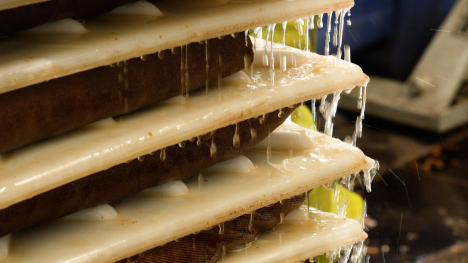
Minnesota’s Keepsake Cidery combines heirloom apples, traditional cider making and direct sales to help a small farm thrive.
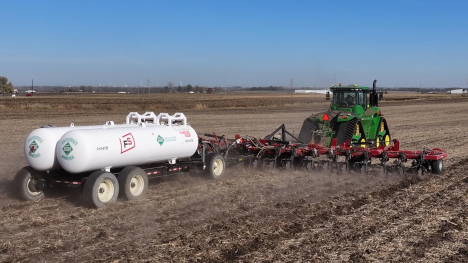
New federal plans target farmers' fuel and fertilizer costs through direct relief and investments in domestic fertilizer production.
Chris Robinson weighs corn recovery prospects, soybean price levels and the rebound in cattle.

New farm relief, a food safety honor, Minnesota cider and commodity market analysis with Chris Robinson.
Chris Robinson answers viewer questions on corn yields, crude oil and cattle, and explains his soybean outlook.