Market Plus with Matt Bennett


Market Plus with Matt Bennett
Transcript
[Brooke Kohlsdorf] Welcome to the table for the Friday, March 6th, 2026 installment of Market Plus. Joining us now, Matt Bennett. And as a reminder, we are recording this on Thursday because of some changes to our production schedule. So, we didn't get to cover everything in the main segment. So, I want to start with a question that comes from Brian in Iowa, and he's asking with grain fundamentals out the window and only having a weather scare to move the markets for planting season. What's the best marketing strategy for corn?
[Matt Bennett] Yeah, I mean, so I don't know that grain fundamentals are out the window. What we have to understand is, is with grain fundamentals. Again, we talked about this in the regular segment. Corn demand is phenomenal. And I think given huge demand you're probably going to see a very similar year to a year ago. If you get the acres planted and you have a decent yield, could you draw down stocks just a little bit this year? Absolutely. There's no question about it. But what would be the best strategy if I'm a grower and I've got bins, I kind of like stepping in here when the markets in the four 70s almost pushing 480, maybe put an offer in a 480 hedge that on the December contract, if it's going in the bin, then I'm going to roll that out to the July later on in the year. Typically, last fall, you were running 30 to $0.35 a carry the whole time. I'm going to lift that hedge, roll it to the July. If I get $0.30 out of it with a 480 hedge, I got 510 corn. All I've got to do is set basis. So, you know, I think that using our bins similar to an elevator does take advantage of carry, take advantage of basis. We do that. I think we can work our way into a much better price.
[Kohlsdorf] All right. Gary is asking, planting less than 30 days away in the southwest part of Kansas. Oklahoma, the Texas Panhandle. Any changes in planting intentions because it's so dry?
[Bennett] I mean, that's a good question. We've actually talked to growers in that part of the world down into the Delta. You know, there's going to be less cotton in rice. First of all, we know that just from a profitability standpoint, it's a very tough game. I think when you're in southwest Kansas down into the panhandle of Texas, down into the Hereford area, of course, you got a lot of cattle, a lot of demand for corn, probably going to pick up some corn acres in that part of the world, you know, if they've got the moisture. Now, obviously with irrigation, they can get that corn up and going where it's dry land might be much more complicated and who knows what they'll do there. But I think when you get over east, you know, Arkansas, Louisiana, into that part of the world, what are those acres go to? And I got to think more of those acres are going to go to soybeans, actually. And part of it is it's just been tough sledding for them in that part of the world. There's been a lot of talk about how financially strained the growers are in that part. Once again, of the Corn Belt. I've got to think that just availability of funding, you know, might push some of those guys more towards soybeans. But yeah, dryness is going to be a major issue on dry land. Last year, dryland corn was phenomenal. We'll see if they can get a plant this year.
[Kohlsdorf] That's interesting. I have kind of a question of my own, because if you look at the drought monitor, the drought map, it's pretty bad. We're getting some rain potentially this week. But when do the markets start kind of reacting or worrying about drought?
[Bennett] And that's a really good question. I've been asked it a lot here lately. So, in my part of the world, we were dry as a bone. I didn't have a tile that ran any of my field tiles ran from August all the way until this week because we were so dry in our part of the world. Massive amount of rain. A lot of that rain was supposed to go to Wheat Country, and it kind of shifted to the east. And bottom line is we've kind of fixed some of our topsoil dryness, but we're still way behind market. Typically, though, to answer your question, doesn't care about dryness. In February and March, if you go all the way back to a year like 2012, we did have good moisture to get the crop up and going, but we entered that thing fairly dry. Margaret really didn't care until June, you know, and so I've got to think that you'd be a ways away from getting the market to really react much.
[Kohlsdorf] And it's good to have a dry spring.
[Bennett] Yeah, absolutely.
[Kohlsdorf] Yeah. All right. Ethan from Kansas is wondering, there are many producers that think high cattle prices are here to stay. Are they living on false hope?
[Bennett] Well, you look at the history of the cattle market and it's always been a cyclical market. This has been a dynamic situation over the last few years. It started with a drought in the West, you know, and then clearly some of those guys and gals weren't able to hold on to heifers if they wanted to because they didn't have the grass to support them, you know, and then obviously prices took off to levels they'd never seen. And so now, even if they do get the grass back, even if they do get moisture where we just talked about, they need moisture, are they going to keep them, you know, are you going to take 3 or $3500 for a heifer, or are you going to let someone else take her off your hands? Whenever most of those guys have never seen that kind of money in their career. And so, you know, are they living on false hope, though, is the question. In all honesty, we have to be cognizant once again of one thing the administration has been very clear on is that food inflation is very important to them. And they've tried different measures to curb beef prices. And given the way that they do things, I don't know that they've tried everything that they want to try. And so, I'd at least want to keep myself protected. I at least want to do some risk management. LRP is a good tool. You can step in and put a floor under the market. But by all means, if I've got a significant amount of risk, I don't think that I'd go into this assuming anything because as we know, one tweet can change a lot of things.
[Kohlsdorf] Do you think people consumers are just getting used to high beef prices? And they're like, well, this is what it is.
[Bennett] In the last few weeks, at times we've seen a select bordering up on choice. And what does that tell you is that six 650 hamburger didn't scare anybody away. You know, again, I was in I was at Commodity Classic last week. In all honesty, we were in a couple of different steakhouses. Standing room only had to have reservations. And I can assure you that it's pretty hard on the pocketbook. You know, it's not slowing people down.
[Kohlsdorf] Yeah. All right. Last question from social media. And this one. What commodity? No pressure here. What commodity? Corn or beans should we be more in favor to plant this year?
[Bennett] And I don't want to be wishy washy, but I will tell you, it is totally dependent on where you're at. And so, where I'm at in central Illinois, the farm doc team put together budgets for corn and soybeans, and in all four regions of Illinois, their projection is that beans work better than corn. What is the average yields in Illinois like in your better farm ground? It's probably a little bit better than Iowa. Whereas in Iowa there's a lot of places where they can grow better corn than some of us can in Illinois. So, in Iowa, I would expect that corn acres are going to be pretty stout. Now. Yes, there was a lot of disease. I'm hearing some guys and gals saying, hey, maybe I should do a little rotation here, you know? And last year was a horrible year for disease. Whereas in Illinois, I do think anybody who's a little strapped on money, which I think includes a lot of us, you know, I think some of those folks might opt towards soybeans, especially if they've got a five, six-year APH of 75, 80-bushel beans. I mean, that works at $11 for most people. So, it's entirely dependent on where you're at. But that particular person that asked the question, I'd love for them to reach out to me and I would I would tell them for their area what I think makes the most sense.
[Kohlsdorf] Okay, reach out to Matt. It doesn't say where they're from, the view farm. So yes, so dependent on where you are. Another question we were talking about during the break, the dollar enjoying a nice rally. And you were saying that it was interesting that it rose while oil prices rose at the same time, and it's usually the other way around, like one falls and one rises, right?
[Bennett] Yeah. Typically, when the dollar goes up, commodities move lower. I mean, our commodities typically have an inverse relationship. You came out of the gate there on Sunday night into Monday. Oil gapped higher. It's been strong. We talked about it earlier $13 higher for the week. But we've got to remember this is Thursday. We've got another day left. You know it could go higher yet tomorrow. But what have we seen the dollar do? The dollar has been pretty strong. The dollar kind of spiked up and it's backed off. Just a shade here these last couple of days. But bottom line is I think a lot of folks are looking at what's going on in the world here. And they're looking at some positioning and some of the relationships. And there's no question that with the U.S. kind of stepping into the Venezuelan situation and Iran, those were two major sources of oil supply for China. And so, I think that some people are saying maybe the U.S. is going to be maybe there will be some interest in owning that currency, after all. Whereas for a while we looked at deflationary trade, that was whenever we saw silver, gold, platinum, palladium just take off like rockets. That's kind of cooled off though, you know. And so, it's very interesting to see, especially with the dollar moving higher. I don't expect that kind of fervor to continue anytime soon.
[Kohlsdorf] Okay. I think that covers it all. Unless you have anything else Matt.
[Bennett] Absolutely. It's going to be it's a very challenging year again. But at the same time, we have a better start to the year than what we did a year ago, you know, but we don't want to ignore the opportunities the market is offering us.
[Kohlsdorf] Okay. Thanks, Matt. Next week, a look at past failures in America's land promise and commodity Market analysis with Naomi Blohm. Thanks for joining us and have a great week.
Trading in futures and options involves substantial risk. No warranty is given or implied by Iowa PBS or the analysts who appear on Market to Market. Past performance is not necessarily indicative of future results.
Watch More

Brian Strasser is an Iowa farmer who figured out that the same months the farm goes quiet on cash flow are the same months travelers fill up a rental car app — so he built a fleet, and turned the seasonal gap into a financial advantage.
Weather is part of the discussion in the wheat, corn and soybean markets while our Market Analysis with Karen Braun also covers the cattle on feed report.
Wet and dry weather have different impacts on the commodities market. Our Market Plus is with Karen Braun.
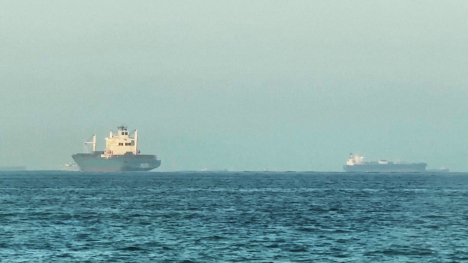
This week, the G7 summit in France became the stage for an official pause in the war between Iran and the United States.
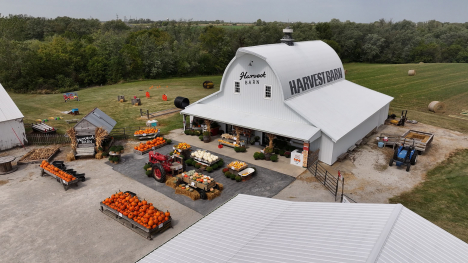
The Boyer family made Iowa their home in the 1990s, venturing away from family farming in Pennsylvania to pursue their own agricultural vision.
The G7 tone changes with a memo of understanding in the mix. Another weather system sweeps across the Corn Belt. One family’s love of farming has cultivated something bigger than the farm itself. And, commodity market analysis with Karen Braun.