Struggling agriculture producers receive news of payouts. One families’ love of farming leads to success on and off the farm. And, commodity market analysis with Ted Seifried.


On this edition of Market to Market ...
Struggling agriculture producers receive news of payouts. One families’ love of farming leads to success on and off the farm. And, commodity market analysis with Ted Seifried.
Transcript
[Paul Yeager] Coming up on market to market, struggling agricultural producers receive news of payouts. One family's love of farming leads to success on and off the farm and commodity market analysis with Ted Seifried next.
[MUSIC]
[Announcer] I wouldn't be here without my customers.
Yeah, I'd like to thank the customers. They're very dear to our heart.
It's about the people that you're working with and the relationships that you have.
Thank you. Thank you. Thank you.
Thank you from the bottom of my heart.
[MUSIC]
[Announcer] Tomorrow. For over 100 years, we've worked to help our customers be ready for tomorrow.
[MUSIC]
Trust in tomorrow. Information is available from a Grinnell Mutual agent today.
[Announcer] This is the Friday, December 12th edition of Market to Market, the Weekly Journal of Rural America.
[Yeager] Hello, I'm Paul Yeager. The Federal Reserve is usually unanimous in their votes on the key interest rate. This week, a 9 to 3 rally in favor of cutting the lending mark took more of the headlines than the reduction in the rate. The split indicates descent in what assistance a rate cut will do to the economy, and sets up the challenge for the next FOMC meeting. The lower lending rate comes at a time of year farmers look to take out operational loans for 2026. The expense of higher costs and borrowing may fall, but inputs for feed and seed of strain, the cost of production equation. But help is on the way from the government. Peter Tubbs reports.
[Narrator] This week, The White House announced a bridge payment plan to assist farmers who have lost income due to trade disruptions caused by higher tariffs.
[Secretary Brooke Rollins] The bridge that is needed to get from the last administration and what basically happened under the last president in the last U.S. Department of Agriculture to this new golden age for farmers, where instead of farming for government checks, they can farm to feed their family and sell their products and pass it on to the next generation, that this bridge is absolutely necessary based on where we are right now.
[Narrator] A $12 billion package will be targeted mostly at the major commodities wheat, corn, soybeans, cotton, peanuts and rice. $1 billion will be reserved for specialty crops. The funds to make those payments will be coming from import tariffs collected since the start of the trade war. The bridge payments will be limited to operations with an adjusted gross income under $900,000, and will be capped at $155,000 per recipient, while the money won't make farmers whole, it may help reduce some of their losses.
[Cordt Holub] And I think, Mr. Trump, I think you brought I think you brought Christmas to farmers with this bridge payment will be able to farm another year. Help us get by.
[Narrator] The payment comes at the end of a growing season where none of the major commodity crops are expected to be profitable. The combined production of corn and soybeans in the U.S. is expected to lose $22 billion this year, the National Young Farmers Coalition and the National Sustainable Agriculture Coalition issued a joint statement. The Farmer Bridge Assistance Program provides some initial relief but is insufficient on its own. It effectively excludes most specialty crop growers and does little to prevent the loss of farms or farmland due to acute financial hardship. The Agricultural Trade Monitor at North Dakota State University estimates that tariffs are adding 9% to the price of agricultural inputs. The Chinese are behind their originally agreed upon pace for soybean purchases in 2025, but the Trump administration has moved that deadline to the end of February 2026. Rollins says farmers will be able to apply for the bridge payments before the end of December, and the money will be distributed by February 28th, 2026. For Market to Market, I'm Peter Tubbs.
[Yeager] Access to land is usually one of the biggest hurdles in getting started in farming. The expense of equipment and inputs, along with navigating the weather. Add another layer to getting a farm of your own. Sometimes you have to make your own luck in being ready to move when the opportunity presents itself. A Pennsylvania family uprooted to a new time zone and forged their own lane with their livestock, using a value-added approach to their beef production. John Torpy reports in this week's cover story.
[Narrator] A brisk autumn wind greets a herd of Limousin bulls and members of the Boyer family on their southern Iowa farm. Jason Boyer and his wife Amy, made Iowa their home in the 1990s, venturing away from his family's farming operation in Pennsylvania to pursue their own agricultural vision.
[Jason Boyer] When I moved from back here, I wanted to be a place. I liked, the crops, I like the cows, so it was kind of looking for that quote, unquote combination type place. It wasn't going to be the primo crop ground, and it wasn't going to be just pasture. I wanted kind of the combination because the cows and the crops and the hay and the rotation all can kind of work together as a whole system.
[Narrator] Jason Boyer's dream of raising cattle began on a hay farm in Pennsylvania. However, that dream was a difficult one to pursue. Land for farming was hard to come by and even harder to afford. An FFA trip to the Midwest in the mid-80s gave Boyer a chance to steer his dream in a different direction.
[Jason Boyer] I could see what you could buy land for here. You could buy a whole farm here for what a house would cost you back there.
[Narrator] After the farm crisis of the 1980s, prices for farmland in Iowa were significantly less than the cost of farm ground in Pennsylvania. Boyer saw this as an opportunity to establish his own cattle operation with enough space to realize his dream. In 1994, with two dozen Limousin cattle, Jason and his wife Amy moved away from their families in Pennsylvania to their new farm in southern Iowa, with support from family back home, the Boyers began building their new life in Iowa, looking to set themselves apart from other producers. The Boyers took a value-added approach to their beef production.
[Jason Boyer] You know, maybe we only had 50 cows, but if we can take the, the steers and finish them and sell them at Farmer's Market piece by piece or through beef sticks, that maybe that expanded or what, you know, we were adding value to what it was.
[Narrator] Seeking to establish themselves outside conventional beef markets. In 2006, the Boyers began producing beef sticks and summer sausage with a unique flavor that can be traced to the Boyer's heritage.
[Jason Boyer] The beef sticks is something we grew in our butcher shop that we had back home. We did it did baloney or a beef stick. We started up at Farmer's Market and we sampled and sampled and sampled. But once you got them people to taste it, that's all it took.
[Kaitlin Boyer] Yeah, we've sold them for 15 plus years. We've had the beef sticks around and us three kids, we grew up going to farmer's market 26 Saturdays of the year. And beef sticks was one of our main products.
[Narrator] And Katelyn Boyer is the oldest of Jason and Amy Boyer's three children. The siblings each have their own stake in the Boyer Family Farms operation, with degrees in animal science and marketing. Katelyn helps with making genetic selections for the family's Seedstock operation and with marketing decisions for their farms. Various products.
[Kaitlin Boyer] I really love the genetic side of things. Help select matings. Dad, my brother Casey and I and Connor as well all work together to make sure that we can accomplish all of those things.
[Narrator] The Boyer's believe their investment in the Limousin breed is what gives them a market advantage over other breeds.
[Kaitlin Boyer] You know, having trim, lean beef, having heavy muscling, good rib eye shape, having a good yield, grades, they're all very crucial with, you know, today's market. So, I think that's one of the main things with the Limousin cattle is not only their heavy muscle shape, but their feed efficiency is also very valuable too. They gain more on less feed, which you know, is a value to a lot of different cattle producers.
[Narrator] Today, the Boyer children run their own herds, even though they are mixed together, with the one being tended by their dad. This gives them a financial advantage because they can cover input costs in a more efficient way. With hard work and a passion for agriculture, the small seed stock business started by the Boyers has grown into a Limousin cattle operation featuring animals with hybrid traits realized by following the Lim flex program, selling hundreds of bulls and heifers annually all across North America. Seeking additional revenue opportunities for the business. In 2001, the family opened Harvest Barn Marketplace. The 1930s former milking barn is now a showcase for the Boyer's beef products, as well as wares from various local producers of craft goods. What can be found on the shelves of the Harvest Barn Marketplace can also be found in gift boxes for an online marketplace that reaches across 40 states. What started as a dream a thousand miles from home has become a multi-generational operation, thriving on the pursuit of possibilities.
[Kaitlin Boyer] It's just neat that we all get to work together, building and growing, that we all can see the similar vision.
[Jason Boyer] Amy and I, we had got married and moved out here. We had 30. I guess. Just a dream or a dream or a hope. And you know, you never know what where that road or dream will take you.
[Narrator] For market to market. I'm John Torpy.
[Announcer] Next, the Market to Market report.
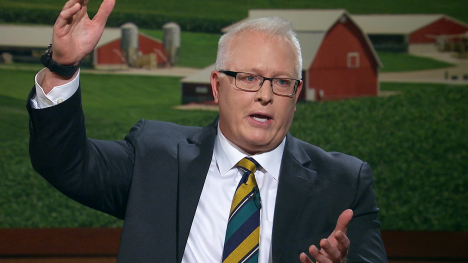
[Yeager] The USDA report this week was neutral as ending stocks for soybean and wheat stayed the same. While corn stocks were reduced slightly for the week. The nearby wheat contract lost $0.07, and the March corn contract fell $0.04. China appears to be buying some U.S. soybeans, but not enough to offset the effect of the growing size of the South American crop. The January soybean contract dropped $0.29, while January meal cut $4.90 per ton. March cotton shrank by a dime per hundredweight. Over in the dairy parlor. January class three milk futures improved by $0.50. The livestock market was higher. February. Cattle added 240. January. Feeders put on a nickel and the February lean hog contract was higher by 225. In the currency markets, the U.S. dollar index was lower by 62 ticks. January. Crude oil lost 2.52 per barrel. Comex gold found 8910 per ounce, and the Goldman Sachs Commodity Index was off by almost 16 points to settle at five. 50. Even here now, to lend us his insight on these and other trends is one of our regular market analysts, Ted Seifried. Hello, Ted.
[Ted Seifried] Hi, Paul.
[Yeager] Always good to see you here.
[Seifried] Always great to be here. Thanks for having me.
[Yeager] If you had to write a headline for the week, what would you make it?
[Seifried] Ooh. Man, it's hard to ignore the big sell off that we had in soybeans since the beginning of the. Of December 1st. Really? It's tough to ignore that. Especially since, you know, we are seeing, like you said, we're seeing the daily flash sales. China is back in the market. They are buying. But it's not enough. As you said. Yeah. South American weather does have something to do with that. We don't have any major problems there. They're planting was timely. Yeah. It started off really quickly. Then it slowed down because of some dryness up north. I'm sorry. Dryness south wetness up north. But ultimately they got that crop planted pretty much on average. And you know, looking further out in time, maybe some La Nina concerns for the southern part of Brazil. But other than that, it looks pretty good. I think the big realization that the market has come to over the past few weeks is that 12 million metric tons from China, if that's all they buy, isn't going to be enough to get to the USDA full marketing year. Export projection.
[Yeager] Well, let's do a question. We're going completely out of order here because I want to start with this. Because this is this is of curiosity to me. Scott in Wisconsin was asking you, Ted, China's auctioned off beans in their country. Are they making room for American beans?
[Seifried] Yeah, they have to. China's port stocks are at record highs right now because they took in so many beans from Brazil and Argentina from their tax break program, so much more from South America than they usually do during that time frame, that they have to make some sort of room for our beans that they're having to buy for political reasons. So, they're auctioning stuff off. That means that's going to really back up the storage and the need later on in time. So, when we say the big opportunity for China to come in and buy more than that, 12 million metric tons, and if it's not politically motivated, meaning they agree to more to that, for some reason it's going to have to come from South American weather or problems with that Brazilian crop. But because they are doing these auctions because they're moving stuff around internally, their needs are going to be less during a South American weather problem if there is one. So, it's lessening the degree that a South American weather problem could help our export program, Paul.
[Yeager] When you look at the politics involved and you look at the price involved, which one's winning right now when it comes to beans.
[Seifried] China's doing what they've agreed to. Again, we don't have this. We don't have an agreement that's been signed. But they're certainly acting like they are following through on that agreement. To this point, I think they're more than halfway done. I think they're about 6.5 million metric tons into their buying program. So, to get to the end of February for them to buy another 5.5 million metric tons, they can easily do that. But that's all politically motivated. We are not the cheapest in the world. I mean, you look at Brazil, they have an advantage, especially since, you know, we had that rally off the lows they October 1st, Lowe’s so I don't see any reason for China to buy more than that. 12 million metric tons, unless there is a massive problem with the South American crop. And if they don't buy more than that, 12 million metric tons. The big question there is what about the rest of the world? And we are still trying to catch up with that picture, because we're still catching up on our weekly export sales numbers that are now current through November 13th. The rest of the world had been buying very well, but that was really before the big rally that we had. And so, the question is, what's going on now? And I really doubt that the rest of the world has been going as hot and heavy as they were originally. I worry that even if the rest of the world has stayed strong, we're probably 60 million bushel below the USDA's current year on year or marketing year. Export estimate. But that's with me using some very, very big rest of the world numbers. If those rest of the world numbers have fallen off, we're maybe 120 million bushels away. So, then it all comes down to what's that production report in January going to say.
[Yeager] I threw you off because I went way out of order. So, let's go back to the first, because to me, the beans, I did want to get the beans out of the way. So, wheat wise, weaker dollar seems to be helping. But there's other headwinds. What are they?
[Seifried] Well, you know, I had made a case before this December WASDE report that the USDA could increase wheat exports, U.S. wheat exports. The problem with that and the reason they didn't is because, once again, they increased world production and world carryover. This has been a massive increase in the world wheat crop. That has been happening month after month. And even since that December report earlier this week, we had the Rosario Grain exchange yesterday increasing Argentina's wheat crop almost 3 million metric tons once again. So, we have a situation, Paul, where we haven't had any major production issues in the world. It's extremely rare. I mean, almost every year we have at least one, 2 or 3 major wheat exporters that have problems with their crop. We don't have that. It is truly a bumper global wheat crop, and that's going to give us a big, big problem when it comes to our wheat exports. Now, where we could see more wheat demand is wheat for feed. If there is some poor quality wheat out there. So that's great. But then that really kind of maybe cannibalizes some corn demand.
[Yeager] So which is what I wanted to get to right off the top with that corn demand issue.
[Seifried] Yeah.
[Yeager] Is it strong enough to your liking right now?
[Seifried] Corn export demand has been really fantastic. The USDA just raised the full marketing year corn export projection by 125 million bushels. Their explanation for that wasn't that they were looking at all the export sales numbers that we haven't seen yet. Their explanation for that was because of the export inspections, which stayed current throughout the shutdown. And they have been really, really fantastic. However, I don't know, I wonder if we just saw the high water mark for the corn export number on a USDA balance sheet, because when you look at, you know, export sales. And again, we're through November 13th is what we have in front of us right now. We're pretty much average as far as the amount of commitments for this time of year versus the full year. So, I'm not sure that they really need to move that number higher. Even if we do keep up with these really fantastic export inspections, I think at some point, seasonality, the seasonality is going to be kind of flip flopped because we spend a lot more time selling corn and shipping corn in our normal soybean export program season. And Brazil spent a lot of time shipping soybeans during their normal corn export season. So, I wonder if we've just kind of flip flopped. Those export windows a little bit. But for now, I think we've really maxed out the export number. So, I'm again, I don't think the USDA is going to need to move that higher in the short term. There's been a lot of talk about the feed and residual number and how that number could be way too high. And yes, I get it. There's not a lot of animals out there, and that the feed portion of the feed and residual number could be too high. And that feed wheat might cut into that a little bit. But the residual portion is the part that people don't really talk about. And when you have a massive, massive crop like we did last year, or at least the crop that the USDA is using on their balance sheet, we'll see about that in January. But when you have that big of a production number, you know that residual number is going to be huge. That's just statistics. That's how that works. So, I'm not sure that that feeding residual number needs to come down 200 to 300 million bushels. Unless you really have a big reduction in production.
[Yeager] Well, residual is not a word we talk about. We haven't talked about in a while. And so that makes me wonder, are we at the bottom end of the range or are we just getting started.
[Seifried] Lower the bottom end of the range of residual.
[Yeager] Well usage you talk about? Yes. But are we just at the bottom of a range because of residual? Sorry.
[Seifried] So I mean the residual number is really just a function of production, right? I mean, if you have a big production number then you're feeding residual number is going to be big. It's just that's how that works. This is a year where I think the percentage of feeding residual versus production could be a little bit lower than what the USDA is using because of the feed portion, but that's really a smaller portion of that number. What happens is if there's a big reduction in yield and overall production or maybe a reduction in acres, I'm really confused as to what happened with acres this year, because we've never seen such a large change from a planted acreage number, which is supposed to be a survey of what we actually planted to having major revisions in both September and October. So maybe there's a revision coming in acreage. I'm not sure. But if yield were to drop and production drops, then that residual number will come down and they'll somewhat offset.
[Yeager] Okay, let's get a livestock. Let's talk about the feeding of those animals. Feeders $16.05 in two weeks. $16 was last week only $0.05 that week. What does that small movement in feeders mean to you?
[Seifried] Well, I mean, you got to take the work, the body of work as a whole, right? I mean, we had, you know, record prices then we had a very steep drop off, put in a corrective low, and then we've had a nice bounce off of that low. I think ultimately you've run up into some very key resistance levels now. And we've corrected the correction. Now the big question is where do we go from here? Because we know that we still have a fairly I mean, we still have the same tight supply scenario that we've had for multiple years now. This is an old bull story in an old bull market. What's going to happen after the first of the year? You know, we haven't had we haven't heard a whole lot of talk about reopening the border, about lowering beef prices. I mean, for a few weeks there before the Thanksgiving holiday, the administration was very active in trying to really push those prices down. We've not heard a lot since then. That's allowed prices to come back up. But is that border going to reopen after the first of the year? If it does, that will start to fix or at least soothe that tight supply situation and probably suggests that the highs are in the longer it takes to reopen that border, the better the chance that we have to go back up towards highs. But from a live cattle perspective, a lot of that's going to depend on what domestic demand is going to be after we get past the holiday season. We know people are still spending money during this holiday season. The stock market looks good, consumer confidence is out there, but we also know that, you know, based on what these reporting agencies are saying, that a lot of the holiday buying right now, Paul, is mostly on finance credit. And you know, the different finance alternatives that are out there now. And to me that suggests that, okay, we're buying because tis the season. But our buying might really dry up after the first of the year. And if that happens, well, it takes a little bit less or takes a little bit or a lot a bit of the pressure off the tight supply situation and there to really makes it difficult to justify making new highs in the cattle complex.
[Yeager] Well, buy beef to celebrate, but we're not going to buy much beef come January, is what you're saying.
[Seifried] It's kind of what it feels like. Yeah.
[Yeager] Well, let's also talk about the weather when it comes to livestock, because it it's going to be pretty cold. It's impacted the cattle market. It's also impacting the hog market as well trying to move these things. Yes it's cold for a few days but then it's going to warm up. What's your take?
[Seifried] Yeah. You know movement is obvious when you look at hogs because they're the ones that that react to it very quickly. I mean, you saw weights increase very dramatically last week, but that's a function of not moving to market. It does mean that we've got a lot of upside up front supply. And when we increase weights that means we've got more supply. But yeah, weather I think is going to be this is going to be a difficult year. We've had a couple mild winters in recent history. This one just feels a lot different. And the longer-term forecasts are suggesting the same, both from a snow precip perspective, but also from these polar vortex vortexes and these very cold temperatures. So that will definitely keep us on our toes in the livestock markets.
[Yeager] Means we're going to have to wear our hats earlier.
[Seifried] I'm definitely going to have to wear a hat, Paul. I don't have very much insulation up there at the moment.
[Yeager] Well, that's the way it goes. Speaking of hats, we have a question in Market Plus about hats. We'll get to that in a moment. Thank you. Ted, good to see you as always.
[Seifried] Thanks, Paul. Thanks for having me.
[Yeager] It's Ted Seifried everybody and you have been watching the market analysis segment. And in a moment we're going to continue our discussion in an online only segment, which we call Market Plus. So, search Market Plus with Ted Seifried wherever you get your podcast to hear that conversation, or go to our website at Markettomarket.org. The newest way to find out how this program is made, what's to come, and behind the scenes information is to subscribe to our Market Insider newsletter. Each Monday, we send you an email which includes a poll question which stations carry this program and what Ted and I talked about between the show tapings. Subscribe at the bottom of our website of Markettomarket.org. Next week we are going to wrap our 50th season celebration with voices from the past and the present. Thank you so much for watching. Have a great week!
[MUSIC] [MUSIC]
[Announcer] Market to Market is a production of Iowa PBS, which is solely responsible for its content.
[MUSIC]
[Announcer] I wouldn't be here without my customers.
Yeah, I'd like to thank the customers. They're very dear to our hearts.
It's about the people that you're working with and the relationships that you have.
Thank you. Thank you. Thank you.
Thank you from the bottom of my heart.
[MUSIC]
[Announcer] Tomorrow. For over 100 years, we've worked to help our customers be ready for tomorrow. Trust in tomorrow. Information is available from a Grinnell Mutual agent today.
Trading in futures and options involves substantial risk. No warranty is given or implied by Iowa PBS or the analysts who appear on Market to Market. Past performance is not necessarily indicative of future results.
Watch More
New farm relief, a food safety honor, Minnesota cider and commodity market analysis with Chris Robinson.
Chris Robinson answers viewer questions on corn yields, crude oil and cattle, and explains his soybean outlook.

Huub Lelieveld receives the 2026 World Food Prize for six decades of work advancing food safety.
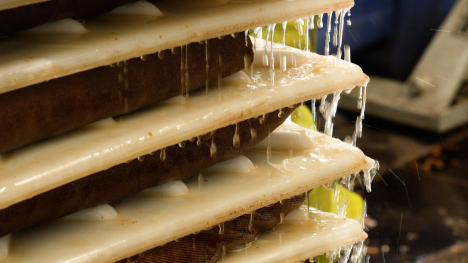
Minnesota’s Keepsake Cidery combines heirloom apples, traditional cider making and direct sales to help a small farm thrive.
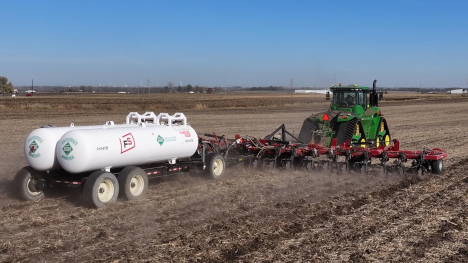
New federal plans target farmers' fuel and fertilizer costs through direct relief and investments in domestic fertilizer production.
Chris Robinson weighs corn recovery prospects, soybean price levels and the rebound in cattle.