Processed food is in the crosshairs while protein gets a boost. European farmers take to their tractors over free trade. A squid squabble off the Oregon coast. And, commodity market analysis with John Roach.


On this edition of Market to Market ...
Processed food is in the crosshairs while protein gets a boost. European farmers take to their tractors over free trade. A squid squabble off the Oregon coast. And, commodity market analysis with John Roach.
Transcript
[Paul Yeager] Coming up on Market to Market, processed food is in the crosshairs, while protein gets a boost. European farmers take to their tractors over free trade a squid squabble off the Oregon coast. And commodity market analysis with John Roach next.
[MUSIC]
[Announcer] I wouldn't be here without my customers.
Yeah, I'd like to thank the customers. They're very dear to our hearts.
It's about the people that you're working with and the relationships that you have.
Thank you. Thank you. Thank you.
Thank you from the bottom of my heart.
[MUSIC]
[Announcer] Tomorrow. For over 100 years, we've worked to help our customers be ready for tomorrow. Trust in tomorrow. Information is available from a Grinnell Mutual agent today. This is the Friday, January 9th edition of Market to Market, the Weekly Journal of Rural America.
[Yeager] Hello, I'm Paul Yeager. The year of the horse 2026 left the gate racing to economic news. Wrapping up last year and setting a course for the new year. Farmers sentiment dropped three points in December to a reading of one. 36 the decline in the Purdue University CME Group AG Economy Barometer is attributed to the softening of producers long term outlook. Friday's jobs report came in with 50,000 new positions, about the same as November's pace. That makes about 584,000 jobs created in 2025, the lowest non-pandemic year level since 2003. The unemployment rate dropped to 4.4%. The first decline since June. The new year brings resolutions for many of us, including more exercise, limiting scrolling and the losing of a few pounds. The White House started with what we eat and how less of some things would benefit us now and in the future. David Miller reports.
[Robert Kennedy Jr.] My message is clear -- eat real food.
[Narrator] From the podium in The White House briefing room, Trump administration officials literally put the food pyramid on its head this week, flipping concentration of what Americans should eat more and less of in their diets.
[Robert Kennedy Jr.] Protein and healthy fats are essential, and were wrongly discouraged in prior dietary guidelines. We are ending the war on saturated fats. Diets rich in vegetables and fruits, reduced disease risk more effectively than many drugs.
[Narrator] Sugars used in sweetened beverages like soda have been targeted before by the administration and most recently by USDA in their calls for change in how food benefits should be spent.
[Brooke Rollins] This is the foundation that will make America healthy again, not just for those of us alive today, but for our children and our children's children and those coming behind.
Dramatically, more protein is being proposed from the previously recommended levels. However, many Americans are already ahead of the mark.
[Meg Bruening] I would caution people when they see that news, to think about how they eat and how much protein they eat, and maybe that's one place where critical thinking is really important.
[Narrator] The National Pork Producers Council applauded the plan, quote, putting pork front and center on the plate, unquote. The guidelines are released every five years, as required by law. This version calls for more Whole foods and fewer highly processed foods. The American Soybean Association acknowledges the role soybean oil and soy protein play in the health and nutrition of Americans. However, they remain deeply concerned by the rhetoric and selectively cited studies regarding the health and safety of soybean oil in DGA, supporting material. Food policy experts say The White House promised a sharp departure from previous plans, and the news this week delivered.
[Marion Nestle] The guidelines also talk about the need to balance calories appropriately and to keep saturated fat at 10% of calories, which is going to be very hard to do if you're eating full fat dairy and meat.
[Narrator] For Market to Market, I'm David Miller.
[Yeager] The emergence of South America's production agriculture sector has earned the attention of North American and Asian countries. Now, Europeans are concerned over new deals aimed at five countries that could flood their agricultural market and impact their producers. On Friday, EU states greenlit the plan as a counter to action taken by President Trump on trade. Peter Tubbs looks at the loud efforts made this week ahead of the vote.
[Narrator] Dozens of tractors and farmers jammed highways and traffic crossings throughout Greece this week, protesting soaring production costs. Also at issue there and in France are changes in European Union trade policy. French farmers parked next to the arc de Triomphe to show their concern about the EU's intention to move forward on a free trade deal with five South American nations Brazil, Argentina, Bolivia, Paraguay and Uruguay. The farmers at the protest argue the coalition will hurt French producers livelihoods. European farmers fear the deal would flood the market with cheaper imports, triggering protests in multiple countries over concerns around the future of the farming livelihood. The group Rural Coordination is trying to put pressure on the French government, which protesters say has been weak in its opposition to the deal. For Market to Market, I'm Peter Tubbs.
[Yeager] Fishing – it can be hot one day and then cold another. In any particular location. Whether someone gets a hit cast after cast or an entire cadre of casters showed up. Too much of a good thing can cause problems for those who are trying to make a living off the catch of the day. The netting of calamari, known by its more common name of squid, has prompted a squabble that regulators are attempting to strike a balance between profits and protection. Off the coast of Oregon, Colleen Bradford Krantz walks us through the lines in the water in this week's cover story.
[Narrator] Joseph Mulkey of Reedsport, Oregon, was so eager to follow his father into the commercial fishing business that he was tempted to drop out of high school.
[Joseph Mulkey] The only reason I finished high school was my mom told me that if I didn't graduate, I would never get the opportunity to run the boat.
[Narrator] He did graduate, and after years on the crew, he eventually became captain of the family's 68 foot fishing boat known as the Pearl Jay. This fall, he finished building a 57 foot boat of his own. But mulkey's all in commitment to commercial fishing, came with concerns about how the industry sometimes operated.
[Joseph Mulkey] Sadly, we are on somewhat of a decline. I feel that our industry is too focused on volume as opposed to quality. When you look at other fisheries in the world, Norway and European fisheries, they focus on very high quality and much lower volumes than we do.
[Narrator] That concern about quantity over quality became especially relevant when market squid fishing off Oregon's coast began drawing serious interest from other West Coast commercial crews. Troy Buel, the State fishery management program leader for the Oregon Department of Fish and Wildlife, helps regulate certain ocean species fished within three miles of the state's coast.
[Troy Buell] This fishery started in 2016, when we saw about 2.7 million pounds of squid landed, which was more than we'd ever seen historically. And we have records going back to the early 80s that there was some squid fishing happening. But but not to that degree.
[Narrator] A marine heat wave or an area of unusually warm ocean water. From 2013 to 2016 is believed to have brought more market squid north to Oregon, California fishing crews wanted to follow them.
[Troy Buell] And we started getting questions from some of those fishermen about what would be required to fish market squid in Oregon as far as what permits and licenses they would need to have.
[Narrator] For Mulkey, the squid boom offered a chance to try purse seining, a net based fishing method that uses a drawstring type rope at the bottom to gather the catch. Around 2018, Mulkey convinced his family to invest $100,000 in used nets and gear for a test run. The tests succeeded, and the family upgraded their equipment. Market squid, known as calamari when served, are usually caught only at night in the fall. They're drawn to lights just like moths. Some fishing operations used a separate light boat that would attract the squid, while a catcher boat set nets around them. Even though he was using this strategy himself, Mulkey began to worry that it was too effective.
[Joseph Mulkey] A lot of times, as soon as you're done with the set that you just made, pumping those squid on the boat, you can immediately go back and set again. It's extremely efficient, and our fishery here in Oregon is not a big enough fishery to sustain that much efficiency. And so there was a few of us that felt like we needed to get rid of the light boats.
[Narrator] By 2019, nearly 40 boats were working in the Oregon squid fishery, a term that in this case refers to all the crews fishing for the same regulated species.
[Joseph Mulkey] There was always a fishery up off of Florence, and even without light boats, we're very efficient. And with all of those boats participating, I've never caught a squid in that area since then. I think we kind of demolished that run.
[Narrator] Mulkey called state fisheries managers with his concerns and found himself in the unusual position of asking for a few new regulations over his own livelihood. The state, however, already had a safeguard in place.
[Troy Buell] We had what we call a harvest guideline set at 4.5 million pounds of squid landed, and so the requirement that if we ever landed that much squid into Oregon, though, is that we held a public meeting to be able to evaluate the fishery.
[Narrator] Unlike long lived species like rockfish or whales that take years to mature, Marcus squid are a bit easier to protect as they reproduce rapidly and live less than a year. The state has a goal of fishermen leaving 30% of the squid's eggs on the ocean floor to protect the species future.
[Troy Buell] That is rather hard to measure, and so we did put in a regulation that closes the fishery two days a week on the weekends, and that is a proxy for us allowing the squid to spawn, you know, 30% of what they would have been able to do without any fishing.
[Narrator] But it was the banning of separate light boats. After contentious debate that angered some fishing crews.
[Troy Buell] I took a lot of calls about, yeah, the light boat issue, both from people that felt that they weren't necessary and were creating kind of an unfair playing field for people that that weren't using them or didn't have them to people that hadn't invested in building light boats and were using them in the fishery. So yeah, lots of calls. It was pretty contentious.
[Narrator] For Mulkey, advocating for restrictions cost him some friendships.
[Joseph Mulkey] Particularly with the light boats. I have some people that I used to call friends that are not friends anymore.
[Narrator] After the regulations concerning separate light boats took effect, which also lined up with a swing back to cooler ocean conditions, Mulkey said participation dropped rapidly from 40 boats to 4 or 5. The peak in 2020 brought 10 million pounds of market squid, or $6 million worth, into Oregon's ports. In recent years, the catch has totaled closer to 1 to 1.5 million pounds.
[Troy Buell] You know, that's not a huge amount of money compared to some of our more valuable fisheries. But it's not nothing significant for individual operators and even some of the ports.
[Narrator] Both men feel the state is now better positioned to balance economic and ecological considerations when the next marine heat wave hits, bringing along thousands of tiny, tentacled mollusks.
[Joseph Mulkey] I want to do this the rest of my life, and if my kids want to do it, I want them to be able to do it. And the stocks have to be there for us to do it.
[Narrator] For Market to Market, I'm Colleen Bradford Krantz.
[Announcer] Next, the Market to Market report.
[Yeager] Traders positions appear to be in neutral ahead of Monday's USDA report for the week ending January 9th. The nearby wheat contract added $0.11, and the March corn contract gained $0.08. China keeps buying from the U.S., but did signal fewer purchases from South America this year. The March soybean contract improved $0.17, while March meal put on seven. 70 per ton March cotton expanded by $0.47 per hundredweight. Over in the dairy parlor. February class three milk futures declined by $0.22. The livestock market was mixed. February cattle lost two. 27. March. Feeders put on one. 75. And the February lean hog contract increased by $1.20. In the currency markets, the U.S. dollar index moved higher by 73 ticks. February. Crude oil gained two. Oh five per barrel. Comex gold expanded by one. 74 per ounce, and the Goldman Sachs Commodity Index was up by more than eight points to settle at five. 5640. Here now, to lend us his insight on these and other trends is our Senior market analyst, John Roach. Hello, sir.
[John Roach] Hi, Paul. Thank you.
[Yeager] When we've discussed the wheat market in the past, at least in the last year or two, it's always been about supply. But it's not always about the U.S. supply. It's about this story that comes out of Ukraine and Russia. So why would the market move higher this week on declining weather conditions in the United States.
[Roach] Well, the the market really had to regain some lost ground. I mean, we had higher prices earlier in the winter and then slid into the lows that we saw around the first of the year. And and we bounced back with traders. Looking forward to Monday's report from the USDA. People decided they really didn't want to hold some of the short positions, rather take their profits and get out of the way.
[Yeager] Is that exclusive to wheat, or do you think that's another contracts?
[Roach] I think it happened in corn and soybeans as well. We saw both of those markets rally as well. And I think it's just people getting into a neutral position. It's interesting. We look at the 20 day moving average as an indicator of the trend. And and all three markets corn, wheat and beans closed right up or right above or just below the 20 day moving average. So prices have gone into neutral zone with everybody waiting to see what the government tells them.
[Yeager] We've put it off long enough. Let's talk about Monday because that is a massive deal for a number of reasons. Does this Monday's reports, plural, carry more weight than normal for you?
[Roach] It certainly does. I mean, these will be the numbers that we use from here on forward as it pertains to last year's production. The crop we harvested in 25 will be finalized on these numbers, and it will be double counted as we look at the stock's position. So not only will the government say here's what we believe the production was, they will say here's what the inventory is in the bin currently. And from that we'll extrapolate. Well, a combination of what was the supply and what has been the demand. And from those numbers we'll look forward and say, well, based on this, we expect demand to be a certain level, and we expect stocks before the next harvest to be at a certain level. So this is really sort of a a super kind of a report from a standpoint of all the information that it gives us. And then what we do with it. Looking forward.
[Yeager] But given that we maybe didn't have all the greatest data at the end of 2025, government shutdown thrown in the mix, some reports were a little different. We're not still 100% sure how big or small that corn and bean crop was. I guess that's why I'm asking if this one seems a little different to you.
[Roach] Well, this particular crystal ball has some fog surrounding it because we had some unusual circumstances. As you just outlined. Plus, the government is a smaller force than what it used to be. And so we don't know what for sure. That's done. And so we're we're really in a little bit of a quandary. But we'll take those numbers. The traders will take those numbers and they'll look out forward and, and make the adjustments that they think are correct. And then we'll trade from there. But but the thing that we have to keep in mind, one of the things we know the government is going to tell us is that we have plentiful supplies. I mean, the current estimate for stocks on on corn is about 7.5% bigger than the stocks were last year. Beans are about three and wheat is about 3% bigger than what it was last year. So we're dealing with big supplies of grain that we're going to then have to merge together with the South American production and South American production is all expected to come in at higher levels than a year ago. And now we have to find out what's the level of demand and can we consume all that grain. And the reality is it's going to be difficult to do that. So we're probably going to have surplus conditions lasting all the way around into the harvest of 26. And we'll see what our harvest of 26 is. And of course that's that's up for, for question, depending on the weather to.
[Yeager] Surplus for the grower usually means lower but better for the end user who's looking to make purchases. Given what you're outlining.
[Roach] That's exactly right. But but let's remember, Paul, we've known this for some months. So so that's six month old information that the supplies are big, the prices are cheap. So we've already seen maybe the worst news, maybe this news will tell us. It's not quite as bad as we thought, but we've already determined a price level. If you look at what the price level has been for the last 90 days, like I say, we're we're right now at the 20 day moving average on corn, wheat and beans. So we're we've adjusted and the market's comfortable. What's the likelihood is that we get something. What is the likelihood that we get something unusual. Not very likely. Well so if we get some some bounce up out of these numbers farmers need to use that as an opportunity to make sales.
[Yeager] Well, that's the perfect segue to Paul in Minnesota's question. And I think it's on the mind of many. And you're not going to have much time to act on it, though Paul wants to know some pretty nice local bases here in Minnesota where he's at. Should we look at locking some of it in before Monday's report?
[Roach] Well, I think what you have to do is be ready to to make some sales. And if you want to go ahead and separate the basis out and you want to lock in because you are anticipating a higher price than no problem with that. But if you're wrong and the price actually goes down, the basis is liable to actually get even better. Because farmers don't like this price. And so if you cheapen the price on Tuesday, you're going to have farmers like it even less. And the and the desire to make sales will be slow and the basis will have to stimulate it.
[Yeager] Are you saying that the it's possible that the the barn doors are going to get welded shut again?
[Roach] Well, until I need the cash, when I need the money. Okay, I'll move the grain. I have to move in order to generate the cash. But then I'm going to stop. And that's been the attitude farmers have had. And they've had it now since harvest. And that's fine. But you have to be careful here that you you're you're missing out selling. When we have rallies in the market and we've generated sell signals in corn and wheat, two of them here since during a season that we like to sell, we've only generated one in soybeans so far. But the next sell signal, we want to be making some sales. And I can almost guarantee you that the farmers watching this show tonight will not like the price.
[Yeager] Well, they like the price in beans any better.
[Roach] Well, I think on all three corn, wheat and beans. I don't think we're going to like the price. And I think we'll have to market in that environment until somebody has a crop problem that's possible. We can start to have a problem in South America, and possible we can have a problem in North America. But at the moment we're not too worried about the weather.
[Yeager] Are you in a position right now looking at the news of China? Maybe not interested as much in South America? Is that their signal to try to lower this market even further and swoop in and make some purchases, either from South or North America?
[Roach] Well, China always tries to talk the price down. So I mean, that's definitely normal. And if you remember, they tried to talk the price down before. They just bought the last round of beans. You know, that that they promised to buy. And it looks like they're going to get or get close to their 12 million tons that they promised they'd buy. They're up over 8 million traders think they might even be up closer to ten, although we don't really have those numbers reported yet. So they've actually done quite a bit of buying during this period of time. And that takes away their need to buy some of the South American inventory, because they actually followed through and bought us inventory.
[Yeager] Let's move to livestock for a moment, because live cattle was the story of 2025 like it was the story of 2020 for what are the headlines in 26 looking like to you?
[Roach] They're going to continue to be the headline of higher price levels or of strong price levels, not necessarily higher. We're actually struggling a little bit right now in the dressed beef trade. Maybe the demand through the holidays was not quite as big as we thought, but the inventory of feeder cattle they found Screwworms again in this week that were announced. And so we're going to continue to have slow movement of feeder cattle into the country. We're going to continue to have difficulty expanding the herd. And and we've got an economy that's a little more robust than we thought, which is probably going to help us as far as demand is concerned. If the government's new recommendations on eating more protein are followed, that could help us with demand. So so the the meat markets in a pretty positive state, although you have to be a little cautious when you're at these high price levels, it doesn't take much to get the get you in trouble and have and have a sharp decline. But it's going to somewhat come out of the blue.
[Yeager] It's not out of the blue necessarily, but the hog run up has been pretty steady on a good run here lately. If you look at the chart that we're about to see what's going to keep that thing, I mean, since the first part of December, we've been headed up.
[Roach] We have been. And what's interesting is if you look at the makeup of the charts, the nearby has gone up slower than the deferred. So, so really what we made new highs on the summer and beyond months this week. So the outlook has improved really just steadily here over the last month. The outlook has improved. And that's what you see in the more distant futures. And the interesting thing is that the hog crush, which is a combination of the futures and feeder pig and the corn values, is is down, is up as profitable as it has been, 90% of the time, over 90% of the time in the last ten years. So it looks very positive at the moment.
[Yeager] Well that's good. We ended on a positive note. Thank you John, good to see you again.
[Roach] Thank you very much. Appreciate it. Paul.
[Yeager] That’s John Roach and you've been watching the analysis segment. In a moment. We'll continue our discussion in an online only segment search Market Plus with John Roach. Wherever you get your podcasts to hear that conversation or go to our website of markettomarket.org. We are here to assist in the resolution to expand knowledge in the new year. January is the perfect time to dive into our Market to Market classroom project. We have modules on commodities, government and science. Head to Markettomarket.org. Next week, double the analysis of Monday's USDA report. Thank you so much for watching. Have a great week.
[Announcer] I wouldn't be here without my customers.
Yeah, I'd like to thank the customers. They're very dear to our hearts.
It's about the people that you're working with and the relationships that you have.
Thank you. Thank you. Thank you.
Thank you from the bottom of my heart.
[MUSIC]
[Announcer] Tomorrow. For over 100 years, we've worked to help our customers be ready for tomorrow. Trust in tomorrow. Information is available from a Grinnell Mutual agent today.
Trading in futures and options involves substantial risk. No warranty is given or implied by Iowa PBS or the analysts who appear on Market to Market. Past performance is not necessarily indicative of future results.
Watch More
New farm relief, a food safety honor, Minnesota cider and commodity market analysis with Chris Robinson.
Chris Robinson answers viewer questions on corn yields, crude oil and cattle, and explains his soybean outlook.

Huub Lelieveld receives the 2026 World Food Prize for six decades of work advancing food safety.
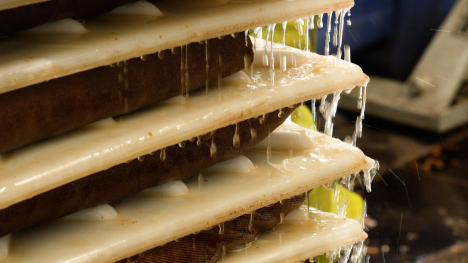
Minnesota’s Keepsake Cidery combines heirloom apples, traditional cider making and direct sales to help a small farm thrive.
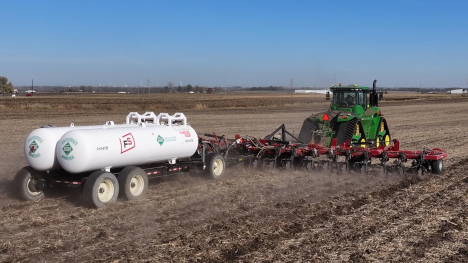
New federal plans target farmers' fuel and fertilizer costs through direct relief and investments in domestic fertilizer production.
Chris Robinson weighs corn recovery prospects, soybean price levels and the rebound in cattle.