After years of declining fluid milk consumption in the U.S., a few dairy products have seen demand take off in the last decade.


U.S. consumer demand for certain dairy products - butter, cottage cheese and yogurt among them - has taken off in recent years.
Transcript
[Colleen Krantz] When sisters Jennifer Orchard and Julie Bacon found out in March they had won first place for salted butter at the World Championship Cheese Contest, it was the right good news at the right time for their young Wisconsin company, Royal Guernsey Creamery.
[Jennifer Orchard, co-owner, Royal Guernsey Creamery - Columbus, Wisconsin] We were blown away because it was our first time entering in the world contest, and we won a gold medal with our salted butter, a silver medal with our signature butter in the flavored contest…So we are really proud that we can be two small artisans making butter and we still can have a place on the worldwide level.
[Krantz] The dairy industry has had some good news of its own. After years of declining fluid milk consumption in the U.S., a few dairy products have seen demand take off in the last decade. Butter is one of them.
From 2014 to 2024, butter consumption rose 24%, from 5.5 pounds to 6.8 pounds per person, a 50-year high. Cottage cheese consumption grew 13% over that same period. And while yogurt hit its record level in 2013, it has hovered near that peak ever since.
[Orchard] We're seeing a big push toward moving back to real ingredients, simple ingredients, quality ingredients, which dairy really encompasses. So when we talk about butter, butter is a simple product. …We’re just cream and sometimes salt.
[Krantz] But while Jennifer and Julie celebrate in their Butter Barn, the view from the nearby shed tells a different story. That's where Julie and her husband, Ed Bacon, raise the cows and where the economics look different.
While some of their milk goes toward the butter, most is sold through their co-op. Conditions have improved since the early 2000s when expenses clearly exceeded income. More recently, margins have hovered near the break-even point. Farmers have managed this even as the national average milk price dropped about 6% between 2014 and 2024.
[Julie Bacon, co-owner, Royal Guernsey Creamery - Columbus, Wisconsin] The price for our milk is about basically what we used to get in the ‘70s but machinery and all our other input costs have really just gone through the roof. And that's causing farmers, especially dairy farmers, to be extra efficient. We really watch every penny.
[Krantz] Even as some dairy products grow in popularity, the industry still faces declining beverage milk consumption — down 20% between 2014 and 2024.
[Bacon] If demand goes up and the supply isn't there, obviously, the price goes up. But right now we are seeing an oversupply of milk…so right now, milk prices are not very good at all.
[Krantz] The cottage cheese demand has pushed at least one western Wisconsin creamery to its limits. Westby Cooperative Creamery produces 14 million pounds annually but it still can’t keep up with demand.
[J.D. Greenwalt, President/CEO, Westby Cooperative Creamery - Westby, Wisconsin] We are running at absolute max. We run 24 hours a day, seven days a week, 365 days a year…We are at capacity until we add more volume, but I can tell you we have more requests every single week…We haven't even found where that peak is to even start coming back down off of.
[Krantz] To meet that demand, the creamery — supplied by 88 farms — has launched a $15 million modernization project that will increase cottage cheese production by about 50%. When it is completed this fall, the creamery, which also makes yogurt and sour cream, will produce 21 million pounds of cottage cheese annually.
[Greenwalt] And I am sold out already. I have potential customers going on beyond that if we continue investing. But I cannot make enough cottage cheese."
[Krantz] Greenwalt said until around 2015, cottage cheese had been losing popularity, appearing mainly in buffets and lasagna recipes. He credits Good Culture, a brand whose cottage cheese is made by the Westby creamery, with helping turn that around with its marketing that highlighted its high-protein, clean-label appeal.
[Greenwalt] Right at that same time, TikTok kind of got popular and people were putting a lot of TikTok recipes, and making ice creams and pizza crust and breads and pancakes. And that really prompted a huge revival in cottage cheese."
[Krantz] An hour southeast, in Richland Center, Wisconsin, Schreiber Foods has seen the U.S. demand for non-frozen yogurt demand hold relatively steady over the past decade after seeing consistent growth in the preceding years.
[Andrew Tobisch, Director of Communications, Schreiber Foods - Green Bay, Wisconsin] More people are just starting to make yogurt a regular part of their daily eating routine, and it's something that has a lot to offer. It brings protein to the table, which helps us feel more full. It has live cultures that help with digestion. Those are things that people are looking for.
[Krantz] Schreiber Foods, a $7.5-billion global company that makes dairy products under other companies’ labels, doesn't see interest in yogurt fading anytime soon.
[Tobisch] From what we're seeing, it's growing everywhere. So it doesn't matter where you are - Europe, here in the United States, we can't keep up… we're producing as much yogurt as we possibly can right now. And we're investing so we're increasing that capacity. That just takes time."
Westby Cooperative Creamery member-owner Gail Klinkner and her husband, Rob, raise cows at their Pine Prairie Jerseys and Klinkner Holsteins farm near Viroqua, Wisconsin. They've long bred their dairy cows for high fat and protein content — exactly the kind of milk that performs well in cottage cheese production.
[Gail Klinkner, Pine Prairie Jerseys/Klinkner Holsteins - Viroqua, Wisconsin] Through the course of the last 10 to 20 years, we’ve seen a lot of shifts, a lot of market volatilities up and down. And growing up on a dairy, I'm not sure I felt that I felt that it was that hostile of an environment really...But as we've been on our own, we've definitely seen some very low lows and some very high highs and it's really… riding that out."
[Krantz] Increased product demand at the consumer level doesn't always translate quickly to farm profitability, but Klinkner is cautiously optimistic.
[Klinkner] I think sometimes the milk price lags behind what’s going on with consumer trends. I think it’s very stable and getting stronger. As the need for cottage cheese rises and those sales come online, from my knowledge, it's only going to explode and the price support from there should continue to improve as we go forward."
By Colleen Bradford Krantz, [email protected]
Watch More

New farm relief, a food safety honor, Minnesota cider and commodity market analysis with Chris Robinson.
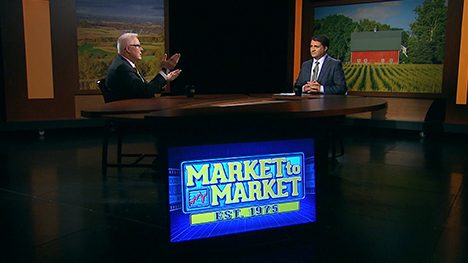
Chris Robinson answers viewer questions on corn yields, crude oil and cattle, and explains his soybean outlook.

Huub Lelieveld receives the 2026 World Food Prize for six decades of work advancing food safety.
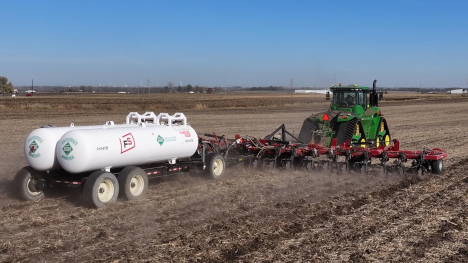
New federal plans target farmers' fuel and fertilizer costs through direct relief and investments in domestic fertilizer production.
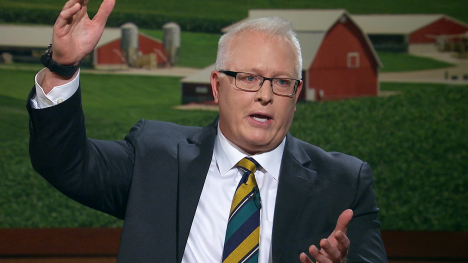
Chris Robinson weighs corn recovery prospects, soybean price levels and the rebound in cattle.
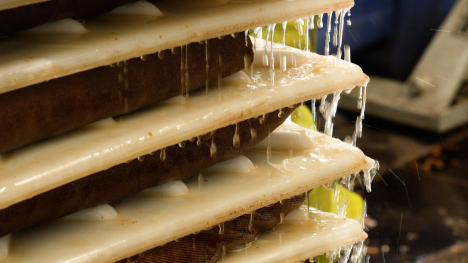
Minnesota’s Keepsake Cidery combines heirloom apples, traditional cider making and direct sales to help a small farm thrive.