The U.S. Department of Agriculture announced that it will use $300 million from the Inflation Reduction Act to monitor agricultural emissions.


The U.S. Department of Agriculture announced that it will use $300 million from the Inflation Reduction Act to monitor agricultural emissions, including the creation of a research network to monitor carbon levels in soil.
Transcript
The U.S. Department of Agriculture announced that it will use $300 million from the Inflation Reduction Act to monitor agricultural emissions, including the creation of a research network to monitor carbon levels in soil.
Researchers at Purdue University have been studying soil samples that go back over 40 years to understand the impacts of different cover crops and tillage techniques.
Shalamar Armstrong, associate professor of agronomy, Purdue University: “Farmers grow crops. And so when those farmers grow those crops, those crops are farming carbon. They are storing carbon through photosynthesis and then ultimately the decay of the residue into the soil.”
Brad Wetli, farmer: “I think right now we’re real in the infancy of knowing how much carbon we’re actually storing in the ground. So for the contracts of how much carbon you store and getting paid on I think that can sway me one way or the other, like what contracts to go for if I now how much carbon I’m actually putting in the ground.”
Establishing techniques to monitor the captured carbon will be required to properly price contracts to reimburse farmers for their storage work.
Shalamar Armstrong, associate professor of agronomy, Purdue University: “The market has to understand farmer risk when adopting practices to store carbon. I think that the that happens and they find a middle ground, you’re going to see greater adoption.”
While cover crops improve soil performance and durability over time, the costs of planting covers can be hard to justify in the short term. Carbon storage contracts may change the math.
Brad Wetli, farmer: “Doing cover crops on our ground, we’ve noticed the structure getting better, our soils aren’t washing down into the streams like they have probably in the past several years. So as far as it benefitting for me, it’s the fertilizer I put down doesn’t get washed down the streams, so, basically that money I put out in the field will stay basically in my pocket.”
For Market to Market, I’m Peter Tubbs.
Watch More
Sugarbeet losses, diesel costs, Montana’s feral horses and market analysis with Shawn Hackett.
Shawn Hackett weighs storing corn versus selling soybeans and Brazil’s potential weather risks.
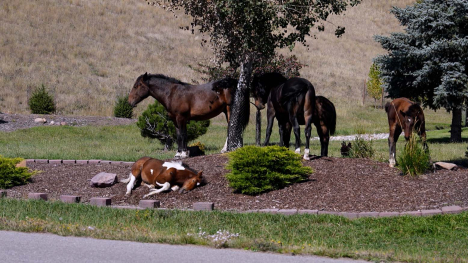
Montana residents balance affection for free-roaming horses with safety and property concerns.
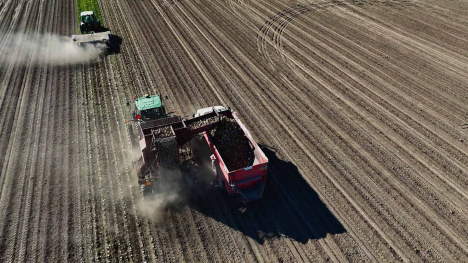
A growers association reports average losses of $500 per acre as sugarbeet harvest gets underway.
Shawn Hackett weighs corn demand, USDA yields and potential November turning points for grains.

Global supply disruptions keep fertilizer markets volatile heading into 2027.